Monthly Archives: June 2013

Do Vegetables and Fruits Prevent Disease?

Switching to the paleo diet often leads to increased vegetable and fruit consumption

Switching to the paleo diet often leads to increased vegetable and fruit consumption

Potential answers are in the American Journal of Clinical Nutrition (2012).  I quote:

For hypertension, coronary heart disease, and stroke, there is convincing evidence that increasing the consumption of vegetables and fruit reduces the risk of disease. There is probable evidence that the risk of cancer in general is inversely associated with the consumption of vegetables and fruit. In addition, there is possible evidence that an increased consumption of vegetables and fruit may prevent body weight gain. As overweight is the most important risk factor for type 2 diabetes mellitus, an increased consumption of vegetables and fruit therefore might indirectly reduces the incidence of type 2 diabetes mellitus. Independent of overweight, there is probable evidence that there is no influence of increased consumption on the risk of type 2 diabetes mellitus. There is possible evidence that increasing the consumption of vegetables and fruit lowers the risk of certain eye diseases, dementia and the risk of osteoporosis. Likewise, current data on asthma, chronic obstructive pulmonary disease, and rheumatoid arthritis indicate that an increase in vegetable and fruit consumption may contribute to the prevention of these diseases. For inflammatory bowel disease, glaucoma, and diabetic retinopathy, there was insufficient evidence regarding an association with the consumption of vegetables and fruit.

It bothers me that vegetables and fruits are lumped together: they’re not the same.

The paleo diet is unfairly characterized as meat-centric. It can certainly provide beaucoup vegetables and fruits. Diabetics should be careful which ones they choose, to avoid spikes in blood sugar.

Steve Parker, M.D.

Scientific Reviews Support the Paleo Prescription for Potassium and Sodium

A pinch of salt helps reduce bitterness in coffee

A pinch of salt helps reduce bitterness in coffee

Most of us have heard that reducing salt (sodium) intake is supposed to be good for us, although even that’s debatable. Fewer have heard that higher potassium may healthful. Those diet characteristics—low sodium and high potassium—are naturally incorporated into the Paleolithic diet (aka Stone Age, caveman, hunter-gatherer or paleo diet).

Read MedPageToday for details.

The association between sodium restriction and lower rates of cardiovascular disease and mortality is a confusing mess. My gut feeling is that strict sodium avoidance is important for only 20% of the population, at most.

But make no mistake: If I were on the cusp of drug therapy for high blood pressure, I’d cut my sodium to 3 grams a day, lose excess weight, increase my potassium consumption, and get regular exercise, all in an effort to avoid drugs. (If my blood pressure was 170/103 or higher, I’d go on drugs, make all those lifestyle changes, then try to reduce my drugs later.)

From MedPageToday:

However, the assertion that reduced salt intake will have beneficial effects on disease outcomes contradicts the results of a 2011 meta-analysis, which failed to show significant relationships between reduced salt intake and mortality or cardiovascular outcomes.

HIIT IT!

A treadmill is one of many ways to do high-intensity interval training.  Tabata's classic study used a stationary bicycle.

A treadmill is one of many ways to do high-intensity interval training. Tabata’s classic study used a stationary bicycle.

I found a free article by Martin Gibala,Ph.D., a major researcher into high-intensity interval training (HIIT).  He prefers to abbreviate it as HIT.

I don’t like to exercise, so I’ve been incorporating HIIT  into my workouts for over a year.  It’s helped me maintain my level of fitness to that required of U.S. Army soldiers, without being a exercise fanatic.

So what’s HIIT?  Gibala’s definition:

High-intensity interval training is characterized by repeated sessions of relatively brief, intermittent exercise, often performed with an “all out” effort or at an intensity close to that which elicits peak oxygen uptake (i.e., ≥90% of VO2peak).

HIIT involves short sessions of very intense exercise two or three times per week, for as little as 15 minutes.  That’s total time, not 15 minutes per session!  Yet you see a significant fitness improvement.  Be aware: the brief exercise bouts should be exhausting.

The Gibala article has all the scientific journal references you’d want, plus a suggested HIIT program for an absolute beginner.

One final quote from Dr. Gibala:

It is unlikely that high-intensity interval training produces all of the benefits normally associated with traditional endurance training. The best approach to fitness is a varied strategy that incorporates strength, endurance and speed sessions as well as flexibility exercises and proper nutrition. But for people who are pressed for time, high-intensity intervals are an extremely efficient way to train. Even if you have the time, adding an interval session to your current program will likely provide new and different adaptations. The bottom line is that — provided you are able and willing (physically and mentally) to put up with the discomfort of high-intensity interval training — you can likely get away with a lower training volume and less total exercise time.

Read the rest.

Steve Parker, M.D.

PS:  Why won’t Gibala give some credit to Izumi Tabata who did a pioneering study on HIIT in 1996?

PPS:  Gibala narrated this stationary bike HIIT video.

h/t Tony Boutagy

QOTD: Victoria on Teenage Breasts

Teenage girls are being brought up to believe that their breasts are two pre-cancerous lesions… ticking time bombs.

Victoria at PrincipleIntoPractice

Maybe We Don’t Need as Much Calcium As We Think

I’ve worried about the relatively low calcium amounts provided by most paleo diets.  Maybe I shouldn’t. Fanatic Cook Bix has a new post about various calcium absorption mechanisms in our bodies. If intake is low, certain mechanisms kick in, allowing us to absorb more than is usual. I quote:

So, someone who is eating less than 400 mg – which is half the recommended amount (the DRIs are 800-1000 mg/day, some groups recommend up to 1300 mg) – may, all else being equal, end up with a similar calcium status as someone eating 1000 mg or more because an active transport mechanism kicks in at lower intakes. As well, more calcium may be absorbed from the colon.

Calcium is not unusual in this regard. Absorption of nutrients is often higher when intake is low, and vice versa. Zooming in on one nutrient, in this case calcium, and fretting over whether we’re “getting enough” has a downside if it leads to taking supplements. Many nutrients compete for intestinal absorption, e.g. zinc supplements have been shown to substantially reduce calcium absorption. And, it should be said, what the body doesn’t absorb goes out with the feces.

It may be better to focus on eating a variety of minimally processed foods than to focus on discrete nutrients, and let the body take care of itself.

Read the rest.

At any given time, I usually have at least one little old lady on my hospital service who has fallen and fractured her hip, wrist, pelvis, or humerus (arm bone that’s part of the shoulder). Nearly always she has the bone-thinning disease called osteoporosis, which may be related to calcium consumption. If we can prevent osteoporosis with diet and exercise, that’s much preferable to dealing with the fractures.

Paleo Diet Helps Another Type 1 Diabetic

Dietitian Kelly Schmidt published another interview with an adult-onset type 1 diabetic, Alexis. A quote on how low-carb “primal” eating altered her health:

Overall health has improved. I have much better mental clarity.  I feel less moody and irritable. I also notice a difference in my hair, skin and nails. I have tons of baby hair growing and I no longer have strange ridges in my nails. After being diagnosed I also discovered that I am definitely gluten intolerant and cannot eat legumes.  I used to think I had acne in high school but in retrospect it was these things manifesting themselves. My skin is perfectly clear after going paleo. Paleo has also helped me maintain my weight. I weighed 103 when diagnosed and looked very malnourished. I gained some weight back but have been able to maintain it by eating this way. I also have to add that my dental health has improved ten fold. After many years of terrible dental visits I haven’t had one cavity and in fact, the last time I went for a cleaning my dentist said my teeth were so clean he didn’t even need to clean them!

Read the rest.

Ryberg et al: Effects of Paleolithic Diet on Obese Postmenopausal Women

Sweden's Flag. Most of the researchers involved with this study are in Sweden

Sweden’s Flag

After menopause, body fat in women tends to accumulate more centrally than peripherally. This is reflected in a higher incidence of fatty liver disease, type 2 diabetes, and cardiovascular disease. A multinational group of researchers wondered if a modified paleo-style diet would have metabolic effects on healthy overweight and obese (BMI 28–35) postmenopausal women in Sweden, with particular attention to fat levels in liver and muscle. I’ll call this the Ryberg study because that’s the first named author.

Study Details

Curiously, they never give the age range of the 10 study participants. Were they closer to 52 or 82?

tuna, fishing, Steve Parker MD, paleo diet, tuna salad

Has anyone even bothered to ask why the tuna are eating mercury? —Jim Gaffigan

The five-week intervention diet seems to have been mostly prepared and provided by the investigators, but they allowed for home cooking by providing menus, recipes, and a food list. No limit on consumption. The goal was to obtain 30% of calories from protein, 40% from fat (mostly unsaturated), and 30% from carbohydrate “…together with 40 g nuts (walnuts and sweet almonds) on a daily basis….”

The diet included lean meat, fish, fruit, vegetables (including root vegetables), eggs and nuts. Dairy products, cereals, beans, refined fats and sugar, added salt, bakery products and soft drinks were excluded.

“They were also advised to use only rapeseed [i.e., canola] or olive oil in food preparation.”

A diet like this should reduce average saturated fat consumption, which was a stated goal, while substituting monounsaturated  and polyunsaturated fat for saturated.

These women were sedentary before and during the intervention.

Results

The ladies indeed made some major changes in their diet. Total calories consumed fell by 22% (2,400 to 1,900 cals). The average weight of participants dropped from 190 lb (86.4 kg) to 180 lb (81.8 kg).

Carbohydrates consumption as a percentage of total calories fell from 49% to 25%. Total carb  grams dropped from 281 to 118, with fiber grams unchanged. To replace some of the carbs, the women increased their protein and fat calorie percentages by about a third. The authors don’t make it clear whether the total carb grams included total fiber grams. (I could probably figure it out if I had the time and inclination, but don’t.) “Before” and “after” fiber grams were 25 and 27, respectively.

In other words, “…the ratio between energy intake from the macronutrients protein, total fat and carbohydrates expressed as E% [calorie percentages] changed significantly from 16:33:50 at baseline to 28:44:25 after five weeks.” Total daily fat grams didn’t change, but the contribution of saturated fat grams fell.

Elevated blood pressure is one component of metabolic syndrome

Elevated blood pressure is one component of metabolic syndrome

A 10-point drop in systolic blood pressure over the five weeks didn’t quite reach statistical significance (p=0.057), but the 9% drop in diastolic pressure did.

“Fasting serum levels of glucose, leptin, cholesterol, triglycerides, HDL, LDL, ApoB and apolipoprotein A1 (ApoA1) and percentage HDL also decreased significantly.”

Fat (or lipid) content of the liver dropped by half. It was measured by magnetic resonance spectroscopy. Peripheral muscle fat content didn’t change, measured in the soleus and  tibialis anterior muscles of the leg.

Urinary C-peptide excretion and HOMA indices [HOMA1-IR formula] decreased significantly, whereas whole-body insulin sensitivity, measured using the hyperinsulinaemic euglycaemic clamp technique, was not significantly changed.” See footnote labelled PPS at bottom page for confusing details.

My Comments

The intervention diet was a reasonable version of the Paleolithic diet, with one exception. From what I’ve seen from Eaton, Konner, and Cordain, I think they’d agree. Except for the rapeseed oil. It’s fallen out of favor, hasn’t it?

Here’s what the Jaminet’s wrote about canola:

Canola oil…is rapeseed oil bred and processed to remove erucic acid and glucosinolates. During processing, the oil is treated with the solvent hexane and very high temperatures; it may also be subject to caustic refinement, bleaching, and degumming. [Perfect Health Diet, p.225.]

I can’t quite see Grok doing that.

My fantasy about extra virgin olive oil is that it simply oozes out of the olives when pressure is applied. So easy a caveman could do it.

Eaton and Konner have argued that our ancestral diet would have had at least two or three times the fiber as was provided by this diet. But that would have been at a total daily calorie consumption level of at least 3,000 or 3,5oo back in the day. So this diet isn’t so far off.
10-lb Weight Loss Without Calorie Restriction? I'll Take That.

10-lb weight loss In five weeks without conscious calorie restriction? I’ll take that.

The 10 lb (4.6 kg) weight loss is impressive for an eat-all-you-want diet. Calorie intake dropped spontaneously by 500/day, assuming the numbers are accurate. The satiation from higher protein consumption may explain that. The authors admit that the women lost more weight than would be predicted by the energy balance equation (i.e., a pound of fat = 3,500 calories). They wonder about over-estimations of food intake, thermogenic effects of protein versus other macronutrients,  and loss of glycogen (and associated body water). You can’t argue with those scales, though.

While serum C-peptide didn’t fall, urinary levels did. (My sense from reviewing other literature is that 24-hr urine levels of C-peptide are more accurate indicators of insulin production, compared to a single fasting C-peptide level.) The authors interpret this as increased insulin sensitivity in the liver in combination with decreased insulin secretion by the pancreas. Fasting serum insulin levels fell from 8.35 to 6.75 mIU/l (p<0.05).

Regarding the non-significant change in overall insulin sensitivity as judged by hyperinsulinemic euglycemic clamp technique, remember that insulin sensitivity of the liver may be different from sensitivity in peripheral tissues such as muscle. These investigators think that liver insulin sensitivity was clearly improved with their diet.

Blood lipid changes were in the right direction in terms of cardiovascular disease risk, except for the drops in HDL (from 1.35 to 1.17 mmol/l) and ApoA1.

This study may or may not apply to men. Also note the small sample size. Will these results be reproducible in a larger population? In different ethnicities?

I like the reduction in blood pressure. That could help you avoid the risk, expense, and hassle of drug therapy.
From 97 to 90 mg/dl

Serum glucose fell from 96  to 90 mg/dl

I like the drop in fasting blood sugar from 96 to 90 mg/dl (5.35 to 5 mmol/l). It’s modest, but statistically significant. Was it caused by the weight loss, reduced total carb consumption, paucity of sugar and refined starches, lower total calories, higher consumption of protein and mono- and polyunsaturated fats, or a combination of factors? As with most nutritional studies, there’s a lot going on here. A small fasting blood sugar drop like this wouldn’t matter to most type 2 diabetics, but could diabetics see an even greater reduction than these non-diabetics? Only one way to tell: do the study.

I can well imagine this diet curing some cases of metabolic syndrome, prediabetes, mild type 2 diabetes, and fatty liver disease.

Most type 2 diabetics (and prediabetics, for that matter) are overweight or obese.  If a diet like this helps them lose weight, it could improve blood sugar levels. Nearly all authorities recommend that overweight and obese diabetics and prediabetics get their weight down to normal. (I admit that weight loss and improved blood sugar levels are not always in sync.) Weight loss by any standard method tends to improve insulin sensitivity.

Furthermore, the elevated fasting blood sugars that characterize so many cases of diabetes and prediabetes are usually linked to, if not caused by, insulin resistance in the liver. According to these investigators, the diet at hand improves insulin sensitivity in the liver, and even lowers fasting blood sugars in non-diabetic older women.

This modified Paleolithic-style diet doesn’t include table sugar or refined grain starches. That would help control blood sugar levels in both type 1 and type 2 diabetics and prediabetics. The authors didn’t say so, but this must be a relatively low-glcemic-index diet.

The investigators don’t mention ramifications of their diet for folks with diabetes. Their focus is on ectopic fat accumulation (in liver and muscle) and its linkage with insulin resistance and cardiovascular disease. They’ve put together a promising program to try on diabetics or prediabetics. They just need the will and funding to git’r done.

I agree with the authors that the lower calorie consumption, rather than the paleo diet per se, may have caused or contributed to the reduction in liver fat.

Stockholm Palace

Stockholm Palace

The investigators wonder if a Paleolithic-style diet like this would be beneficial over the long-term in patients with non-alcoholic fatty liver disease (NALFD) and associated metabolic disturbance (e.g., impaired sensitivity sensitivity in the liver). NAFLD tends to predict the development of diabetes and cardiovascular disease. If we can prevent or reverse fatty liver, we may prevent or reverse type 2 diabetes and cardiovascular disease, to an extent. You’ll be waiting many years for those clinical study results.

But you have to decide what to eat today.

A significant number of American women (20%?) need to lose weight, lower their blood pressures, lower their blood sugars, and decrease their liver fat. This Ryberg Paleolithic-style diet would probably do it.

A very-low-carb diet is another way to reduce liver fat, and it’s more effective than simple calorie restriction.

Steve Parker, M.D.

Reference: Ryberg, M., et al. A Palaeolithic-type diet causes strong tissue-specific effects on ectopic fat deposition in obese postmenopausal women. Journal of Internal Medicine, 2013, vol. 274(1), pp: 67-76.  doi: 10.1111/joim.12048

PS: See Carbsane Evelyn for her take on this study here and here.

PPS: Urinary C-peptide secretion reflects insulin production. HOMA is a gauge of insulin resistance, much cheaper and quicker than the purported “gold-standard” hyperinsulinemic euglycemic clamp technique. Why HOMA and the clamp technique in this study didn’t move together is unclear to me, and the authors didn’t explain it. School me in the comment section if you can. Click this HOMA link and you’ll find this statement: “HOMA and clamps yield steady-state measures of insulin secretion and insulin sensitivity in the basal and maximally stimulated states, respectively. HOMA measures basal function at the nadir of the dose-response curve, whereas clamps are an assessment of the stimulated extreme.” Maybe that means HOMA is applicable to the fasted state (no food for 8 hours), whereas the clamp technique is more applicable to the hour or two after you ate half a dozen donuts.

It’s Time For New Type 2 Diabetes Treatment Guidelines

…from the American Association of Clinical Endocrinologists. I haven’t digested them yet, but didn’t want you to have to wait for that. Keep in mind they’re written for healthcare providers, so they may be difficult to understand.

Overweight and obesity are addressed without mention of specific diet recommendations.

You’ll find a nice table summarizing diabetes drugs and their effects on weight and various organ systems. It even includes the brand new SGLT2 inhibitor.

New York Times opinion piece by a doctor injects a note of caution. Were the guidelines unduly influenced by Big Pharma?

Early Feedback on the Paleobetic Diet From Jane Lenzen

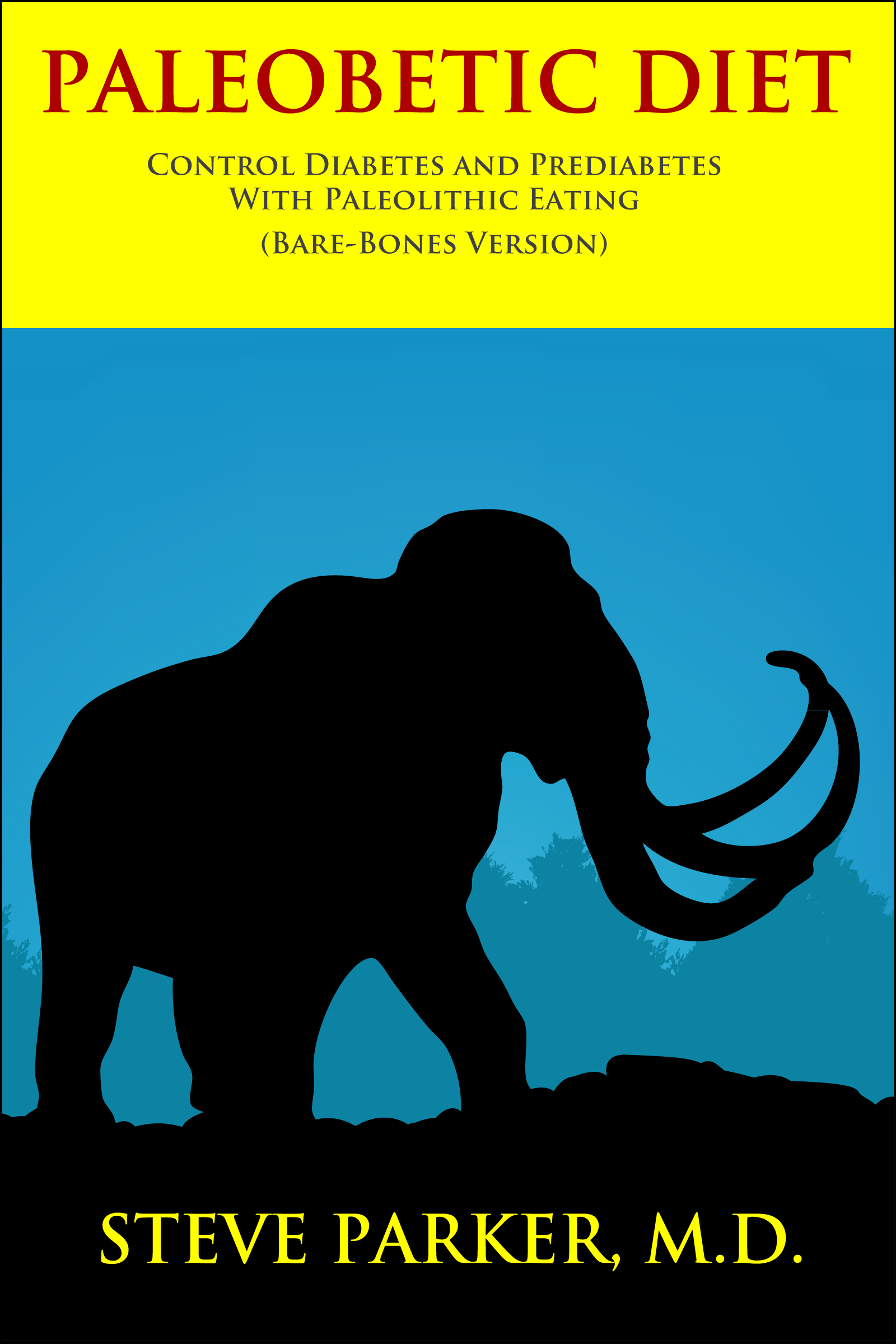
Paleobetic diet, Steve Parker MD,paleo diet, diabetic diet, diabetes

Cover designed by my 14-year-old son, Paul

Jane has been in the Clinical Nutrition field for decades. I don’t know her personally but we’ve exchanged a few emails lately. She graciously gave me permission to post her comments here. Anything in brackets below is what I added for clarification. Without further ado, here’s Jane:

***

I like to put fruits and vegetables in their proper categories. For example, avocados, tomatoes, olives, pumpkin, squash and peppers are all fruits.

As I said earlier, I discovered through observation in the early 80’s that diabetics could not eat fruit by itself, though fruit was always recommended as a stand-alone snack by the Am. Diabetic (and Dietetic) Assoc. You recommended that starchy vegs/fruits should be eaten with a protein or nuts, which is so invaluable to people, in general, diabetic or not.

In your general rec’s, there are 10 CHO’s [carbohydrate grams] AM, and Lunch/Dinner with 20 CHO’s [grams]. I’ve found that most people do better with equal amounts of protein at every meal. You mentioned later that if one is exercising, then increase the B’fast CHO’s, which I agree with. But, for the most part, I think people burn off the CHO’s during the day, no matter what they are doing. Plus, most people eat the next meal (after b’fast) within 4 hrs, whereas lunch and dinner are usually spaced more at 5 – 6 hrs. I think CHO’s should be highest at breakfast for most diabetics, as long as it is balanced with enough protein. Proteins at the next two meals could be higher. I disagree with fruits being eaten at dinner, as I think this spikes the BG for the next morning fasting. The type and amount is, of course, key.

Diet sodas. None! I believe that the sweet taste of any artificial sweetener will provoke some kind of response in the brain/body. There are mixed studies as far as insulin response, but French researchers performed a 14 yr study which showed an association between diet soda intake and Type 2 Diabetes. If your patients drank 2 sodas/day, that’s 14 per week…….too many!! I’m not a purist, by any means, but to be on the safe side, I’d stick with Paleo here……..no artificial anything.

Hypoglycemia. Again, I’m not in the ADA camp on this one either. I do believe in emergencies, (below 60 mg/dl [3.3 mmol/l]) the diabetic must ingest glucose, but only about 10 gms is usually needed, for the most part, if the BG is not too low. (Under 45 mg/dl [2.5 mmol/l], then 20 gms is warranted.) If between 60 – 70, I’d do a combo of protein and sugar. (1/2 cup OJ [120 ml orange juice] with 4 almonds or 3 glucose tabs with 4 almonds.) I’ve witnessed diabetics sucking on hard candies too many times per week, which does bring up the glucose, but to the detriment of hormonal balance. I try to prevent this yo-yoing syndrome that goes on…..it can’t be good long-term.

You advised to check BG [blood glucose] 4 – 6 times per day before meals and at bedtime. I think two of those should be 2 hr. post-prandials, which may give them better control overall.

Your meal ideas use too much of the same foods, like onions and tomatoes. Cruciferous vegetable are all over the place, which may be detrimental to those with Hypothyroidism. I’d include different vegetables at every meal to give the diabetic more option ideas.

***

Thank you, Jane!

Regarding 10 grams of digestible carbohydrate at breakfast and 20 g at lunch and dinner (evening meal): This is in deference to the dawn phenomenon, in which blood sugars tend to run higher between 6 and 9 am, roughly. I need to do some research to see how commonly this occurs. Adding carbs on top of dawn phenomenon may not be a great idea. I believe this is why Dr. Bernstein’s Diabetes Solution provides fewer carbs for breakfast than for lunch and dinner. If you don’t experience dawn phenomenon, it wouldn’t matter if you ate 20 or 30 g of digestible carb for breakfast.

I’ve asked for feedback on the Paleobetic Diet, hoping to make it better in future versions. If you give me comments via email, rest assured I will never publish them anywhere without your permission.

—Steve

New Type 2 Diabetics Not Hurt With Moderate Fruit Consumption


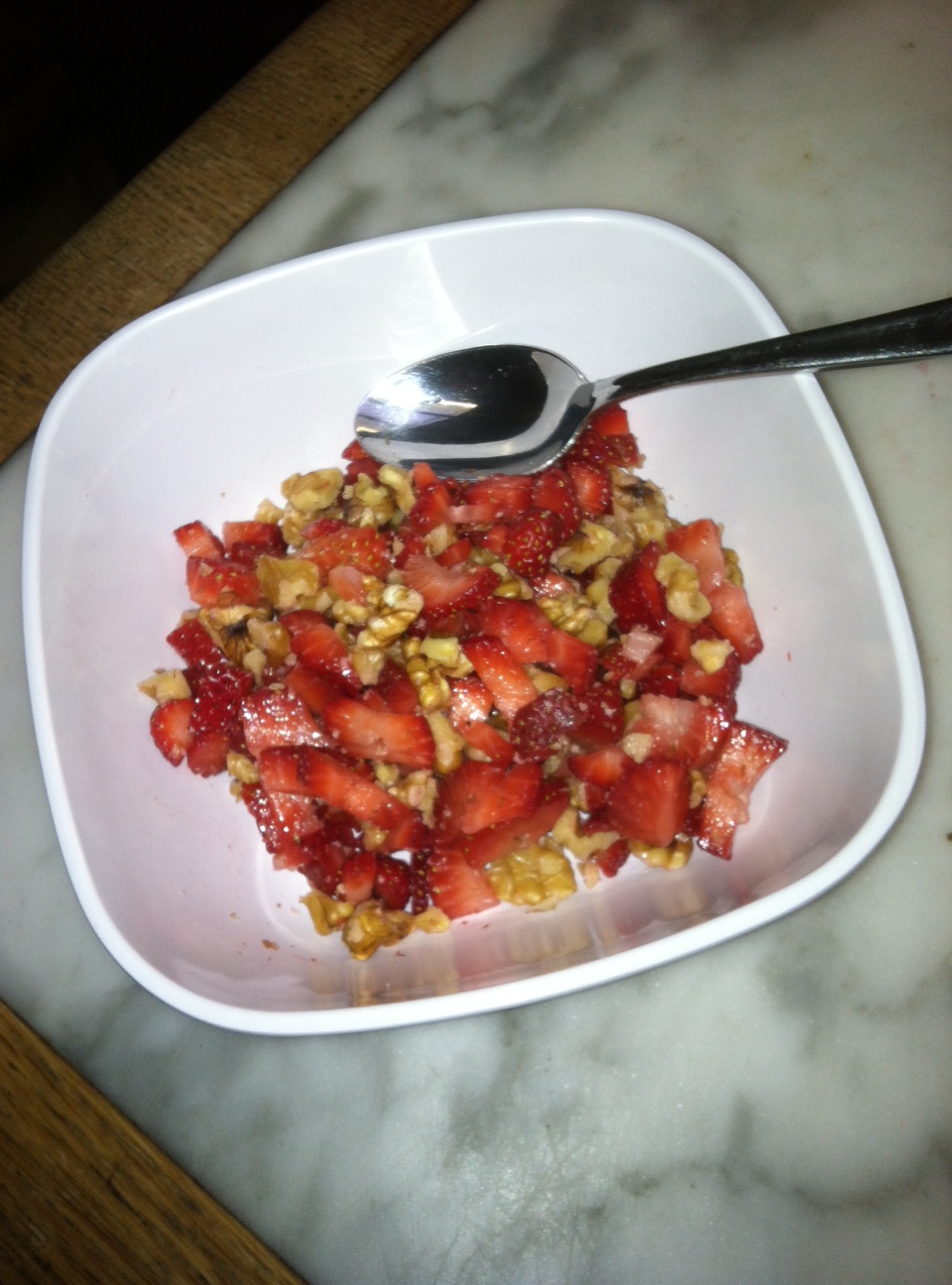
paleobetic diet, breakfast, paleo diet

Brian’s Berry Breakfast: simply strawberries and walnuts

…according to an article in Nutrition Journal. (BTW, Shelby Hughes,with Type 1 diabetes, mentioned in a recent interview that she eats a fair amount of fruit.) The Nutrition Journal study participants were newly diagnosed type 2 diabetics. This is interesting research because we’ve often assumed that the sugar in fruits would raise blood sugar too high, leading to recommendations to avoid fruits, or at least limit them to one piece daily.

Of course, fruit in an integral component of most paleo diets.

The Well blog at the New York Times covered the story.  You’ll likely find the comments illuminating.  Also see this Diabetes Self-Managment article. I’ll read the original research report when time allows.

—Steve