Monthly Archives: June 2013

T1 Shelby Hughes Is Thriving on the Paleo Diet

Dietitian Kelly Schmidt posted an interview with Shelby at her blog. Shelby seems to tolerate a fair amount of carbohydrate (fruit and starchy vegetables) although I don’t know how much insulin she’s taking to process them. Her case of diabetes is a little unusual since she wasn’t diagnosed until age 39. I wonder if she has some residual beta cell insulin production.

Another thing I like about this story is that it illustrates that a paleo diet doesn’t have to be based on meat.

Read the rest.

Exercise and the PWD (Person With Diabetes)

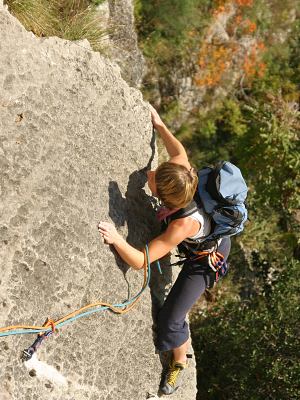
hypoglycemia, woman, rock-climbing

Hypoglycemia now would be a tad inconvenient

People with diabetes may have specific issues that need to be taken into account when exercising.

DIABETIC RETINOPATHY

Retinopathy, an eye disease caused by diabetes, increases risk of retinal detachment and bleeding into the eyeball called vitreous hemorrhage. These can cause blindness. Vigorous aerobic or resistance training may increase the odds of these serious eye complications. Patients with retinopathy may not be able to safely participate. If you have any degree of retinopathy, avoid the straining and breath-holding that is so often done during weightlifting or other forms of resistance exercise. Vigorous aerobic exercise may also pose a risk. By all means, check with your ophthalmologist first. You don’t want to experiment with your eyes.

DIABETIC FEET AND PERIPHERAL NEUROPATHY

Diabetics are prone to foot ulcers, infections, and ingrown toenails, especially if peripheral neuropathy (numbness or loss of sensation) is present. Proper foot care, including frequent inspection, is more important than usual if a diabetic exercises with her feet. Daily inspection should include the soles and in-between the toes, looking for blisters, redness, calluses, cracks, scrapes, or breaks in the skin. See your physician or podiatrist for any abnormalities. Proper footwear is important (for example, don’t crowd your toes). Dry feet should be treated with a moisturizer regularly. In cases of severe peripheral neuropathy, non-weight-bearing exercise (e.g., swimming or cycling) may be preferable. Discuss with your physician or podiatrist.

HYPOGLYCEMIA

Low blood sugars are a risk during exercise if you take diabetic medications in the following classes: insulins, sulfonylureas, meglitinides, and possibly thiazolidinediones and bromocriptine.

Hypoglycemia is very uncommon with thiazolidinediones. Bromocriptine is so new (for diabetes) that we have little experience with it; hypoglycemia is probably rare or non-existent. Diabetics treated with diet alone or other medications rarely have trouble with hypoglycemia during exercise.

Always check your blood sugar before an exercise session if you are at risk for hypoglycemia. Always have glucose tablets, such as Dextrotabs, available if you are at risk for hypoglycemia. Hold off on your exercise if your blood sugar is over 200 mg/dl (11.1 mmol/l) and you don’t feel well, because exercise has the potential to raise blood sugar even further early in the course of an exercise session.

As an exercise session continues, active muscles may soak up bloodstream glucose as an energy source, leaving less circulating glucose available for other tissues such as your brain. Vigorous exercise can reduce blood sugar levels below 60 mg/dl (3.33 mmol/l), although it’s rarely a problem in non-diabetics.

The degree of glucose removal from the bloodstream by exercising muscles depends on how much muscle is working, and how hard. Vigorous exercise by several large muscles will remove more glucose. Compare a long rowing race to a slow stroll around in the neighborhood. The rower is strenuously using large muscles in the legs, arms, and back. The rower will pull much more glucose out of circulation. Of course, other metabolic processes are working to put more glucose into circulation as exercising muscles remove it. Carbohydrate consumption and diabetic medications are going to affect this balance one way or the other.

If you are at risk for hypoglycemia, check your blood sugar before your exercise session. If under 90 mg/dl (5.0 mmol/l), eat a meal or chew some glucose tablets to prevent exercise-induced hypoglycemia. Re-test your blood sugar 30–60 minutes later, before you exercise, to be sure it’s over 90 mg/dl (5.0 mmol/l). The peak effect of the glucose tablets will be 30–60 minutes later. If the exercise session is long or strenuous, you may need to chew glucose tablets every 15–30 minutes. If you don’t have glucose tablets, keep a carbohydrate source with you or nearby in case you develop hypoglycemia during exercise.

Re-check your blood sugar 30–60 minutes after exercise since it may tend to go too low.

If you are at risk of hypoglycemia and performing moderately vigorous or strenuous exercise, you may need to check your blood sugar every 15–30 minutes during exercise sessions until you have established a predictable pattern. Reduce the frequency once you’re convinced that hypoglycemia won’t occur. Return to frequent blood sugar checks when your diet or exercise routine changes.

These general guidelines don’t apply across the board to each and every diabetic. Our metabolisms are all different. The best way to see what effect diet and exercise will have on your glucose levels is to monitor them with your home glucose measuring device, especially if you are new to exercise or you work out vigorously. You can pause during your exercise routine and check a glucose level, particularly if you don’t feel well. Carbohydrate or calorie restriction combined with a moderately strenuous or vigorous exercise program may necessitate a 50 percent or more reduction in your insulin, sulfonylurea, or meglitinide. Or the dosage may need to be reduced only on days of heavy workouts. Again, enlist the help of your personal physician, dietitian, diabetes nurse educator, and home glucose monitor.

Finally, insulin users should be aware that insulin injected over muscles that are about to be exercised may get faster absorption into the bloodstream. Blood sugar may then fall rapidly and too low. For example, injecting into the thigh and then going for a run may cause a more pronounced insulin effect compared to injection into the abdomen or arm.
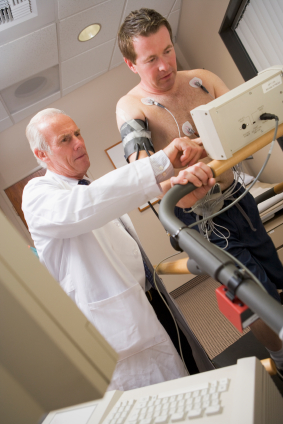
medical clearance, treadmill stress test

This treadmill stress test is looking for hidden heart disease

AUTONOMIC NEUROPATHY

This issue is pretty technical and pertains to function of automatic, unconscious body functions controlled by nerves. These reflexes can be abnormal, particularly in someone who’s had diabetes for many years, and are called autonomic neuropathy. Take your heart rate, for example. It’s there all the time, you don’t have to think about it. If you run to catch a bus or climb two flights of stairs, your heart rate increases automatically to supply more blood to exercising muscles. If that automatic reflex doesn’t work properly, exercise is more dangerous, possibly leading to passing out, dizziness, and poor exercise tolerance. Other automatic nerve systems control our body temperature regulation (exercise may overheat you), stomach emptying (your blood sugar may go too low), and blood pressure (it could drop too low). Only your doctor can tell for sure if you have autonomic neuropathy.

Steve Parker, M.D.

History of the “Modern” Paleo Diet Movement

Here’s a timeline, certainly not comprehensive, but probably more than enough to bore you. I’m trying to hit the major developments.

  • 1939 – Nutrition and Physical Degeneration by Weston A. Price’s is published.
  • 1973 – Stephen Boyden’s “Evolution and Health” is published in The Ecologist.
  • 1975 – The Stone Age Diet: Based On In-Depth Studies of Human ecology and the Diet of Man is self-published by Walter L. Voegtlin, M.D.
  • January 1985 – “Paleolithic Nutrition. A consideration of its nature and current implications” by S. Boyd Eaton and M. Konner in the New England Journal of Medicine.
  • 1987 – Stone Age Diet by Leon Chaitow (London: Optima).
  • 1988 – The Paleolithic Prescription: A Program of Diet and Exercise and a Design for Living by S. Boyd Eaton, M. Shostak, and M. Konner.
  • January 1997 – Paleodiet.com established by Don Wiss.
  • March 1997 – The Paleodiet listserv established by Dean Esmay and Donn Wiss.
  • April 1997 – The Evolutionary Fitness online discussion list is created. Art DeVany is its anchor and Tamir Katz is a regular participant.
  • April 1997 – Jack Challem published the article “Paleolithic Nutrition: Your Future Is In Your Dietary Past.”
  • 1999 – Neanderthin by Ray Audette is published.
  • November 2001 – Evfit.com established by Keith Thomas (“Health and Fitness in an Evolutionary Context”).
  • December 2001 – The Paleo Diet by Loren Cordain, Ph.D., is published.
  • April 2001 – Wikipedia’s page on Palaeolithic diet is created.
  • 2005 – Art DeVany’s first paleo blog.
  • 2006 – Exuberant Animal by Frank Forencich is published.
  • 2008 – Art DeVany’s Las Vegas seminar.
  • 2009 – The Primal Blueprint by Mark Sisson is published. Art DeVany announces ‘The New Evolution Diet’.
  • 8 January 2010 – The New York Times features the paleo lifestyle in its ‘fashion’ pages.
  • 26 February 2010 – McLean’s (Canada) publishes a general audience review of the paleo movement.
  • February 2010 – Food and Western Disease by Staffan Lindeberg is published.
  • March 2010 – Paleolithic lifestyle page is created on Wikipedia.
  • September 2010 – The Paleo Solution: The Original Human Diet by Robb Wolf is published.

Contributors to this timeline include Keith Thomas, Paul Jaminet, and Ray Audette (the latter two via blog comments). Any errors are mine.

Of the folks above, my major influences have been Cordain, Eaton, and Konner.

What would you add? I’m tempted to include the Jaminet’s book (Perfect Health Diet) and Dr. Emily Deans’ blog. Paul Jaminet mentioned Jan Kwasniewski’s Optimal Diet of 1990 (or was it Optimal Nutrition?), but is that just “the Polish Atkins,” as some say? Very high fat.

—Steve

QOTD: Yoni Freedhoff, M.D., on the Paleo Diet

Of course even were the narrative totally BS, I’d venture most folks’ paleo diets are exceedingly healthful given the emphasis on actual cooking.

Yoni Freedhoff, M.D.

Conner Middelmann Whitney: What About Artificial Sweeteners?

Conner, a nutritionist, has an article up at Psychology Today. She doesn’t have too much heartburn about my allowance of stevia in the Parker paleo diet. For example, she writes:

Stevia, a non-caloric sweetener derived from the stevia rebaudiana plant, is a useful sugar alternative, if you don’t mind its slightly metallic, licorice-like taste. Choose minimally processed stevia (green-leaf liquid and powder) rather than the heavily processed white powder. (Stevia processing involves dozens of steps and lots of non-nutritive chemicals to conver tit form green leaf to white powder.)

***

So, rather than search for the “perfect” sweetener, a better use of our creative energy might be to figure out how to lower our desire for sweet tastes and seek satisfaction from other flavors.

Agreed.

She favors honey when she uses a sweetener. But many diabetics will have unacceptable blood sugar spikes if they eat too much honey.

Much of her article is about sucralose (Splenda).

Read the whole enchilada.

What’s This Diet Doctor Look Like?

I don’t post many pictures of myself here. It’s appropriate for you to wonder what a “diet doctor” looks like. I tell anyone interested about the benefits of weight management and exercise, and how to do it. I practice what I preach, mostly. At a shade under 6 feet tall (183 cm), I weigh 170 lb (77.3 kg).

—Steve

Steve Parker MD

Steve Parker and son Paul in a Boy Scout overnight backpacking trip on the Mogollon Rim in Arizona

Inuits of Northern Canada Undergoing Rapid Diet Transition

…and it’s not in a healthy direction, I suspect. Details are at Nutrition Journal.

But, Doc, My Back and Joints Hurt Too Much To Exercise!

EXERCISE WITH JOINT AND BACK PAIN

Many of my obese patients have chronic low back and joint pains.  Painful lower limb joints and chronic or recurrent back pain are an exercise barrier to many people, whether skinny or fat. Those affected should consult a physician for a diagnosis, treatment, and advice on appropriate physical activity. If the physician isn’t sure about an exercise prescription, consultation with an orthopedist, physiatrist, or physical therapist should be helpful. Generally, weight-bearing on bad joints should be minimized by doing pool calisthenics, stationary cycling, swimming, etc. Use your imagination. Particularly bothersome joints may not tolerate exercise, if ever, until weight is lost by some method other than exercise. (Exercise by itself is typically an ineffective way to lose major weight.)

Light to moderate exercise actually reduces the pain and disability of knee degenerative arthritis. The effect is modest and comes with a small risk of injury such as bone fracture, cartilage tears, arthritis flare, and soft tissue strain.

“Scientific American” Pooh-Pooh’s the Paleo Diet

Click through for details. The writer mentions our pals Marlene Zuk and Christine Warinner. A snippet:

The Paleo diet not only misunderstands how our own species, the organisms inside our bodies and the animals and plants we eat have evolved over the last 10,000 years, it also ignores much of the evidence about our ancestors’ health during their—often brief—individual life spans (even if a minority of our Paleo ancestors made it into their 40s or beyond, many children likely died before age 15). In contrast to Grok, neither Paleo hunter–gatherers nor our more recent predecessors were sculpted Adonises immune to all disease.

Were Hominins Eating Grains 3 Million Years Ago?

A guest blogger at Discover magazine tackles some recent evidence that our hominin ancestors ate more grain than we might think. Her conclusion:

So while there remains little doubt that many modern humans eat too much sugar and processed foods, these studies show that identifying a particular “paleo” diet is impossible. Researchers are just beginning to understand what ancient humans ate, and these recent studies show that grasses and grains have been part of the human diet for millions of years.

Read the rest. You may find the comments interesting.