Category Archives: Diabetic Diet

Is Insulin Making You Hungry All the Time?

So easy to over-eat!

So easy to over-eat! Is it the insulin release?

No, insulin probably isn’t the cause of constant hunger, according to Dr. Stephan Guyenet. Dr. G gives 11 points of evidence in support of his conclusion. Read them for yourself. Here are a few:

  • multiple brain-based mechanisms (including non-insulin hormones and neurotransmitters) probably have more influence on hunger than do the pure effect of insulin
  • weight loss reduces insulin levels, yet it gets harder to lose excess weight the more you lose
  • at least one clinical study (in 1996) in young healthy people found that foods with higher insulin responses were linked to greater satiety, not greater hunger
  • billions of people around the world eat high-carb diets yet remain thin

An oft-cited explanation for the success of low-carbohydrate diets involves insulin, specifically the lower insulin levels and reduced insulin resistance seen in low-carb dieters. They often report less trouble with hunger than other dieters.

Here’s the theory. When we eat carbohydrates, the pancreas releases insulin into the bloodstream to keep blood sugar levels from rising too high as we digest the carbohydrates. Insulin drives the bloodstream sugar (glucose) into cells to be used as energy or stored as fat or glycogen. High doses of refined sugars and starches over-stimulate the production of insulin, so blood sugar falls too much, over-shootinging the mark, leading to hypoglycemia, an undeniably strong appetite stimulant. So you go back for more carbohydrate to relieve the hunger induced by low blood sugar. That leads to overeating and weight gain.

Read Dr. Guyenet’s post for reasons why he thinks this explanation of constant or recurring bothersome hunger is wrong or too simplistic. I agree with him.

The insulin-hypoglycemia-hunger theory may indeed be at play in a few folks. Twenty years ago, it was popular to call this “reactive hypoglycemia.” For unclear reasons, I don’t see it that often now. It was always hard to document that hypoglycemia unless it appeared on a glucose tolerance test.

Regardless of the underlying explanation, low-carb diets undoubtedly are very effective in many folks. And low-carbing is what I always recommend to my patients with carbohydrate intolerance: diabetics and prediabetics.

Steve Parker, M.D.

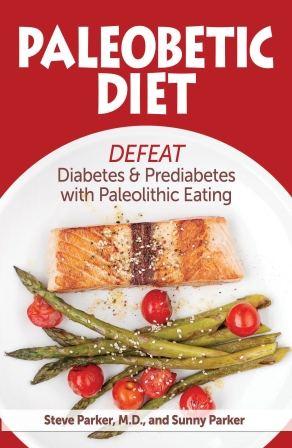
front cover

front cover

One Man’s N=1 Experiment Comparing Lower- Versus Moderate-Carb Diet For His Diabetes

Use the search box to find the recipe for this low-carb avocado chicken soup

Use the search box to find the recipe for this low-carb avocado chicken soup

Read his amazingly detailed post at Diatribe. Adam, who has type 1 diabetes, figured out during his college days that eating no more that 30 grams of carbs at a time was “a complete gamechanger” for improving his blood sugars. He experimented on himself to see if there was a difference between his usual lower-carb diet (146 grams/day) versus 313 grams/day.

A quote:

To my utter surprise, both diets resulted in the same average glucose and estimated A1c. But there were major tradeoffs:

The higher-carb, whole-grain diet caused four times as much hypoglycemia, an extra 72 minutes per day spent high, and required 34% more insulin. (A less healthy high-carb diet would have been far worse.)

Doubling my daily carbs also added much more effort and produced far more feelings of exhaustion and diabetes failure. It was not fun at all, and the added roller coaster, or glycemic variation, from all the extra carbs made it more dangerous.

See more at: http://diatribe.org/low-carb-vs-high-carb-my-surprising-24-day-diabetes-diet-battle#sthash.pZOgCWVl.dpuf

I think the lower-carb approach is healthier over the long run. Check with your own healthcare provider before making any drastic change in your diabetic diet.

Steve Parker, M.D.

Paleobetic Diet-FrontCover_300dpi_RGB_5.5x8.5

Long-Term T2 Diabetes Diet Trial: Low-Carb Edges Out High-Carb Eating

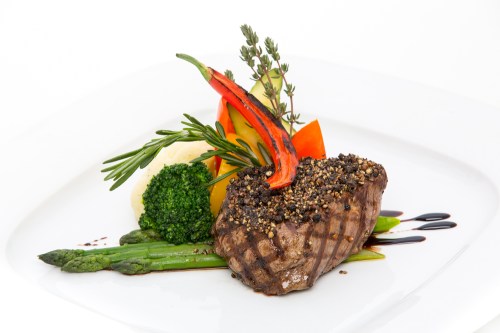
Paleo-compliant low-carb meal. I almost used this for my Paleobetic Diet book cover.

Paleo-compliant low-carb meal. I almost used this for my Paleobetic Diet book cover.

This is an important report because most diet studies last much less than one year. Details are in the American Journal of Clinical Nutrition.

Study participants were 115 obese (BMI 35) type 2 diabetics with hemoglobin A1c averaging 7.3%. Average age was 58. So pretty typical patients, although perhaps better controlled than average.

They were randomized to follow for 52 weeks either a very low-carbohydrate or a high-carbohydrate “low-fat” diet. Both diets were designed to by hypocaloric, meaning that they provided fewer calories than the patients were eating at baseline, presumably with a goal of weight loss. The article abstract implies the diets overall each provided the same number of calories. They probably adjusted the calories for each patient individually. (I haven’t seen the full text of the article.) Participants were also enrolled in a serious exercise program: 60 minutes of aerobic and resistance training thrice weekly.

Kayaking is an aerobic exercise if done seriously

Kayaking is an aerobic exercise if done seriously

The very low-carb diet (LC diet) provided 14% of total calories as carbohydrate (under 50 grams/day). The high-carb diet (HC diet) provided 53% of total calories as carbohydrate and 30% of calories as fat. The typical Western diet has about 35% of calories from fat.

Both groups lost weight, about 10 kg (22 lb) on average. Hemoglobin A1c, a reflection of glucose control over the previous three months, dropped about 1% (absolute reduction) in both groups.

Compared to the HC diet group, the LC dieters were able to reduce more diabetes medications, lower their triglycerides more, and increase their HDL cholesterol (“good cholesterol”). These triglyceride and HDL changes would tend to protect against heart disease.

SO WHAT?

You can lose weight and improve blood sugar control with reduced-calorie diets—whether very low-carb or high-carb—combined with an exercise program. No surprise there.

I’m surprised that the low-carb group didn’t lose more weight. I suspect after two months of dieting, the low-carbers started drifting back to their usual diet which likely was similar to the high-carb diet. Numerous studies show superior weight loss with low-carb eating, but those studies are usually 12 weeks or less in duration.

diabetic diet, low-carb diet, paleobetic diet

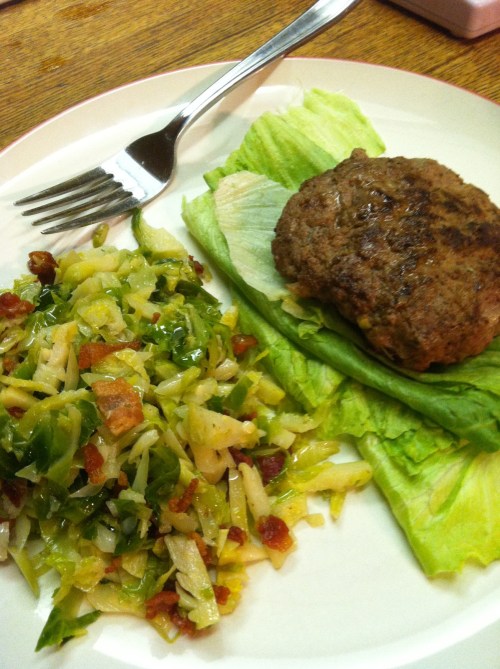
Low-Carb Brian Burger and Bacon Brussels Sprouts (in the Paleobetic Diet)

The low-carb diet improved improved lipid levels that might reduce risk of future heart disease, and allowed reduction of diabetes drug use. Given that we don’t know the long-term side effects of many of our drugs, that’s good.

If I have a chance to review the full text of the paper, I’ll report back here.

Steve Parker, M.D.

Reference: Jeannie Tay, et al. Comparison of low- and high-carbohydrate diets for type 2 diabetes management: a randomized trial. First published July 29, 2015, doi: 10.3945/​ajcn.115.112581    Am J Clin Nutr

Which Diet for a 41-Year-Old Asian Indian With Prediabetes?

The CulinaryRx blogger at MedPageToday asked two physicians what diet modifications they’d recommend for a 41-year-old Asian-Indian man with prediabetes. (To read the article you may need to do a free sign-up.)

The moderator asked his experts twice whether carbohydrate restriction is important, and never got a straight answer. These experts must not think it’s important since they push legumes, lentils, fruits, and whole grains. Dr. Nadeau said he believes there is no specific diet for folks with diabetes. I almost fell off my chair when I read one comment recommending cookies and sweets, because they’re traditional. They also recommend low glycemic load, nuts, higher protein consumption, vegetables, and “good oils” like olive oil (ghee not even  mentioned).

Read this blog post for prior comments that include advice from possible clinicians.

I’m confident that Dr. Ronesh Sinha in Silicon Valley, California, would disagree with the advice of MedPageToday’s experts. Dr. Sinha would likely recommend limiting digestible carbohydrates to 50–150 grams/day as the most important dietary step.

I’m still looking for clinical studies of various diets for South Asians with prediabetes and diabetes.

Steve Parker, M.D.

Short-Term Paleo Diet Improves Glucose Control in Obese Type 2 Diabetes (the Masharani Study)

UCSF is here

UCSF is here

A three-week Paleolithic-style diet improved blood sugars and lipids in obese type 2 diabetics, according to researchers at the University of California—San Francisco. This is the Lynda Frassetto study I’ve been waiting over a year for. The first named author is U. Masharani, so I’ll refer to this work in the future as the Masharani study. Sorry, Lynda.

To understand the impact of this study, you need to know about a blood test called fructosamine, which reflects blood sugar levels over the preceding 2–3 weeks. You may already be familiar with a blood test called hemoglobin A1c: it tells us about blood sugars over the preceding three months. Blood glucose binds to proteins in our blood in a process called glycation. The higher the blood glucose, the more bonding. Glucose bound to hemoglobin molecules is measured in HgbA1c. Glucose bound to plasma proteins (predominantly albumin) is measured as fructosamine. It probably has nothing to do with fructose. Fructosamine is a generic name for plasma ketoamines.

If you’re doing a diabetic diet study over over 2–3 weeks, as in the report at hand, changes in glucose control will mostly be detected in fructosamine rather than HgbA1c levels.

How Was the Research Done?

Twenty-five obese diabetics in the San Francisco Bay area were randomly assigned to either a paleo-style diet or one based on American Diabetes Association (ADA) guidelines. They followed the diets for three weeks, with various measurements taken before and after intervention.

Participants were aged 50-69; you have to guess the sex breakdown. Average body mass index was 34. Over half (63%) were White/European American; there were three each of Asian, African American, and Hispanic ethnicity. They had normal blood pressures and diabetes was well controlled, with hemoglobin A1c’s around 7% and fructosamine levels close to normal. Four subjects were on no diabetes medications; 14 were taking metformin alone, five were on metformin and a sulfonylurea, one was on long-acting insulin and a sulfonylurea. No drug dosages were changed during the study.

Both intervention diets were designed for weight maintenance, i.e., avoidance of weight loss or gain. If participants lost weight, they were instructed to eat more. All food was prepared and provided for the participants. Three meals and three snacks were provided for daily consumption.

Fourteen subjects completed the paleo diet intervention. They ate lean meats, fruits, vegetables, tree nuts, poultry, eggs, canola oil, mayonnaise, and honey. No added salt. No cereal grains, dairy, legumes, or potatoes. Calorie percentages from protein, fat, and carbohydrate were 18%, 27%, and 58%, respectively. Compared to the ADA diet, the paleo diet was significantly lower in saturated fat, calcium, and sodium (under half as much), while higher in potassium (twice as much). These dieters eased into the full paleo diet over the first week, allowing bodies to adjust to higher fiber and potassium consumption. The paleo diet had about 40 grams of fiber, over twice as much as the ADA diet.

[I wonder why they chose canola over other oils.]

Ten subjects completed the ADA diet, which included moderate salt, low-fat dairy, whole grains, rice, bread, legumes, and pasta. Calorie percentages from protein, fat, and carbohydrate were 20%, 29%, and 54%, respectively (very similar to the paleo diet). I don’t have any additional description for you. I assume it included meat, poultry, eggs, and fruit.

Diet compliance was confirmed via urine measurements of sodium, potassium, pH, and calcium.

What Did the Researchers Find?

Both groups on average lost about 2 kg (4-5 lb).

Compared to their baseline values, the paleo group saw reductions in total cholesterol, HDL cholesterol, LDL cholesterol, HgbA1c (down 0.3% absolute reduction), and fructosamine. Fructosamine fell from 294 to 260 micromole/L. [The normal non-diabetic range for fructosamine is 190-270 micromole/L.]

Compared to their baseline values, the ADA diet group saw reductions in HDL cholesterol and HgbA1c (down 0.2% absolute reduction) but no change in fructosamine, total cholesterol, and LDL cholesterol.

Comparing the groups to each other, the difference in fructosamine change was right on the cusp of statistical significance at p = 0.06.

Within each group, insulin resistance trended down, but didn’t reach statistical significance. However, when they looked at the folks who were the most insulin resistant, only the paleo dieters improved their resistance. By the way, insulin resistance was measure via euglycemic hyperinsulinemic clamp instead of the short-cut HOMA-IR method.

Blood pressures didn’t change.

The authors don’t mention hypoglycemia at all, nor alcohol consumption.

They note that some of the paleo dieters complained about the volume of food they had to eat.

Errata

I found what I think are a couple misprints. Table 1 has incorrect numbers for the amount of sodium and potassium in the ADA diet. See the text for correct values. Table 2 give fructosamine values in mg/dl; they should be micromoles/L.

Final Thoughts

This particular version of the paleo diet indeed seems to have potential to help control diabetes in obese type 2’s, perhaps even better than an ADA diet, and despite the high carb content. Obviously, it’s a very small study and I’d like to see it tested in a larger population for several months, and in type 1 diabetics. But it will be years, if ever, before we see those research results. Diabetics alive today have to decide what they’ll eat tomorrow.

I wish the researchers had explained why they chose their paleo diet macronutrient breakdown: calorie percentages from protein, fat, and carbohydrate were 18%, 27%, and 58%, respectively. Perhaps they were trying to match the ratios of the ADA diet. But from what I’ve read, the average ancestral paleo diet carbohydrate energy percentage is 30-35%, not close to 60%. My experience is that reducing carb calorie consumption to 30% or less helps even more with glucose control. Reducing carbs that low in this study would have necessitated diabetes drug adjustments and increased the risk of hypoglycemia.

The authors wonder if the high fiber content of the paleo diet drove the lowered glucose levels.

High HDL cholesterol is thought to be protective against coronary artery disease and other types of atherosclerosis. Both diet groups here saw reductions in HDL. That’s something to keep an eye on.

The ADA diet group saw a drop in HgbA1c but not fructosamine. I can’t explain how HgbA1c goes down over three weeks without a change in fructosamine level.

You have to wonder if the paleo diet results would have been more impressive if the test subjects at baseline had been sicker, with poorly controlled blood pressures and HgbA1c’s of 9% or higher. And it sounds like some of these folks would have lost weight if not forced to eat more. The paleo diet is more satiating than some.

The article was well-written and a pleasure to read, in contrast to some I’ve suffered through recently.

Steve Parker, M.D.

Reference: Masharani, U., et al. Metabolic and physiologic effects from consuming a hunter-gatherer (Paleolithic)-type diet in type 2 diabetes. European Journal of Clinical Nutrition, advance online April 1, 2015. doi: 10.1038/ejcn.2015.39


Why Do Diabetics Resist the Paleo Diet?

Dr. Ernie Garcia (MD) posted a passionate essay about his difficulty getting his patients with diabetes to follow a carbohydrate-restricted Paleolithic diet. He makes a good case for carbohydrate addiction. A few quotes:

Today I saw a lady at my office. Fairly typical middle-aged, over weight female with poorly controlled diabetes. She recently started on an insulin pump but her glucose control is no better at all. I had a suspicion why, and again started to question the details of what she eats. Of course, she eats carb after carb after carb. Whole wheat this, and low fat that. She has tried to cut the carbs in the past, and actually had pretty decent success, but quickly falls back into your carbilicious ways. Why? Why go back when a change in diet shows clear improvement in her sugars?

*   *   *

What do addicts do? They generally know what they do is bad for them, and they have periods of clarity where they do better. Eventually though, the pull of their drug of choice draws them back in. Or, they slip up and use just a little and BAM…right back to square one. They feel shame for their addiction, people look down upon them for it, and they wish so badly they could make a permanent change, but they always fall back into old habits. Now, imagine a heroin addict who is advised to control the addition by sticking with “moderation” because of course, everything is good in moderation right?

Another issue that type 2 diabetics have is that they’ve been eating copious carbohydrates for over 40 years. It’s hard to break any habit with that type of longevity. It doesn’t help that they’re immersed in a carb-centric culture.

RTWT.

Steve Parker, M.D.


What About Vegetarian Diets for Diabetes?

low-carb diet, spaghetti squash, paleobetic diet, diabetic diet

The spaghetti squash at top is related to pumpkins and zucchini

I was surprised to learn that well-known diabetes writer David Mendosa (Type 2 DM) has switched from a very low-carb diet to a low-carb vegetarian diet, eating no more than 50 grams/day of carbohydrate. Why?

For me the issue is that I don’t want to be responsible for harming sentient beings as much as I can avoid it while still following a healthy diet.

I can respect that. I’m sure he’s monitoring the effects of the diet on his blood sugars and weight. Probably his blood lipids, too.

It sounds like all David had to do was drop fish from his prior diet. He still eats eggs (whites only?), cheese, and full-fat yogurt, so I’d call him a lacto-ovo-vegetarian.

If you’re already convinced that the Paleolithic diet is the best one for people with diabetes, read no further.

What Is a Vegetarian Diet?

From UpToDate.com:

Vegetarian diets vary considerably depending on the degree of dietary restrictions. According to the strictest definition, a vegetarian diet consists primarily of cereals, fruits, vegetables, legumes, and nuts; animal foods, including milk, dairy products, and eggs generally are excluded. Several less restrictive vegetarian diets may include eggs and dairy products. Some vegetarian diets may be grouped as follows:

●Macrobiotic — Vegetables, fruits, legumes, and seaweeds are included in the diet, while whole grains, especially brown rice, are also emphasized. Locally-grown fruits are recommended. Animal foods limited to white meat or white-meat fish may be included in the diet once or twice a week.
●Semi-vegetarian — Meat occasionally is included in the diet. Some people who follow such a diet may not eat red meat but may eat fish and perhaps chicken.
●Lacto-ovovegetarian — Eggs, milk, and milk products (lacto = dairy; ovo = eggs) are included, but no meat is consumed.
●Lactovegetarian — Milk and milk products are included in the diet, but no eggs or meat are consumed.
●Vegan — All animal products, including eggs, milk, and milk products, are excluded from the diet. Some vegans do not use honey and may refrain from using animal products such as leather or wool. They also may avoid foods that are processed or not organically grown.

A 2012 poll in the U.S. estimated that 7% of adults eat at least one meal a week that does not include meat, fish or poultry, 4% do not eat meat, fish, or poultry, and 1–2% do not eat meat, fish, poultry, dairy products, or eggs. Roughly 5% of individuals in the UK, Germany, and Australia describe themselves as vegetarian.

Switching to the paleo diet often leads to increased vegetable and fruit consumption

A low-carb diet can still have plenty of vegetables

Are Vegetarian Diets Safe?

Vegetarians need to be careful to get enough high-quality protein, iron, vitamin B12, vitamin D, and perhaps calcium. B12 comes only from animal products, as far as I know. You can make vitamin D by exposing your skin to sufficient sunlight. Some vegetarians will need to consult a dietitian to ensure adequate nutrition. (BTW, all my comment about vegetarian diets apply to adults only—I don’t treat children, so I’m not up-to-date on their nutritional needs.)

I’ve written about vegetarian diets for diabetes before: here and here. Dr. Michael Greger couldn’t convince Dr. Harriet Hall (or me) that we should avoid eating all animal products.

The Grashow Question

Someone claiming to be Charles Grashow left a comment on one of my blogs recently:

As I’ve posted before, this [vegetarian macrobiotic diet] took Insulin Dependent T2D [patients] OFF MEDS within 21 days!

Seems much better – but then again this diet is vegan not paleo!

http://www.hoajonline.com/internalmedicine/2052-6954/2/3
Ma-Pi 2 macrobiotic diet intervention during 21 days in adults with type 2 diabetes mellitus, Ghana 2011

http://www.nutritionandmetabolism.com/content/11/1/39
The effect of the macrobiotic Ma-Pi 2 diet vs. the recommended diet in the management of type 2 diabetes: the randomized controlled MADIAB trial

http://www.hindawi.com/journals/jnme/2012/856342/
Medium- and Short-Term Interventions with Ma-Pi 2 Macrobiotic Diet in Type 2 Diabetic Adults of Bauta, Havana

SO – my question is this. Why do you not recommend this type of diet instead? Or does it not fit into your paradigm?

I responded:

Charles, that macrobiotic Ma-Pi 2 diet looks like it has significant potential. I quickly scanned your first link only. For those not familiar with the diet, here’s a description form your first link:

“Vegetarian Ma-Pi 2 macrobiotic diet, designed especially by Mario Pianesi for treating diabetic patients. Total volume of the Ma-Pi 2 diet consisted of 40-50% whole grains (rice, millet and barley), 35-40% vegetables (carrots, savoy cabbage, cabbage, chicory, onions, red radish, parsley), and 8% legumes (adzuki beans, chickpeas, lentils, black beans). As a complement we used gomasio (roasted ground sesame seeds with unrefined sea salt), fermented products (miso, tamari, umeboshi) and seaweeds (kombu, wakame, nori). Bancha tea (theine-free green tea) was the main liquid diet.”

“The assayed Ma-Pi 2 diet is lower in energy than the traditional one recommended for diabetic patients, but safe, with adequate satiating effect due to the high fiber content, adequate in protein (12% of the total energy), with an acceptable amino acid score, low in fat (15% of the total energy), and high in complex carbohydrates (73%). The diet has a high antioxidant capacity and a high content of bioactive compounds with recognized functional properties (Table 2). Foods were elaborated by culinary macrobiotic specialists from UPM, Italy, and offered at the hospital during breakfast, lunch, dinner and snacks. Unfortunately, the variety of vegetables was restricted because of limited availability.”

I wonder if that would be deficient in vitamin B12.

It looks like it would be worth a try for a type 2 diabetic under medical supervision (risk of hypoglycemia). I’d like to try a few meals with those ingredients, some of which I’ve never heard of, prepared by someone who knows what they’re doing. Unless I missed it in the link, it might be hard for the average person to replicate that study diet. If I understood correctly, the study participants stayed in a hospital for three weeks and meals were prepared for them.

I don’t have time to hit the other links right now.

-Steve

My Current Stance on Vegetarian Diets For Diabetes

I say “current stance” because I’ll change my mind based on scientific evidence as it becomes available.

I’m not convinced that any of the vegetarian diets is clearly superior to the other available “diabetic diets” in terms of quality of life, longevity, and avoidance of diabetes complications.

We have some evidence that some vegetarian diets may help control diabetic blood sugars and help reduce the need for diabetes medications, at least short-term.

If my diabetic patients want to try a vegetarian diet, I have no objections as long as these criteria are met:

  • it’s a well-designed diet that provides adequate nutrition (which may require a dietitian consultation)
  • blood sugars, hemoglobin A1c, body weight, and blood lipids are monitored periodically
  • the patient is able and willing to self-monitor blood sugars fairly frequently
  • physician oversight, especially for those taking diabetes drugs

Vegetarian diets can be very high in carbohydrate content, which potentially could wreck blood sugar control. If that happens, consider a vegetarian diet with fewer starches and sugars.

Steve Parker, M.D.

Is a Vegan Diet Better Than Paleo for T2 Diabetes?

We don’t know yet because they’ve never been compared head-to-head.

paleo diet, Steve Parker MD, how to cook asparagus and Brussels sprouts

These might be on the vegan Ma-Pi 2 diet

What we do have is a specific vegan diet (Ma-Pi 2) compared to a low-fat diet in a study published by Nutrition & MetabolismCarbsane Evelyn dove into the study at her blog (recommended reading), or you can read the original research report yourself. Study subjects had fairly well-controlled type 2 diabetes and were elderly (66) and overweight (84 kg or 185 lb). The vegan diet was mostly whole grains, vegetables, legumes, and green tea.  The low-fat and vegan diets both probably supplied 200-300 calories/day fewer than what the subjects were used to: 1900 cals for men, 1700 for women. The study lasted only three weeks.

The vegan group ate 335 grams/day of carbohydrate compared to 235 grams in the low-fat group. In contrast, the Paleobetic Diet provides 60-80 grams/day of digestible carb and the Ketogenic Mediterranean Diet allows a max of 20-30 grams.

The vegans in the study at hand ate 15-20 more grams/day of fiber. High fiber intake is linked to better blood sugar control.

From the study abstract:

After correcting for age, gender, BMI at baseline, and physical activity, there was a significantly greater reduction in the primary outcomes fasting blood glucose and post-prandial blood glucose in those patients receiving the Ma-Pi 2 diet compared with those receiving the control diet. Statistically significantly greater reductions in the secondary outcomes, HbA1c, insulin resistance, total cholesterol, LDL cholesterol and LDL/HDL ratio, BMI, body weight, waist and hip circumference were also found in the Ma-Pi 2 diet group compared with the control diet group. The latter group had a significantly greater reduction of triglycerides compared with the Ma-Pi 2 diet group.

The take-home point for me is that overweight T2 diabetics can improve short-term diabetes numbers despite a high carbohydrate consumption if they restrict calories and eat the “right” carbs. Restrict calories enough—600/day?—and T2 diabetes might be curable

I’ve written before about vegetarian/vegan diets for diabetes. My patients are more resistant to vegan diets than they are to low-carb.

Paleobetic diet, low-carb breakfast

Not allowed not on the Ma-Pi 2 diet. Bacon, eggs, black coffee, and Cholula hot sauce. A caveman wouldn’t recognized any of this except for eggs.

I scanned the original report and don’t see any problems with Evelyn’s summary.

Steve Parker, M.D.

Listen to Low-Carb Diet Proponents Franziska Spritzler and Dr. Troy Stapleton

Who says low-carb paleo diets are mostly meat?

Who says low-carb paleo diets are mostly meat?

Jimmy Moore posted an interview with Dr. Troy Stapleton and Franziska Spritzler, R.D. These two wouldn’t consider themselves paleo diet gurus by any means. They advocate carbohydrate-restricted diets for management of blood sugars in diabetes, consistent with my approach in the Paleobetic Diet. Dr. Stapleton might argue I allow too many carbohydrates. By the way, he has type 1 diabetes; I’ve written about him before. Franziska is available for consultation either by phone, Skype, or in person.

Steve Parker, M.D.

Very-Low-Carb Diet Beats Medium-Carb ADA Diet in Type 2 Diabetes

Compared to a traditional American Diabetes Association diet, a very-low-carbohydrate ketogenic diet was more effective at controlling type 2 diabetes and prediabetes, according to University of California San Francisco researchers.

The debate about the best diet for people with diabetes will continue to rage, however. You’ll even find some studies supporting vegetarian diets. I’m still waiting for published results of the Frassetto group’s paleo diet trial.

Some non-starchy low-carb vegetables

Some non-starchy low-carb vegetables

Details

Thirty-four overweight and obese type 2 diabetics (30) and prediabetics (4) were randomly assigned to one of the two diets:

  1. MCCR: American Diabetes Association-compliant medium-carbohydrate, low-fat, calorie-resticted carb-counting diet. The goals were about 165 grams of net carbs daily, counting
    carbohydrates, an effort to lose weight by eating 500 calories/day less than needed for maintenance, and 45–50% of total calories from carbohydrate. Protein gram intake was to remain same as baseline. (Note that most Americans eat 250–300 grams of carb daily.)
  2. LCK: A very-low-carbohydrate, high-fat, non-calorie-restricted diet aiming for nutritional ketosis. It was Atkins-style, under 50 grams of net carbs daily (suggested range of 20–50 g). Carbs were mostly from non-starchy low-glycemic-index vegetables. Protein gram intake was to remain same as baseline.

Baseline participant characteristics:

  • average weight 100 kg (220 lb)
  • 25 of 34 were women
  • average age 60
  • none were on insulin; a quarter were on no diabetes drugs at all
  • most were obese and had high blood pressure
  • average hemoglobin A1c was about 6.8%
  • seven out of 10 were white

Participants followed their diets for three months and attended 13 two-hour weekly classes. Very few dropped out of the study.

Results

Average hemoglobin dropped 0.6% in the LCK group compared to no change in the MCCR cohort.

A hemoglobin A1c drop of 0.5% or greater is considered clinically significant. Nine in the LCK group achieved this, compared to four in the MCCR.

The LCK group lost an average of 5.5 kg (12 lb) compared to 2.6 kg (6 lb) in the MCCR. The difference was not statistically significant, but close (p = 0.09)

44% in the LCK group were able to stop one or more diabetes drugs, compared to only 11 % in the other group

31% in the LCK cohort were able to drop their sulfonylurea, compared to only 5% in the MCCR group.

By food recall surveys, both groups reported lower total daily caloric intake compared to baseline. The low-carbers ended up with 58% of total calories being from fat, a number achieved by reducing carbohydrates and total calories and keeping protein the same. They didn’t seem to increase their total fat gram intake;

The low-carbers apparently reduced daily carbs to an average of 58 grams (the goal was 20-50 grams).

There were no differences between both groups in terms of C-reactive protein (CRP), lipids, insulin levels, or insulin resistance (HOMA2-IR). Both groups reduced their CRP, a measure of inflammation.

LCK dieters apparently didn’t suffer at all from the “induction flu” seen with many ketogenic diets. They reported less heartburn, less aches and pains, but more constipation.

Hypoglycemia was not a problem.

If I recall correctly, the MCCR group’s baseline carb grams were around 225 g.

Bottom Line

Very-low-carb diets help control type 2 diabetes, help with weight loss, and reduce the need for diabetes drugs. An absolute drop of 0.6% in hemoglobin A1c doesn’t sound like much, translating to blood sugars lower by only 15–20 mg/dl (0.8–1 mmol/l). But remember the comparator diet in this study was already mildy to moderately carbohydrate-restricted. At least half of the type 2 diabetics I meet still tell my they don’t watch their carb intake, which usually means they’re eating around 250–300 grams a day. If they cut down to 58 grams, they most likely will see more than a 0.6% drop in hemoglobin A1c after switching to a very-low-carb diet.

If you’re developing a new diabetes drug that drops hemoglobin A1c by 0.6%, you’ll get FDA approval for effectiveness.

This is a small study, so it may not be reproducible in larger clinical trials and other patient populations. Results are consistent with several other similar studies I’ve seen, however.

Steve Parker, M.D.

Reference: Saslow, Laura, et al (including Stephen Phinney). A Randomized Pilot Trial of a Moderate Carbohydrate Diet Compared to a Very Low Carbohydrate Diet in Overweight or Obese Individuals with Type 2 Diabetes Mellitus or PrediabetesPLoS One. 2014; 9(4): e91027. Published online Apr 9, 2014. doi: 10.1371/journal.pone.0091027     PMCID: PMC3981696

PS: When I use “average” above, “mean” is often a more accurate word, but I don’t want to have to explain the differences at this time.

PPS: Carbsane Evelyn analyzed this study in greater detail that I did and came to different conclusions. Worth a read if you have an extra 15 minutes.