Posted onDecember 24, 2024|Comments Off on Peace on Earth, Good Will to All Men
From the Holy Bible (NIV), Matthew 22:36-40:
36 “Teacher, which is the greatest commandment in the Law?”
37 Jesus replied: “‘Love the Lord your God with all your heart and with all your soul and with all your mind.’ 38 This is the first and greatest commandment. 39 And the second is like it: ‘Love your neighbor as yourself.’[40 All the Law and the Prophets hang on these two commandments.”
Therapeutic exercise helps a little. But don’t expect a dramatic improvement, according to this 2023 study published at The Lancet Rheumatology. The benefits tend to accrue to patients who are in most pain and most physically impaired at baseline.
If you’re carrying a lot of excess weight, it only stands to reason that weight loss would take some stress off those worn-out joints. Let me help.
PFAS stands for per- and polyfluoroalkyl substances. These man-made and long-lasting chemicals are implicated in causation of cancer, immunity impairment, infertility, impaired kidney function, thyroid disease, and low birth weight.
Thrice in the last six months I’ve heard that compared to the European Union, U.S. regulators allow many more added chemicals in food. That sounds like a deep and circuitous rabbit hole that I’m not ready to explore. Please mention in the comments an authoritative book or website on the subject.
I’ve been trying to grow food here in the Sonoran Desert for the last three years. I’m about ready to give up. My primary pests have been mealy bugs, caterpillars, mice, pack rats, and squirrels.
Oh, well. I guess it won’t matter when nuclear WWW3 kicks off.
Posted onMarch 27, 2024|Comments Off on Do You Trust the Mainstream Media?
I’m increasingly distrustful of the mainstream (aka legacy) media. Ownership of it is in the hands of surprisingly few people. This makes reported news susceptible to manipulation by folks that have an agenda that may be at odds with your desire for “just the facts.”
In 1976, when the U.S had only three or four national over-the-air TV stations and no Internet, 72% of Americans trusted mass media. A Gallup poll found that in 2023, only 32% of Americans had a “great deal” or a “fair amount” of trust in the mass media. A larger percentage—39%—had “none at all.” In view of AI or CGI-generated imaging, it’s getting hard to believe anything you don’t see with your own eyes.
Most of the mainstream media (aka legacy media) consumed in the U.S. originates from a handful of companies. From a 2021 essay by Helen Johnson:
In 1983 there were 50 dominant media corporations. Today there are five. These five conglomerates own about 90 percent of the media in the United States, including newspapers, magazines, book publishers, motion picture studios and radio and television stations. As of 2020, the five media giants are AT&T (Time Warner, CNN, HBO), Comcast (NBC Universal, Telemundo, Universal Pictures), Disney (ABC, ESPN, Pixar, Marvel Studios), News Corp (Fox News, Wall Street Journal, New York Post) and ViacomCBS (CBS, Paramount Pictures).
Alternative Media for Your Consideration (not for local news, sports, weather)
By no means do I endorse or agree with everything you see or hear at these sites.
Tucker Carlson on X (news, opinion, politics, interviews)
RamzPaul on Rumble (news, cultural commentary, nationalism)
The Dan Bongino Show on Rumble (politics, news, opinion)
Michael Farris’ podcast “Coffee and a Mike” (interviews)
“Redacted” with Natali and Clayton Morris on Rumble (news, cultural commentary)
Jeffrey Prather’s “The Prather Point” on Rumble (preparedness, Deep State exposure, communitarianism)
The Epoch Times (U.S. and international news, lifestyle, health, Falun Gong)
The Unz Review (cultural commentary, economics, literature, politics, conspiracy)
Catherine Austin Fitts at Solari.com (for personal finance and investing, banking, government)
RT at RT.com (news and commentary from a Russian viewpoint)
O’Keefe Media Group (citizen journalism, expose wrongdoing)
In October 2023, the American Academy of Pediatrics (AAP) published a report examining low-carbohydrate diets like keto in children and adolescents. You probably won’t be surprised that the authors are concerned. Despite the increasing popularity of carbohydrate restriction, evidence to support the benefits of low-carb diets in young people under 18 with obesity or diabetes is very limited. And though diabetes authorities have acknowledged that carb restriction has “the most evidence” for improving blood sugar levels, the American Diabetes Association has only endorsed low-carb eating as one of multiple possible eating patterns.
And yet, there are many people in the diabetes community who believe in the effectiveness of low, even very-low, carbohydrate diets for their children. There’s at least one study that supports their advocacy
I’m not a pediatrician and never treat children in my hospital practice, not even 17-year-olds. Nor have I reviewed the pertinent pediatric scientific literature. So I’ve never been comfortable writing about keto diets for children. The linked DD article was reviewed by Anna Goldman, M.D.
Posted onFebruary 8, 2024|Comments Off on Eaton and Konner Update Their View of the Paleo Diet
Melvin Konner and S. Boyd Eaton are highly respected pioneers in the paleo diet movement. Their new article in Evolutionary Anthropology is titled “Hunter-gatherer diets and activity as a model for health promotion: Challenges, responses, and confirmations.” For the low, low price of $15 USD you can read it here.
Abstract
Beginning in 1985, we and others presented estimates of hunter-gatherer (and ultimately ancestral) diet and physical activity, hoping to provide a model for health promotion. The Hunter-Gatherer Model was designed to offset the apparent mismatch between our genes and the current Western-type lifestyle, a mismatch that arguably affects prevalence of many chronic degenerative diseases. The effort has always been controversial and subject to both scientific and popular critiques. The present article (1) addresses eight such challenges, presenting for each how the model has been modified in response, or how the criticism can be rebutted; (2) reviews new epidemiological and experimental evidence (including especially randomized controlled clinical trials); and (3) shows how official recommendations put forth by governments and health authorities have converged toward the model. Such convergence suggests that evolutionary anthropology can make significant contributions to human health.
Posted onJanuary 12, 2024|Comments Off on Having Trouble Losing Weight? Try these 19 Tricks and Tips
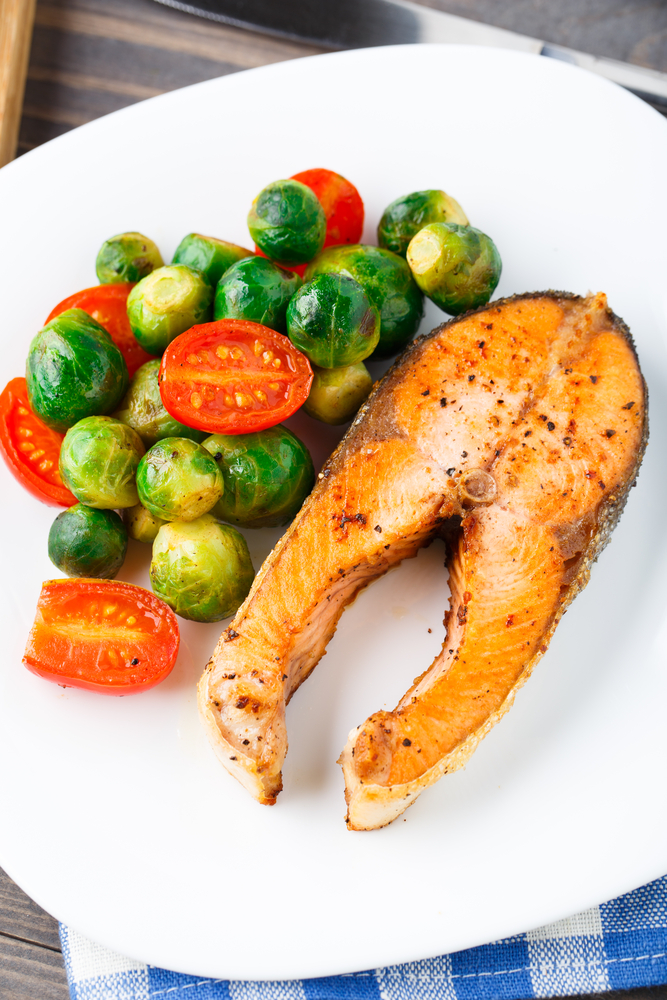
Certified paleo-compliant, plus high omega-3 fatty acids and low-carb
Record-keeping is often the key to success.
Accountability is another key to success. Consider documenting your program and progress on a free website such as FitDay, SparkPeople, 3FatChicks, or others. Consider blogging about your adventure on a free platform such as WordPress or Blogger, or try the newer social media sites. Such a public commitment may be just what you need to keep you motivated.
Do you have a friend or spouse who wants to lose weight? Start the same program at the same time and support each other. That’s built-in accountability.
If you tend to over-eat, floss and brush your teeth after you’re full. You’ll be less likely to go back for more anytime soon.
Eat at least two or three meals daily. Skipping meals may lead to uncontrollable overeating later on. On the other hand, ignore the diet gurus who say you must eat every two or three hours. That’s codswallop.
Eat meals at a leisurely pace, chewing and enjoying each bite thoroughly before swallowing.
Plan to give yourself a specific reward for every 10 pounds (4.5 kg) of weight lost. You know what you like. Consider a weekend get-away, a trip to the beauty salon, jewelry, an evening at the theater, a professional massage, home entertainment equipment, new clothes, etc.
Carefully consider when would be a good time to start your new lifestyle. It should be a period of low or usual stress. Bad times would be Thanksgiving day, Christmas/New Years’ holiday, the first day of a Caribbean cruise, and during a divorce.
If you know you’ve eaten enough at a meal to satisfy your nutritional requirements yet you still feel hungry, drink a large glass of water and wait a while.
Limit television to a maximum of a few hours a day.
Maintain a consistent eating pattern throughout the week and year.
Eat breakfast routinely.
Control emotional eating.
Weigh frequently: daily during active weight-loss efforts and during the first two months of your maintenance-of-weight-loss phase. After that, cut back to weekly weights if you want. Daily weights will remind you how hard you worked to achieve your goal.
Be aware that you might regain five or 10 pounds (2-4 kg) of fat now and then. You probably will. Don’t freak out. It’s human nature. You’re not a failure; you’re human. But draw the line and get back on the old weight-loss program for one or two months. Analyze and learn from the episode. Why did it happen? Slipping back into your old ways? Slacking off on exercise? Too many special occasion feasts or cheat days? Allowing junk food or non-essential carbs back into the house?
Learn which food item is your nemesis—the food that consistently torpedoes your resolve to eat right. For example, mine is anything sweet. Remember an old ad campaign for a potato chip: “Betcha can’t eat just one!”? Well, I can’t eat just one cookie. So I don’t get started. I might eat one if it’s the last one available. Or I satisfy my sweet craving with a diet soda, small piece of dark chocolate, or sugar-free gelatin. Just as a recovering alcoholic can’t drink any alcohol, perhaps you should totally abstain from…? You know your own personal gastronomic Achilles heel. Or heels. Experiment with various strategies for vanquishing your nemesis.
If you’re not losing excess weight as expected (about a pound or half a kilogram per week), you may benefit from eating just two meals a day. This will often turn on your cellular weight-loss machinery even when total calorie consumption doesn’t seem much less than usual. The two meals to eat would be breakfast and a mid-afternoon meal (call it what you wish). The key is to not eat within six hours of bedtime. Of course, this trick could cause dangerous hypoglycemia if you’re taking drugs with potential to cause low blood sugars, like insulin and sulfonylureas. If you take drugs for diabetes, talk to your dietitian or physician before instituting a semi-radical diet change like this.
One of the fitness bloggers I used to follow was James Fell. He said, “If you want to lose weight you need to cook. Period.”
Regular exercise is much more important for prevention of weight regain rather than for actually losing weight.










 Paleo Diabetic