Category Archives: Uncategorized

A Hundred Years From Now, You and Everyone You Know Will Be Dead

Only one thing really matters. That’s your relationship with Jesus Christ/God. Who was Jesus? Did he exist? Was he crucified for your eternal salvation?

Jesus is my Lord and Savior. He died for my sins. After my death, I’ll be with him in heaven forever.

Steve Parker, M.D.

Merry Christmas, Everyone!

Credit: Zvonimir Atletic / Shutterstock.com

Will You Participate In Dry January?

See you in February. Or not.

I’ve run across a number of patients who slowly increased their alcohol consumption over months or years, not realizing it was causing or would cause problems for them. Alcohol is dangerous, lethal at times.

From a health standpoint, the generally accepted safe levels of consumption are:

  • no more than one standard drink per day for women
  • no more than two standard drinks per day for men

One drink is 5 ounces of wine, 12 ounces of beer, or 1.5 ounces of 80 proof distilled spirits (e.g., vodka, whiskey, rum, gin).

Dry January was conceived in the UK in 2012 or 2014. (A related concept is Sober October.) The idea is simply to abstain from all alcohol for the month of January. The Alcohol Change UK website can help you git ‘er done. Many folks notice that they sleep better, have more energy, lose weight, and save money. There are other potential benefits.

If you think you may have an unhealthy relationship with alcohol, check your CAGE score. It’s quick and easy.

Alternatively, if you make a commitment to a Dry January but can’t do it, you may well have a problem.

Steve Parker, M.D.

PS: Check out this video about the benefits of sobriety.

PPS: This guy quit drinking alcohol for 30 days:

Osteoarthritis Is a Metabolic Disorder, Not Wear and Tear

Radical new information on osteoarthritis from Paul Ingraham:

One of the most deeply held beliefs in musculoskeletal medicine is that osteoarthritis is a “wear and tear” condition — that joints slowly crumble under the onslaught of gravity and use and abuse. This fundamentally mechanical view of arthritis directly suggests that the heavier we are, the more likely we are to have trouble in our load-bearing joints.

But that’s just not the case: osteoarthritis prevalence doubled in the 20th Century independent of age and weight (Wallace 2017).

So something else has to be going on. People got heavier on average, but not twice as heavy!

Or consider this: obese people get more osteoarthritis of the hand (Jiang 2016), but probably not because they are walking on their hands.

So … why?

This post weaves together the threads of several past posts about the biochemical foundations of seemingly “mechanical” problems, and you may recognize some pieces. But this is an all-new synthesis, anchored by some good science news you can use — practical and encouraging, which is a rare pleasure.


It’s a short read, well worth your time.

Steve Parker, M.D.

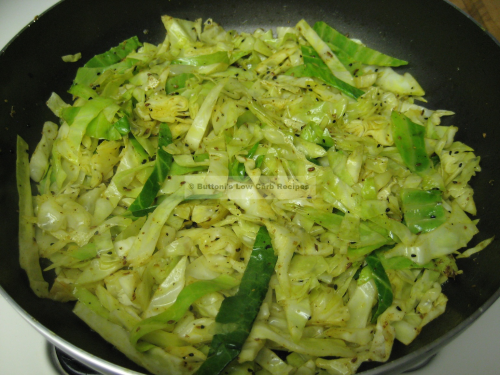
Recipe: Indian Cabbage by Peggy

From Peggy at Buttoni’s Low-Carb Recipes:

If you think you don’t like cabbage (like my husband) you have GOT to try this recipe!  You’ll swear you are not eating cabbage!!  No cabbage odor or strong taste whatsoever to this dish!  It is a delightfully crunchy side dish with grilled Tandoori Chicken or pork chops!  I order my nigella seeds (black onion seeds or kalongi seed) on-line, but you may be fortunate to have a spice supplier where you live.  I would not recommend omitting them, as you will miss out on a flavor layer that is quite nice.  Once you taste this recipe (without alterations) you’ll wish you had found this simple recipe long ago!  This dish is Atkins Induction, Primal and Paleo friendly.

I haven’t tried this yet but will someday. Filing it here so I don’t lose it. Click for details.

Steve Parker, M.D.

This May Be Why You Hate Broccoli

If so, it may well be because of your genes according to an article at SBS.com. Particular genes determine whether you can detect a bitter chemical (called PTC) in broccoli and other brassicas like cauliflower and brussels sprouts.

Free broccoli and carrot in frying“/ CC0 1.0

“On average, about 70% of us can taste something bitter in broccoli or PTC, but those with two copies of the bitter sensitivity gene are closer to 20%, and they are much more likely to hate it.”

U.S. President George H.W. Bush said in March 1990, “I do not like broccoli. And I haven’t liked it since I was a little kid and my mother made me eat it. And I’m President of the United States and I’m not going to eat any more broccoli!” He banned it on Air Force One.

Most of us at the Parker Compound like broccoli. My wife usually sautes it in olive oil and seasons with garlic, other herbs, and salt.

Steve Parker, M.D.

Both Paleo and Mediterranean Diets Associated With Lower Risk of Stress, Anxiety, and Depression

…in Muslim Iranian women, according to an article at Journal of Nutrition and Metabolism.

There’s a lot going on in this study. I didn’t understand some of the statistics. Click the link above for full details. Here’s the abstract:

Background

Psychiatric disorders have been a challenge for public health and will bring economic problems to individuals and healthcare systems in the future. One of the important factors that could affect these disorders is diet. 

Objective

In the current study with a cross-sectional design, we investigated the association of Paleolithic and Mediterranean diets with psychological disorders in a sample of adult women. 

Methods

Participants were 435 adult women between 20 and 50 years old that refer to healthcare centers in the south of Tehran, Iran. The diet scores were created by the response to a valid and reliable semiquantitative food frequency questionnaire (FFQ), and the psychological profile was determined by response to the Depression, Anxiety, and Stress Scale (DASS-21). The multivariable-adjusted logistic regression was applied to compute the odds ratio (OR) and 95% confidence interval (CI). 

Results

After adjusted for potential confounders, it is evident that participants in the highest Paleolithic diet tertile had lower odds of depression (OR = 0.21; 95% CI: 0.12, 0.37: P < 0.001), anxiety (OR = 0.27; 95% CI: 0.16, 0.45: P < 0.001), and stress (OR = 0.19; 95% CI: 0.11, 0.32; P < 0.001) in comparison to the lowest tertile. Furthermore, those in the third tertile of the Mediterranean diet score were at lower risk of depression (OR = 0.20; 95% CI: 0.11, 0.36; P < 0.001), anxiety (OR = 0.22; 95% CI: 0.13, 0.38; P < 0.001), and stress (OR = 0.23; 95% CI: 0.13, 0.39; P < 0.001) compared with those in the first tertile. 

Conclusion

The result of the current study suggests that greater adherence to Paleolithic and Mediterranean dietary patterns may be related with a decreased risk of psychological disorders such as depression, anxiety, and stress.


Steve Parker, M.D.

Paleo Diet Might Improve Hashimoto’s Thyroiditis and Grave’s Disease

But the evidence is weak. From the Journal of the American Nutrition Association:

Abstract

The aim of this systematic review was to examine the characteristics of Paleolithic diet (PD) interventions designed for adult patients with autoimmune thyroid disease (AITD) in order to determine if diet elements have the potential to successfully reduce thyroid antibodies (Ab) such as thyroglobulin (Tg), thyroid peroxidase (TPO), and thyroid stimulating hormone receptor (TSHR), and improve thyroid hormones (thyroxine (T4), triiodothyronine (T3) and thyroid stimulating hormone (TSH)) or resolve AITD pathogenesis. Randomized controlled trials (RCTs) with an adult population of 18 years and older, diagnosed with Hashimoto’s thyroiditis (HT) or Graves’ disease (GD) (Basedow’s), who were placed on a diet of Paleolithic or ancestral nature, and achieved reduction of AITD Abs, improvement of thyroid hormones, and, or resolution of AITD were searched. Various electronic databases were used. Bias was assessed using critical appraisal tools from the Scottish Intercollegiate Guidelines Network (SIGN) and Joanna Briggs Institute (JBI). Studies were excluded according to exclusion criteria and results analyzed. One randomized controlled trial (RCT), a pilot study, and six case studies were found. In total, eight AITD studies focusing on Paleolithic or ancestral interventions were located. In highlight, females were the predominant gender. Case studies solely focused on AITD with protocols ranging from 8-60 weeks. All studies showed clinical improvements, one had significant improvement, two showed AITD resolution. After structured evaluation of nutritional interventions utilizing the PD on the effects of AITD, it was concluded foods of ancestral nature along with the addition of specific supplements, food components, exercise and mindfulness meditation, and exclusion of modern day foods have a considerable impact on thyroid Ab and hormones. The relevant studies suggest while this dietary protocol can be useful in clinical practice, larger-scale studies need to be conducted. Key teaching points: There are currently no dietary interventions recommended for the treatment of autoimmune thyroid disease. The Paleo diet has been documented to improve AITD antibodies and thyroid hormones in both Hashimoto’s thyroiditis and Graves’ disease.The Paleo diet can provide a natural source of nutrients similar to supplemental nutrients that have shown positive results on AITD.The paleo diet provides specific macronutrient percentages that may be beneficial in reducing AITD antibodies, while improving thyroid hormones.Methylation supplementation may be useful in AITD cases.


Steve Parker, M.D.

Hiccups: What’s Your Favorite Cure?

I’ve written previously about how Paul Ingraham helped cure my patello-femoral pain syndrome.

More recently, Paul looked into hiccup cures because his father had an intractable case. What finally worked for dad? Breathing into a plastic bag.

Boosting blood CO2 (hypercapnia) by breathing in a PLASTIC bag. This one is quite plausible and is easy and safe to try. Hypercapnia definitely affects some kinds of hiccups. The story (from a smart source, a good “friend of PainSci”): “There’s an even easier way out of hiccups — at zero cost. Learned it from my uncle, who studied medicine in Brazil in the 50s. Anesthetized patients with hiccups were a pain, so they needed to get rid of it ASAP. Method: breathing in a PLASTIC bag, small enough for you to get to hypercapnia (get higher blood levels of CO2). You have to hold the bag REALLY tight around nose and mouth to prevent air from escaping, and if you have troubles with dizziness, it’s advisable to sit down for it. As soon as it gets uncomfortable, mostly after 4-6 breaths, you can stop, the hiccup will be gone. I don’t know what this does to the phrenic nerve, but it works 100%.”

Safety Note: Obviously there could be some danger with this method. If he’d had low O2 or was struggling for breath, we likely wouldn’t have dared. (On the other hand, if he’d been in that state, he would’ve been at the hospital.) But he was supervised, with no possibility of getting stuck, and a matter of only just a few breaths. Perhaps there was still some risk… but I think not treating those hiccups was also a risk.

I’ve never tried that method for my hiccups. My personal favorite home remedy is “drinking from the far side of the glass.” AKA, drinking water upside down. Watch this video of a good ol’ boy demonstrating the technique although I would aim for drinking at least 6-8 fl oz of water before quitting. Don’t ask me how it works; it may have something to do with the soft palate or diaphragm.

Steve Parker, M.D.

Leanne Morgan: The Problem With the Paleo Diet

I just spent an hour laughing at Leanne Morgan videos at YouTube. Her humor is not for young people, but instead for women over 40 who have children. I love her accent.

Steve Parker, M.D.