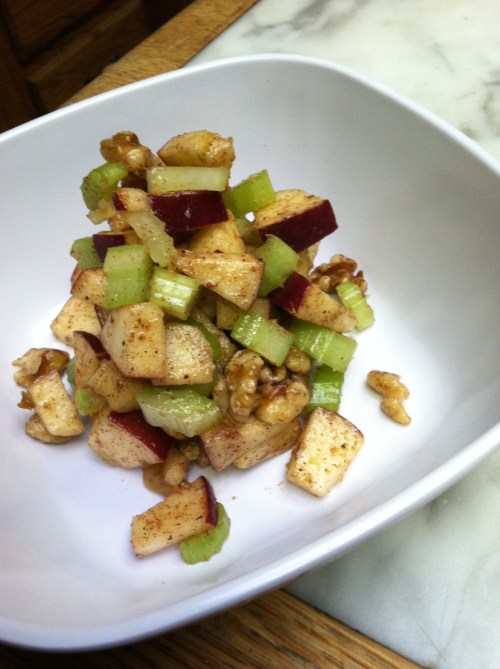
Should You Eat Salads?

A masterpiece by Sunny Parker

I’m not generally a fan of U.S. federal government committee recommendations on what we should eat. They’ve led us astray before. For what it’s worth, the USDA and National Cancer Institute have put together a Healthy Eating Index. Salad-eaters score higher on the Index, which they say is better for you. I do believe the best salads are better than the crap most Americans eat.

From the Journal of the Academy of Nutrition and Dietetics:

Abstract

Background

Consuming salad is one strategy with the potential to harmonize diets more closely with national dietary guidance. However, it is not known whether nutrient intake and diet quality differ between people who consume vegetable-based salad and those who do not.

Objective

The objective of this study was to compare nutrient intake and diet quality between salad reporters and nonreporters.

Design

This study is a cross-sectional analysis of 1 day of dietary intake data collected via 24-hour recall.

Participants/setting

Adults 20 years and older (n=9,678) in What We Eat in America, National Health and Nutrition Examination Survey 2011-2014 were included. Respondents who ate salad on the intake day were considered salad reporters.

Main outcome measures

This study estimated nutrient intake from all foods and beverages (excluding supplements) and evaluated diet quality using the Healthy Eating Index (HEI) 2015.

Statistical analyses

Nutrient intake and HEI scores were compared between salad reporters and nonreporters using paired t tests with regression adjustment for confounding variables. Results were considered significant at P<0.001.

Results

On the intake day, 23% of adults consumed salad. Energy, protein, and carbohydrate intakes did not differ between salad reporters and nonreporters. Salad reporters had higher intakes than nonreporters of dietary fiber, total fat, unsaturated fatty acids, vitamins A, B-6, C, E, K, folate, choline, magnesium, potassium, and sodium (P<0.001). Total HEI 2015 scores were significantly higher for reporters (56 of a possible 100 points) than nonreporters (50 points) P<0.001. Reporters also had significantly higher scores for eight of 13 HEI components: total vegetables, greens and beans, whole fruits, total protein foods, seafood and plant proteins, fatty acids, refined grains, and added sugars (P<0.001).

Conclusions

Incorporating vegetable-based salad into one’s diet may be one effective way to increase nutrient intake and improve overall diet quality. Regardless of salad reporting status, HEI scores show that diets of US adults need improvement.

Source: Consuming Vegetable-Based Salad Is Associated with Higher Nutrient Intakes and Diet Quality among US Adults, What We Eat in America, National Health and Nutrition Examination Survey 2011-2014 – Journal of the Academy of Nutrition and Dietetics

Steve Parker, M.D.

Click pic to purchase book at Amazon.com. E-book versions available at Smashwords.com.

Ketogenic and Very Low-Carb Diet Effective for T2 Diabetes for at Least Two Years

This Avocado Chicken soup is very low-carb. Use the search box to find the recipe.

It’s well-established that very low-carb and ketogenic diets over the short-term usually do a good job for folks with type 2 diabetes: better blood sugar levels, fewer diabetes drugs needed, improved lipids, lower blood pressure, etc. Many people—from patients to dietitians to physicians—question whether the diet and associated improvements can be sustained for more than a few months. The study at hand looked at results two years out, and found definite clinical benefit and sustainability.

First, a quick point to get out of the way. In the U.S., HgbA1c is reported as a percentage. But other countries often report HgbA1c in mmol/mol. It’s not easy to convert one to the other accurately, so when you see values in mmol/mol below, be aware they’re only my approximations, not the researchers’.

Here’s how the researchers did their study, published in the summer of 2019.

Scientific Method

262 adults with type 2 diabetes (average age 54) were enrolled in the intervention group, called CCI (digitally-monitored continuous care intervention via a web-based app). 87 were assigned to “usual care.” For all participants at baseline, body mass index averaged 37-40, HgbA1c averaged 7.6% (60 mmol/mol), and they had diabetes for an average of eight years. The CCI group monitored beta-hydroxybutyrate (a ketone) levels, glucoses, body weight, etc, and uploaded results via the web-based app. The app also facilitated an online peer community for social support. For those who preferred in-person education (about half of the total), clinic-based group meetings were held weekly for 12 weeks, bi-weekly for 12 weeks, monthly for six months, and then quarterly in the second year. Continuous Care Intervention included individual support with telemedicine, customized nutritional guidance (emphasis on sustained nutritional ketosis), and health coaching.

The 87 Usual Care folks were recruited from the same geographic area and healthcare system. The received care from their primary care physician or endocrinologist and were counseled by a dietitian (ADA recommendations) as part of their diabetes education. Medical care was not modified for the study. This group had less intense clinical measurements than the CCI cohort.

Of the 262 participants who started with the CCI group, 218 remained after one year. So 44 drop-outs. Of these 262 pioneers, 194 remained for the entire second year (so 24 more drop-outs). If those drop-out numbers seem high to you, be aware that they are NOT. Even the Usual Care group of 87 had 19 drop-outs over the two years.

So what happened?

Reductions from baseline to two years in the CCI group included: fasting insulin, weight (down about 10% or 11.9 kg), blood pressure (systolic and diastolic), HgbA1c, and triglycerides. Those are all going in the right direction.

Other findings for the CCI group: HDL-cholesterol (“good cholesterol”) went up. Excluding metformin, the use of diabetes control drugs in the CCI group dropped from 56% of participants to 27%. Some dietitians fear the ketogenic diets are bad for bones, causing calcium to leak out of bones, weakening them since calcium is the main mineral in bones. But spine bone mineral density in the CCI group was unchanged over the two years.

The “usual care” group had no changes in those measurements or diabetes medication use.

Now, to understand some of the investigators results, you need to know their definitions. Diabetes remission = glycemic control without medication use. Partial remission is “sub-diabetic hyperglycemia of at least 1 year duration, HgbA1c level between 5.7-6.5% (39 to 48 mmol/mol), without any medications (two HbgA1c measurements).” Complete remission is “normoglycemia of at least 1 year duration, HgbA1c below 5.7% [39 mmol/mol], without any medications (two HgbA1c measurements).” Diabetes reversal per Supplementary Table 2: Sub-diabetic hyperglycemia and normoglycemia (HgbA1c below 6.5% or 48 mmol/mol), without medications except metformin.

The CCI group had resolution of diabetes (partial or complete remission in 18%, reversal in 53%), which was not seen in the usual care group. Complete remission was achieved in 17 (6.7%) of the CCI group. HgbA1c in the CCI group at two years dropped from average of 7.6% (60 mmol/mol)  to 6.7% (50 mmol/mol).

Conquer Diabetes and Prediabetes

Metformin is the most-recommended drug for type 2 diabetes

“CCI diabetes reversal exceeds remission as prescriptions for metformin were usually continued given its role in preventing disease progression, preserving beta-cell function and in the treatment of pre-diabetes per guidelines.”

The average dose of insulin in CCI folks who were using insulin at baseline decreased by 81% at two years. (Have you noticed the price of insulin lately?)

Beta-hydroxybutyrate is a ketone, and at a certain level in the blood, indicates the presence of ketosis on a ketogenic diet. “The 2 year beta-hydroxybutryate (BHB) increase above baseline demonstrated sustained dietary modification.”  “…the encouraged range of nutritional ketosis (> or = 0.5 mM) was observed in only a minority (14.1%) of participants at 2 years. On average, patient-measured BHB was > or = 0.5mM for 32.8% of measurement over the 2 years.”

Bottom Line

In summary, the CCI group—eating ketogenic and/or very low-carb—showed sustained beneficial effects even two years after start of the study. I suspect the Virta app, clinic-based group meetings, and individual support and coaching contributed significantly to the participants’ success.

Steve Parker, M.D.

PS: By the way, many of the study authors are affiliated with Virta Health Corp., which I assume is a for-profit company. Virta provided funding for the study. Could that funding have unduly influenced the results? It’s always possible but I have no evidence that it did. If not already available, I expect a commercial version of the program will be within 12–24 months.

Reference: Athinarayanan, S.J., et al (including Sarah Hallberg, Jeff Volek, and Stephen Phinney). Long-Term Effects of a Novel Continuous Remote Care Intervention Including Nutritional Ketosis for the Management of Type 2 Diabetes: A 2-year Non-randomized Clinical Trial. Frontiers in Endocrinology, Vol. 10, article 348, June 19, 2019.
Click pic to purchase book at Amazon.com. E-book versions available at Smashwords.com.


Mild Intermittent Fasting May Be Good for You

Have you ever tried to catch a wild rabbit by hand?

Eating within a 10-hour window shouldn’t be too hard. Breakfast at 7 AM, finish dinner by 5 PM. That’s  right, we don’t need to be eating every 3–4 hours. Do you think our ancestors have been eating three meals a day for the last 200,000 years? I don’t. The probably went 24–48 hrs without much food on a regular basis.

From LA Times:

In an early effort to explore the benefits of daily fasting in humans, researchers have found that people who are at high risk of developing diabetes improved their health in myriad ways when they ate all of their meals over a span of just over 10 hours, then fasted for the remainder of their 24-hour day.

Source: Variant of intermittent fasting improved health in new study – Los Angeles Times

Steve Parker, M.D.

Click pic to purchase book at Amazon.com. E-book versions available at Smashwords.com.
Is There and Optimal Diet For Liver Fat (Hepatic Steatosis)?

Stages of liver damage: Healthy, fatty liver, fibrosis, and cirrhosis

From Dr Bret Scher at DietDoctor:

Fortunately, we have emerging evidence that low-carb and ketogenic diets improve fatty liver while also helping with glycemic control and weight loss, an impressive combination rarely seen with medications. As we reported earlier, studies have shown that carbohydrate restriction changes liver metabolism, stimulating the breakdown of liver fat. Another study mentioned in the same post showed that when children substitute complex forms of starch to replace sugar, they experience reduced amounts of liver fat.

Yet another impressive study found that despite equal weight loss, a low-carb Mediterranean diet was better than a low-fat diet for reversing liver fat and signs of NAFLD. And finally, Virta Health published a subset of its data showing that one year on a ketogenic diet improved non-invasive tests for NAFLD and liver scarring.

Source: Limiting Carbs Likely Better Than Drugs for Fatty Liver — Diet Doctor

Steve Parker, M.D.

Click pic to purchase book at Amazon.com. E-book versions available at Smashwords.com.
U.S. Life Expectancy Decreasing

Sir John Glubb studied various empires that existed over the last 4,000 years. He deduced that empires have predictable lifecycles, from origin to ascendence, to great power then decline and collapse. I’m not the only one to notice that the U.S. may be on the decline. Decreasing life expectancies are a potential marker of decline. Glubb died in 1986 at the age of 88.

From JAMA Network:

U.S. life expectancy increased for most of the past 60 years, but the rate of increase slowed over time and life expectancy decreased after 2014. A major contributor has been an increase in mortality from specific causes (eg, drug overdoses, suicides, organ system diseases) among young and middle-aged adults of all racial groups, with an onset as early as the 1990s and with the largest relative increases occurring in the Ohio Valley and New England. The implications for public health and the economy are substantial, making it vital to understand the underlying causes.

Source: Life Expectancy and Mortality Rates in the United States, 1959-2017 | Population Health | JAMA | JAMA Network

Steve Parker, M.D.

PS: Maybe we’d live longer if we ate food congruent with our evolution instead ultra-processed man-made foods.

Click pic to purchase book at Amazon.com. E-book versions available at Smashwords.com.
 

Ultra-processed Food Linked to Type 2 Diabetes


One example of UPF

A recent observational study done in France found an association between incidence of type 2 diabetes and consumption of ultra-processed foods.

What are ultra-processed foods? From the study at hand, “Ultraprocessed foods (UPF) (ie, foods undergoing multiple physical, biological, and/or chemical processes, among which mostly of exclusive industrial use, and generally containing food additives) are widespread worldwide and especially in Western diets, representing between 25% and 60% of total daily energy [calories].”

These results suggest an association between UPF consumption and type 2 diabetes risk. They need to be confirmed in large prospective cohorts in other settings, and underlying mechanisms need to be explored in ad hoc epidemiological and experimental studies. Beyond nutritional factors, nonnutritional dimensions of the diet may play a role in these associations, such as some additives, neoformed contaminants, and contact materials. Even if a causal link between UPF and chronic diseases cannot be established so far, the accumulation of consistent data leads public health authorities in several countries such as France or Brazil to recommend privileging the consumption of unprocessed/minimally processed foods, and limiting the consumption of UPF in the name of the precautionary principle.

Source: Ultraprocessed Food Consumption and Risk of Type 2 Diabetes Among Participants of the NutriNet-Santé Prospective Cohort | Lifestyle Behaviors | JAMA Internal Medicine | JAMA Network

Steve Parker, M.D.

PS: Not much UPF in the Paleobetic Diet.

Click pic to purchase book at Amazon.com. E-book versions available at Smashwords.com.

How to Cure Patello-Femoral Pain Syndrome

Paul Ingraham cured my PFPS. He’s not a physician or physical therapist. But he’s a smart guy, writer, and former massage therapist. I don’t care about your credentials as long as you can help me with your intelligence, integrity, and the scientific method.  Click for his article on patello-femoral pain syndrome if interested. I paid about $20 USD for the full article, and it was well worth it. Full disclosure: I don’t know Paul and earn no commission or other compensation for this endorsement.

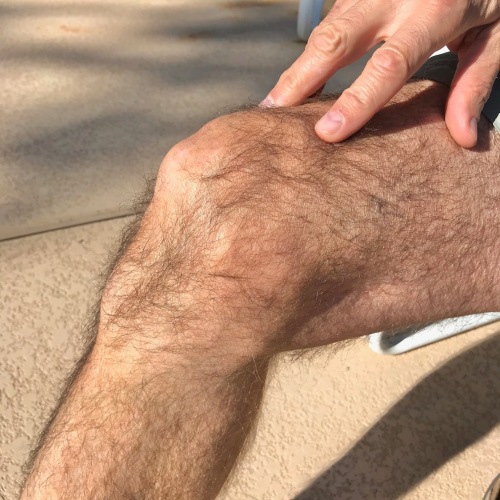
Photo credit: Steven Paul Parker II

The key to my cure was probably radical rest, or what Paul calls profound rest.

If you have PFPS, I hope you find something useful here.

Regular readers here know I’m a huge proponent of exercise. Unfortunately, exercise can be risky. You can injure yourself. I did that a few years ago when I was getting in shape to climb Humphreys Peak. I accelerated my training program too rapidly and developed patell0-femoral pain syndrome (PFPS).

This is how my right knee felt in 2017:

I’ve developed over the last month some bothersome pain in my right knee. It’s not interfered much with my actual hiking, but I pay for it over the subsequent day or two. I’m starting to think this may put the kibosh on my Humphries Peak trek next month.

The pain is mostly anterior (front part of the knee) and is most noticeable after I’ve been sitting for a while with the bent knee, then get up to walk. The pain improves greatly after walking for a minute or less. It also hurts a bit when I step up on something using my right leg. If I sit with my knee straight (in full extension), it doesn’t hurt when I get up. The joint is neither unusually warm nor swollen. Ibuprofen doesn’t seem to help it.

That episode resolved after I stopped hiking for 3–4 months. But in 2018 I had recurrence of similar pains in my left knee, with no clear precipitant this time. I continued my usual weight-training program and expected another spontaneous resolution. Six months passed…no improvement. That’s when I found Paul Ingraham’s article.

By the way, I’m the one who diagnosed my PFPS. It’s been said that a doctor who diagnoses and treats himself has a fool for a patient. He can’t be adequately objective.

Alternative diagnoses would include patello-femoral osteoarthritis and degenerative meniscus, due to my age (over 60). Diagnosis of the osteoarthritis could be facilitated by knee X-rays: weight-bearing posterior-anterior imaging, weight-bearing lateral view, and sunrise view.

This was my treatment plan for PFPS in early Feb 2019, based on Paul Ingraham’s recommendations. Paul explains how to do various specific exercises below in his article.

  1. Avoid all activities that stress the patella-femoral joint or aggravate pain for at least two weeks, if not longer (2–3 months). Paul calls it “profound rest.” I started this Feb 17. No knee-loading exercise (e.g., leg presses, any kind of squat, deep knee bends) until pain is truly in remission from rest. I quit my usual squats, Bulgarian split-squats, and single-leg Romanian deadlifts.
  2. Consider Motrin (ibuprofen) 400-600 mg three times daily for two weeks (I did 600 mg 3x/day) but usually no help
  3. Consider cold-packs (10–20 mins) when it flares up but usually no help. (I never did this because I couldn’t find my WalMart cold-pack.)
  4. Find a substitute for the squats? E.g., stationary bike? No bike for now: too much stress on patello-femoral joint at this time
  5. Paul’s not big on stretching (quadriceps and hamstring stretches routinely recommended by others). I didn’t stretch.
  6. While recovering, keep leg straight most of the time, even when sitting. Sit less. (I didn’t sit less but did make a huge effort to keep my  affected led fully extended, or at least not bent more that 20 degrees at any time. This necessitated sitting on the edge of my seat at work, and/or lowering the height of the seat. At home relaxing, I’d keep my leg fully extended. I think this was extremely important for my healing. I considered getting a standing desk for home or work but didn’t.)
  7. Start with exercises that keep knees straight. Exercise both lower extremities. As condition improves, can start to add other exercises, very slowly, that allow bent knees. Single-leg RDLs may be a good start (started in Sept 2019). Restart squats, deep knee bends, and leg presses (cycling?) only very late into recovery. Rehab must progress VERY SLOWLY. If an exercise causes more knee pain, back off and work the hips first. Exercise 2–3 times/week. Walking on the flat in moderation is usually OK. Strengthening hip abductors may be helpful.
  8. Hamstring curls via machine or therabands. Curl to 60 degrees, not 120. (I curled to 90 degrees using therabands).
  9. Quadricep setting. (I didn’t do this. Straight-leg raises on your back seem to be similar, which I did.)
  10. Straight-leg raises, on back and side-lying. (Done: 3 sets of 10 reps each side.)
  11. Clam shells. (Done: 3 sets of 10 reps each side.)
  12. Knee lifts? (don’t know what that is; not done).
  13. Consider the following although not from Paul: Hip abductor strengthening: “monster walks” (lateral steps with elastic band around (just proximal to) knees: 1 min x 3 sets. Hip hikes (what’s this?): 2 sets of 20 reps each side.
  14. Consider the following although not from Paul: Quad strengthening: terminal knee extensions with elastic band, 3 sets of 15 reps; leg presses?; semi squat, 3 sets of 10 reps (also recumbent bike?). Also consider stork stance TKE (terminal knee extensions) as alternative to standard TKE.
  15. Paul likes trekking poles for hikers. (I’ve been using these for years; Leki brand.)
  16. Not from Paul: Home physical therapy for six weeks
  17. Not from Paul: Turkish get-ups now or later? Much further into recovery!

Update of Progress on April 4, 2019:

Knee definitely feeling better, probably due to profound rest as above.  On Feb 23, I aggravated knee mildly by sledding in snow with Paul in Care Free – no regrets! Around Feb 26, Sunny got me started on Platinum’s Ortho-Chon Plus, 3 caps twice daily. Per 3 caps: glucosamine sulfate 800 mg, turmeric 380 mg, methylsulfonylmethane 350 mg, berberine HCL 145 mg, Boswellia serrata extract 140 mg, hyaluronic acid 50 mg, cat’s claw 10 mg, total cetylated fatty acids 3 mg. Not sure if these did any good at all; I’m skeptical. Started feeling less pain around Feb 29.

I am not healed or in remission yet. Doing hip exercises twice or once/wk with Therabands: clamshells, straight leg raises, side-lying straight leg raises, hamstring curls.

I had to put hip exercises on hold temporarily on March 28 due to a right low back muscle strain either from the exercises or weed pulling.

Update on Nov 25, 2019:

The PFPS is in remission and has been since July or so. For the last couple months I’ve been doing single-leg Romanian deadlifts and “walking” on elliptical-type aerobic machines at Anytime Fitness—some machines also work the upper limbs, others don’t—which are very easy on my knees. Avoiding treadmill since I have a palpable click in one knee, and treadmill aggravates my degenerative joint disease (DJD in both knees but predominantly left knee).

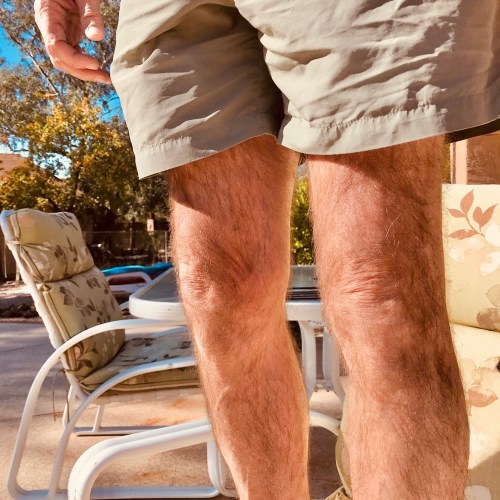
Both offending knees

Next step is to slowly re-introduce exercises that load the knees (particularly the patell0-femoral joint). This is scary but must be done. My quads have atrophied somewhat. Squats? Lunges? Bulgarian split squats?

Steve Parker, M.D.

PS: Most types of knee pain will improve if you lose excess fat weight.

Click pic to purchase book at Amazon.com. E-book versions available at Smashwords.com.
1 in 4 Young Adults in U.S. Has Prediabetes

I’m worried about the kid’s future health

Stats from JAMA Pediatics:

In the United States, about 1 of 5 adolescents [12-18 y.o.] and 1 of 4 young adults [19-34 y.o.] have prediabetes. The adjusted prevalence of prediabetes is higher in male individuals and in people with obesity. Adolescents and young adults with prediabetes also present an unfavorable cardiometabolic risk profile, putting them both at increased risk of type 2 diabetes and cardiovascular diseases.

Source: Prevalence of Prediabetes Among Adolescents and Young Adults in the United States, 2005-2016. – PubMed – NCBI

I’m doing my part to prevent conversion of prediabetes to type 2 diabetes.

Steve Parker, M.D.

Click pic to purchase book at Amazon.com. E-book versions available at Smashwords.com.

Roll the Dice: Bariatric Surgery Prolongs Life in Type 2 Diabetes

bariatric surgery, Steve Parker MD

Band-type gastric bypass, a type of metabolic surgery

Bariatric surgeries are considered by some experts (mostly surgeons?) to be the most effective way to treat or cure type 2 diabetes. They are effective, assuming you survive the original operation and potential complications, which may require further surgery.

From JAMA Network:

Among patients with type 2 diabetes and obesity, metabolic surgery, compared with nonsurgical management, was associated with a significantly lower risk of incident [heart attack, ischemic stroke, and mortality]. The findings from this observational study must be confirmed in randomized clinical trials.

Source: Association of Metabolic Surgery With Major Adverse Cardiovascular Outcomes in Patients With Type 2 Diabetes and Obesity | Bariatric Surgery | JAMA | JAMA Network

Steve Parker, M.D.

Click pic to purchase book at Amazon.com. E-book versions available at Smashwords.com.
 

Can You Avoid Muscle Loss on Low-Calorie Diets?

Greek salad with canned salmon

The parts of your body that aren’t fat tissue are collectively called fat-free mass or lean mass. Fat-free mass includes muscle, organs, bones, water, connective tissue, etc. Reduced-calorie diets are often linked to reduction of body components—like muscle—other than the desired loss of excess fat.

One proven effective way to preserve muscle mass on a reduced-calorie diet is to consume adequate protein. Judicious exercise also helps.

I haven’t read the full article below, and probably won’t. For what it’s worth, the authors say fat-free mass can be preserved during a very low-carb ketogenic diet via adequate intake of vitamin D, leucine, and whey protein. Do you think maybe they’re selling a particular supplement?

The abstract isn’t very well written. Or is it the title that’s misleading?

Abstract

The loss of fat free mass (FFM) that occurs during a weight loss secondary to low-calorie diet can lead to numerous and deleterious consequences. We performed a review in order to evaluate the till-now evidence regarding the optimum treatment for maintaining FFM during low-calorie diet. This review included eligible studies. In order to maintain FFM during a low-calorie diet, there are various diet strategies: adopt a very-low carbohydrates ketogenic diets (VLCKD) and take an adequate amount of specific nutrients (vitamin D, leucine, whey protein). As regard the numerous and various low-calorie diet proposals for achieving weight loss, the comparison of VLCKD with prudent low-calorie diet demonstrated that FFM was practically unaffected by VLCKD. This is possible for numerous mechanisms, involving insulin and insulin like grow factor-I – growth hormone (IGF-I-GH) axis, and which acts by stimulating protein synthesis. Considering protein and amino acids intake, an adequate daily intake of leucine (4 grams/day), and whey protein (20 grams/day) is recommended.

Regarding vitamin D, if the blood vitamin D has low values (<30 ng/ml), it is mandatory that an adequate supplementation is provided, specifically calcifediol because in the obese subject, this form is recommended to avoid seizure in the adipose tissue: 3–4 drops/day or 20–30 drops/week of calcifediol are generally adequate to restore normal 25(OH)D plasma levels in obese subjects.

Source: Current Opinion On Dietary Advice In Order To Preserve Fat Free Mass During A Low-Calorie Diet – ScienceDirect

I had never heard of that obesity-calcifidiol connection.

Steve Parker, M.D.

Click pic to purchase book at Amazon.com. E-book versions available at Smashwords.com.