
Credit: Zvonimir Atletic / Shutterstock.com
Merry Christmas to all my readers!
-Steve

Credit: Zvonimir Atletic / Shutterstock.com
Merry Christmas to all my readers!
-Steve
I’m hearing ads on the radio that many in the U.S., including children, are suffering from hunger. Nutrition science journals in the last few years are covering “food insecurity,” which many would assume means not having enough food or fearing the lack of food.
These concerns seem at odds with the fact that two-thirds of us are overweight or obese. So how many of us at normal or below-average weights suffer from food insecurity or hunger?
James Bovard breaks it down for you in an excellent article. Read the whole thing. Some morsels (heh):
Fat hungry people would be less hungry if they’d cut way back on refined, nutrient-poor carbohydrates, replacing with protein and healthy fats.
Denmark researchers found an association between antibiotic usage and later development of type 2 diabetes. Just because there’s a linkage between antibiotics and type 2 diabetes doesn’t mean there is a direct causal relationship.
One possible way that antibiotics could cause diabetes, however, would be through alteration of gut germs (aka microbiome). An antibiotic may do a great job curing your urinary tract infection, while at the same time eliminating millions of certain gut bacteria and allowing other species to have a population explosion. One of the most fascinating fields of medicine now is trying to figure out if and how the billions of bacteria in our intestines might influence health and disease. F’rinstance, gut bacteria may influence whether we are fat or slim.
I bet if you graphed antibiotic use and incidence of type 2 diabetes over the last 50 years, they would trend together pretty well. Any volunteers to do that?
Steve Parker, M.D.
Comments Off on Antibiotics May Cause Type 2 Diabetes
Posted in Causes of Diabetes, Uncategorized
Tagged antibiotics, antibiotics cause diabetes, cause of diabetes, microbiome
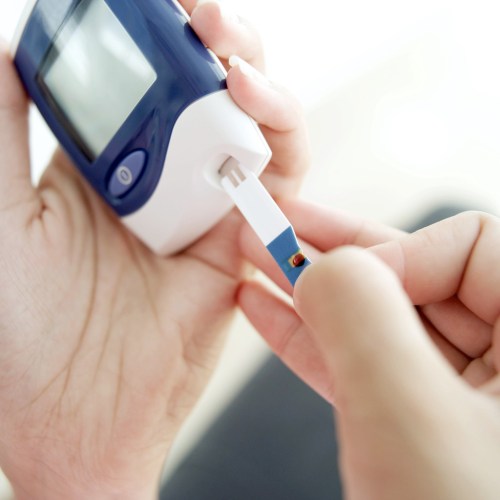
Not the only way to assess glucose control
Can you believe I’ve had patients show me a week’s worth of home glucose tests showing great numbers, tell me they’ve been that good for the last three months, and then I find a sky high Hemoglobin A1c test? How can that be?
Hemglobin A1c (or HgbA1c) is a standard measure of glucose control, or lack thereof, over the three months preceding the blood test.
It’s also used for diagnosis of diabetes and prediabetes. Levels between 5.7 and 6.4% suggest prediabetes. Levels of 6.5% of higher indicate diabetes.
Hemoglobin is the oxygen-carrying protein in red blood cells. HgbA1c tells us if many sugar molecules are stuck to the hemoglobin, a process called glycosylation. HgbA1c is sometimes referred to as glycated hemoglobin. About half of the HgbA1c value is determined by blood sugar levels in the month before the blood draw.
But the HgbA1c test is not always an accurate reflection of blood sugar levels.
Many factors unrelated to serum glucose (sugar) levels can alter the HgbA1c value. Here they are:
Pregnancy
Pregnant women tend to have lower than average HgbA1c.
Certain Types of Anemia
Iron-deficiency anemia may yield falsely low or high HgbA1c, depending on whether it’s being treated or not.
Acute bleeding and hemolytic anemia give falsely low HbA1c values.
The unifying feature here is that young red blood cells, called reticulocytes, take some time to get glycosylated.
Lack of a Spleen
HgbA1c will be falsely high. Your spleen removes old red blood cells. Not having a spleen increases the life span of red blood cells, so they can accumulate more glucose molecules.
Various Hemoglobin Types or Congenital Abnormalities
Hemoglobin S and hemoglobin C may lead to deceptively low HgbA1c. Hemoglobin F tends to overestimate.
Blood Transfusions
Recent red blood cell transfusions will lower the HgbA1c if it was elevated to begin with, especially if lots of blood is transfused.
Renal Failure
It’s complicated; talk to your kidney specialist.
Chronic Disease
HgbA1c values can be unreliable in chronic alcoholism, chronic narcotic users, severely high triglyceride or bilirubin levels, kidney failure, vitamin and mineral deficiencies (particularly the vitamins and minerals needed to make red blood cells).
Race
Hispanics, Asians, and Blacks tend to have higher HgbA1c’s than Whites who have the same blood sugar levels. The difference is about 0.3% (absolute, not relative.
Wild Glycemic Excursions
What’s this? You might call it labile diabetes: dramatic swings between sugars too low and way too high. For example, this patient may have daily glucose swings between 40 and 210 mg/dl (2.2 and 11.7 mmol/l). His HgbA1c may turn out near normal or acceptable, but many experts worry that the wild oscillations may contribute to diabetic microvascular complications like eye and kidney disease.
Are There Alternatives to HgbA1c?
Yes. If you think the HgbA1c test is inaccurate, consider other tests such as continuous glucose monitoring, fructosamine, glycated albumin, 1,5-anhydroglucitol, and more frequent home glucose monitoring.
Reference: Bazerbachi, F., et al. Is hemoglobin A1c an accurate measure of glycemic control in all diabetic patients? Cleveland Clinic Journal of Medicine, vol. 81, #3, March 2014: 146-149

Pharmacist using her advanced degree to count pills
Larry Husten writing at CardioBrief mentions a recent press release alleging that empagliflozin reduces cardiovascular disease risk.
Larry points out a problem with diabetes drugs that I’ve been harping on for years: we don’t know the long-term outcomes and side effects of most of our drugs. As long as a diabetes drug reduces blood sugar and seems to be relatively safe in the short term, it will be approved for use by the U.S. Food and Drug Administration. Larry writes:
Until now the best thing anyone could say for sure about all the new diabetes drugs was that at least they didn’t kill people. That’s because although these drugs have been shown to be highly effective in reducing glucose levels, a series of large cardiovascular outcomes trials failed to provide any evidence of significant clinical benefit.
Cardiovascular disease is a major stalker of diabetics. I’m talking about heart attacks, strokes, heart failure, sudden cardiac death.
The aforementioned press release touts reduced cardiovascular disease risk in patients taking empagliflozin. What’s missing is any mention of overall death reduction. Even if the drug really prevents heart attacks and strokes, which I doubt, don’t you want to know about overall death rates? I do. For all we know, the drug could promote illness and death from infections and cancer while reducing heart attacks and strokes. The drug’s net effect could be premature death.
I’m 99% certain the researchers doing the work have the mortality data. Unless they don’t want to know.
By no means am I against drug use. But if I had type 2 diabetes, I’d do all I can with exercise, weight control, and low-carb eating before resorting to new or higher doses of drugs.
Steve Parker, M.D.
Comments Off on Does Diabetes Drug Empagliflozin Reduce Heart Disease Risk?
Posted in Drugs for Diabetes, Heart Disease
Tagged cardiovascular disease risk, empagliflozin, heart disease, type 2 diabetes

Paleo-compliant low-carb meal. I almost used this for my Paleobetic Diet book cover.
This is an important report because most diet studies last much less than one year. Details are in the American Journal of Clinical Nutrition.
Study participants were 115 obese (BMI 35) type 2 diabetics with hemoglobin A1c averaging 7.3%. Average age was 58. So pretty typical patients, although perhaps better controlled than average.
They were randomized to follow for 52 weeks either a very low-carbohydrate or a high-carbohydrate “low-fat” diet. Both diets were designed to by hypocaloric, meaning that they provided fewer calories than the patients were eating at baseline, presumably with a goal of weight loss. The article abstract implies the diets overall each provided the same number of calories. They probably adjusted the calories for each patient individually. (I haven’t seen the full text of the article.) Participants were also enrolled in a serious exercise program: 60 minutes of aerobic and resistance training thrice weekly.

Kayaking is an aerobic exercise if done seriously
The very low-carb diet (LC diet) provided 14% of total calories as carbohydrate (under 50 grams/day). The high-carb diet (HC diet) provided 53% of total calories as carbohydrate and 30% of calories as fat. The typical Western diet has about 35% of calories from fat.
Both groups lost weight, about 10 kg (22 lb) on average. Hemoglobin A1c, a reflection of glucose control over the previous three months, dropped about 1% (absolute reduction) in both groups.
Compared to the HC diet group, the LC dieters were able to reduce more diabetes medications, lower their triglycerides more, and increase their HDL cholesterol (“good cholesterol”). These triglyceride and HDL changes would tend to protect against heart disease.
SO WHAT?
You can lose weight and improve blood sugar control with reduced-calorie diets—whether very low-carb or high-carb—combined with an exercise program. No surprise there.
I’m surprised that the low-carb group didn’t lose more weight. I suspect after two months of dieting, the low-carbers started drifting back to their usual diet which likely was similar to the high-carb diet. Numerous studies show superior weight loss with low-carb eating, but those studies are usually 12 weeks or less in duration.
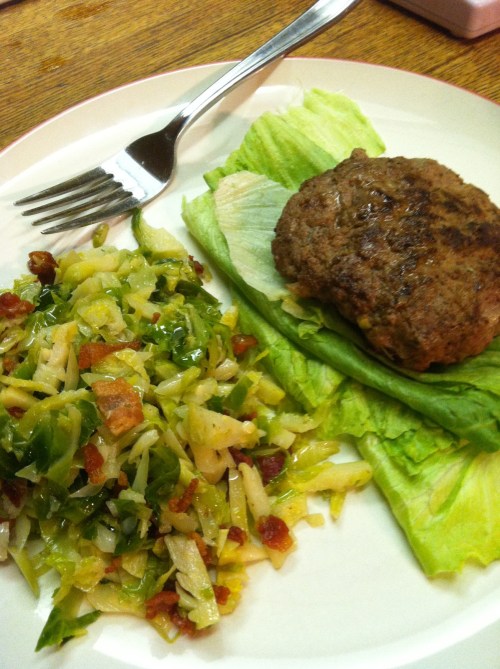
Low-Carb Brian Burger and Bacon Brussels Sprouts (in the Paleobetic Diet)
The low-carb diet improved improved lipid levels that might reduce risk of future heart disease, and allowed reduction of diabetes drug use. Given that we don’t know the long-term side effects of many of our drugs, that’s good.
If I have a chance to review the full text of the paper, I’ll report back here.
Reference: Jeannie Tay, et al. Comparison of low- and high-carbohydrate diets for type 2 diabetes management: a randomized trial. First published July 29, 2015, doi: 10.3945/ajcn.115.112581 Am J Clin Nutr
Posted in Diabetic Diet, Dietary Carbohydrate, Low-Carb
Tagged diabetic diet, low-carb diet, Paleobetic Diet, type 2 diabetes
The CulinaryRx blogger at MedPageToday asked two physicians what diet modifications they’d recommend for a 41-year-old Asian-Indian man with prediabetes. (To read the article you may need to do a free sign-up.)
The moderator asked his experts twice whether carbohydrate restriction is important, and never got a straight answer. These experts must not think it’s important since they push legumes, lentils, fruits, and whole grains. Dr. Nadeau said he believes there is no specific diet for folks with diabetes. I almost fell off my chair when I read one comment recommending cookies and sweets, because they’re traditional. They also recommend low glycemic load, nuts, higher protein consumption, vegetables, and “good oils” like olive oil (ghee not even mentioned).
Read this blog post for prior comments that include advice from possible clinicians.
I’m confident that Dr. Ronesh Sinha in Silicon Valley, California, would disagree with the advice of MedPageToday’s experts. Dr. Sinha would likely recommend limiting digestible carbohydrates to 50–150 grams/day as the most important dietary step.
I’m still looking for clinical studies of various diets for South Asians with prediabetes and diabetes.
Steve Parker, M.D.
Posted in Diabetic Diet
Tagged Asian Indian, diabetes, diabetic diet, India, Indian, prediabetes, South Asian

There’s something about cabbage…
Raffinose is sometimes called a fiber but more often is characterized as a trisaccharide, oligosaccharide, or complex carbohydrate. It’s all four.
A typical bowl of cabbage soup has three grams of fiber. If you eat two bowls, that’s six grams, still not all that much, but can predictably cause loose stools or diarrhea in many folks because of a particular type of fiber: raffinose.
The thing about raffinose is that it passes through the small intestine undigested because we lack the enzyme alpha-galactosidase. When raffinose hits the colon, bacteria start digesting it (i.e., fermenting it), potentially leading to gas, bloating, and/or diarrhea. If your “dose” of raffinose is small enough, you won’t have any symptoms. To use cabbage soup as a constipation preventative or remedy, you have to experiment to see what dose works for you.
Raffinose is also found in beans and cruciferous vegetables like brussels sprouts and cauliflower
PS: Ever heard of Beano? The active ingredient is the enzyme alpha-galactosidase. It breaks down raffinose in the small intestine, to simple sugars we can absorb.
PPS: Raffinose is one of the oligosaccharides to avoid if you’re on a low FODMAPs diet.
Posted in Vegetables
Tagged cabbage, constipation, diarrhea, FODMAPS diet, natural laxative, raffinose

Cubes of Diabetes?
A Pharm.D (Dr of Pharmacology) and a pair of MD’s surveyed much of the available scientific literature—both animal and human studies—and concluded that fructose is a major culprit in the rise of type 2 diabetes and prediabetes. Fructose does its damage by increasing insulin resistance. ScienceDaily has the details.
Be aware that their conclusion is certainly not universally accepted. I read “Pathogenesis of type 2 diabetes mellitus” at UpToDate.com a few months ago and saw no mention of fructose. Under dietary factors, they mainly talked about obesity and how that increases insulin resistance, leading to elevated blood sugars, while the reverse happens with weight loss. I haven’t looked at all the research so I have no definite opinion yet on the fructose-diabetes theory; I’m skeptical.
Fructose is a type of simple sugar. Common dietary sources of fructose are fruits, table sugar (aka sucrose, a 50:50 combination of glucose and fructose molecules), and high-fructose corn syrup (which is usually 42 or 55% fructose).

Damaging effects, if any, of fructose in these fruits may be mitigated by the fiber
A few quotes from ScienceDaily:
“At current levels, added-sugar consumption, and added-fructose consumption in particular, are fueling a worsening epidemic of type 2 diabetes,” said lead author James J. DiNicolantonio, PharmD, a cardiovascular research scientist at Saint Luke’s Mid America Heart Institute, Kansas City, MO. “Approximately 40% of U.S. adults already have some degree of insulin resistance with projections that nearly the same percentage will eventually develop frank diabetes.”
* * *
While fructose is found naturally in some whole foods like fruits and vegetables, consuming these foods poses no problem for human health. Indeed, consuming fruits and vegetables is likely protective against diabetes and broader cardiometabolic dysfunction, explained DiNicolantonio and colleagues. The authors propose that dietary guidelines should be modified to encourage individuals to replace processed foods, laden with added sugars and fructose, with whole foods like fruits and vegetables. “Most existing guidelines fall short of this mark at the potential cost of worsening rates of diabetes and related cardiovascular and other consequences,” they wrote.
If you’re eating a typical Western or American diet, you’ll reduce your fructose consumption by adopting the Paleobetic Diet, Mediterranean diet, or Low-Carb Mediterranean Diet.
RTWT.
Steve Parker, M.D.

Click pic to purchase book at Amazon.com. E-book versions also available at Smashwords.com.

 Diabetic Mediterranean Diet Advanced Mediterranean Life

 Paleo Diabetic