Do the Drug Companies Have Too Much Influence on Diagnosis and Management of Type 2 Diabetes?

diabetic mediterranean diet, Steve Parker MD

Pharmacist counting pills

MedPageToday has recently completed a series of articles looking at socioeconomic issues related to diabetes drugs that have come onto the market in the last decade. They call it their Diabetes Drugs Investigation. I recommend the entire series to you if you have type 2 diabetes. The authors’ have five major points:

1. “Diabetes drugs improve lab tests, but not much more, particularly in pre-diabetics.” FDA drug approvals were based mostly on whether hemoglobin A1c or blood sugar levels improved, not on improvements in hard clinical endpoints such as risk of death, heart attacks, stroke, blindness, amputations, etc.

2. “Physicians and drug makers have reported diabetes drugs as the “primary suspect” in thousands of deaths and hospitalizations.”

3. “Diabetes drug makers paid physicians on influential panels millions of dollars.” The implication is that the panelists were not totally unbiased in their assessments of drug effectiveness and safety.

4. “Risk of a risk now equals disease.” This is about the latest redefinition of prediabetes which created many more “patients.” Prediabetes can progress to type 2 diabetes over a number of years: one of every four adults with prediabetes develops diabetes over the next 3 to 5 years. Some doctors are even treating prediabetes with diabetic drugs. (I recommend a “diet and exercise” approach.) The authors think the prediabetic label—one third of U.S. adults, including half of all folks over 65—is over-used and over-treated.

5. “The clinical threshold for diagnosing diabetes has crept lower and lower over the past decade.” For instance, in 1997 expert panels lowered the threshold defining diabetes from a fasting blood glucose level of 140 mg/dl (7.8 mmol/l) to 125 mg/dl (6.9 mmol/l). Four million more American adults became diabetics overnight. In 2003, they lowered the threshold for prediabetes from a fasting blood glucose from 110 mg/dl (6.1 mmol/l) to 100 mg/dl (5.6 mmol/l). Boom! 46 million more American prediabetics.

I fully agree with the authors that we don’t know which drugs for type 2 diabetes are the best in terms of prolonging life, preventing diabetes complications, and postponing heart attacks and strokes. Furthermore, we don’t know all the adverse long-term effects of most of these drugs. For instance, metformin had been on the market for over a decade before we figured out it’s linked to vitamin B12 deficiency.

That’s why I try to convince my patients to do as much as they can, when able, with diet and exercise before resorting to one or more drugs. (All type 1 diabetics and a minority of type 2 diabetics must take insulin.) Maybe it’s healthier to focus primarily on drug therapy…but I don’t think so.

RTWT.

Steve Parker, M.D.

Sulfonylurea Drugs Linked to Heart Disease in Women

…according to this article at Diabetes Care. The study population was the Nurses Health Study. The longer the sulfonylurea was used, the stronger the association with Coronary Heart Disease. CHD is by far the most common cause of heart attacks. On the bright side, the drugs were not linked to stroke risk. Remember, correlation is not causation, blah, blah, blah…

This report is another reason to do all you can to control blood sugars with diet and exercise, minimizing the risks—known and unknown—of long-term drugs.

I rarely start my patients on sulfonylureas these days.

Steve Parker, M.D.

Merry Christmas!

Credit: Zvonimir Atletic / Shutterstock.com

Credit: Zvonimir Atletic / Shutterstock.com

What We Don’t Know About Diabetes Drugs Could Kill You

paleobetic diet, low-carb diet, diabetic diet

How about this one?

MedPageToday has an article on the “Bittersweet Diabetes Economy” talking about the cost of treating diabetes, pharmaceutical company influence on diagnosis and treatment of diabetes and prediabetes, and the unknown long-term effectiveness of diabetes drugs. Most of the article pertains to type 2 diabetes. A quote:

Last year, sales of diabetes drugs reached $23 billion [worldwide or U.S.?], according to the data from IMS Health, a drug market research firm. That was more than the combined revenue of the National Football League, Major League Baseball, and the National Basketball Association.

But from 2004 to 2013, none of the 30 new diabetes drugs that came on the market were proven to improve key outcomes, such as reducing heart attacks or strokes, blindness, or other complications of the disease, an investigation by MedPage Today and the Milwaukee Journal Sentinel found.

The U.S. Food and Drug Administration approved all of those drugs based on a surrogate endpoint: the ability to lower blood sugar. Many of the new drugs have dubious benefit; some can be harmful.

Another key outcome we don’t know about is prevention or postponement of death in type 2 diabetes via drug therapy.

Now you have some inkling of why I exhort my patients to maximize diet and exercise interventions before resorting to drugs, increasing drug dosages, or adding more drugs. (I’m not talking about type 1 diabetes here.)

RTWT.

Is a Vegan Diet Better Than Paleo for T2 Diabetes?

We don’t know yet because they’ve never been compared head-to-head.

paleo diet, Steve Parker MD, how to cook asparagus and Brussels sprouts

These might be on the vegan Ma-Pi 2 diet

What we do have is a specific vegan diet (Ma-Pi 2) compared to a low-fat diet in a study published by Nutrition & MetabolismCarbsane Evelyn dove into the study at her blog (recommended reading), or you can read the original research report yourself. Study subjects had fairly well-controlled type 2 diabetes and were elderly (66) and overweight (84 kg or 185 lb). The vegan diet was mostly whole grains, vegetables, legumes, and green tea.  The low-fat and vegan diets both probably supplied 200-300 calories/day fewer than what the subjects were used to: 1900 cals for men, 1700 for women. The study lasted only three weeks.

The vegan group ate 335 grams/day of carbohydrate compared to 235 grams in the low-fat group. In contrast, the Paleobetic Diet provides 60-80 grams/day of digestible carb and the Ketogenic Mediterranean Diet allows a max of 20-30 grams.

The vegans in the study at hand ate 15-20 more grams/day of fiber. High fiber intake is linked to better blood sugar control.

From the study abstract:

After correcting for age, gender, BMI at baseline, and physical activity, there was a significantly greater reduction in the primary outcomes fasting blood glucose and post-prandial blood glucose in those patients receiving the Ma-Pi 2 diet compared with those receiving the control diet. Statistically significantly greater reductions in the secondary outcomes, HbA1c, insulin resistance, total cholesterol, LDL cholesterol and LDL/HDL ratio, BMI, body weight, waist and hip circumference were also found in the Ma-Pi 2 diet group compared with the control diet group. The latter group had a significantly greater reduction of triglycerides compared with the Ma-Pi 2 diet group.

The take-home point for me is that overweight T2 diabetics can improve short-term diabetes numbers despite a high carbohydrate consumption if they restrict calories and eat the “right” carbs. Restrict calories enough—600/day?—and T2 diabetes might be curable

I’ve written before about vegetarian/vegan diets for diabetes. My patients are more resistant to vegan diets than they are to low-carb.

Paleobetic diet, low-carb breakfast

Not allowed not on the Ma-Pi 2 diet. Bacon, eggs, black coffee, and Cholula hot sauce. A caveman wouldn’t recognized any of this except for eggs.

I scanned the original report and don’t see any problems with Evelyn’s summary.

Steve Parker, M.D.

I Failed as a Deer Hunter

ll

ll

Last month I missed my first chance ever to shoot a deer.

Arizona has a lottery system to determine who gets to participate in the harvest. Winners were announced in July or so. I had until early November to get ready.

My family has no hunting tradition, so I’m on my own. Before the hunt, I needed to choose and purchase a rifle*, choose and purchase optics (a scope), learn how to shoot accurately, learn how to hunt deer, and make several advance trips to my designated hunting area to scope it out (exactly where are the deer?). Furthermore, I need new eyeglasses. As you might imagine, I’m fairly obsessive and compulsive about doing things the right way. I ran out of time, thanks to other aspects of life that were more important. Oh, well. Maybe I’ll be ready by next fall.

I did spend a couple hours with my son checking out rifles at Bass Pro Shop in Mesa, Arizona. They had many on my list of prospects.

Notes On Rifle Choice

Although a wood stock is aesthetically appealing, a synthetic stock probably makes more sense in terms of withstanding weather-related stress such as rain, heat, cold, and extremes of humidity. Plus, the synthetic stocks are $200 cheaper.

I’m leaning towards .308 caliber since it packs enough punch for elk hunting. .30-06 would do the trick, too.

I was not greatly impressed with Savage rifles, although the Weather Warrior was not bad. I don’t remember otherwise which Savage models I held. The salesman at Bass said it’s a little more trouble to mount a scope on the Savages. Savages are popular rifles.

He also told me to consider stainless steel barrels.

The Weatherby Vanguard Series 2 Sporter with synthetic stock was OK, but not one of my favorites.

I ruled out the Ruger American simply because I like the Tikka T3 better. I have a Ruger revolver and recommend the company. I also have a soft spot for Browning firearms since I’m happy with my Browning BDA .380 semi-automatic pistol.

The Sako A7 is too expensive, even with synthetic stock. I don’t remember the price, but must be over $1,500.

All of the following are in the running for future purchase:

  • The Tikka T3 (Hunter or Forest model) is made by Sako and I was favorably impressed. $600 with synthetic stock.
  • Browning A-Bolt Medallion (not chambered in .308, but in .30-06).
  • Browning X-Bolt Hunter.
  • Browning X-Bolt Medallion.
  • Winchester Model 70 is very nice. The Alaskan model is probably the only one on this page that comes with iron sites, an option I like. It is chambered in .30-06 but not .308
  • Remington 700. Several different models, and perhaps not in .308 caliber. At least one has iron sites (BDL model). But has Remington solved the dangerous trigger issue?

If I had to choose one right now, it’d be the Tikka T3.

Steve Parker, M.D.

 *Mike S., thanks for offering me the use of one of your rifles. But my goal is a Parker family rifle I can pass down to the next generation.

PS: I just learned that a Remington 700 is what Charles Whitman used to kill 16 people from a tower at the University of Texas (in Austin) in 1966.

Low-Carb Diet Beats Low-Fat for Weight Loss While Improving Cardiovascular Risk Factors

…according to an article at MedPageToday.

Many physicians have been reluctant to recommend low-carb diets out of fear that they increase cardiovascular risk. How could that happen? By replacing carbohydrates with fats, especially saturated fats, leading to atherosclerosis. I don’t buy that theory (here’s why).

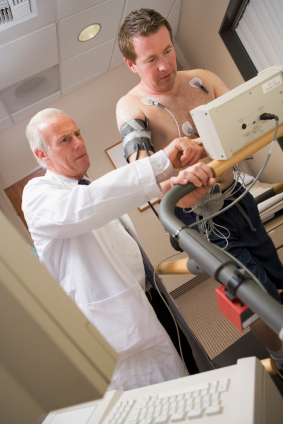
medical clearance, treadmill stress test

This treadmill stress test is looking for atherosclerotic heart disease, aka coronary artery disease and coronary heart disease

A recent study compared low-carb to low-fat dieting over 12 months and actually found better improvements in cardiovascular disease risk factors on the low-carb diet (max of 40 grams a day).

After 12 months, folks on a low-carbohydrate diet had lost 5.3 kg (11.7 lb), while those on a low-fat diet with similar caloric value had lost 1.8 kg (3.9 lb). Both groups showed lowering of LDL cholesterol, while the low-carbers had better improvements in HDL cholesterol and triglycerides.

DietDoctor Andreas Eenfeldt can add this study to his list of others that show better weight loss with low-carb diets compared to low-fat.

Steve Parker, M.D.

Pioglitazone May Prevent Dementia

MP900178842[1]

Pioglitazone (aka Actos) is a type 2 diabetes drug in the TZD class. You could call it an “insulin sensitizer.” A recent report out of Germany suggests that pioglitazone prevents dementia, but it’s not a very strong linkage. If it works, I wonder if it’s simply related to better control of blood sugar, which could be accomplished with a variety of means. 

The best popular press report I’ve seen is at Bloomberg.

German researchers went fishing for associations in a huge database of patients and drug usage. Their formal report hasn’t even been published yet. A five-year study was recently initiated to further investigate the possibility that piogoitazone prevents dementia. I doubt this will pan out.

Steve Parker, M.D.

Human Brain Size Shrinking For Last 10,000+ Years

An article at Scientific American offers some explanations, but nobody knows why with certainty. Maybe it’s simply related to the decline in average human body size that started about 10,000 years ago, the dawn of the Agricultural Revolution.

I’d credit the SciAm author but can’t figure out who it is. A quote:

The way we live may have affected brain size. For instance, domesticated animals have smaller brains than their wild counterparts probably because they do not require the extra brainpower that could help them evade predators or hunt for food. Similarly, humans have become more domesticated.

Discovery magazine looked at shrinking brains in 2010.

Steve Parker, M.D.

Segmented Sleep: Our Ancestral Pattern?

klkjh

Richard Wrangham estimates hominins tamed fire and started cooking with it 1.8 million years ago

I heard about segmented sleep a couple years ago. The idea is that you sleep for maybe three hours, then get up and putter around for two or three hours, then go back to sleep for another three or four hours.

The easy availability of light after sunset has changed our sleeping patterns only recently, on an evolutionary scale. Before we had electric lights, candles, oil and gas lamps, our only sources of artificial light after sundown were campfires and short-lived torches.

Karen Emslie has an article on segmented sleep at Aeon. A snippet:

Before electric lighting, night was associated with crime and fear – people stayed inside and went early to bed. The time of their first sleep varied with season and social class, but usually commenced a couple of hours after dusk and lasted for three or four hours until, in the middle of the night, people naturally woke up. Prior to electric lighting, wealthier households often had other forms of artificial light – for instance, gas lamps – and in turn went to bed later. Interestingly, Ekirch found less reference to segmented sleep in personal papers from such households.

For those who indulged, however, night-waking was used for activities such as reading, praying and writing, untangling dreams, talking to sleeping partners or making love. As Ekirch points out, after a hard day of labouring, people were often too tired for amorous activities at ‘first’ bedtime (which might strike a chord with many busy people today) but, when they woke in the night, our ancestors were refreshed and ready for action. After various nocturnal activities, people became drowsy again and slipped into their second sleep cycle (also for three or four hours) before rising to a new day. We too can imagine, for example, going to bed at 9pm on a winter night, waking at midnight, reading and chatting until around 2am, then sleeping again until 6am.

Think about this if you have insomnia that wakes you in the middle of the night and you can’t get back to sleep. It may not be a detrimental condition that requires medication or other intervention. Can you really win a fight with a million years of evolution?

RTWT.

Steve Parker, M.D.