Tag Archives: paleo diet

Another Review Article In Favor Of Paleolithic Eating

It’s in the Annual Review of Plant Biology. The authors promote fruit and vegetable consumption. A snippet from the 2013 article:

Our Paleolithic ancestors were hunter-gatherers, consuming diets rich in lean wild meat or fish, with relatively high consumption of fruits and green leafy vegetables. Our modern diets, in contrast, are high in saturated fats and starches, added sugars with high energy load, and “unnatural fats” such as transfats. Paleolithic diets, in contrast to those of simians and present-day hunter-gatherers, are estimated to have been approximately 75% fruit [that’s news to me; reference is from S. Lindeberg]. In modern US diets, foods unavailable to Paleolithic societies—including dairy products, cereal grains, refined cereal flour, refined sugars, refined vegetable oils, and alcohol—on average make up 70% of total energy consumption. Of this, 50% is in the form of vegetable oils and refined sugars .Americans currently consume less than 60% of the US Department of Agriculture recommendations for vegetables and less than 50% of the recommendations for fruits.

h/t Bill Lagakos

Reference: Annu. Rev. Plant Biol. 2013. 64:19–46. This article’s doi:10.1146/annurev-arplant-050312-120142

Alex Hutchinson and Matt Fitzgerald Endorse Old Stone Age Diet?

paleobetic diet, breakfast, paleo diet

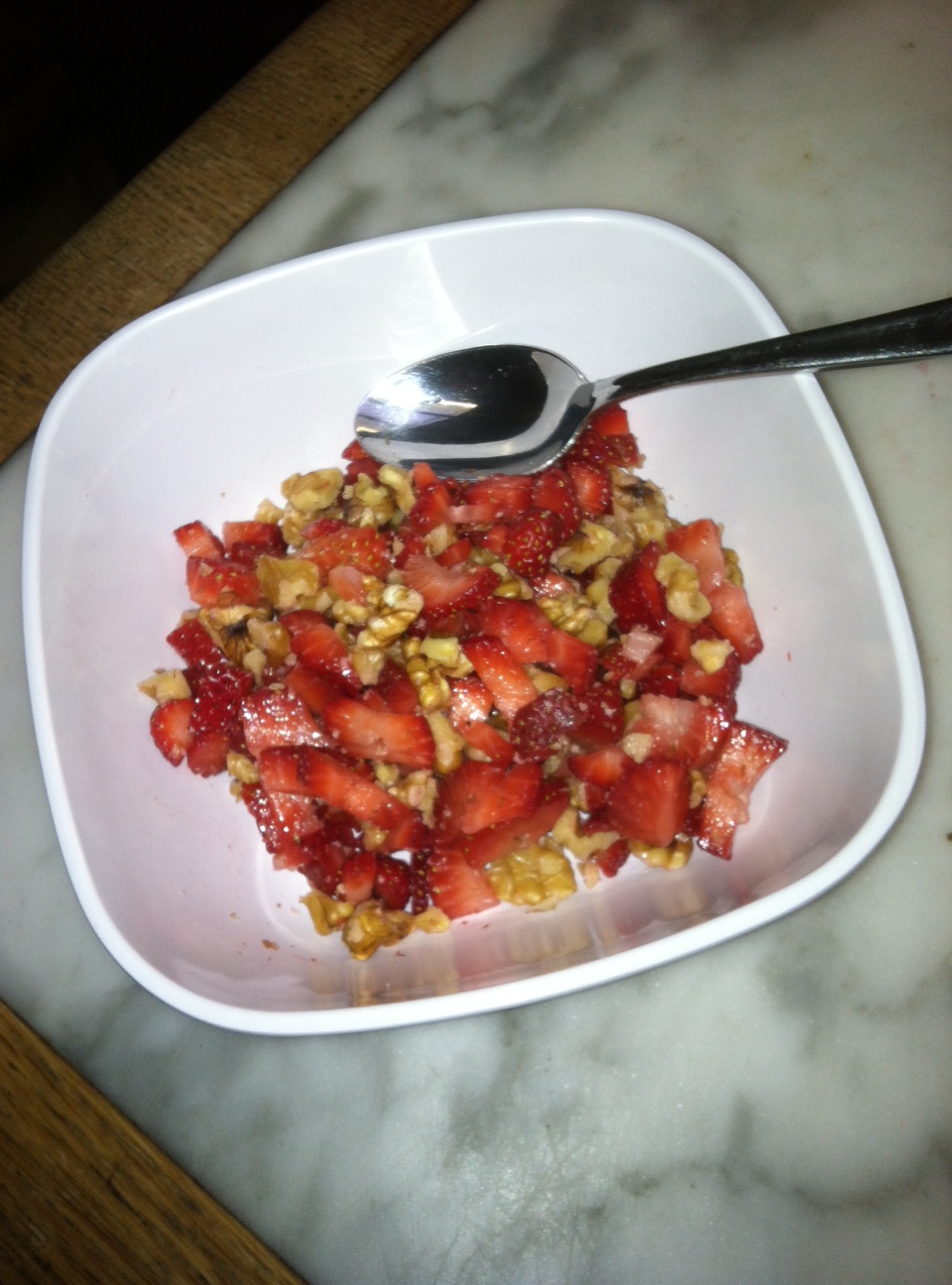
Brian’s Berry Breakfast: simply strawberries and walnuts. Nutrient analysis here: https://paleodiabetic.com/2013/02/27/brians-berry-breakfast/

Over at Runner’s World, Alex Hutchinson recommends three good books on nutrition. One is by Matt Fitzgerald called Diet Cults: The Surprising Fallacy at the Core of Nutrition Fads and Guide to Healthy Eating for the Rest of Us. Alex writes, “As you’d expect, he takes shots at various popular diets — Paleo, vegan, low-carb, low-fat, raw, and so on — but this isn’t really a debunking book. Frankly, if you’re a devoted adherent to one of these diets, this book probably won’t change your mind.” Anyway, Mr. Fitzgerald proposes a healthy eating hierarchy. The idea is that, wherever a food lies on the scale, the aim is to eat more of the foods that rank above it, and less of those ranked below it. In other words, generally eat more of the foods at the top of the list.

  • vegetables
  • fruits
  • nuts, seeds, and healthy oils
  • high-quality meat and seafood
  • whole grains
  • dairy
  • refined grains
  •  low-quality meat and seafood
  • sweets
  • fried foods

Those top four items pretty much define a pure paleo diet.

Steve Parker, M.D.

h/t Yoni Freedhoff (His Diet Fix book is one of the three recommended)

Recipe: Baked Glazed Salmon and Herbed Spaghetti Squash

This is a paleo-friendly modification of a meal in my Conquer Diabetes and Prediabetes book. It makes two servings.

Ingredients:

16 oz (450 g) salmon filets

4.5 garlic cloves

7 tsp (34.5 ml) extra virgin olive oil

1.5 fl oz (45 ml) white wine

4.5 tsp (22 ml) mustard

4 tbsp (60 ml) vinegar, either cider or white wine (balsamic vinegar would add 6 g of carbohydrate to each serving)

2 tsp (10 ml) honey

1.5 tbsp (15 ml) fresh chopped oregano (or 1 tsp (5 ml) of dried organo)

2 cups cooked spaghetti squash

2 tbsp fresh parsley, chopped

0.5 tsp (2.5 ml) salt

1/4 tsp (1.2 ml) black pepper, or to taste

Instructions:

Start on the herbed squash first since it may take 30 to 70 minutes to cook. Click  for instructions on cooking spaghetti squash unless you have some leftover in the fridge. To two cups of the cooked squash, add 4 tsp (20 ml) of the olive oil, all the fresh chopped parsley, a half clove of minced garlic, 1/3 tsp (1.6 ml) of the salt, and 1/8 tsp (0.6 ml) of black pepper, then mix thoroughly. The herbed squash is done. It could be difficult to time perfectly with the fish even if you have two ovens. But it’s tasty whether warm, room temperature, or cold. If you want it warm but it’s cooled down before the fish is ready, just microwave it briefly.

Onward to the fish. Preheat the oven to 400º F (200º C). Line a baking sheet or pan (8″ or 20 cm) with aluminum foil. Lightly salt and pepper the fish in the lined pan, with the skin side down.

Now the glaze. Sauté four cloves of minced garlic with 1 tbsp (15 ml) of olive oil in a small saucepan over medium heat for about three minutes, until it’s soft. Then add and mix the white wine, mustard, vinegar, honey, and 1/8 tsp (0.625 ml) of salt. Simmer uncovered over low or medium heat until slightly thickened, about there minutes. Remove glaze from heat and spoon about half of it into a separate container for later use.

Drizzle and brush the salmon in the pan with the glaze left in the saucepan. Sprinkle the oregano on tip.

Bake the fish in the oven for about 10–13 minutes, or until it flakes easily with a fork. Cooking time depends on your oven and thickness of the fish. Overcooking the fish will toughen it and dry it out. When done, use a turner to transfer the fish to plates, leaving the skin on the foil if able. Drizzle the glaze from the separate container over the filets with a spoon, or brush it on. Don’t use the unwashed brush you used earlier on the raw fish.

Servings: 2

Nutritional Analysis:

50% fat

13% carbohydrate

37% protein

600 calories

21 g carbohydrate

3 g fiber

18 g digestible carbohydrate

1,150 mg sodium

1,277 mg potassium

Prominent features: Rich in protein, B6, B12, niacin, pantothenic acid, phosphorus, and selenium

Recipe: Slow-Cooker Chicken, Roasted Vegetables, and Tangerine

low-carb diet, diabetic diet, Paleobetic diet

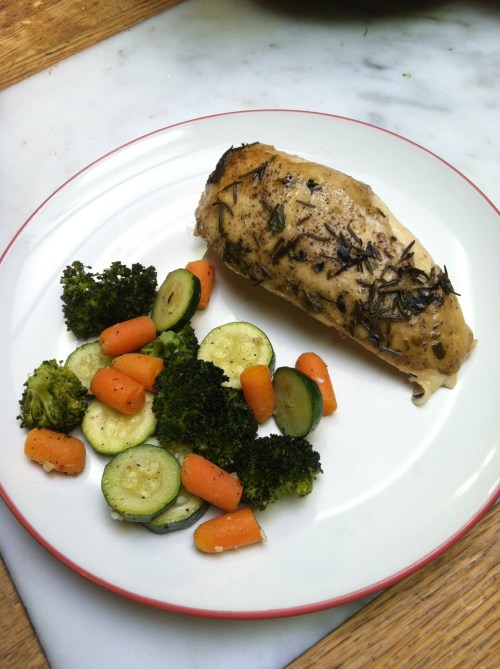
Slow-cooker chicken and roasted veggies

Guess the percentage of light versus dark meat in a chicken.

It’s 50:50. Along with the breasts, the wings are considered light or white meat.

Guess how much meat and skin you have left after you cook and debone a whole chicken. No peaking.

About half the raw weight you started out with. Not counting the giblets you feed to the coyotes.

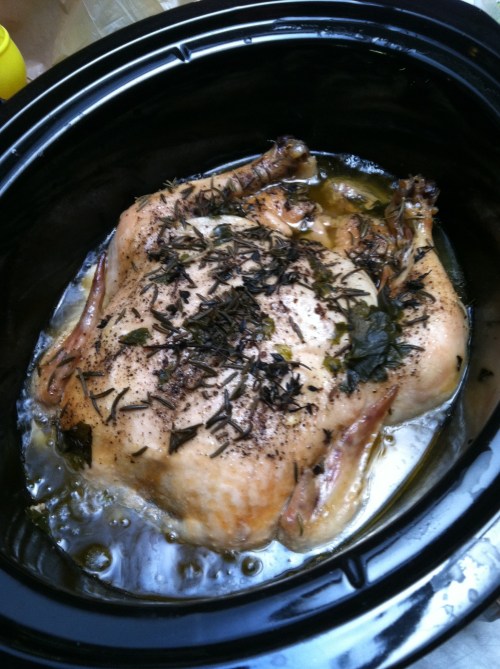
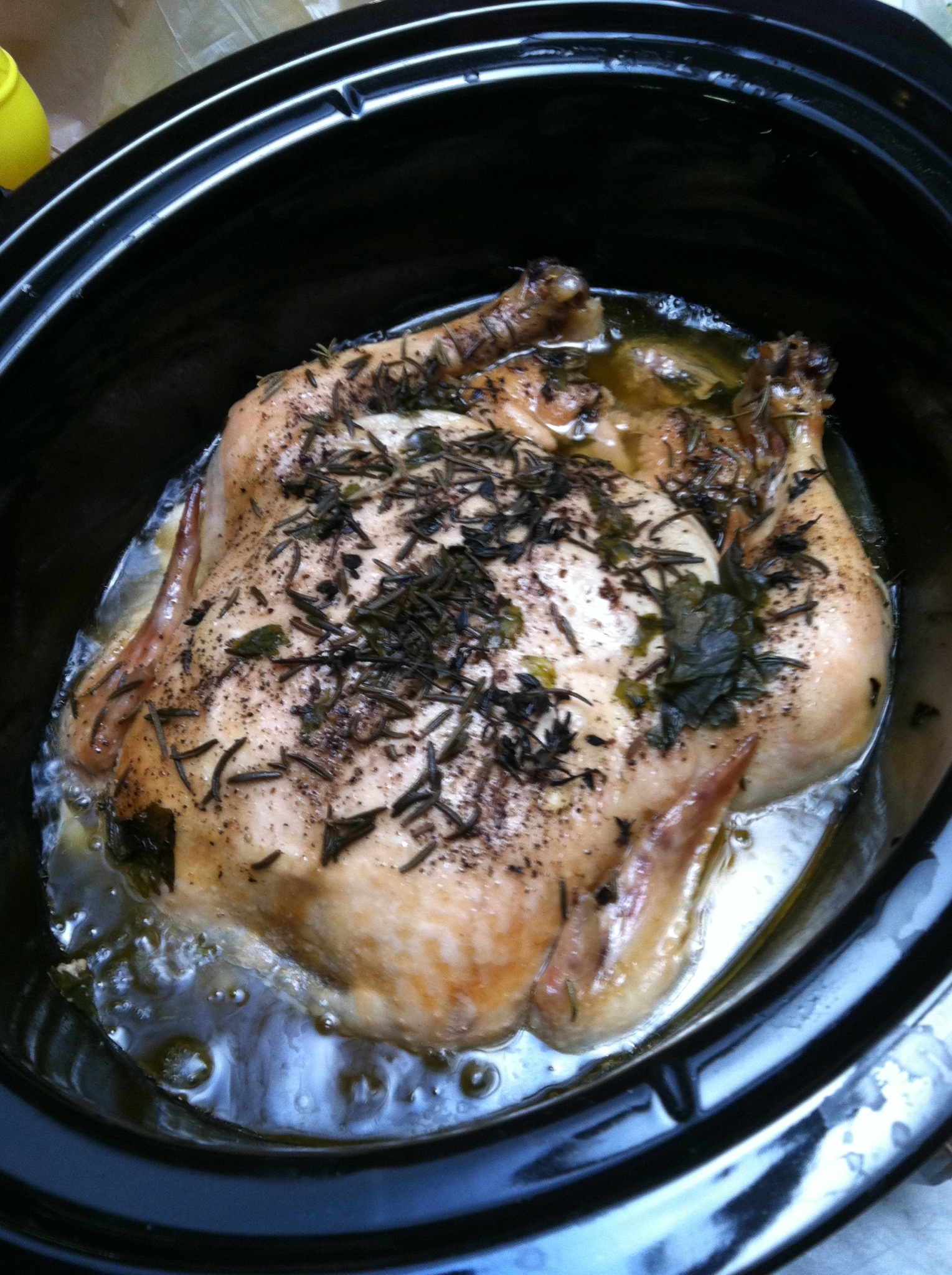
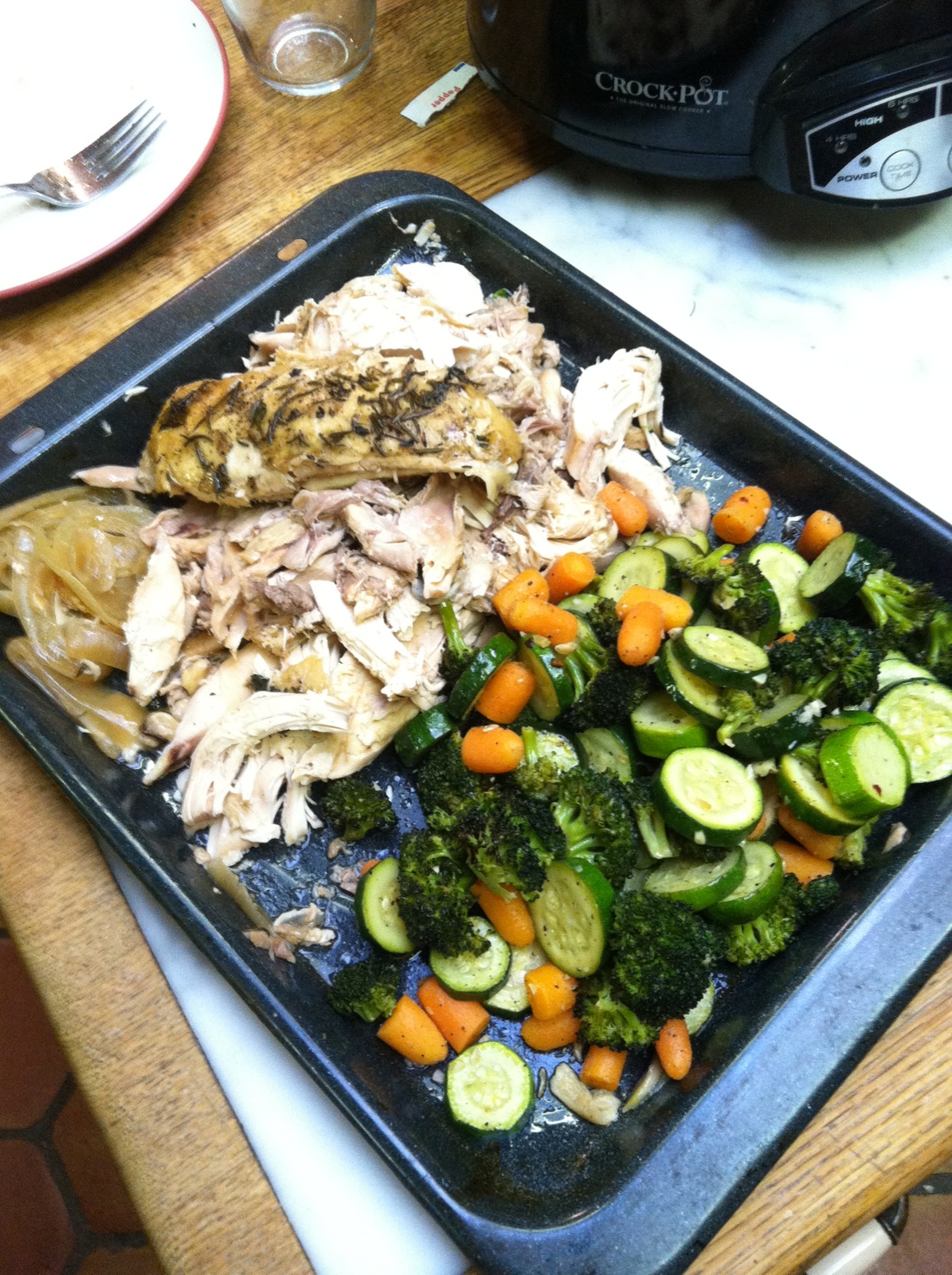
The nutritional analysis of this meal (see below) assumes that you eat the chicken skin and the onion on the bottom of the slow-cooker (sometimes called a Crock♦Pot although that’s a registered trademark). Much of the chicken fat will stay in the bottom of the slow-cooker after you remove the chicken and onion. Now you’ve got chicken stock to use in other recipes.
diabetic diet, low-carb, Paleobetic diet

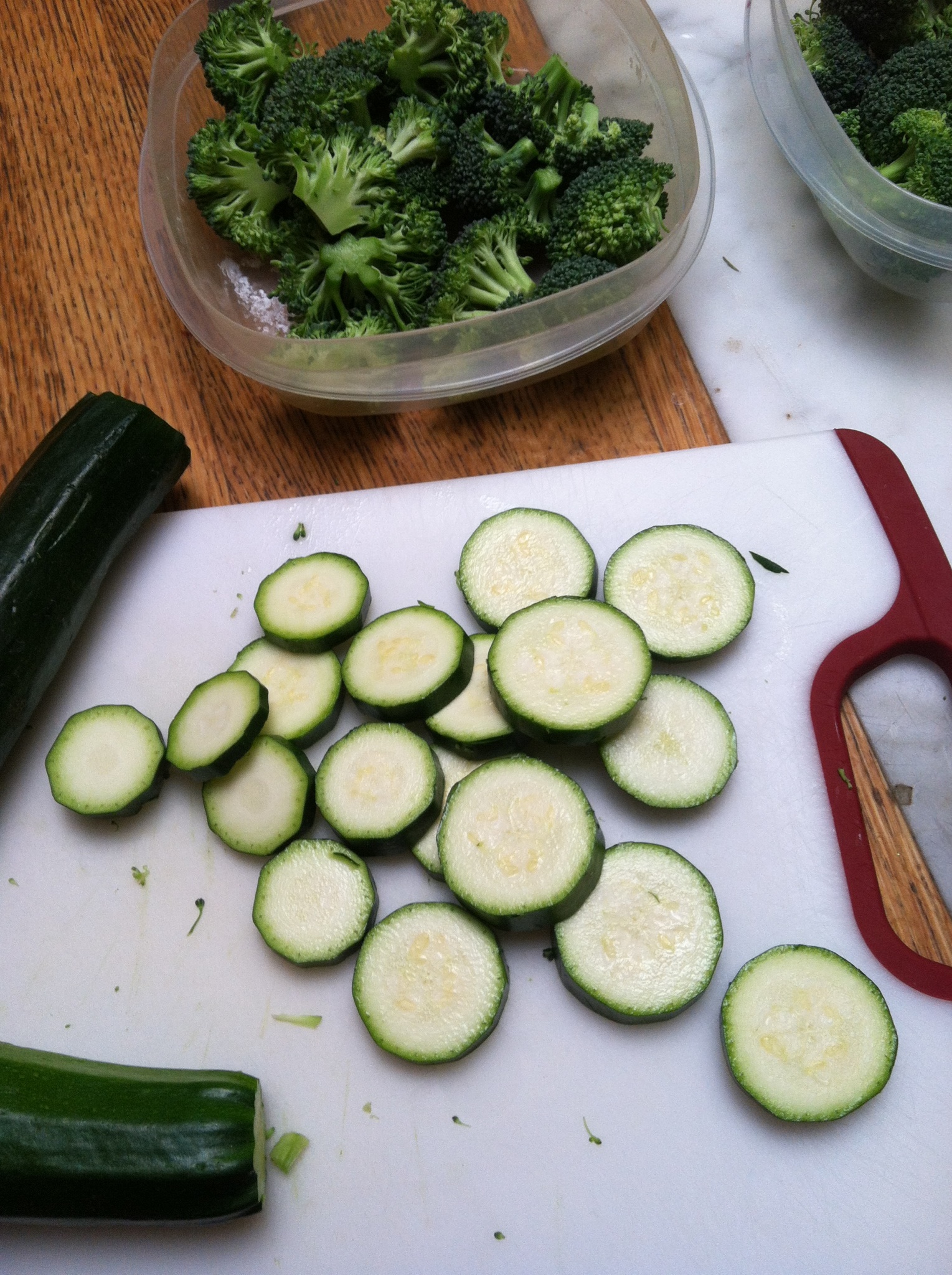
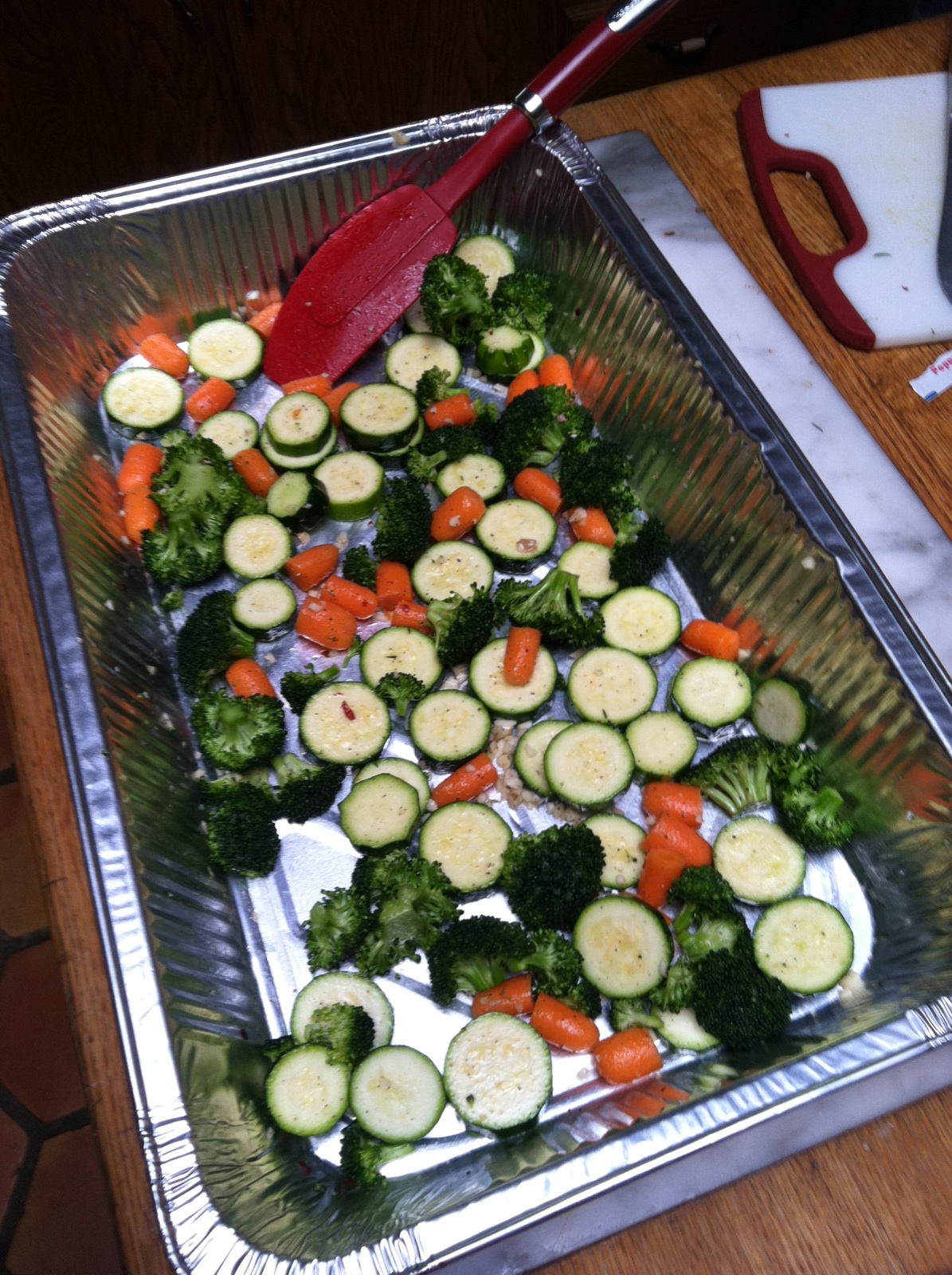
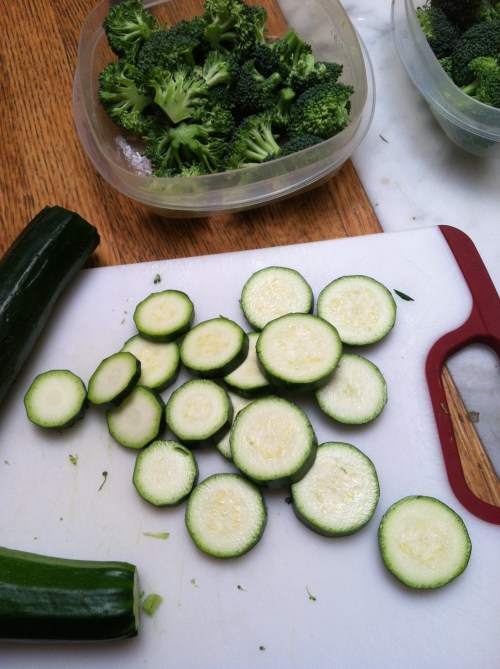
Meal prep: zucchini and broccoli

Ingredients:

1 whole young chicken, about 5 lb (2.3 kg) raw gross weight

1 medium onion, 6.5 oz (185 g), peeled and cut into 1-cm thick discs or circles

3 tbsp (45 ml) olive oil

5 garlic cloves

5 sprigs fresh thyme leaves, about 1/2 tsp (2.5 ml) (or a third of that if using dried thyme—I’ve read that dried thyme is better to add early in the cooking process whereas fresh may be best if added toward the end)

3/4 tsp (3.7 ml) fresh ground black pepper (or to taste)

3/4 tsp (3.7 ml) salt (or to taste)

1/2 tbsp (7.4 ml) fresh or dried rosemary

2 sprigs fresh parsley, leaves only, chopped

8 oz (240 ml) canned chicken broth

1.5 cups (360 ml) broccoli florets (aka flowerets)

3 zucchini squashes (6.5 oz or 185 g each), cut into 1/2-inch or 1-cm discs

5.5 oz (155 g) fresh carrots, peeled and cut into bite-sized pieces

2 tsp (10 ml) lemon juice

1/4 tsp (1.2 ml) lemon zest (optional)

1/4 tsp (1.2 ml) pepper flakes (do you have a left-over packet from your old pizza-eating days?)

5 medium (2 and 3/8 inch or 6-cm diameter) tangerines
low-carb, diabetic diet, Paleobetic diet

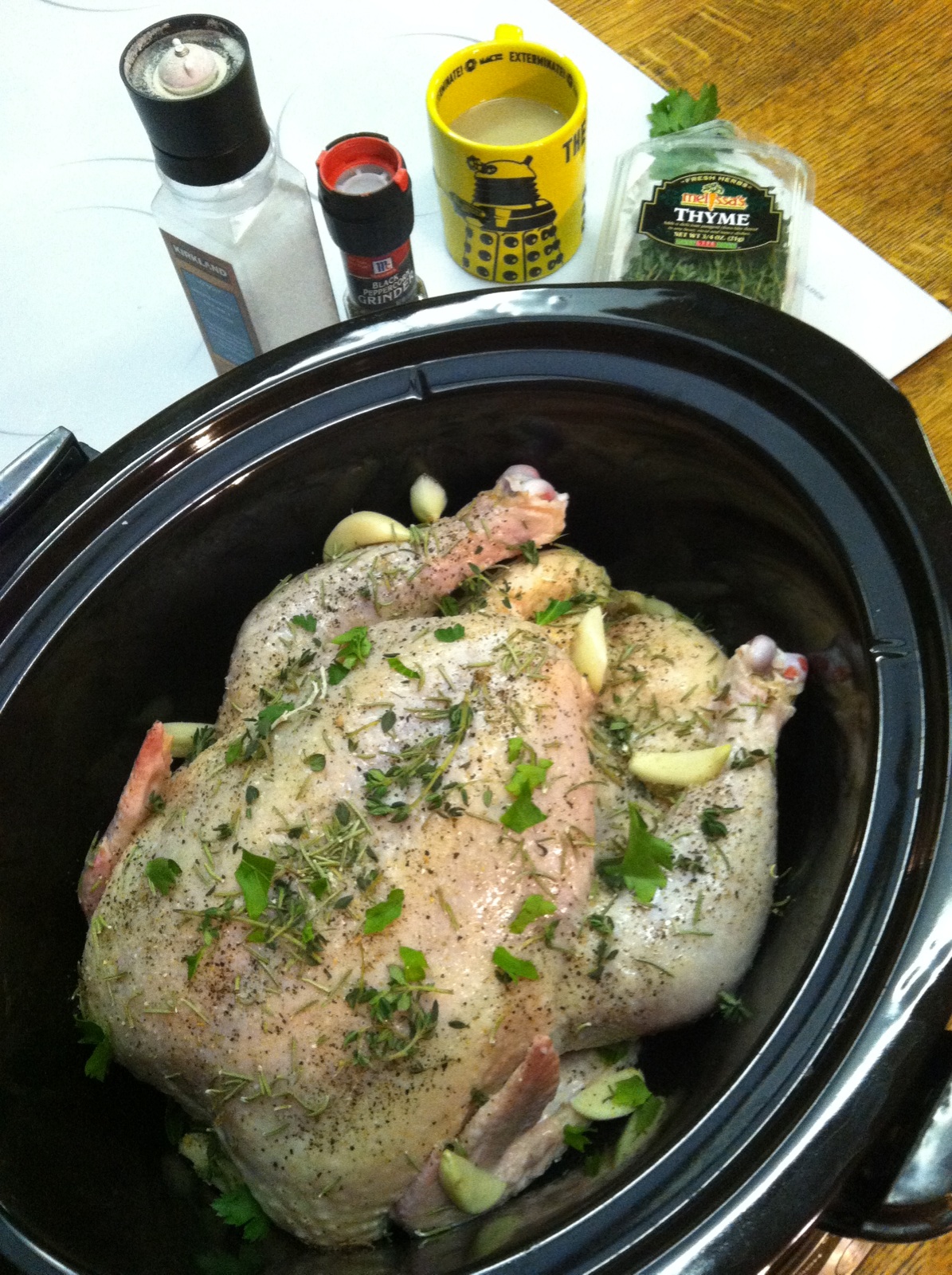
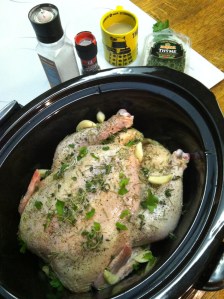
Slow-cooker loaded and just about ready to fire up

Instructions:

First, the slow-cooker chicken. This cooks for eight hours, so you’ll want to start in the morning. Place the cut onion in the bottom of the cooker. Do what you want with the chicken giblets (neck, liver, heart, gizzard), even eat them after cooking. The coyotes don’t care if cooked or not. Rub 1 tbsp (15 ml) of the olive oil onto the top of the chicken, then place in the cooker on the bed of onion. Cut three of the garlic cloves into thirds and drop into the cooker. Add the chicken broth to the cooker. Sprinkle the thyme leaves on top of the chicken, along with 1/4 tsp (1.2 ml) of black pepper and 1/4 tsp (1.2 ml) salt. Sprinkle the rosemary and parsley into the cooker. Close the lid and cook on low heat for eight hours.

At the base of the slow-cooker

At the base of the slow-cooker

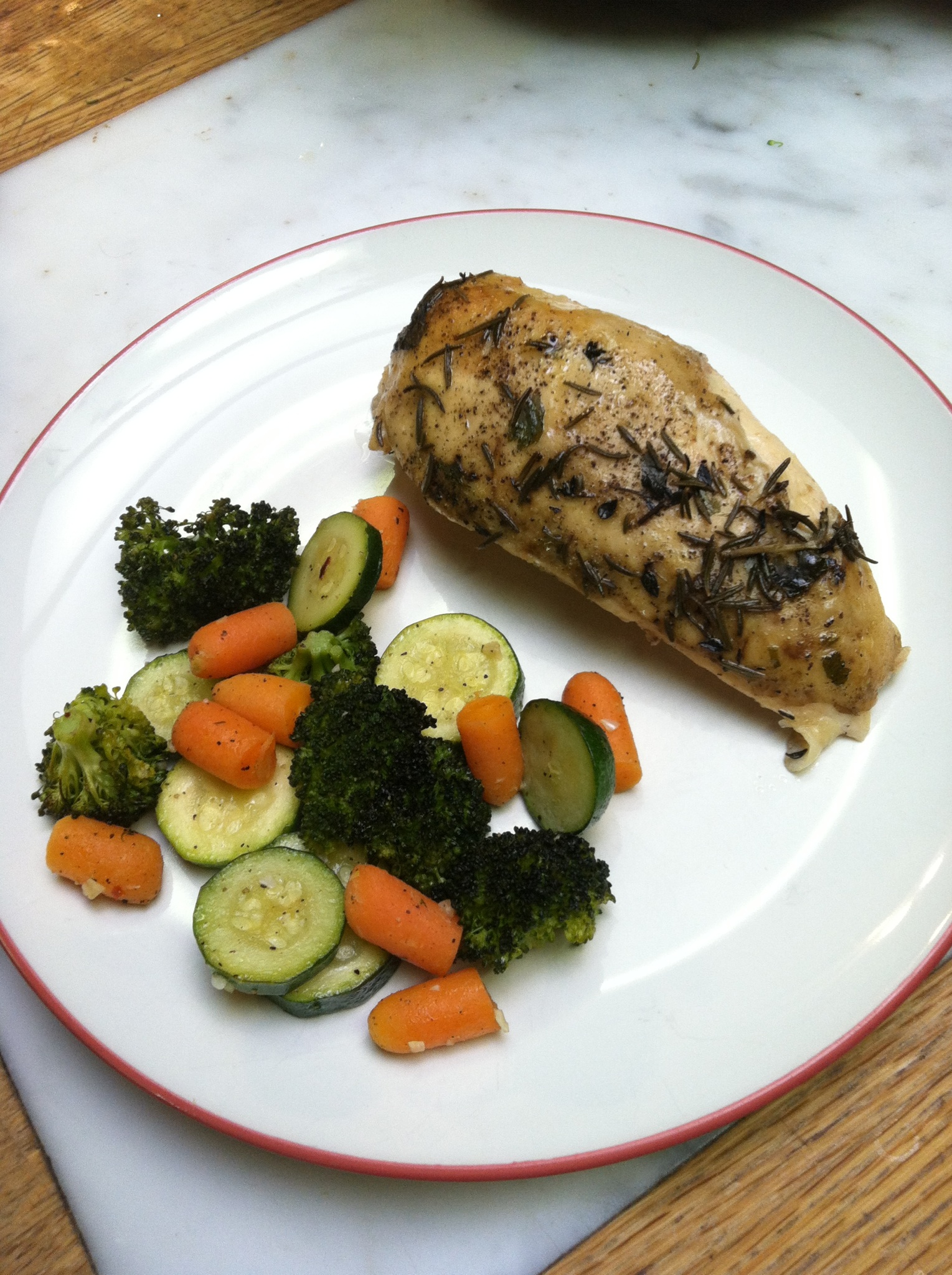
Now the roasted vegetables. Preheat the oven to 400 ºF or 200 ºC. In a large baking dish or sheet, place the broccoli, zucchini, carrots, 2 minced garlic cloves, the lemon juice and zest, the pepper flakes, 1/2  tsp salt (2.5 ml) , 1/2 tsp pepper (2.5 ml), and 2 tbsp olive oil (30 ml). Mix thoroughly. You could do the mixing in a bowl if you wish, then transfer to a cooking sheet. You want these cooking as a thin layer rather than bunched on top of each other. Place in oven and cook for 15–20 minutes, depending on how crisp you like your veggies. The carrots will always end up firmer than the others.

Enjoy a tangerine for desert.
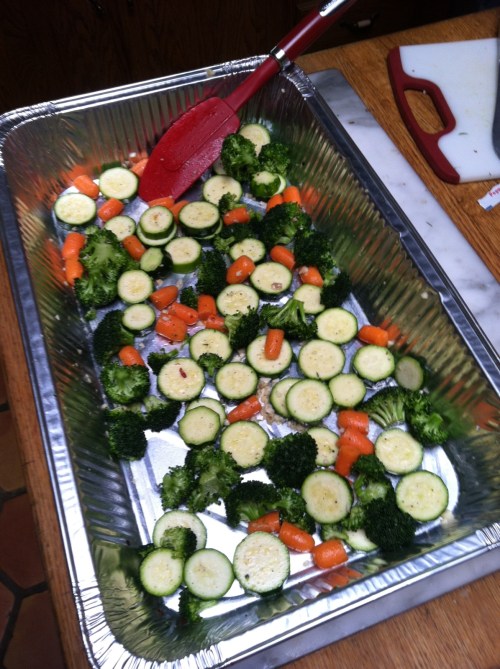
low-carb, diabetic diet, Paleobetic diet

Next step is the oven

low-carb, diabetic diet, Paleobetic diet

Eight hours later…

Servings: 5 (a serving is 7 oz of chicken (with skin), 1 cup of veggies, and 1 tangerine)

Nutritional Analysis per Serving: 

49% fat

13% carb

38% protein

692 calories

24 g carbohydrate

5 g fiber

19 g digestible carbs

1,409 mg sodium

1,132 mg potassium

Prominent features: Rich in protein, vitamin A, B6, C, iron, niacin, pantothenic acid, phosphorus, selenium, and zinc.
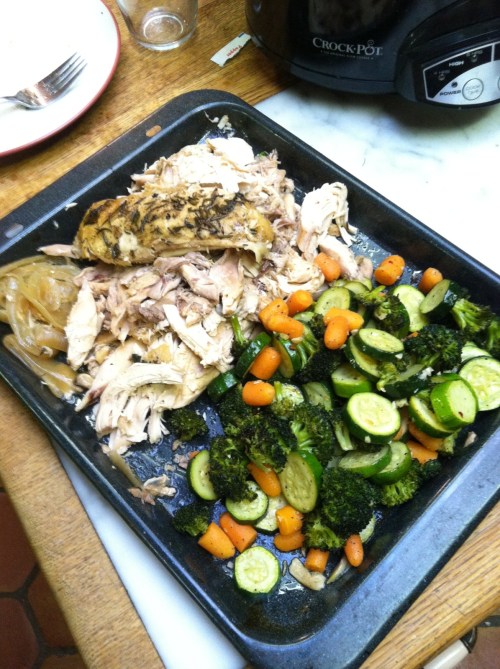
diabetic diet, Paleobetic diet, low-carb

Here’s all of it except the tangerines. To do my nutritional analysis, I had to debone the bird and weigh the meat and skin.

Recipe: Sunny’s Super Salad

diabetic diet, Paleobetic diet, diabetes,

You won’t be able to eat this in one sitting if you’re small or sedentary

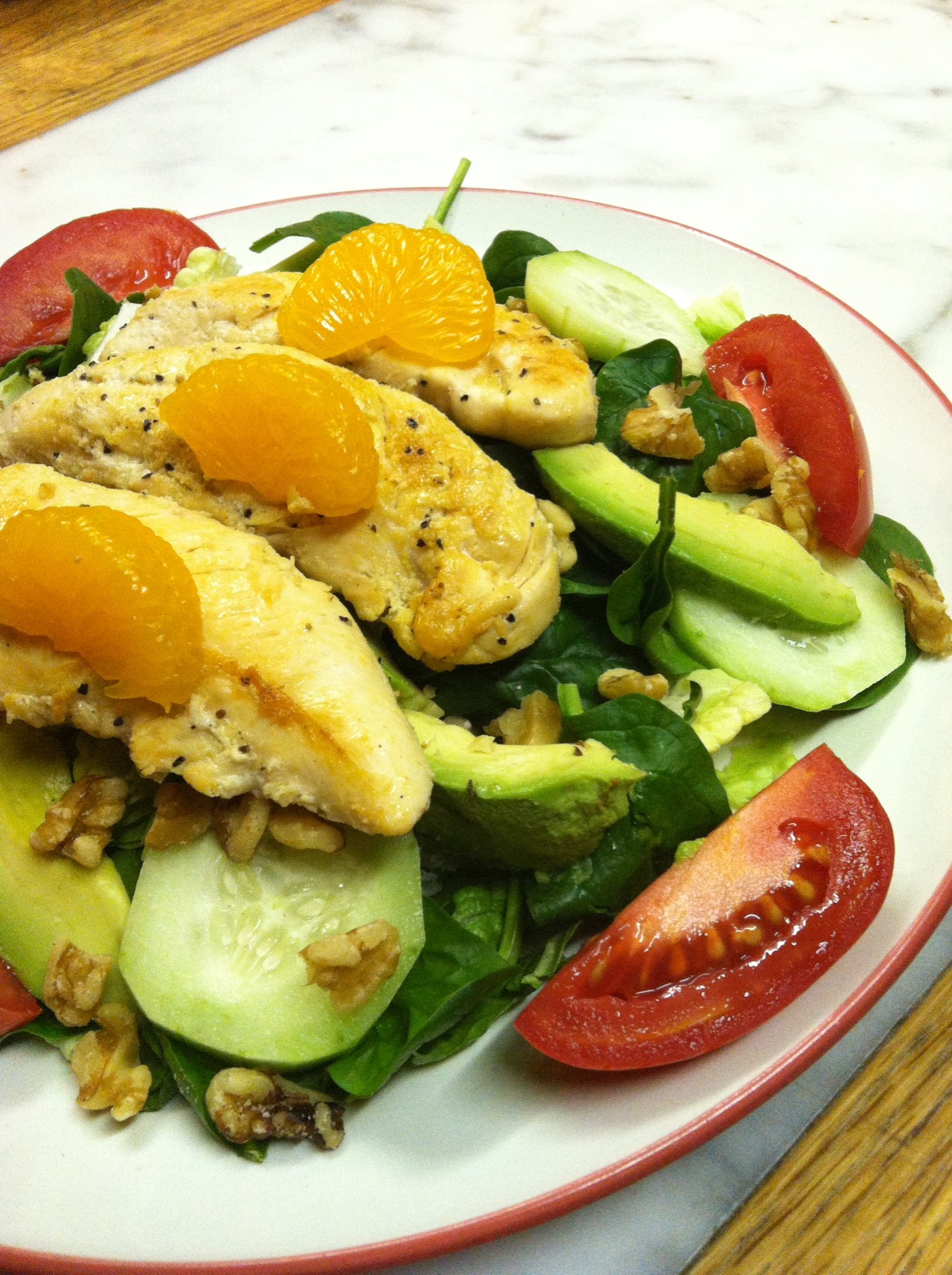
This huge salad is a full meal. It fills a 10-inch plate (25 cm). Since it contains five vegetables, you should feel virtuous eating it. Who says the paleo diet’s all about meat?

Ingredients:

8 oz (230 g) raw chicken breast tenderloin (it cooks down to 5 oz)

1/4 cup (60 ml) canned mandarin orange wedges (6-7 wedges) (if you can only find these packed in syrup or light syrup, add 3 g to the digestible carb count below)

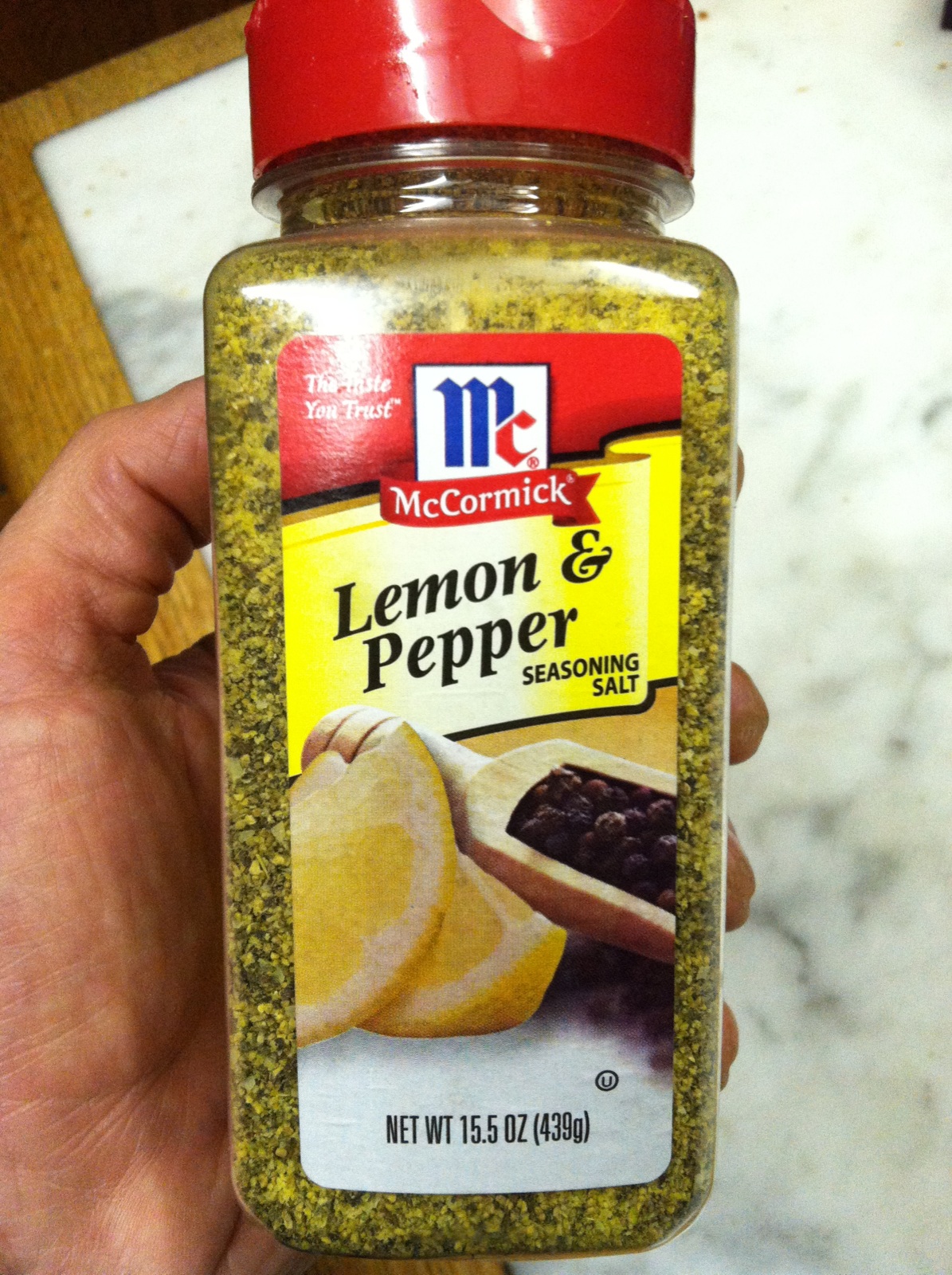
1/4 tsp (1.2 ml) lemon pepper seasoning

4 oz (110 g) hearts of romaine lettuce

1 oz (30 g) baby spinach

2.5 oz (1/4 cucumber or 70 g) cucumber, peeled and sliced into discs

2 oz (60 g) California avocado, peeled and seeded, cut into wedges (1/2 of standard-sized avocado)

3 oz (85 g) fresh tomato (a typical roma or small tomato)

1 oz (30 g) walnuts

6 tbsp (90 ml) extra virgin olive oil

2 tbsp (30 ml) vinegar (we used balsamic)

1/4 tsp (1.2 ml) salt

1/4 tsp (1.2 ml) fresh ground black pepper

1/4 tsp (1.2 ml) crushed dried rosemary

diabetic diet, Paleobetic diet, low-carb, seasoning

Like Deborah on “Everybody Loves Raymond,” my wife often makes lemon chicken

Instructions:

First cook the chicken breast over medium heat in a skillet. If you think the meat will stick to the pan, add a smidgen (1/2 tsp or 2.5 ml) of olive oil to the pan. Don’t overcook or the meat will get tough. It’ll take five or 10 minutes.

While that’s cooking, prepare your vinaigrette. In a jar with a lid, place the olive oil, vinegar, salt, pepper, and rosemary, then shake vigorously for 20 seconds. Not 21 or you’ll ruin it. You’re done.

If you use a commercial vinaigrette instead, use one that has no more than 2 g of carbohydrate per 2 tbsp. You may have trouble finding that since so many of the commercial guys add sugar.

Place the lettuce and spinach on a plate then add the cucumber, avocado, tomato, cooked chicken, walnuts, and mandarin orange wedges on top. Drizzle two or three tbsp of the vinaigrette over it (nutritional analysis assumes three). Enjoy.

Servings: 1

(Actually, you’ll have enough vinaigrette left over for one or two more salads or vegetable servings. Save it in the refrigerator.)

Nutritional Analysis:

57 % fat

12 % carbohydrate

31 % protein

710 calories

25 g carbohydrate

10 g fiber

15 g digestible carb

990 mg sodium

1,570 mg potassium

Prominent features: Rich in protein, vitamin A, B6, C, copper, iron, manganese, magnesium, pantothenic acid, selenium, and phosphorus.

low-carb diet, diabetic diet, Paleobetic diet, balsamic vinaigrette,

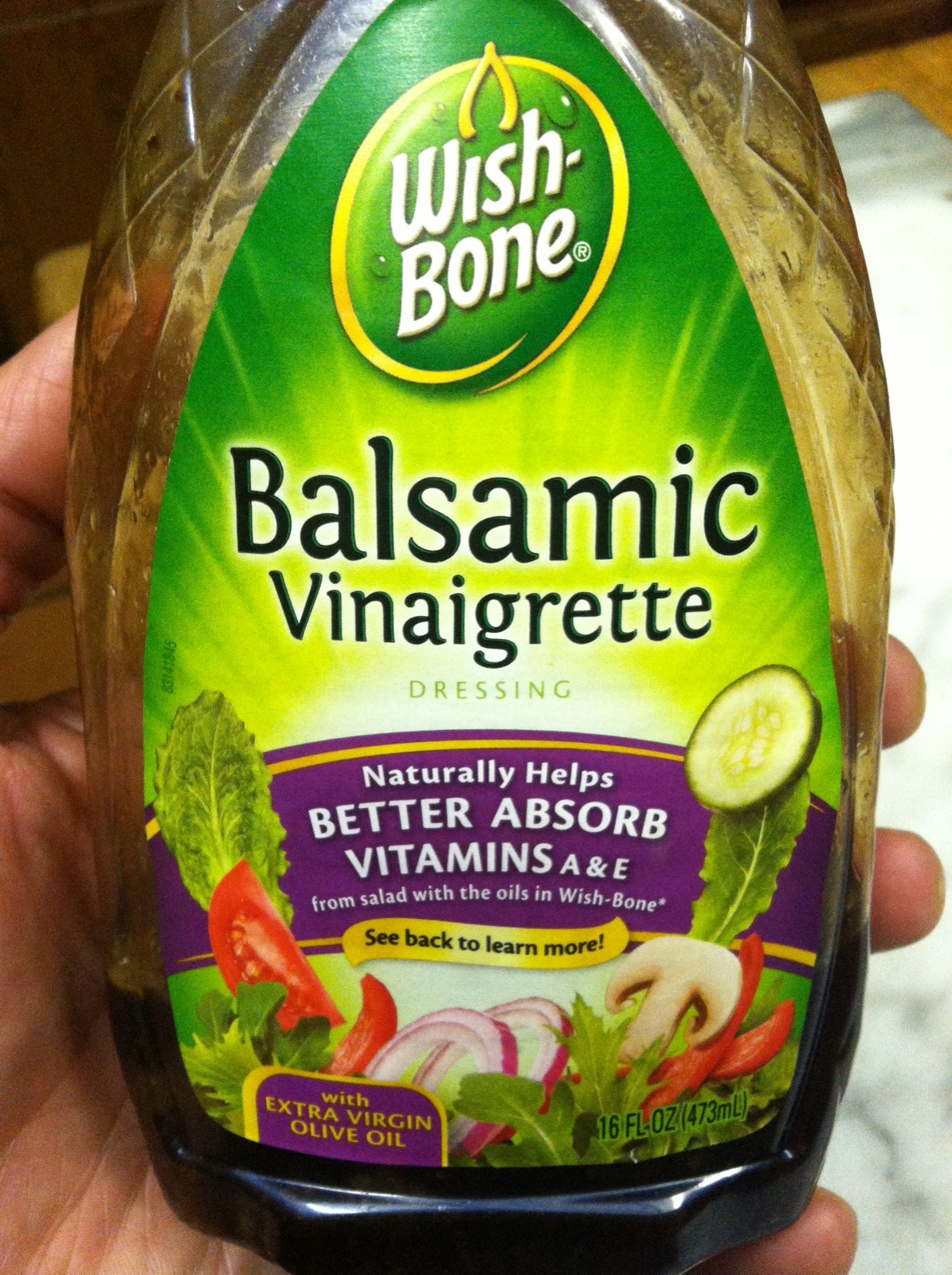
I like this and use it. The lower left corner says “with EXTRA VIRGIN OLIVE OIL.” In order, the listed ingredients are water, balsamic vinegar, soybean oil and extra virgin olive oil, sugar….  2 tbsp has 3 grams of carb. Which oil would you guess predominates? BTW, balsamic has the most carbs of all the vinegars.

Worried About Inadequate Calcium on Your Paleo Diet?

Bix at Fanatic Cook has a post on calcium and dairy consumption as regards to protection against broken hips from thin bones (osteoporosis). Or rather the lack of protection!

I’ve worried before that most paleo diets could be deficient in calcium because they don’t include milk products. Osteoporosis in adults or inadequate bone growth in kids are about the only significant problems you might see if that’s the case.

Bix quotes Harvard professor and pediatrician Dr. David Ludwig:

“Humans have no nutritional requirement for animal milk, an evolutionary recent addition to diet. Anatomically modern humans presumably achieved adequate nutrition for millennia before domestication of dairy animals, and many populations throughout the world today consume little or no milk for biological reasons (lactase deficiency), lack of availability, or cultural preferences.

Adequate dietary calcium for bone health, often cited as the primary rationale for high intake of milk, can be obtained from many other sources. Indeed, the recommended levels of calcium intake in the United States, based predominately on balance studies of 3 weeks or less, likely overestimate actual requirements and greatly exceed recommended intakes in the United Kingdom.

Throughout the world, bone fracture rates tend to be lower in countries that do not consume milk compared with those that do. Moreover, milk consumption does not protect against fracture in adults, according to a recent meta-analysis.”

Read the whole enchilada.

Another article mentions Dr. Ludwig:

People with a high-quality diet — those who get adequate protein, vitamin D and calcium from things like leafy greens, legumes, nuts and seeds — may get little or no added nutritional benefit from consuming three servings of dairy a day, Ludwig argues.

Hmmm. Wonder how he feels about grains. Sounds paleoish so far.

I’m just about ready to stop worrying about calcium.

Steve Parker, M.D.

Was It the Paleo Diet or Acorns or ? That Rotted These Teeth?

“Basically, nearly everybody in the population had caries,” or tooth decay, says Louise Humphrey, a paleo-anthropologist with the Natural History Museum in London.

Humphrey says 94 percent of the more than 50 people from the cave she studied had serious tooth decay. “I was quite surprised by that,” says Humphrey. “I haven’t seen that extent of caries in other ancient populations.”

Certainly, life was brutal and short for Stone Age folks, what with saber tooth cats, parasites, and not an aspirin to be found anywhere. But at least the paleo diet — meat, tubers, berries, maybe some primitive vegetables and very few carbs— was supposed to be good for the teeth. Carbohydrates can turn sugary in your mouth, then bacteria turn that into enamel-eating acid.

But apparently, these ancient people had a thing for acorns.

“Acorns,” says Humphrey, “are high in carbohydrates. They also have quite a sticky texture. So they would have adhered easily to the teeth.”

Read the whole thing.

Click to see the study abstract.

h/t Melissa McEwen

David Mendosa On Low-Carb High-Fat Diets for Type 2 Diabetes

David Mendosa suggests that all type 2 diabetics can manage their illness without drugs. I’m not quite that optimistic, but probably a majority can, if they have the knowledge, discipline, and willpower. I haven’t looked in depth at David’s diet recently so I don’t know if it’s paleo or not; it’s more likely LCHF (low-carb, high-fat). Here are some snippets from David’s blog:

You can use drugs to bring your A1C level down to normal. That’s a good thing. But this strategy does have its costs, and those costs aren’t just money out of your pocket or your checkbook. The worst of those costs are the potential side effects of the drugs.

***

But some of us think we have a safer strategy of managing our diabetes without drugs. Back in 2007 I joined this group with the encouragement of a good friend of mine who is a Certified Diabetes Educator. Before that, I had 14 years of experience taking a wide range of diabetes drugs, including two different sulfonylureas (Diabeta and Amaryl), Glucophage (metformin), and Byetta. For the past six years I haven’t taking any diabetes drugs, and yet I keep my diabetes in control with an A1C level usually about 5.4.

I had to make three big changes in my life when I went off the diabetes drugs, and they are hard at first. But now they are a routine part of my life, and I would never go back to my old ways. The changes that I had to make are those that almost everyone who has diabetes has to make. In order of importance, I had (1) to lose weight, (2) eat fewer carbohydrates, and (3) exercise more.

Read the whole enchilada. It’s brief.

Steve Parker, M.D.

Unexpected Caveman Foods

Offal includes tongue, heart, liver, kidney, intestine, pancreas, trotters, and ?

Offal includes tongue, heart, liver, kidney, intestine, pancreas, trotters, and ?

Tom Schuler’s blog has a guest post by archeologist John Williams, Ph.D. entitled “How to eat like a cavemen (the real kind).” Dr. Williams reviews some evidence that our Paleolithic ancestors ate:

  • chyme
  • human flesh
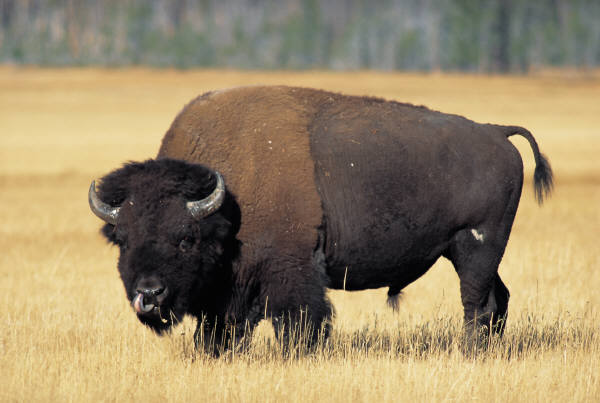
  • blood (e.g., Plains Indians drinking warm buffalo blood)
  • yogurt (e.g., from the stomachs of suckling buffalo calves)
  • milk
  • bone and organ grease
  • alcohol (from fermented fruit)

Read the rest. It’s a funny and quick read.

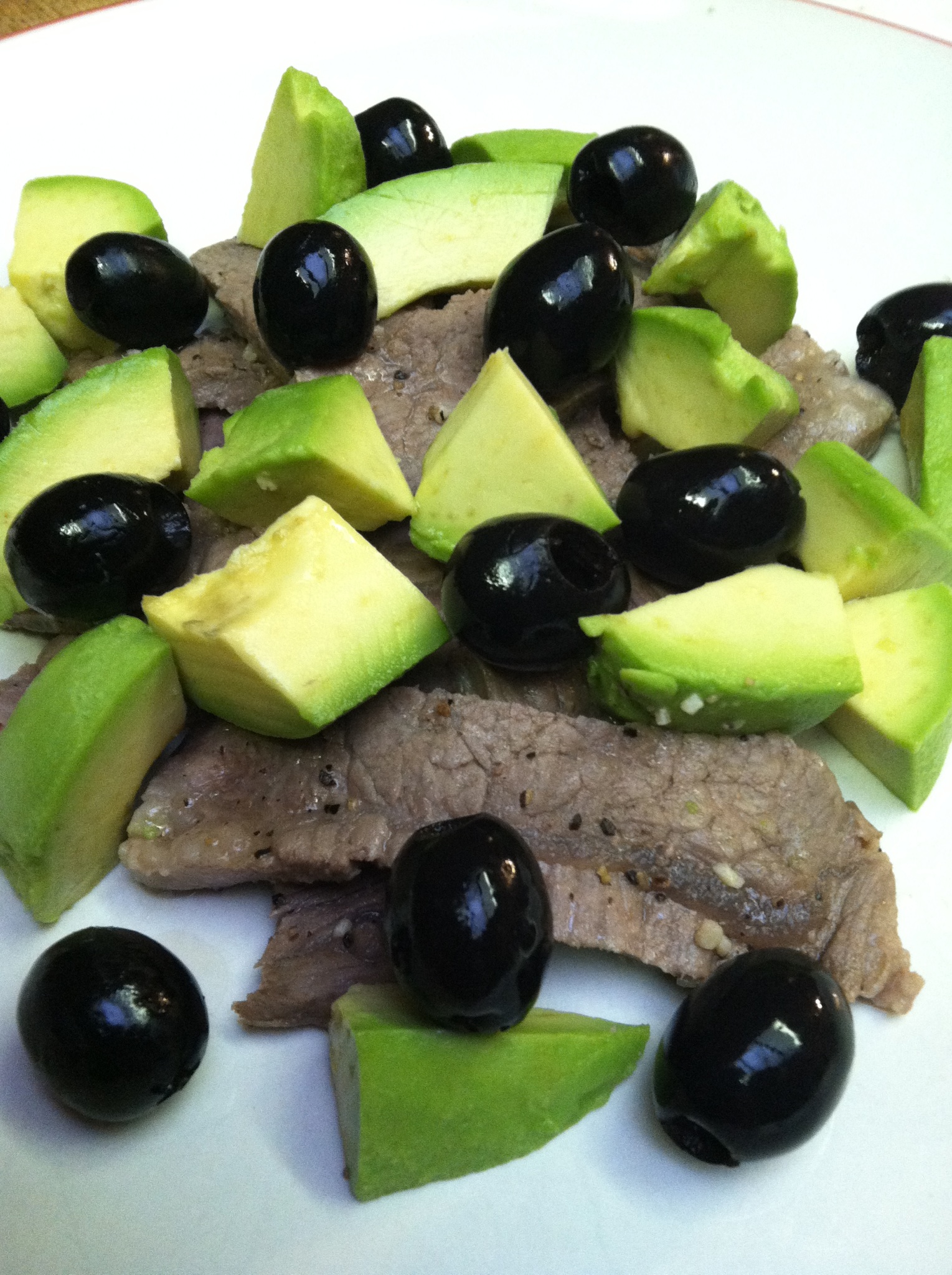
Recipe: Steak, Avocado, Olives and Tomato

Paleobetic diet

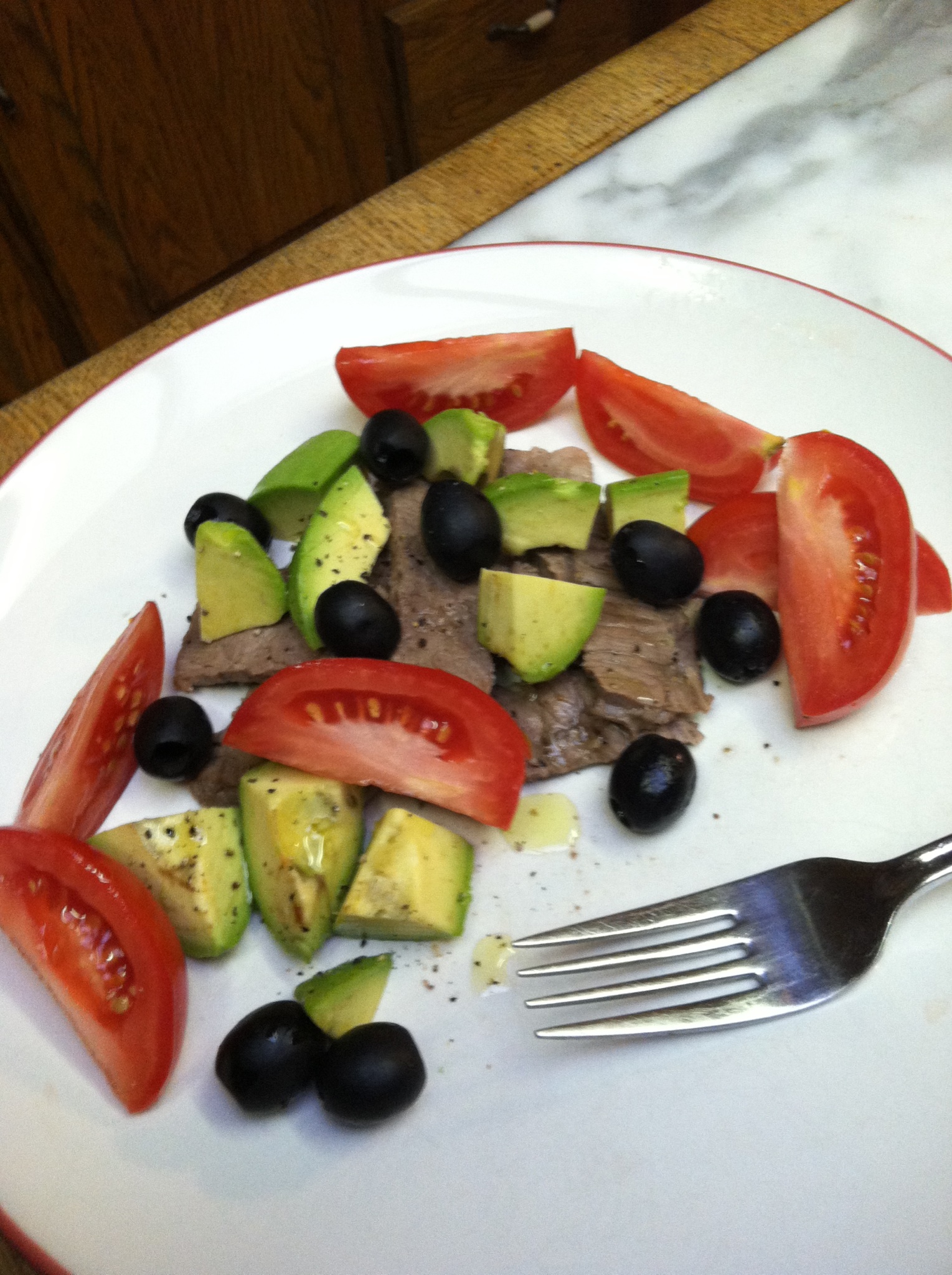
I ate mine for breakfast. Who needs bagels, cereal, and donuts?

This was super-easy to put together because I used leftover steak. But I’ll assume you’re cooking your steak fresh. We bought ours as thinly sliced round steak, about a 1/4-inch thick (0.6 cm). Some places might refer to this as a “minute steak” because it cooks so quickly. Minute steak also refers to a piece of beef, usually the round, that’s been pounded flat, about a 1/4-inch thick. Even if you start with raw meat, you can prepare today’s recipe in 10 minutes.

Paleobetic diet

It tastes as good as it looks

Ingredients:

4 oz (113 g) cooked thin round steak (start with 5 oz raw)

1 California (Hass) avocado, standard size (4.5 oz or 127 g), peeled, pitted, and chunked

14 black olives, pitted, medium size (Purist alert: probably highly processed)

1 tomato, medium-size (medium size or 2.5-inch diameter (6,4 cm), or a large roma tomato), cut into wedges

Salt and pepper to taste, or use commercial steak seasoning such as Montreal Steak Seasoning by McCormick (a favorite at the Parker Compound)

Instructions:

Sprinkle your steak with seasoning then cook over medium or medium-high heat in a skillet, about a minute on each side. Or heat your leftover steak in the microwave. If you overcook, it will be tough.

Place all ingredients artfully on a plate and enjoy.

Servings: 1

Nutritional Analysis (via Fitday):

60% fat

12% carbohydrate

28% protein

600 calories

20 g carbohydrate

12 g fiber

8 g digestible carbohydrate

587 mg sodium

1530 mg potassium

Prominent features: Lots of protein, vitamin B6, vitamin B12, copper, iron, niacin, pantothenic acid, phosphorus, selenium, and zinc