Monthly Archives: February 2013

Low-Carb Research Update

Grain-based high-carb Neolithic food

Grain-based high-carb Neolithic food

The paleo diet averages about 30% of total calories from carbohydrates, with a range of about 22 to 40%.  That 30% average is much lower than the standard 50–60% in the developed world.  Is that lower percentage healthy or not?  It depends on the quality of the carbs and the remainder of the diet.  It most certainly can be healthy.

As much as possible, I base my nutrition and medical recommendations on science-based research published in the medical literature.  In the early 2000s, a flurry of scientific reports demonstrated that very-low-carb eating (as in the style of Dr. Robert Atkins) was safe and effective for short-term weight management and control of diabetes.  Eighty hours of literature review in 2009 allowed me to embrace low-carbohydrate eating as a logical and viable option for many of my patients. The evidence convinced me that the relatively high fat content of many low-carb diets was nothing to worry about long-term.

I’d like to share with you some of the pertinent low-carb research findings of the last few years.

Low-Carb Diets

  • Low-carb diets reduce weight, reduce blood pressure, lower triglyceride levels (a healtlhy move), and raise HDL cholesterol (another good trend).  These improvements should help reduce your risk of heart disease.  (In the journal Obesity Reviews, 2012.)
  • Dietary fat, including saturated fat, is not a cause of vascular disease such as heart attacks and atherosclerosis (hardening of the arteries).  (Multiple research reports.)
  • If you’re overweight and replace two sugary drinks a day with diet soda or water, you’ll lose about four pounds over the next six months.  (American Journal of Clinical Nutrition, 2012.)
  • United States citizens obtain 40% of total calories from grains and added sugars.  Most developed countries are similar.  Dr. Stephan Guyenet notes that U.S. sugar consumption increased steadily “…from 6.3 pounds [2.9 kg] per person per year in 1822 to 107.7 pounds [50 kg] per person in 1999.  Wrap your brain around this: in 1822 we ate the amount of added sugar in one 12-ounce can of soda every five days, while today we eat that much sugar every seven hours.”
  • A very-low-carb diet improves the memory of those with age-related mild cognitive impairment. Mild cognitive impairment is a precursor to dementia.  (University of Cincinnati, 2012.)
  • High-carbohydrate and sugar-rich diets greatly raise the risk of mild cognitive impairment in the elderly. (Mayo Clinic study published in the Journal of Alzheimers’ Disease, 2012.)
  • Compared to obese low-fat dieters, low-carb dieters lose twice as much fat weight.  (University of Cincinnati, 2011.)
  • Diets low in sugar and refined starches are linked to lower risk of age-related macular degeneration in women.  Macular degeneration is a major cause of blindness.  (University of Wisconsin, 2011.)
  • A ketogenic (very-low-carb) Mediterranean diet cures metabolic syndrome (Journal of Medicinal Food, 2011.)
  • For type 2 diabetics, replacing a daily muffin (high-carb) with two ounces (60 g) of nuts (low-carb) improves blood sugar control and reduces LDL cholesterol (the “bad” cholesterol). (Diabetes Care, 2011.)
  • For those afflicted with fatty liver, a low-carb diet beats a low-fat diet for management. (American Journal of Clinical Nutrition, 2011.)
  • For weight loss, the American Diabetes Association has endorsed low-carb (under 130 g/day) and Mediterranean diets, for use up to two years. (Diabetes Care, 2011.)
  • High-carbohydrate eating doubles the risk of heart disease (coronary artery disease) in women.  (Archives of Internal Medicine, 2010.)
  • One criticism of low-carb diets is that they may be high in protein, which in turn may cause bone thinning (osteoporosis).  A 2010 study shows this is not a problem, at least in women.  Men were not studied.  (American Journal of Clinical Nutrition.)
  • High-carbohydrate eating increases the risk of developing type 2 diabetes (American Journal of Clinical Nutrition, 2010.)
  • Obesity in U.S. children tripled from 1980 to 2000, rising to 17% of all children.  A low-carb, high-protein diet is safe and effective for obese adolescents.  (American Journal of Clinical Nutrition, 2010.

Steve Parker, M.D.

PS:  The paleo diet is also referred to as the caveman diet, Paleolithic diet, hunter-gatherer diet, Stone Age diet, and ancestral diet.

Are Rats Related to Tooth Decay?

From Karl Gruber at Scientific American:

You could be forgiven for thinking that tooth decay is an inevitable fact of life; even ancient Egyptians practiced dentistry. But the study of human teeth suggests that before our ancestors started cultivating plants for food, cavities were uncommon. Tooth decay, it seems, spread once we changed to an agricultural lifestyle.

New evidence from Omar Eduardo Cornejo Ordaz, a postdoctoral research fellow at the Stanford School of Medicine, and his colleagues back up this hypothesis. They analyzed the genomes of several strains of the prevalent caries-causing bacterium,Streptococcus mutans, to determine when new genes evolved in this species and its close relatives. The team’s statistical analyses suggest the bacteria’s population started expanding exponentially about 10,000 years ago, which coincides quite nicely with the birth of agriculture.

Smiling LipsThe article mentions Peter Brown, an Australian paleoanthropologist, who favors sugar and other refined carbohydrates as a cause of dental decay.  No need to invoke rats.  Australian aborigines and Japanese samurai in the Edo period saw deterioration of dental health after introduction of sugars and other refined carbs.

Maybe it’s true: No carbs, no cavities.

—Steve

h/t Amy Kubal

How Accurate Is Your Home Glucose Meter?

BDavid Mendosa reviewed some reviews on home blood glucose monitor accuracy and reproducibility.  He was motivated by an article in Consumer Reports.  You’ll want to click through his links for details.  The last time I looked into this, I found that a device could receive FDA approval if it could measure accuracy to within 20% of the actual blood sugar value as determined by a laboratory machine.  For a blood sugar of 200 mg/dl (11.1 mmol/l), the home device could give you a value anywhere between 160 and 240 mg/dl (8.9 to 13.3 mmol/l).  That doesn’t exactly inspire confidence, does it?

—Steve

Raging Debate: Are Primitive Societies More or Less War-Like than Modern Man?

Mangan introduces the two sides.

Was Steve Jobs Orthorexic?

Maybe so.  Read Bix’s (Fanatic Cook) last post and decide for yourself.

World Health Organization Recommends Healthy Potassium and Sodium Intake Levels

Our Paleolithic ancestors ate much more potassium and less sodium that we do.  The World Health Organization has new Guidelines for lowering sodium and increasing potassium, which may reduce cardiovascular disease.  That’s debatable, of course.  I haven’t read the guidelines, but here they are:

Potassium

Sodium

The Linus Pauling Institute says fruits and vegetables are the best sources of potassium.  Beans are also good, but you won’t be eating those on most versions of the paleo diet.  WHO recommends similar natural sources, and against simple supplementation.

Dr. Emily Deans Has More on Orthorexia

Part II from earlier today.  An excerpt:

I don’t want my children to grow up neurotic about food. On the other hand, when you look at the advertisements and the grocery stores and the incentives out there, popular kid food is pretty wretched, processed, sugary, blue gooey crap. Kids have growing brains and bodies and need appropriate nutrition to fuel that growth.

Amen, sister.

Ideas For A Paleo Diabetic Diet

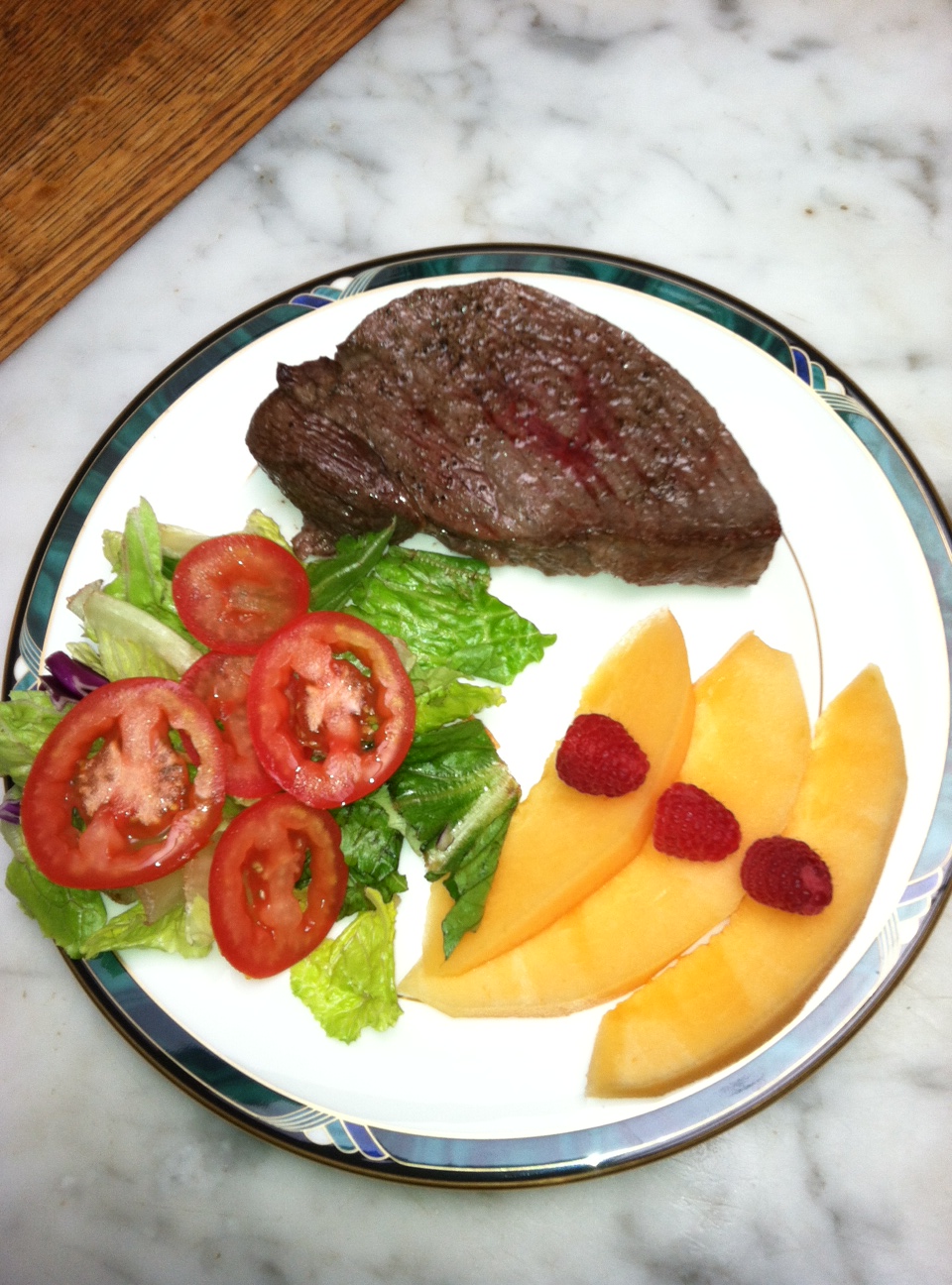
Sirloin steak, salad, cantaloupe, 3 raspberries

Sirloin steak, salad, cantaloupe, 3 raspberries

I’ve been thinking about a paleo-style diabetic diet for over a year.  Here are some miscellaneous ideas for your consideration.

A paleo diabetic diet will have the following major food groups:

  • vegetables
  • fruits
  • nuts and seeds
  • proteins (e.g., meat, fish, eggs)
  • condiments

A paleo diabetic diet could (should?) emphasize salads and low-carb colorful vegetables and only (?) low-carb or low-glycemic-index fruits.

Calories

Total calories?  Probably in the range of 1,800 to 3,000 calories daily with an average of 2,000.  Remember that 85% of type 2 diabetics are overweight or obese. Calorie restriction—regardless of macronutrient ratios (% carb, protein, fat)—tends to improve or normalize blood sugar levels.  Weight loss will likely entail some caloric restriction, whether consciously or not.

Type 1 Versus Type 2 Diabetes

Type 1 and type 2 diabetics have many pathophysiologic differences.  Could a single paleo diabetic diet serve both populations equally well?  That’s the goal.

Carbohydrates

Diabetics have trouble metabolizing carbohydrates, so a paleo diabetic diet should probably be lower-than-average in digestible carbs.  100 g/day?  30 g/day?  I’m leaning toward 60 g ± 25%, so 45–75 g.  Smaller, less active folks could eat 45 g/day; larger, more active guys eat closer to 75 g.

Is there a role for very-low-carb or ketogenic eating patterns?  For most folks, that’s less than 50 g of digestible carbohydrate daily.  Under 30 g for some.  Use that only for those needing to lose weight?  Start everybody at  very low carb levels then increase carbs as tolerated?  On the other hand, there’s a lot to be said for simplicity.  It might be best to avoid very-low-carb (ketogenic) eating entirely.  Anyone not losing the desired amount of fat weight could cut portion sizes, especially carbohydrates.

Fish

I encourage fish consumption twice a week, diabetes or no.  Cold-water fatty fish have more of the healthy omega-3 fatty acids than other fish.

Nuts

I’d encourage 1–2 ounces (28–56 g) of nuts or seeds daily.  Any more than that might crowd out other healthful nutrients.  Nuts are protective of the heart.

Proteins

Protein-rich foods can definitely raise insulin requirements and blood sugar levels, but not in an entirely predictable way, and not to the extent we see with carbohydrates.  Should insulin users dose insulin based on a protein gram sliding scale?  I’m leaning towards simply recommending the same amount of protein at each meal, perhaps 4–8 ounces (113–229 g).

Fruit and Starchy Vegetables

Could a paleo diabetic diet even be “paleo” without fruit?  The problem with classic fruits is that they spike blood sugars too high for many diabetics.  To prevent that, Dr. Richard Bernstein outlaws all classic fruits (and other starchy carbs), even limiting tomatoes and onions to small amounts.  E.g., a wedge of tomato in a salad.  He doesn’t allow carrots either, unless raw (lower glycemic index than when cooked).  A paleo diabetic diet eater may be able to get away with eating lower-carb, lower-GI (glycemic index) fruits such as cantaloupe, honeydew, strawberries and other berries.  Some paleo diabetic dieters will tolerate half an apple twice a day.

Different diabetics will have different blood sugar effects when eating starchy vegetables and higher-carb fruits.  Type 1 diabetics will tend to be more predictable than type 2s.  Both may just need to “eat to the meter”: try a serving and see what happens to blood sugar over the next hour or two.

Starchy vegetables—potatoes and carrots, for example—may well have to be limited.  Again, eat to the meter.

Gluten

This is looking to be gluten-free.  How trendy!  It’s a paleo celiac diet.

Use “natural” stevia as a sweetener?  If you read about how the product on your supermarket shelf  is made, it’s not at all natural.

Omega-6/Omega-3 Fatty Acids

A strict focus on omega-6/omega-3 fatty acid ratio will not appeal to many folks, even if it’s important from a health viewpoint.  Reserve this for advanced dieters who have mastered the basics?  Modern Western diets have an omega-6/omega-3 ratio around 10 or 15:1.  Paleolithic diets were closer to 2 or 3:1.  So we have an over-abundance of omega-6 fatty acid or deficiency of omega-3 that may be unhealthy.

Implementation

To get dieters started, I’d design a week of meals based on 2,000 to 2,200 calories.  If still hungry, eat more protein, fat, and low-carb vegetables (and fruits?).

What do you think?

Steve Parker, M.D.

Disclaimer:  All matters regarding your health require supervision by a personal physician or other appropriate health professional familiar with your current health status.  Always consult your personal physician before making any dietary or exercise changes.  

PS: See Dr. Bernstein’s “no-no” foods on page 151 of his Diabetes Solution book.

PPS: The paleo diet is also known as the Paleolithic diet, Stone Age diet, caveman diet, hunter-gatherer diet, and ancestral diet.

Ever Heard of “Interval Walking”? You Need To Know About It!

Not ready for this? Consider interval walking then.

Not ready for this? Consider interval walking then.

Compared to a regular continuous walking program, interval walking is superior for improving physical fitness, body composition (body mass and fatness), and blood sugar control according to new research reported in Diabetes Care.  Study participants were type 2 diabetics.

Training groups were prescribed five sessions per week (60 min/session) and were controlled with an accelerometer and a heart-rate monitor. Continuous walkers performed all training at moderate intensity, whereas interval walkers alternated 3-min repetitions at low and high intensity. Before and after the 4-month intervention, the following variables were measured: VO2max, body composition, and glycemic control (fasting glucose, HbA1c, oral glucose tolerance test, and continuous glucose monitoring.

I haven’t read the full report yet, but expect that the interval walkers walked as fast as they could for three minutes (4 mph?) then slowed down to a comfortable stroll (1–2 mph?) for three minutes, alternating thusly for 60 minutes.

This should easily do-able for nearly all type 2 diabetics.  The reported results jive with other studies of more vigorous and intimidating interval training.  The only caveat is that it was a small pilot study that may or may not be reproducible.

Steve Parker, M.D.

Back to the Drawing Board: Clovis Comet Questioned

“Comet explosions did not end the prehistoric human culture, known as Clovis, in North America 13,000 years ago, according to research published in the journal Geophysical Monograph Series.

Researchers from Royal Holloway university, together with Sandia National Laboratories and 13 other universities across the United States and Europe, have found evidence which rebuts the belief that a large impact or airburst caused a significant and abrupt change to the Earth’s climate and terminated the Clovis culture. They argue that other explanations must be found for the apparent disappearance.

Clovis is the name archaeologists have given to the earliest well-established human culture in the North American continent. It is named after the town in New Mexico, where distinct stone tools were found in the 1920s and 1930s.”

Source: press release