Category Archives: Uncategorized

Trust Me, I’m a Doctor: You Don’t Want Macular Degeneration

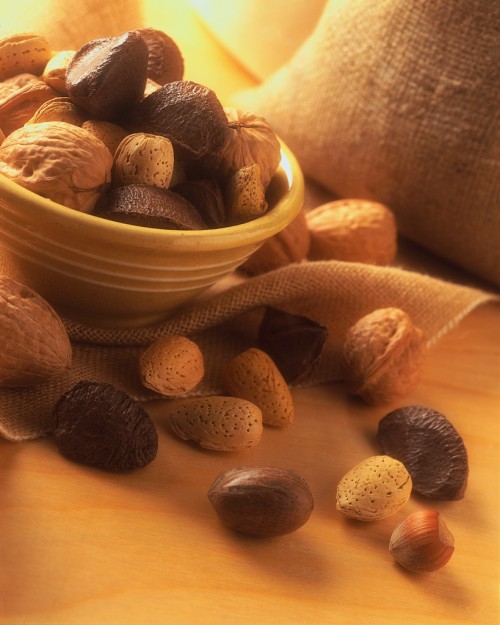
Remember...peanuts aren't nuts, they're legumes

Remember…peanuts aren’t nuts, they’re legumes

I saw an optometrist a few months ago for a new eyeglass prescription and mentioned that age-related macular degeneration (ARMD or AMD) runs in my family. ARMD is the leading cause of adult blindness in the West.

The optometrist suggested I start taking eye vitamins to help prevent ARMD. Popular eye vitamin preparations around here are Ocuvite and I-Caps. He said a multivitamin like Centrum might be just as effective.

Steve Parker MD, eye chart, eye exam

Macular degeneration is the opposite of this: blacked-out or fuzzy vision in the center, clearer at the periphery

UpToDate.com, a source I trust, says that supplements for prevention probably don’t work and are not recommended. Which means Centrum would be just as effective: i.e., none of them work.

Instead, UpToDate recommends regular exercise, not smoking, and relatively high consumption of leafy green vegetables, fruits, fish and nuts. Although they didn’t mention it by name, the traditional Mediterranean diet provides all of those.

On the other hand, if you already have macular degeneration (wet or dry), UpToDate recommends these supplements (probably based on the AREDS-2 study):

  • vitamin C 500 mg/day
  • vitamin E 400 mg/day
  • lutein 10 mg/day
  • zeaxanthin 1 mg/day
  • zinc 80 mg/day (as zinc oxide)
  • copper 2 mg/day (as cupric oxide)

An reasonable alternative for non-smokers and never-smokers is the standard AREDS formula. It’s the same as above except it substitutes beta carotene for lutein or zeaxanthin. You can buy both formulations over-the-counter in the U.S. pre-mixed so you don’t have to swallow a handful of pills, just one.

I was in a supermarket yesterday checking out eye vitamins and noted that Bausch and Lomb’s AREDS-2 formula costs about $10/month.

I’m not taking these supplements for now. I taking the diet, exercise, and non-smoking route.

Steve Parker, M.D.

White Skin in Europeans Only Took Off 6,000 Years Ago

…according to an article at Science magazine. Europeans 10,000 years ago didn’t look much like those of today.

When it comes to skin color, the team found a patchwork of evolution in different places, and three separate genes that produce light skin, telling a complex story for how European’s skin evolved to be much lighter during the past 8000 years. The modern humans who came out of Africa to originally settle Europe about 40,000 years are presumed to have had dark skin, which is advantageous in sunny latitudes. And the new data confirm that about 8500 years ago, early hunter-gatherers in Spain, Luxembourg, and Hungary also had darker skin: They lacked versions of two genes—SLC24A5 and SLC45A2—that lead to depigmentation and, therefore, pale skin in Europeans today.

But in the far north—where low light levels would favor pale skin—the team found a different picture in hunter-gatherers: Seven people from the 7700-year-old Motala archaeological site in southern Sweden had both light skin gene variants, SLC24A5 and SLC45A2. They also had a third gene, HERC2/OCA2, which causes blue eyes and may also contribute to light skin and blond hair. Thus ancient hunter-gatherers of the far north were already pale and blue-eyed, but those of central and southern Europe had darker skin.

Pale skin may be advantageous in northern latitudes because it allows production of more vitamin D.

The article also discusses European evolution of lactose tolerance and height. The ability to digest milk in adulthood apparently didn’t spread through Europe until about 4,ooo years ago.

RTWT.

Fruit Smoothie #1


A 12 fl oz serving

A 12 fl oz serving

My wife began experimenting with smoothies last year after seeing a Vitamix demonstration at Costco. Most Americans should probably eat more fruit; smoothies are one way to do that. Today’s recipe is one she concocted. Note the trendy chia seeds and kale. Smoothies are a great substitute for junk food desserts.

We’re using a Vitamix mixer. Other devices may be able to get the job done. The mixing speeds our device range from one to 10. (Tip for a competitor: make one that goes to 11.) We love our Vitamix and have no regrets about the purchase, although it was expensive (over $500 USD). It is hard to hear anything else when it’s running at top speed.

Since I provide nutritional analysis below, most diabetics can fit this smoothie into their diets without guessing the carb grams. Twelve fl oz or 350 ml provides 32 digestible carb grams. Most diabetics should probably reduce the serving size by a third, down to 8 fl oz (240 ml) and 11 digestible carb grams.

One potential advantage of blending these fruits is that one fruit may provide nutrients that the others lack

One potential advantage of blending these fruits is that one fruit may provide nutrients that the others lack

Ingredients

1 cup (240 ml) grapes, green seedless

1 mandarin orange, peeled, halved

1 banana (7 inches or 18 cm), peeled, cut into 3–4 pieces

1 pear, medium-size, cored, quartered (ok to leave peel on)

1/2 tbsp (7 g) chia seeds

1 cup (50 g) raw kale

Instructions

First put the water in the Vitamix, then grapes, pear, orange, banana, chia seeds, kale, and finally ice. Ice is always last. Then blend on variable speed 1 and gradually go up to high level (10). Total spin time is about 45 seconds.

Full speed ahead!

Full speed ahead!

Number of Servings: 2.5 consisting of 12 fl oz (350 ml) each.

Advanced Mediterranean Diet boxes: 2 fruits

Nutritional Analysis per Serving:

7% fat

88% carbohydrate

5% protein

160 calories

38 g carbohydrate

6 g fiber

32 g digestible carbohydrate

15 mg sodium

520 mg potassium

Prominent features: Good source of vitamin C, fair amount of fiber, miniscule sodium.

Steve Parker, M.D.


Paleo Diet Ranks Dead Last

…in U.S. News & World Report’s yearly ranking of common diets.

I have nothing to add to Tom Naughton’s excellent critique of the listicle.

FWIW, Woman’s World magazine ranked the paleo diet as America’s Best in 2013.

-Steve

Would You Believe Four in Ten U.S. Adults Will Develop Diabetes?

Like type 1 diabetics, many type 2's need insulin shots

Like type 1 diabetics, many type 2’s need insulin shots

Researchers affiliated with the U.S. Centers for Disease Control estimate that 40% of American adults will develop diabetes, mostly type 2. The CDC’s prior estimate was the one of every three Americans born in 2000 would develop diabetes. Some snippets from the article abstract:

On the basis of 2000—11 data, lifetime risk of diagnosed diabetes from age 20 years was 40·2% for men and 39·6% for women, representing increases of 20 percentage points and 13 percentage points, respectively, since 1985—89.

The number of life-years lost to diabetes when diagnosed at age 40 years decreased from 7·7 years in 1990—99 to 5·8 years in 2000—11 in men, and from 8·7 years to 6·8 years in women over the same period.

Years spent with diabetes increased by 156% in men and 70% in women.

The good news is that you can decrease your odds of type 2 diabetes via diet and exercise. The single most important issue in preventing type 2 diabetes is avoiding obesity.

Steve Parker, M.D.


How Did the Agricultural and Industrial Revolutions Change Human Diets?

MP900227702[1]

With the advent of the Agricultural Revolution 10,000 years ago, mankind took a giant leap away from two million years of evolutionary adaptation. The Industrial Revolution that started in the late 18th century—about 240 years ago—was yet another watershed event. The Agricultural Revolution marks the end of the Old Stone Age and the start of the Neolithic period. The Neolithic ended four to six thousand years ago, replaced by the Bronze Age (or Iron Age in some areas).

EFFECTS OF THE AGRICULTURAL REVOLUTION

The Agricultural Revolution refers to farming the land on a large scale, and all that entails: gathering and planting seeds, nurturing the soil, breeding plants for desirable traits, storing crops, processing plants to maximize digestibility, domesticating wild animals and enhancing them by selective breeding, setting down roots in one geographic location, etc. The revolution allowed for the expansion of reliable food supplies and an explosion of human populations. Less time was needed for hunting and foraging, allowing for the development of advanced cultures.

It wasn’t all sunshine and roses, however. We have evidence that human health deteriorated as a result of the revolution. For instance, some populations declined in height and dental health.

EFFECTS OF THE INDUSTRIAL REVOLUTION

The Industrial Revolution starting in the late 18th century brought its own changes to our diet. Progressive industrialization and affluence changed the composition of our “energy foods.” For instance, peasants in poor developing countries derive about 75% of their calories from high-fiber starchy foods. With modernization, fiber-free fats and sugars become the source of 60% of calories. U.S. consumption of cereal fiber decreased by 90% between 1880 and 1976. In addition to lower fiber content, refined wheat products also had fewer vitamins and other micronutrients. Machinery allowed the production of margarine and vegetable oils. Sugar imports and snacking increased in the Western world.

Obesity suddenly became very common in the upper classes of Europe and England toward the end of the 17th century and even more so in the 18th. Weights also increased throughout populations of developed countries. For instance, if we look at U.S. men of average height between the ages of 30 to 34, average weights were 148 lb (66 kg) in 1863, but were up to 170 lb (77 kg) in 1963. Our current obesity epidemic didn’t even start until around 1970.

Let’s look at a few major U.S. diet changes from 1860 to 1975. Energy derived from protein rose from 12% to 14–15%. Energy from fat rose from 25 to 42% of calories. Energy from starches fell from 53 to 22%. Calories from sugar rose from 10 to 24%. Total carbohydrate calories fell from 63 to 46%.

It only takes a few decades to see major changes in a population’s food consumption. For instance, U.S. per capita consumption of salad and cooking oils increased from 21.2 pounds per person in 1980 to 54.3 pounds per person in 2008 (USDA data). I refer to these oils as industrial seed oils, and they include soybean, corn, and sunflower oil. We’re not entirely sure what effect these have on health. Some suspect they are related to obesity, heart disease, and other “diseases of civilization.” Per capita soybean oil consumption in the U.S. increased over a thousand-fold between 1909 and 1999, to 7.4% of total calories. It’s in many of our processed foods. Linoleic acid is a predominant omega-6 fatty acid in seed oils. Linoleic acid consumption increased by 200% in the last century. Thanks to increasing omega-6 fatty acid consumption, the omega-6/omega-3 ratio increased from 5.4:1 to 9.6:1 between 1909 and 2009. (Reference: Blasbalg TL, Hibbeln JR, Ramsden CE, Majchrzak SF, Rawlings RR. “Changes in consumption of omega-3 and omega-6 fatty acids in the United States during the 20th century.” Am J Clin Nutr. 2011 May;93(5):950-62. doi: 10.3945/ajcn.110.006643. Epub 2011 Mar 2.)

The Industrial Revolution also introduced into our diets large amounts of man-made trans-fats, which are highly detrimental to cardiovascular health. Public outcry has lead to diminishing amounts of dietary trans-fats over the last decade.

An occasional teaspoon of sugar probably won't hurt you

Added sugars: table sugar in coffee, high-fructose corn syrup in ketchup

At his Whole Health Source blog, Dr. Stephan Guyenet and Jeremy Landen produced a graph of U.S. sugar consumption from 1822 to 2005. Dr. Guyenet wrote, “It’s a remarkably straight line, increasing steadily from 6.3 pounds (2.9 kg) per person per year in 1822 to a maximum of 107.7 pounds (49 kg) per person per year in 1999. Wrap your brain around this: in 1822, we ate the amount of added sugar in one 12 ounce can of soda (360 ml) every five days, while today we eat that much sugar every seven hours.” Note that added sugars overwhelmingly supply only one nutrient: pure carbohydrate without vitamins, minerals, antioxidants, protein, fat, etc.


Think about the typical Western or Standard American Diet (SAD) eaten by an adult these days. It provides an average of 2673 calories a day (not accounting for wastage of calories in restaurants; 2250 cals/day is probably a more accurate figure for actual consumption). Added sugars provide 459 of those calories, or 17% of the total. Grains provide 625 calories, or 23% of the total. Most of those sugars and grains are in processed, commercial foods. So added sugars and grains provide 40% of the total calories in the SAD. That’s a huge change from the diet of our prehistoric ancestors. Remember, we need good insulin action to process these carbohydrates, which is a problem for diabetics. Anyone going from the SAD to pure paleo eating will be drastically reducing intake of added sugars and grains, our current major sources of carbohydrate. They’ll be replacing them with foods that generally require less insulin for processing. (Figures are from an April 5, 2011, infographic at Civil Eats: http://www.civileats.com.)

FUN FACTS! (from the U.S. Dept. of Agriculture)

  • A typical carbonated soda contains the equivalent of 10 tsp (50 ml) of table sugar.
  • The typical U.S. adult eats 30 tsp (150 ml) daily of added sweeteners and sugars.
  • U.S total grain product consumption was at record lows in the 1970s, at 138 pounds per person. By 2008, grain consumption was up by 45%, to 200 pounds per person.
  • Total caloric sweetener consumption (by dry weight) was 110 pounds per person in the 1950s. By 2000, it was up 39% to 150 pounds.
  • Between 1970 and 2003, consumption of added fats and oils rose by 63%, from 53 to 85 pounds. (How tasty would that be without starches and sugars? Not very.)
  • In 2008, “added fat” calories in the U.S. adult diet were 641 (24% of total calories).

Steve Parker, M.D.

Merry Christmas!

Credit: Zvonimir Atletic / Shutterstock.com

Credit: Zvonimir Atletic / Shutterstock.com

Human Brain Size Shrinking For Last 10,000+ Years

An article at Scientific American offers some explanations, but nobody knows why with certainty. Maybe it’s simply related to the decline in average human body size that started about 10,000 years ago, the dawn of the Agricultural Revolution.

I’d credit the SciAm author but can’t figure out who it is. A quote:

The way we live may have affected brain size. For instance, domesticated animals have smaller brains than their wild counterparts probably because they do not require the extra brainpower that could help them evade predators or hunt for food. Similarly, humans have become more domesticated.

Discovery magazine looked at shrinking brains in 2010.

Steve Parker, M.D.

Anne Hathaway Abandons Vegan Diet for Low-Carb Paleo

I don’t generally follow lifestyles of the rich and famous, but if you do, here you go.

“Hathaway” always makes me think of the Beverly Hillbillies, which gives you an idea how old I am. The Beverly Hills movie is a good one, too. It’ll teach you how to do the “California howdy.”

My wife and I are going to Hathaway’s latest movie tonight: Interstellar. I hear it’s best in the IMAX format.

Steve

Ever Heard of Paleolithic Diet Pioneer Arnold De Vries?

paleo diet, Paleolithic diet, hunter-gatherer diet

Not Arnold Paul De Vries or Don Wiss, but a Huaorani hunter in Ecuador

Don Wiss turned me on to another “modern” paleo diet pioneer, Arnold Paul De Vries, who wrote a 1952 book called Primitive Man and His Food. I even found the book on the Internet a few months ago, perhaps in violation of copyright. I can’t find it now. You can request a digital copy of the book here.

I read his thoughts on the diets of North American Indians before my other duties interrupted me.

Steve Parker, M.D.

Reference (see Comments)