Category Archives: Uncategorized

Guest Post: The Three Bears of Blood Sugar

Paul Cathcart has diabetes; type 1 I’m guessing. He contacted me by email and wanted to share a chapter out of his book, Persona Non Grata With Diabetes: A Self-Portrait of the Diabetic Condition. The only modification I’ve made is to translate mmol/l to mg/dl for my U.S. readers. Here ’tis.

♦♦♦

The Three Bears of Blood Sugar

How do I make myself better?

Fat bear: too much insulin. Skinny bear: sugar too high. Just right bear: healthy, happy diabetic.

Let’s for a moment, forget the experts and let us concentrate on me the diabetic instead.Like the cave man my body does not expect to eat every day. My body by default, collects and stores energy till it seeps through my diabetic veins, peaking my sugar levels, disrupting my salt levels, polluting my blood into acidic syrup; and after fifteen years, making me cry out for help: all anyone could tell me was to have more insulin.

Insulin makes me fat; it’s a foreign synthesised chemical hormone injected into my body to process sugar, storing the excess energy as fat. The more insulin I take the more my body resists. The more my body resists the more it blocks and backs up, creating insulin pockets. These pockets then randomly infuse with my system as a massively unexpected dose, leaving me in one hell of a hypo, and my body burning off fat and muscle producing sugar to fight it. And there I go, straight back up into the high blood sugar numbers tail spin again.

Carbohydrates make me fat; my body cannot digest them in a timely fashion with the insulin. They cause spikes in my blood sugar, which peak and trough out of phase from my five hours analogue insulin timeline. They don’t really catch up and round off, Dose Adjustment For Normal Eating (D.A.F.N.E) style, but slowly degrade the quality of my blood, and clog my organs forcing my body to react in the early morning trying desperately to process them with dawn sugars; and there it is back up to “18.0” again when I went to bed with sugar of “7.2.” [18 mmol/l = 324 mg/dl; 7.2 mmol/l = 130 mg/dl]

High sugar makes me skinny, unable to properly digest food, hold water or heal; my body melting into a puddle of acidic sugar as it did prior to first being diagnosed with diabetes. Easy to slip back in and out of when combining too much insulin, in meeting with the requirements of feeding off the wrong kinds of food for energy, topped up by too much sugar in chasing the tail of excessive insulin.

These very same ups and downs are what aggravate my temper, tire my soul and over time negate my character. Far simpler to digest protein and green leaf vegetables; easy, slow burning energy matching a, small quantity, five hours insulin timeline: synchronising my body while negating fluctuations. I’m far less likely to build up pockets of insulin under the skin, avoiding numerous side effects at later stages. It’s metabolic meditation. We are all just flowers really; I can feel myself begin to wilt after only a few days of uneven blood sugar, then after only two of even levels I feel uplifted as though the sun has come up. It’s really ninety percent diet, ten percent insulin, to be in control.

—Paul Cathcart

Taken from, ‘Persona Non Grata with Diabetes.’
http://www.pngwd.com/the_three_bears.html

Website for Paul’s book

New Kitchen Gadget: Vitamix

Our first creation with the Vitamix

Our first creation with the Vitamix

Grok couldn’t grok it. The noise would scare him.

I call it a mixer; my wife calls it a food processor. We’ll be blending up a storm and reporting at my various blogs. My wife’s been thinking about getting a contraption like this for months. She got excited and bit the bullet when she saw a live demonstration at Costco a few months ago.

Almost immediately out of the box, my wife threw in a couple handfuls of ice, couple handfuls of frozen strawberries, and one and a half bananas. I thought this would be a fruit smoothie, but with the very thick consistency, “Italian ice” might be a better term.

One of our goals is to sneak more fiber, vegetables, and fruit into our kids diets. (Shhhh….don’t tell!)

It's a little noisy, but easily bearable

It’s a bit noisy, but easily bearable

$500 (USD) at Costco, so not cheap. It seems well-made and has a good SEVEN-year warranty!

$500 (USD) at Costco, so not cheap. It seems well-made and has a good SEVEN-year warranty!

Do Processed Red Meats Reduce Lifespan?

They were linked to higher risk of death in this Swedish study. Regular non-processed red meats had no association with shorter life, however. 


How Has the U.S. Diet Changed Over the Last Century?

paleo diet, paleo meal, recipe, stone age diet, paleo food, hunter-gatherer food

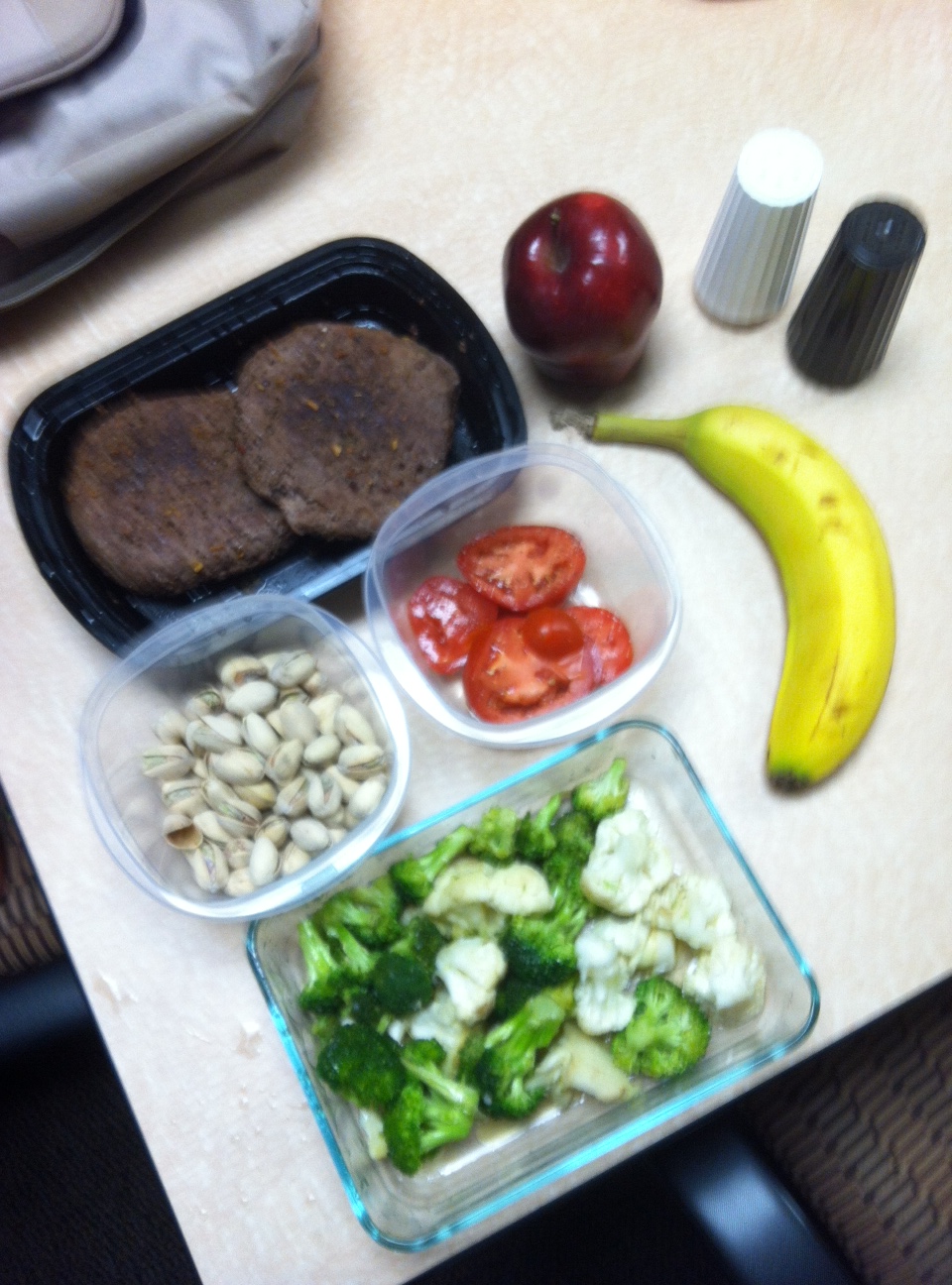
One of the paleo meals I took to the hospital to eat mid-shift

Medical student Kris Gunnars has an article at Business Insider, of all places, that shows graphically many of the major U.S. dietary changes of the last hundred years or so. In this case, transmogrification may be a better term than mere  “changes.” In short, we’ve moved even further away from the Paleolithic diet. I suspect much of the entire Western world diet has evolved in similar fashion.

You need to read the article and ponder the graphs if you question why we have so much obesity, type 2 diabetes, heart disease, hypertension, and perhaps cancer. You’ll see dramatic increases in consumption of added sugars, industrial seed oils (esp. soybean), soda pop and fruit juice (added sugar!), total calories, and fast food. You’ll see how much we’ve increased dining away from home. Butter consumption is down drastically, but doesn’t seem to have done us much good, if any.

Sugar cane

Sugar cane


There’s fairly good evidence that coronary artery disease (CAD; the cause of most heart attacks) was very prominent between 1960 to 2000 or so, but it’s been tapering off in recent years and didn’t seem to be very common 100 years ago. Understand that you can have it for 20 years or more before you ever have symptoms (angina) or a heart attack from it. In fact, the disease probably starts in childhood. I’ve always wondered about the cause of the CAD prevalence trends, and wondered specifically how much of the long-term trend was related to trans-fat consumption. But I’ve never been able to find good data on trans-fat consumption. Kris came up with a chart of margarine consumption, which may be a good proxy for trans-fats. Another of his charts includes shortening, a rich source of trans-fats and probably also a good proxy. Shortening consumption increased dramatically from 1955 until dropping like a rock around 2000.

The timeline curves for trans-fat consumption (by proxy) and prevalence of coronary heart disease seem to match up fairly well, considering a 20 year lag. In the early 1990s, we started cutting back on trans-fats, and here we are now with lower mortality and morbidity from coronary artery disease. (CAD is very complex; lower rates of smoking surely explain some of the recent trend.)

Read the whole enchilada. Very impressive. Highly recommended.

Steve Parker, M.D.

Nuts and Berries: Good for Your Brain, Heart, and Immune System

Here’s the abstract from American Journal of Clinical Nutrition:

The inclusion of nuts in the diet is associated with a decreased risk of coronary artery disease, hypertension, gallstones, diabetes, cancer, metabolic syndrome, and visceral obesity. Frequent consumption of berries seems to be associated with improved cardiovascular and cancer outcomes, improved immune function, and decreased recurrence of urinary tract infections; the consumption of nuts and berries is associated with reduction in oxidative damage, inflammation, vascular reactivity, and platelet aggregation, and improvement in immune functions. However, only recently have the effects of nut and berry consumption on the brain, different neural systems, and cognition been studied. There is growing evidence that the synergy and interaction of all of the nutrients and other bioactive components in nuts and berries can have a beneficial effect on the brain and cognition. Regular nut consumption, berry consumption, or both could possibly be used as an adjunctive therapeutic strategy in the treatment and prevention of several neurodegenerative diseases and age-related brain dysfunction. A number of animal and a growing number of human studies show that moderate-duration dietary supplementation with nuts, berry fruit, or both is capable of altering cognitive performance in humans, perhaps forestalling or reversing the effects of neurodegeneration in aging.

What’s a Cruet?

Our new cruet

Our new $8 cruet

If you’re trying to lose weight or keep from getting fat, salads are helpful. I recommend them in my Advanced Mediterranean Diet, Low-Carb Mediterranean Diet, Paleobetic Diet, and Ketogenic Mediterranean Diet.

My favorite salad dressings are vinaigrettes. They can be as simple as olive oil, vinegar, salt and pepper. The problem with most commercial vinaigrettes is the label says “_____ Vinaigrette with olive oil,” but the first listed ingredient is soybean oil (or some other industrial seed oil) and olive oil is somewhere down the line. My current favorite commercial salad dressing has water as the first ingredient!

Get around that by making your own. Here’s a recipe and a salad to try it on. Also, if you’re watching your carb consumption, the commercial dressings  may sneak in more than you want. Again, avoid that by making your own.

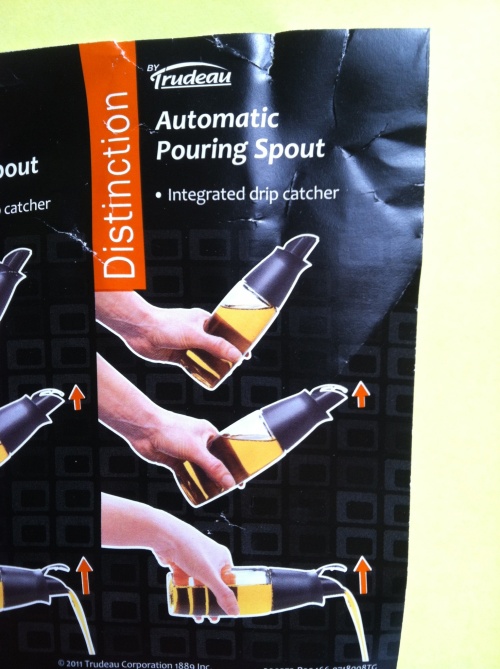
Cruet label

Cruet label

You can make a vinaigrette in a jar with a lid. Add the ingredients then shake to create an emulsion. Or do it in a bowl with a whisk. My wife found us a cruet at the supermarket that I was hoping would allow mixing, storing, and pouring all from the same attractive container. Unfortunately, it leaks when I shake it.

Steve Parker, M.D.

Summary of ADA’s Standards of Medical Care in Diabetes – 2014

Wish I were here

Wish I were here

I just reviewed the new American Diabetes Association treatment guidelines and wanted to share some of my notes with you. You can read the original document free online. It has 620 references!

PERIODIC TESTS, TREATMENTS, AND GOALS

The American Diabetes Association (ADA) recommends the following items be done yearly (except as noted) in non-pregnant adults with diabetes. (Incidentally, I don’t necessarily agree with all ADA guidelines.)

  • Lipid profile (every two years if results are fine and stable)
  • Comprehensive foot exam
  • Screening test for distal symmetric polyneuropathy: pinprick, vibration, monofilament pressure sense, ankle reflexes
  • Serum creatinine and estimate of glomerular filtration rate
  • Test for albumin in the urine, such as measurement of albumin-to-creatinine ratio in a random spot urine specimen
  • Comprehensive eye exam by an ophthalmologist (if exam is normal, every two years is acceptable)
  • Hemoglobin A1c at least twice a year, but every three months if therapy has changed or glucose control is not at goal
  • Flu shots

Additionally, the 2014 ADA guidelines recommend:

  • Pneumococcal vaccination. Additionally, “A one time re-vaccination is recommended for individuals over 65 years of age who have been immunized over five years ago. previously immunized when they were <65 years of age if the vaccine was administered >5 years ago.” Also repeat the vaccination after five years for patients with nephrotic syndrome, chronic kidney disease, other immunocompromised states (poor ability to fight infection), or transplantation.
  • Hepatitis B vaccine for unvaccinated adults who are 19-59 years of age.
  • Weight loss for all overweight type 2 diabetic adults. How? By reducing energy intake (calories) while eating healthfully. “Evidence suggests that there is not an ideal percentage of calories from carbohydrate, protein, and fat for all people with diabetes; therefore, macronutrient distribution should be based on individualized assessment of current eating patterns.”
  • “Monitoring carbohydrate intake, whether by carbohydrate counting or experience-based estimation, remains a key strategy in achieving glycemic control.”
  • Limit alcohol to one (women) or two (men) drinks a day.
  • “In people with type 2 diabetes, a Mediterranean-style, MUFA-rich eating pattern may benefit glycemic control and cardiovascular disease risk factors and can therefore be recommended as an effective alternative to a lower-fat, higher-carbohydrate eating pattern.”
  • “As recommended for the general public, an increase in foods containing long-chain omega-3 fatty acids (from fatty fish) and omega-3 linolenic acid (ALA) is recommended for individuals with diabetes because of their beneficial effects on lipoproteins, prevention of heart disease, and associations with positive health outcomes in observational studies.”
  • “A variety of eating patterns (combinations of different  foods or food groups) are acceptable for the management of diabetes. Personal preference (e.g., tradition, culture, religion, health beliefs and goals, economics) and metabolic goals should be considered when recommending one eating pattern over another.”
  • During initial diabetic exam, screen for peripheral arterial disease (poor circulation). Strongly consider calculation of the ankle-brachial index for those over 50 years of age; consider it for younger patients if they have risk factors for poor circulation.
  • Restriction of dietary protein is no longer routinely recommended in people with diabetic kidney disease (nephropathy with albuminuria). Instead, the focus is on control of blood pressure and blood sugar to prevent progression.
  • Those at risk for diabetes, including prediabetics, should aim for a) moderate weight loss if overweight (about seven percent of body weight), b) exercise: 150 minutes per week of moderate-intensity aerobic activity.
  • “A variety of eating patterns have been shown to be effective in managing diabetes, including Mediterranean-style Dietary Approaches to Stop Hypertension (DASH)-style, plant-based (vegan or vegetarian), lower-fat, and lower-carbohydrate patterns.”
Paleobetic diet, diabetic diet, low-carb, paleo diet, diabetes

This monitor looks like an antique

Some of my dietary recommendations conflict with ADA guidelines. For instance, I think carbohydrate restriction is very important. I expect the experts assembled by the ADA to compose the guidelines were well-intentioned, intelligent, and hard-working. They’re are supported by 620 scientific journal references. I appreciate the expert panel’s work. We’ve simply reached some different conclusions. By the same token, I’m sure the expert panel didn’t have unanimous agreement on all the final recommendations. I invite you to review the dietary guidelines yourself, discuss with your personal physician, then decide where you stand.

GENERAL TREATMENT GOALS

The ADA in 2014 suggests general therapeutic goals for adult non-pregnant diabetics:

  • Fasting blood glucoses: 70 to 130 mg/dl (3.9 to 7.2 mmol/l)
  • Peak glucoses one to two hours after start of meals: under 180 mg/dl (10 mmol/l)
  • Hemoglobin A1C: under 7%
  • Blood pressure: under 140 mmHg systolic and under 80 mmHg diastolic
  • LDL cholesterol: under 100 mg/dl (2.6 mmol/l). (In established cardiovascular dis-ease: <70 mg/dl or 1.8 mmol/l.)
  • HDL cholesterol: over 40 mg/dl (1.0 mmol/l) for men and over 50 mg/dl (1.3 mmol/l) for women
  • Triglycerides: under 150 mg/dl (1.7 mmol/l)

The 2013 guidelines of the American Association of Clinical Endocrinologists focus on hemoglobin A1c rather than blood sugars:

  • Hemoglobin A1c: 6.5% or less for otherwise healthy people who are also at low risk for hypoglycemia.
  • For those with one or more significant illnesses and at risk for hypoglycemia, hemoglobin A1c over 6.5% is fine.

In other words, the target is individualized. Hemoglobin A1c of 6.5% equates to blood sugars that average 140 mg/dl (7.8 mmol/l)—that’s fasting, after meals, whatever. Back in 2011, the AACE recommended blood sugar goals:

  • Fasting Blood Sugar: under110 mg/dl (6.11 mmol/l)
  • Two Hours After a Meal: under140 mg/dl (7.78 mmol/l)

The ADA reminds clinicians, and I’m sure the AACE guys agree, that diabetes control goals should be individualized, based on age and life expectancy of the patient, duration of diabetes, other diseases that are present, individual patient preferences, and whether the patient is able to easily recognize and deal with hypoglycemia. I agree completely. For instance, there’s not much reason to aim for blood sugars of 100 mg/dl (5.56 mmol/l) in a 79-year-old expected to die of lung cancer in four months. The goal is comfort and symptom relief, even if sugars are 220 mg/dl (12.2 mmol/l).

Steve Parker, M.D.

Another Ancestral Community Bites the Dust

This may be old news to you, but I’d not heard of the Oji-Cree tribe before. They live south of Hudson Bay.

Here live the Oji-Cree, a people, numbering about thirty thousand, who inhabit a cold and desolate land roughly the size of Germany. For much of the twentieth century, the Oji-Cree lived at a technological level that can be described as relatively simple. As nomads, they lived in tents during the summer, and in cabins during the winter. Snowshoes, dog sleds, and canoes were the main modes of transportation, used to track and kill fish, rabbits, and moose for food. A doctor who worked with the Oji-Cree in the nineteen-forties has noted the absence of mental breakdowns or substance abuse within the population, observing that “the people lived a rugged, rigorous life with plenty of exercise.” The Oji-Cree invariably impressed foreigners with their vigor and strength. Another visitor, in the nineteen-fifties, wrote of their “ingenuity, courage, and self-sacrifice,” noting that, in the North, “only those prepared to face hardship and make sacrifices could survive.”

 ***

But, in the main, the Oji-Cree story is not a happy one. Since the arrival of new technologies [starting in the 1960s], the population has suffered a massive increase in morbid obesity, heart disease, and Type 2 diabetes. Social problems are rampant: idleness, alcoholism, drug addiction, and suicide have reached some of the highest levels on earth. Diabetes, in particular, has become so common (affecting forty per cent of the population) that researchers think that many children, after exposure in the womb, are born with an increased predisposition to the disease. Childhood obesity is widespread, and ten-year-olds sometimes appear middle-aged. Recently, the Chief of a small Oji-Cree community estimated that half of his adult population was addicted to OxyContin or other painkillers.

Read the rest at The New Yorker.

Recipe: Shrimp Salad and Fresh Fruit

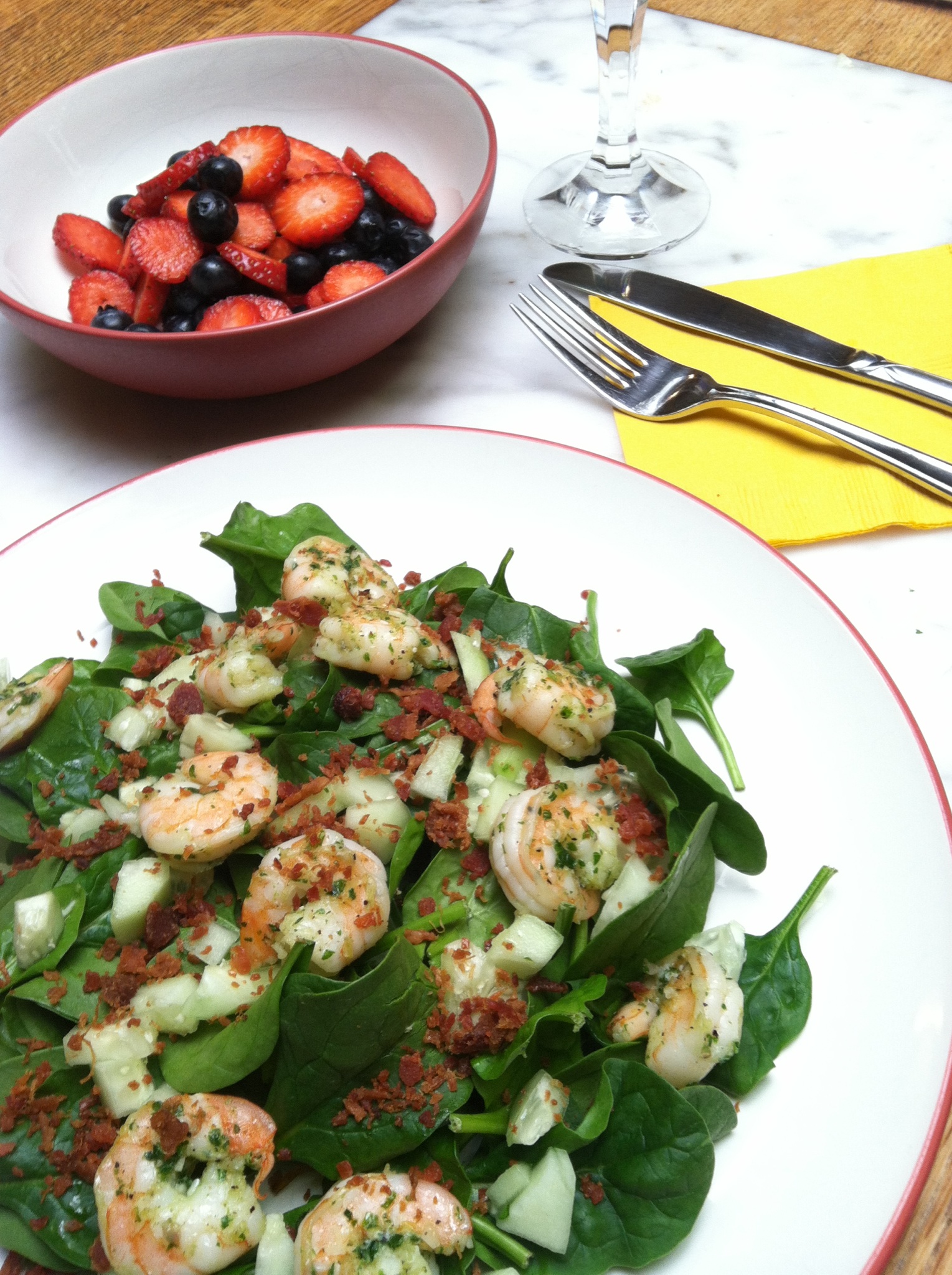
Ignore the bacon bits you may see; they're superfluous

Ignore the bacon bits you may see; they’re superfluous

This was inspired by a shrimp/spinach salad I like at Applebee’s. But here I eschew the sweetness of their sauce and delete the bacon bits.

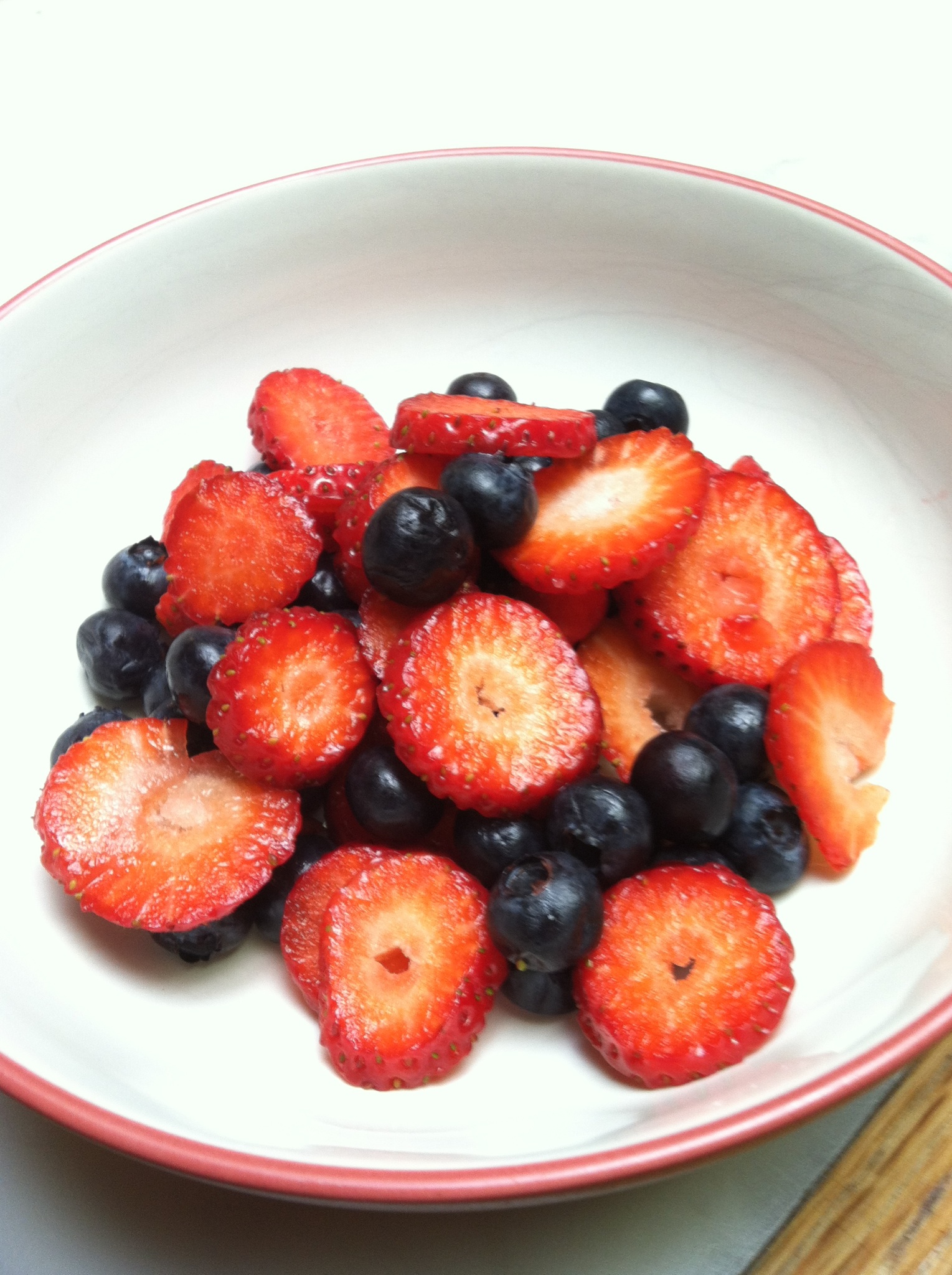
If these aren't in season, substitute cantaloupe, honeydew melon, or 14 sweet raw cherries

If these aren’t in season, substitute cantaloupe, honeydew melon, or 14 sweet raw cherries

Ingredients:

5 oz (140 g) raw shrimp tails, shell removed

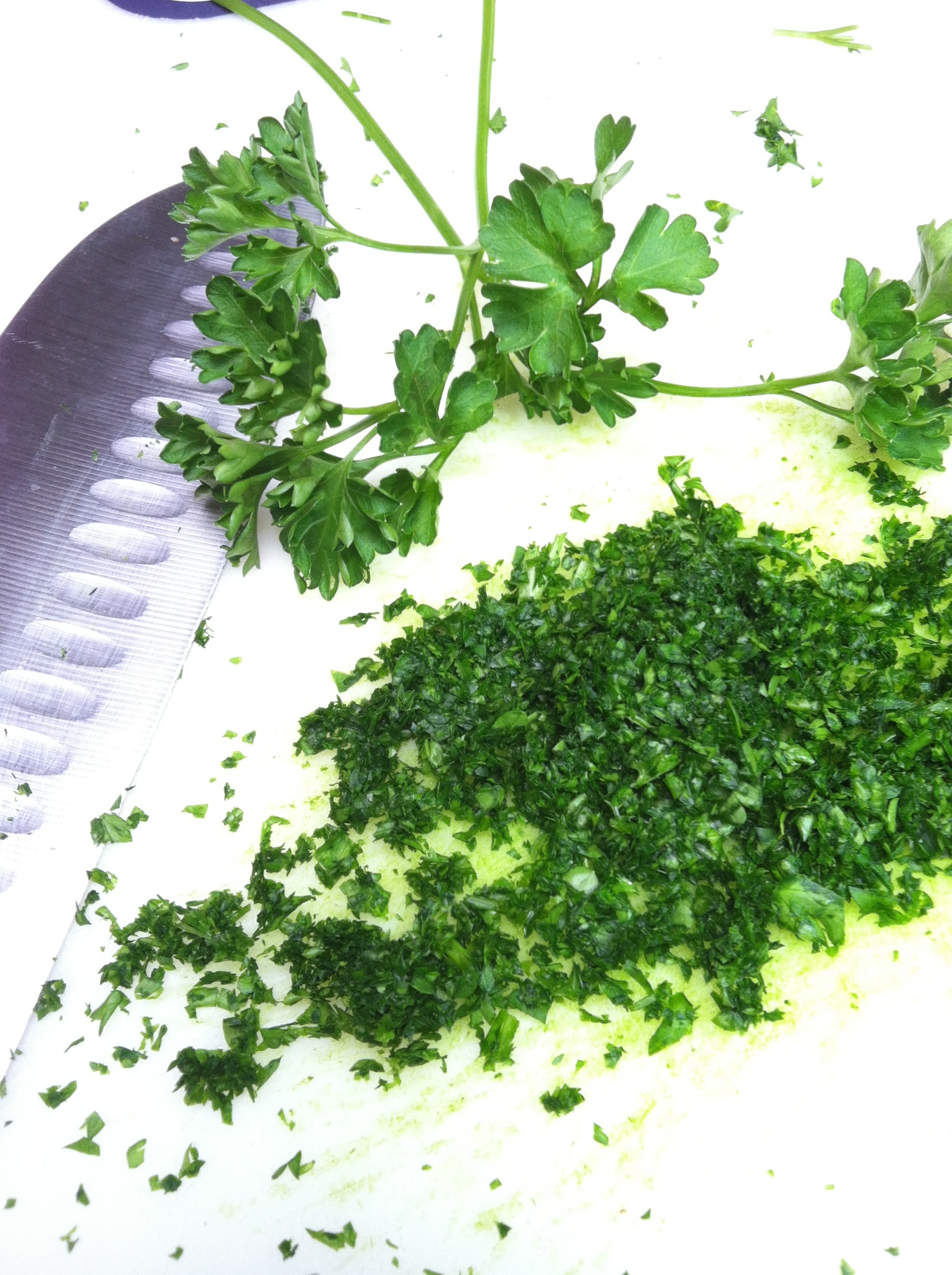
1 tbsp (15 ml) parsley, finely chopped (we used the curly variety)

1 garlic clove, finely chopped

1/4 tsp (1.2 ml) pepper

1/4 tsp (1.2 ml) salt

1 tbsp (15 ml) extra virgin olive oil

1/2 tsp (2.5 ml) extra virgin olive oil

2 0z (57 g) baby spinach (or romaine lettuce or mix of both)

2 oz (57 g) cucumber, peeled and diced

2 tbsp AMD vinaigrette (or commercial dressing with 2 or fewer digestible carbohydrate grams per 2 tbsp or 30 ml)

2 and 3/8 oz or 1/2 cup (67 g or 120 ml) fresh strawberries, sliced (3–4 medium berries)

2 and 3/4 oz or 1/2 cup (78 g or 120 ml) blueberries

Finely chopped parsley

Finely chopped parsley

Instructions:

Make the vinaigrette first so the components have some time to synergize.

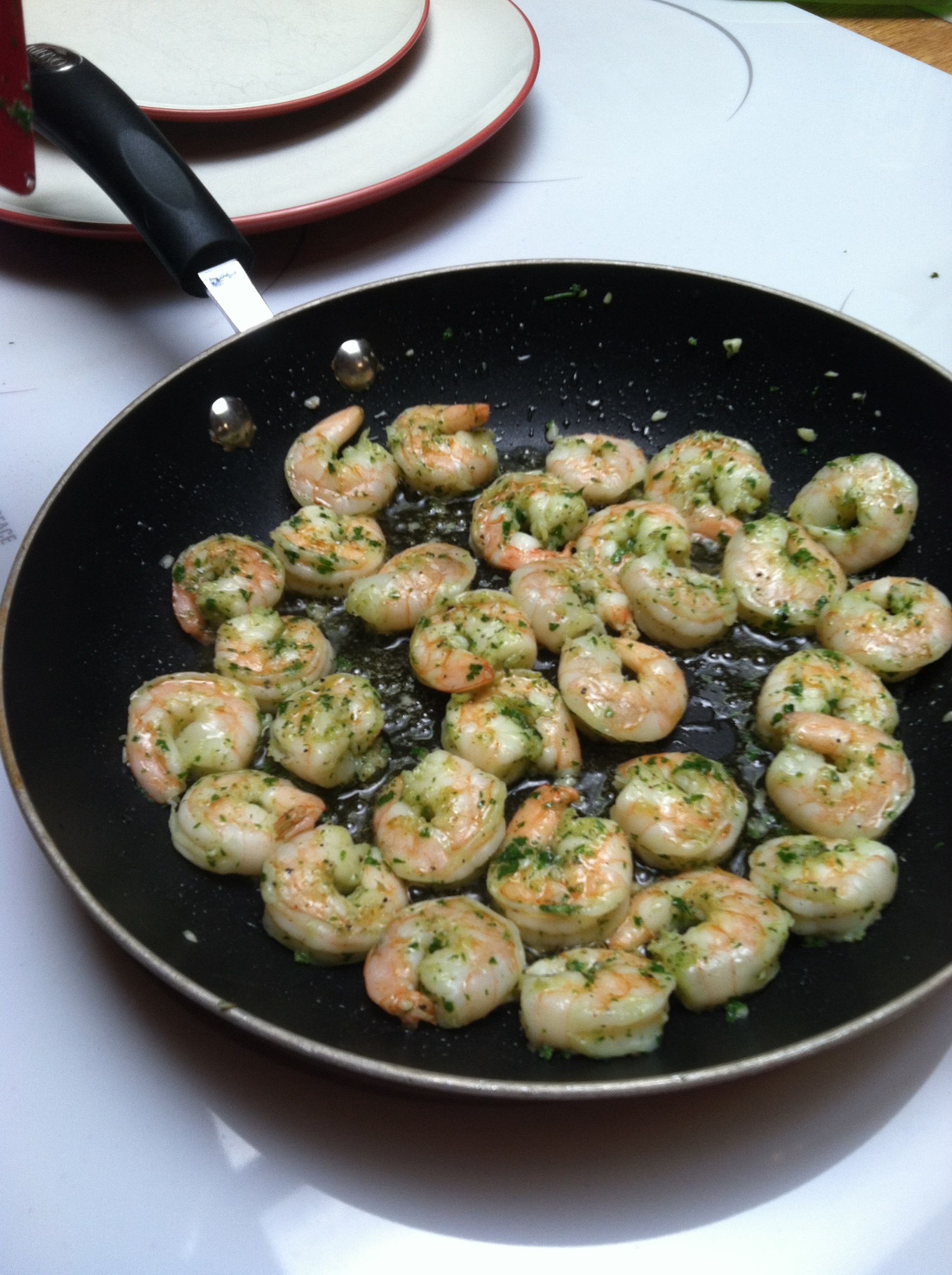
Next, you’ll sauté the shrimp. In a bowl, combine the raw shrimp, parsley, 1/2 tsp (2.5 ml) olive oil, garlic, salt, and pepper, then mix thoroughly to evenly coat the shrimp. Alternatively, you could do that mixing in a plastic baggie (bisphenol-A!). Add 1 tbsp (15 ml) olive oil to a frying pan and cook the shrimp over medium heat until opaque, stirring continuously. When done, it will be patchy  pink and white. It only takes about three minutes.

On a large plate, lay out a bed of spinach or lettuce, over which you’ll scatter the cucumber and cooked shrimp, then the vinaigrette.

Enjoy the fruit for desert.

I don't recall mercury contamination being linked to shrimp

I don’t recall mercury contamination being linked to shrimp. BTW, this is more shrimp than in the recipe.

 Servings: 1

Nutritional Analysis:

63% fat

14% carbohydrate

23% protein

590 calories

23 g carbohydrate

6 g fiber

17 g digestible carbohydrate

1,349 mg sodium

904 mg potassium

Prominent features: Rich in protein, vitamin B12, A, C, E, copper, iron, manganese, and selenium.

Master multi-tasker: wife, chef, photographer

Master multi-tasker: wife, chef, photographer

Recipe: AMD Vinaigrette

Try this on salads, fresh vegetables, or as a marinade for chicken, fish, or beef. If using as a marinade, keep the entree/marinade combo in the refrigerator for 4–24 hours. Seasoned vinaigrettes taste even better if you let them sit for several hours after preparation.

I’ll warn you, this is pretty spicy and tangy. If you prefer less flavor (is that the right word?), either use less of it, or reduce these particular ingredients by half: lemon juice, salt, pepper, paprika, and mustard.

This recipe was in my first book, The Advanced Mediterranean Diet from 2007; hence, “AMD vinaigrette.”

Ingredients:

2 garlic cloves (6 g), minced

juice from 1 lemon (40–50 ml)

2/3 cup (160 ml) extra virgin oil olive

4 tbsp (16 g or 60 ml) fresh parsley, finely chopped

1 tsp (5 ml) salt

1 tsp (5 ml) yellow mustard

1 tsp (5 ml) paprika

4 tbsp (60 ml) red wine or apple cider vinegar

Preparation:

In a bowl, combine all ingredients and whisk together. Alternatively, you can put all ingredients in a jar with a lid and shake vigorously—my preferred method. Let sit at room temperature for an hour, for flavors to meld. Then refrigerate. It should “keep” for at least 5 days in refrigerator. The olive oil will solidify, so take it out and set at room temperature for an hour before using. Shake before using.

Number of Servings: 6 servings of 2 tbsp (30 ml). (In Australia and NZ, you guys say “serves” instead of servings, right mate?)

Nutritional Analysis:

98 % fat

2 % carbohydrate

0 % protein

220calories

1.4 g carbohydrate

0.3 g fiber

1 g digestible carbohydrate

400 mg sodium

41 mg potassium

(You may see a slightly different nutritional analysis—2 g of digestible carb versus 1 g here—at one of my other blogs. That’s the difference between Fitday.com (here) and NutritionData, and rounding.)