To make the book available to more readers, I just dramatically reduced the price at the U.S. Amazon store. $2.99 for the e-book (Kindle) or $9.95 for the paperback. I don’t know how long the prices will stay this low.
If you’re curious, at those prices Amazon pays me $2.06 for each e-book sold, and $2.74 for the paperback.
I don’t care if you leave a favorable or bad review at Amazon. Just be honest. I’ll incorporate helpful and insightful criticism into the 2nd edition.
Posted onDecember 24, 2024|Comments Off on Peace on Earth, Good Will to All Men
From the Holy Bible (NIV), Matthew 22:36-40:
36 “Teacher, which is the greatest commandment in the Law?”
37 Jesus replied: “‘Love the Lord your God with all your heart and with all your soul and with all your mind.’ 38 This is the first and greatest commandment. 39 And the second is like it: ‘Love your neighbor as yourself.’[40 All the Law and the Prophets hang on these two commandments.”
Posted onDecember 10, 2024|Comments Off on Progression of Polycystic Kidney Disease is Preventable
The nephron is the microscopic structural and functional unit of the kidney.
Autosomal Dominant Polycystic Kidney Disease (ADPKD) is the most common inherited cause of end-stage kidney disease and affects 500,000 Americans. It is characterized by fluid-filled cysts in both kidneys and gradual deterioration of kidney function. By age 70, affected folks constitute as much as 10% of the end-stage kidney disease population.
Autosomal Recessive Polycystic Kidney Disease is much less common but is more severe.
Trust me, you want to maintain normal kidney function if possible. In ADPKD, standard interventions include adequate fluid consumption, dietary sodium restriction, and keeping blood pressure below 120-125/80 mmHg.
Understanding chronic kidney disease (CKD) through the lens of evolutionary biology highlights themismatch between our Paleolithic-optimized genes and modern diets, which led to the dramatically increased prevalence of CKD in modern societies. In particular, the Standard American Diet (SAD), high in carbohydrates and ultra-processed foods, causes conditions like type 2 diabetes (T2D), chronic inflammation, and hypertension, leading to CKD. Autosomal dominant polycystic kidney disease (ADPKD), a genetic form of CKD, is characterized by progressive renal cystogenesis that leads to renal failure. This review challenges the fatalistic view of ADPKD as solely a genetic disease. We argue that, just like non-genetic CKD, modern dietary practices, lifestyle, and environmental exposures initiate and accelerate ADPKD progression. Evidence shows that carbohydrate overconsumption, hyperglycemia, and insulin resistance significantly impact renal health. Additionally, factors like dehydration, electrolyte imbalances, nephrotoxin exposure, gastrointestinal dysbiosis, and renal microcrystal formation exacerbate ADPKD. Conversely, carbohydrate restriction, ketogenic metabolic therapy (KMT),and antagonizing the lithogenic risk show promise in slowing ADPKD progression. Addressing disease triggers through dietary modifications and lifestyle changes offers a conservative, non-pharmacological strategy for disease modification in ADPKD. This comprehensive review underscores the urgency of integrating diet and lifestyle factors into the clinical management of ADPKD to mitigate disease progression, improve patient outcomes, and offer therapeutic choices that can be implemented worldwide at low or no cost to healthcare payers and patients.
Steve Parker, M.D.
PS: Compared to the Standard American Diet, the Paleobetic Diet is much lower in carbohydrate content.
Therapeutic exercise helps a little. But don’t expect a dramatic improvement, according to this 2023 study published at The Lancet Rheumatology. The benefits tend to accrue to patients who are in most pain and most physically impaired at baseline.
If you’re carrying a lot of excess weight, it only stands to reason that weight loss would take some stress off those worn-out joints. Let me help.
Posted onDecember 4, 2024|Comments Off on Is Ozempic So Bad That It’s Illegal in Europe?
In the video below, JP implies that it is. He’s technically correct in that it is banned in some European countries according to a January 2024 article at HealthNews. Ozempic and Wegovy are brand names for the same drug: semaglutide, a GLP-1 receptor agonist. Wegovy is FDA-approved for treatment of certain folks with obesity whereas Ozempic is FDA-approved for treatment of type 2 diabetes.
I understand the superficial appeal of drug-induced weight management: no need to fool with exercise and dietary restriction.
Posted onOctober 21, 2024|Comments Off on Ketogenic Diets Reduce Risk of Death
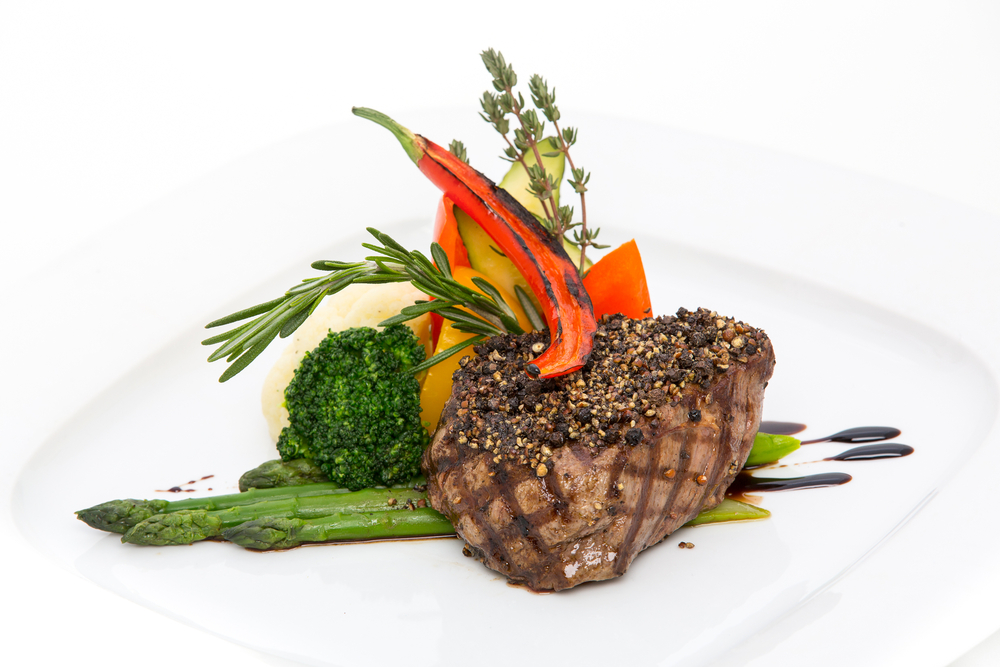
A modern low-carb paleo meal
Many physicians and dietitians have been hesitant to suggest ketogenic diets due to 1) possible increased risk of cardiovascular disease, and 2) unknown effects on overall mortality.
The paleo diet can be ketogenic after a few modifications that get total daily digestible carbs down to 20-30 grams/day. That can be very risky for diabetics taking insulin or other drugs with potential to cause hypoglycemia. But the risk is manageable with medical supervision.
…a higher intake of ultra-processed foods was associated with slightly higher all cause mortality, driven by causes other than cancer and cardiovascular diseases. The associations varied across subgroups of ultra-processed foods, with meat/poultry/seafood based ready-to-eat products showing particularly strong associations with mortality.
You can read the study for yourself free online. Did Big Food (e.g., Archer Daniels Midland, Con-Agra, Monsanto) exert any pressure on the researchers. I dunno.
From the Intro:
Ultra-processed foods are ready-to-eat/heat industrial formulations made mostly or entirely from substances derived from foods, including flavors, colors, texturizers, and other additives, with little if any intact whole food.1Ultra-processed foods, which are typically of low nutritional quality and high energy density, have been dominating the food supply of high income countries, and their consumption is markedly increasing in middle income countries.2 Ultra-processed food consumption accounts for 57% of daily energy intake among adults and 67% among youths in the US according to the National Health and Nutrition Examination Survey (NHANES).34
Ultra-processed foods usually disproportionately contribute added sugars, sodium, saturated fats and trans fats, and refined carbohydrates to the diet together with low fiber.56 As well as having low nutritional quality, ultra-processed foods may contain harmful substances, such as additives and contaminants formed during the processing.
Neurologist Steven Novella wrote a brief post about this study over at Science-Based Medicine. You may also find the comment section there enlightening.
Posted onSeptember 2, 2024|Comments Off on Korean Secrets to Staying Slender
…..South Korean, specifically. Korea has one of the lowest overweight/obesity rates among OECD countries: 33.7%. Life expectancy at birth is 83.4 years, compared to 80.9 in the U.S., 82.2 in UK, 82 in Ireland, and 72.3 in Russia. Anna Lee in the video below postulates why the Korean numbers look so good. She makes a lot of sense. Kpop idols are under high pressure to be more slender than average.
Posted onAugust 28, 2024|Comments Off on Deprescription: Hope for Trulicity and Ozempic Users
I learned a new word today: deprescription. It apparently refers to the act of stopping a prescribed drug.
There’s a class of type 2 diabetes drugs called GLP-1 receptor agonists. Popular examples are Ozempic and Trulicity. They help users to lose excess weight. But there’s concern about long-term drug side effects regain of lost weight when the drug is stopped. So do successful users need to take the drug lifelong?
A study published earlier this year in Diabetes Therapysuggests that successful users of GLP-1 receptor agonists can stop the drug without weight regain and without loss of diabetes control if they also adhere to a very carbohydrate restricted diet. How much carb restriction? Under 30 grams/day, at least at first. That’s going to be ketogenic in most folks. Although I don’t recall seeing “ketogenic” in the study at hand.







 Paleo Diabetic