QOTD: 4th Amendment to the U.S. Constitution

“The right of the people to be secure in their persons, houses, papers, and effects, against unreasonable searches and seizures, shall not be violated, and no Warrants shall issue, but upon probable cause, supported by Oath or affirmation, and particularly describing the place to be searched, and the persons or things to be seized.”

—U.S. Constitution

PS: Please share with your contacts at the NSA, CIA, and FBI

Can You Activate Your Brown Fat, and What If You Did?

The Joslin diabetes blog has an interesting article on brown fat and its effect on metabolic rate and insulin sensitivity. Brown fat is just a type of body type different from the more plentiful white fat (which is actually more pale yellow). If there are other colors of body fat, I don’t know.

If you can “activate” your brown fat, it helps you burn more calories, which could be helpful if you’re trying to lose weight. It also improves insulin sensitivity: beneficial if you have type 2 diabetes or are prone to it.

From Joslin:

“When brown fat is fully activated, it can burn between 200 and 300 extra calories per day. It is most successfully activated through cold exposure. A recent study of people with type 2 diabetes had volunteers sit in a 50 degree room for a couple of hours a day for 10 days in shorts and short-sleeved shirts.

“When I say cold, it’s not icy cold, it’s not like the winter in Boston,” she says. “It’s more or less like the temperature we have here in autumn. After this mild cold exposure, all ten volunteers with type 2 diabetes, as shown in that study, displayed increased brown fat activity and improved insulin sensitivity. This is very exciting.”

Dr. Tseng is working on understanding exactly what is happening on a cellular level to activate brown fat in the cold to see if she can create a drug that will mimic the effects. “Although cold works, it’s just not pleasant,” she says. “If you had to sit in a cold room for a few hours every day, perhaps not everybody could accept that.”

Source: How Your Body Temperature Can Affect Your Metabolism | Speaking of Diabetes | The Joslin Blog

Another way to activate brown fat is exercise (at least if you’re a man or a mouse).

Steve Parker, M.D.

We Unboxed an Anova Precision Cooker

My wife got interested in the sous vide cooking method eight months ago. She gave her original Anova cooker away to someone and replaced it with another brand that broke and shocked her, literally. We just got our new Anova and did this unboxing video. I’m told that unboxing videos are “a thing.”

We’ve noticed in our corner of the universe that steaks are getting more expensive. Sous vide cooking allows us to use a cheaper and tougher cut of meat and it comes out very tender. The method often yields foods that are also more flavorful and juicier compared to other cooking styles.

Are Calcium Supplements Safe?


Death in a bottle?

Death in a bottle?

Monica is a smart and media-savvy nutritionist who brought me on board as a blogger at NutritionData many years ago. Click the link below for her surprising conclusion on calcium supplementation.

Monica writes:

“The National Osteoporosis Foundation published a new report this week, insisting that calcium supplements are safe for your heart. Two weeks ago, Johns Hopkins cardiologist Erin Michos published a paper saying the opposite.

She claims that the NOF review (which was funded by a pharmaceutical company that makes calcium supplements) omitted certain studies (such as the ones she included in her own review) that might have changed the conclusion.

These are just the latest two volleys in a five-year-long tennis match between experts on whether you should or shouldn’t take calcium supplements.  And you thought politics was divisive.”

Source: Calcium Supplements: Safe or Not?

Guess What? I Was Right After All

Reviewers at London Metropolitan University wondered if carbohydrate restriction was a legitimate approach to controlling diabetes. No surprise to me, they conclude that it is:

“A carbohydrate restricted diet can provide a safe and effective solution for improving diabetes management and should have a place within the diabetic guidelines. The diet was effective in reducing postprandial hyperglycemia and glycaemic variability resulting in low levels of glycaemia without the risk of hypoglycaemia. The ability of the diet to reduce the symptoms of dyslipidemia is of particular importance and when compared to the traditional low fat diet for weight loss, the low carbohydrate diet was comparable and in some instances better. There were significant reductions or cessation of diabetic medication reported throughout the literature alongside a reduction in the psychological aspects of living with a long-term disease. It is possible that the current dietary advice may actually accelerate beta cell exhaustion with elevated blood glucose diminishing the islet cells ability to produce insulin.”

Action Plan. But it’s expensive: around $17.

No degludec up in here!

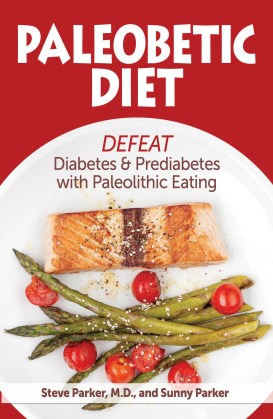
Front cover

What’s More Important For Longevity: Level of Fitness Or Minutes of Exercise Per Week?

She can increase intensity by increasing the weight of those dumbbells

She can increase intensity by increasing the weight of those dumbbells

You’ve heard that “sitting is the new smoking,” right?

Regular physical activity prevents disease and prolongs life. But if you nevertheless still spend to much time sitting around either at work or home, the sitting tends to counteract the benefits of your exercise.

A new study says that your fitness level is more important for long-term health than the number of hours you exercise. Fitness level in this context was cardiorespiratory fitness, probably measured by a maximal-effort treadmill or bicycle test.

Some of your fitness level is inherited, but you can also improve your fitness with the proper intensity or duration of exercise. Rather than exercise longer, I prefer more intensity. Just strolling around the mall at 2 mph for two hours isn’t going to improve fitness in most folks.

From MNT:

“The team conducted a cross-sectional study of 495 women and 379 men from Norway aged between 70-77 years. Sedentary time and physical activity were assessed by accelerometers, while cardiorespiratory fitness was determined by peak oxygen uptake (VO2 peak) – the measurement of the volume of oxygen that the body can utilize during physical exertion.

Researchers compared different levels of activity with fitness levels and cardiovascular risk factor clusters. A cardiovascular risk factor cluster was defined as the presence of three to five risk factors for heart disease.

These risk factors included: elevated waist circumference, elevated blood triglycerides or reduced “good” cholesterol levels, high blood pressure or treatment for hypertension, and elevated fasting blood sugar levels – combined symptoms commonly referred to as metabolic syndrome.

High cardiorespiratory fitness reduced risk of heart diseaseFindings – published in Mayo Clinic Proceedings – showed that when compared with women and men who were the least sedentary, women and men from the most sedentary group were 83 percent and 63 percent more likely to have cardiovascular risk factors from extended time sitting, respectively.

However, when the team took participants’ level of fitness into consideration – measured by having high age-specific cardiorespiratory fitness – they found that the fittest 40 percent had a decreased likelihood of cardiovascular risk factors from prolonged sitting.This finding held true even though the fittest participants spent between 12-13 hours per day sedentary and did not meet current moderate to vigorous physical activity guidelines.”

Source: Fitness, not physical activity, mitigates negative effects of prolonged sitting – Medical News Today

PS: If you’re new to exercise, I teach you how to get started in my books.

Soft Drinks Raise Risk of T2 Diabetes and LADA

I enjoy an aspartame-flavored Fresca now and then

I enjoy an aspartame-flavored Fresca now and then

LADA is latent autoimmune diabetes in adults.

This new study is out of Sweden. The potential disease-inducing soft drink dose was 400 ml or 13.5 fl oz per day. In the U.S., a typical soda can is 10 fl oz or 355 ml. Surprisingly, artificially-sweetened soft drinks were just as guilty as regular beverages.

From MNT:

“The study included 2,874 Swedish adults, of whom 1,136 had type 2 diabetes, 357 had LADA, and 1,137 were healthy controls.

The team analyzed the self-reported dietary data of each adult, looking specifically at the number of soft drinks consumed up to 1 year before a diabetes diagnosis. Participants’ insulin resistance levels, beta cell function, and autoimmune response were also measured.

The researchers found that adults who reported drinking at least two 200-milliliter servings of soft drinks a day – whether they contained sugar or artificial sweetener – were twice as likely to develop LADA and 2.4 times more likely to develop type 2 diabetes, compared with those who consumed fewer than two soft drinks daily.

What is more, adults who consumed five 200-milliliter servings of soft drinks daily were found to be at 3.5 times greater risk of LADA and 10.5 times greater risk of type 2 diabetes, regardless of whether the drinks were sugary or artificially sweetened.”

Source: Diabetes risk doubles with more than two soft drinks daily – Medical News Today

QOTD: Michael Nehls on Ancestral Lifestyle

Lean and muscular

Which is lean and muscular?

“A lifestyle that encompasses 12+ hours intermittent fasting overnight, a nutrient-rich, low-glycemic diet and regular physical exercise almost inevitably leads to a body composition close to that of our foraging ancestors: lean and muscular. Unfortunately, the behavioural trend goes in the other direction, where obesity and “age-related” muscle loss is becoming a major health issue.”

Source: Unified theory of Alzheimer’s disease (UTAD): implications for prevention and curative therapy

Check Out DietDoctor’s Improved Low-Carb Recipe Collection

That's a guacamole deviled egg

That’s a guacamole deviled egg

They’ve always been good recipes—accompanied by all-important nutrient analysis—but they’re even better now. They’re not necessarily paleo-compliant, but many of them are.

From DietDoctor:

“Our low-carb recipe site is probably already the most popular one in the world, with over 100,000 daily pageviews, several hundred recipes and gorgeous images. Now we’re adding even more great functions.You can now change the number of servings for recipes – the ingredient amount will correspond to the number of servings – and you can now also choose between the US or the metric measurement systems for ingredients. All to make it simpler to use our recipes.

We’ve also added a function for members so that it is now possible to save your personal favorite recipes. To activate the latter feature you need to be logged in, so that your selections can be saved for later.”

Source: The World’s Best Low-Carb Recipes Just Got Better – Diet Doctor

Does Exercise Really Prevent T2 Diabetes?

Hop on and ride, ride, ride to prevent diabetes

Hop on and ride, ride, ride to prevent diabetes

Even if you have T2 diabetes already, share this post with someone who has prediabetes or risk of getting diabetes. You could save a life and prevent a lot of hassle.

“A new study, published this week in the journal Diabetologia, takes a deeper look at the role of exercise in the development of type 2 diabetes. It is the most in-depth study to examine exercise independent from other influential factors, such as diet. The conclusions from the report are clear: “This research shows that some physical activity is good, but more is better.” (says study co-author Dr. Soren Brage)

Currently, physical activity guidelines in the U.S. and the United Kingdom recommend 150 minutes of moderate activity or 75 minutes of vigorous activity per week; this could include cycling, walking, or sports. However, according to the Centers for Disease Control and Prevention (CDC), fewer than 50 percent of American adults meet these recommendations.

The current study was a result of collaborative work between two institutions – University College London and the University of Cambridge, both of which are based in the U.K. Data from more than 1 million people was collated. In all, the team analyzed 23 studies from the U.S., Asia, Australia, and Europe.”

***

“According to the analysis, cycling or walking briskly for 150 minutes each week cuts the risk of developing type 2 diabetes by up to 26 percent.

Those who exercise moderately or vigorously for an hour each day reduced their risk by 40 percent. At the other end of the scale, for those who did not manage to reach the 150 minute target, any amount of physical activity they carried out still reduced the risk of type 2 diabetes, but to a lesser extent.”

Source: Exercise vs. diabetes: New level of detail uncovered – Medical News Today

Steve Parker, M.D.

PS: If you want to start an exercise program, my books will get you started.