President of Australian Diabetes Society On Paleo Diet for Diabetics: Don’t Do It

Really?

Really?

From SBS.com:

“People with type 2 diabetes should ditch the paleo diet until there’s substantial clinical evidence supporting its health benefits, warns the head of the Australian Diabetes Society.

It may be popular among celebrities but there’s little evidence to support the dozens of claims it can help manage the disease, says Associate Professor Sof Andrikopoulos.

“There have been only two trials worldwide of people with type 2 diabetes on what looks to be a paleo diet,” he said.

“Both studies had fewer than 20 participants, one had no control diet, and at 12 weeks or less, neither study lasted long enough for us to draw solid conclusions about the impact on weight or glycemic control.”

In a paper for the latest issue of the Australian Medical Journal, Andrikopoulos recommends people with type 2 diabetes seek advice from their GPs [general practitioners], registered dietitians and diabetes organizations.”

Source: Diabetics should put paleo on hold: expert | SBS News

I disagree with Prof. Andrikopoulos. We have adequate evidence to support a paleo-style diet for people with diabetes. I review it in 32 pages of my book. If you want to see the evidence right now, search this site for key words: O’Dea, Lindeberg, Jonsson, Frasetto, Ryberg, Mellberg, Boers, and Masharani.

If you seek diet advice from your general practitioner, endocrinologist, registered dietitian, and diabetes organizations, you’ll likely be told to eat too many carbohydrates, including processed man-made foods, which will wreck your glycemic control. The drug companies and medical-industrial complex will benefit at your expense.

Steve Parker, M.D.

No degludec up in here!

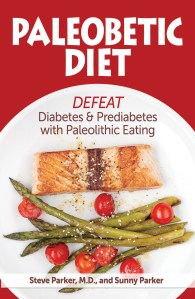
Front cover

Don’t Do It: Exercise Promotes Cancer

Needs a bit more hormetic stress

“Would you spot me, bro?”

I’ve always assumed that exercise reduces the risk of cancer, contributing to the well-established fact that folks who exercise live longer than others.

But a recent study found a positive association between exercise and two cancers: melanoma and prostate.

The good news is that exercise was linked to lower risk of 13 other cancers.

Here’s a quote for the New York Times Well blog:

The researchers found a reduced risk of breast, lung and colon cancers, which had been reported in earlier research. But they also found a lower risk of tumors in the liver, esophagus, kidney, stomach, endometrium, blood, bone marrow, head and neck, rectum and bladder.

And the reductions in risk for any of these 13 cancers rose steeply as people exercised more. When the researchers compared the top 10 percent of exercisers, meaning those who spent the most time each week engaging in moderate or vigorous workouts, to the 10 percent who were the least active, the exercisers were as much as 20 percent less likely to develop most of the cancers in the study.

I’m surprised the protective effect of exercise against cancer wasn’t stronger.

Action Plan

So how much physical activity does it take to prevent cancer? And what type of exercise? We await further studies for specific answers.

I’m hedging my bets with a combination of aerobic and strength training two or three times a week.

Steve Parker, M.D.

PS: If you think cancer’s bad, read one of my books. Wait, that didn’t come out right.

PPS: Men with diabetes seem to be less likely than average to get prostate cancer.

Olive Oil Helps Control After-Meal Blood Blood Sugars

Steve Parker MD, Advanced Mediterranean DIet

Naturally low-carb Caprese salad: non-paleo mozzarella cheese, tomatoes, basil, extra virgin olive oil

Italian researchers found that extra-virgin olive oil taken with meals helps to reduce blood sugar elevations after meals in type 1 diabetics. This may help explain the lower observed incidence of diabetes seen in those eating a traditional Mediterranean diet, which is rich in olive oil.

Before going further into the weeds, remember that glycemic index refers to how high and quickly a particular food elevates blood sugar. High-glycemic index foods raise blood sugar quicker and higher compared to low-glycemic index foods.

The study at hand is a small one: 18 patients. They were given both high- and low-glycemic meals with varying amounts and types of fat. Meals were either low-fat, high in saturated fat (from butter), or high in monounsaturated fat from olive oil. Meals that were high-glycemic index resulted in lower after-meal glucose levels if the meal had high olive oil content, compared to low-fat and butter-rich meals.

If meals were low in glycemic index, blood sugar levels were about the same whether the diet was low-fat, high in saturated fat, or rich in olive oil.

I don’t know if results of this study apply to those with type 2 diabetes. Probably, but uncertain. (google it!)

Action Plan

If you have type 1 diabetes and plan on eating high on the glycemic index scale, reduce your blood sugar excursions by incorporating extra-virgin olive oil into your meals.

Steve Parker, M.D.

PS: No olive trees were killed to produce my book.

Reference: Bozzetto, Luigarda, et al. Extra-virgin olive oil reduces glycemic response to a high-glycemic index meal in patients with type 1 diabetes: a randomized controlled trial. Diabetes Care, online before print, February 9, 2016. doi: 10.2337/dc15-2189


Fire and Human Evolution

Richard Wrangham figures our hominin ancestors tamed fire and started cooking with it 1.8 million years ago. Other authorities date our mastery of fire from 12,000 to 400,000 years ago.

From the New York Times:

“When early humans discovered how to build fires, life became much easier in many regards. They huddled around fire for warmth, light and protection. They used it to cook, which afforded them more calories than eating raw foods that were hard to chew and digest. They could socialize into the night, which possibly gave rise to storytelling and other cultural traditions.

But there were downsides, too. Occasionally, the smoke burned their eyes and seared their lungs. Their food was likely coated with char, which might have increased their risk for certain cancers. With everyone congregated in one place, diseases could have been transmitted more easily.”

Source: Smoke, Fire and Human Evolution – The New York Times

John Hawks Says Humans Haven’t Stopped Evolving 

Writing at TheScientist:

“Skin color is a classic example. One of the largest and most obvious physiological differences between populations, skin color is influenced by more than two dozen genes in a pathway that produces the pigment melanin and regulates the amount of this pigment in different tissues. Changes to these genes interrupt the generation of the dark pigment eumelanin, leaving skin with larger amounts of the reddish pigment pheomelanin, leading to various skin tones and patterns of coloration, such as freckles. Despite its complex genetics, skin color shows consistent patterns of evolution across the globe. People whose ancestors lived in the tropics tend to be dark-skinned, while those who lived further north and south tend to be lighter. One of the revelations of the last 15 years is just how recent this pattern really is. According to analyses of ancient DNA, people who lived in northern Europe only 10,000 years ago would not have had the extremely light skin of today’s people in that region.”

Source: Humans Never Stopped Evolving | The Scientist Magazine®

Hawks also discusses lactase persistence, eye color, blood types, and malaria resistance.

Drugs for Diabetes: Insulin Degludec (Tresiba) – A New Long-Acting Insulin

Tresiba joins other long-acting insulins like insulin glargine (Lantus), insulin detemir (Levemir), and good ol’ NPH insulin. While FDA-approved in the U.S. only this year, it’s been used in other countries for some time. Insulin degludec will have different names depending on the country.

Who Is It For?

  • Adults with type 1 and 2 diabetes
  • Not for diabetic ketoacidosis
  • We have no good data on use in children (under 18), pregnant women, and nursing mothers

How Long Does It Work?

It will last for at least 30 hours in most users. After that, effectiveness starts to taper off but some effect may be seen as long as 42 hours after the injection.

What Is Its Role In Treating Diabetes?

Insulin degludec is a basal insulin, meaning that it runs in the background continuously. It’s not designed to reduce blood sugar that rises after a meal. If your pancreas still makes insulin, release of that insulin may reduce after-meal glucose levels adequately. Otherwise, after-meal glucose elevations are addressed with bolus insulin injections. Bolus-type insulins are the rapid-acting ones like Humalog and Novolog.

Most NPH insulin users, and some insulin glargine (Lantus) users, need the injection twice daily. Because of its long duration of action, Triseba users should never need more than one injection daily. I don’t have much experience with Levemir because the hospital where I work doesn’t stock it.

Triseba users should take it at about the same time daily. If you miss that time by up to five or six hours either way, it probably won’t matter.

What’s the Dose?

For type 2 diabetics who have never used insulin, the starting dose is typically 10 units/day.

For type 1’s switching from other insulins, the usual starting dose is one-third to one-half of the total daily insulin dose, plus rapid-acting bolus insulin around meal times for the remainder.

Change the dose no more often than every three or four days.

How Much Does It Cost?

I don’t know. Likely more than some of the other basal insulins.

Steve Parker, M.D.

PS: Click here for full prescribing information.

PPS: If glargine, degludec, and detemir sound like Greek to you, you’ll appreciate my book.

No degludec up in here!

No degludec up in here!

Is Alzheimer’s Disease Caused By Type 2 Diabetes?

dementia, memory loss, Mediterranean diet, low-carb diet, glycemic index, dementia memory loss

“More basic research is critical.”

Several scientific studies, but not all, link type 2 diabetes with Alzheimer’s disease. Some go so far as to say Alzheimer’s is type 3 diabetes.

My Twitter feed brought to my attention a scientific article I thought would clarify the relationships between diabetes, carbohydrate consumption, and Alzheimer’s dementia (full text).

It didn’t.

Click the full text link to read all about insulin, amylin, insulin degrading enzyme, amyloid–β, and other factors that might explain the relationship between type 2 diabetes and Alzheimer’s dementia. You’ll also find a comprehensive annotated list of the scientific studies investigating the link between diabetes and Alzheimer’s.

Bottom line: We still don’t know the fundamental cause of Alzheimer’s disease. A cure and highly effective preventive measures are far in the future.

Action Plan For You

You may be able to reduce your risk of Alzheimer’s disease by:

  • avoiding type 2 diabetes
  • preventing progression of prediabetes to diabetes
  • avoiding obesity
  • exercising regularly
  • eating a Mediterranean-style diet

Scientists have no idea whether a Stone Age diet prevents dementia.

Carbohydrate restriction helps some folks prevent or resolve obesity, prediabetes, and type 2 diabetes. A low-carb Mediterranean diet is an option in my Advanced Mediterranean Diet (2nd edition).

Steve Parker, M.D.

Reference: Schilling, Melissa. Unraveling Alzheimer’s: Making Sense of the Relationship Between Diabetes and Alzheimer’s Disease. Journal of Alzheimer’s Disease, 51 (2016): 961-977.


Increase in consumption of refined carbohydrates and sugar may have led to the health decline of the Greenland Eskimos 

Not much edible carbohydrate this time of year...

Not much edible carbohydrate this time of year…

From Dr. James Dr. DiNicolantonio:

“In conclusion, an increase in the intake of refined carbohydrate and sugar paralleled the rise in atherosclerotic disease in the Greenland Eskimos. While the total carbohydrate intake of the Greenland Eskimos was just 2–8% of total calories in 1855, this increased to around 40% of calories by 1955.5 The Greenland Eskimos studied by Bang and Dyerberg in the 1970s no longer consumed a traditional healthy Eskimo diet. Indeed, the intake of refined sugar in the Greenland Eskimos increased by almost 30-fold from 1855 (6 g/person/day or around 1½ teaspoonful of sugar) to the 1970s (164–175 g or around 40–44 teaspoonful of sugar). Moreover, the intake of refined carbohydrate increased 5–7-fold from 1855 (18 g/day from bread) to the 1970s (84–134 g/day from bread, biscuits and rye flour).

In summary, the intake of refined carbohydrate and sugar by the Greenland Eskimos increased in parallel to the rise in atherosclerotic disease. Considering that a similar event occurred in the USA and that the overconsumption of refined sugar is a principal driver of type 2 diabetes, hypertension, and coronary heart disease, this most likely explains the health decline of the Greenland Eskimos.”

Source: Increase in the intake of refined carbohydrates and sugar may have led to the health decline of the Greenland Eskimos — DiNicolantonio 3 (2) — Open Heart

More Patients With Impaired Kidney Function Qualify for Metformin

Recently the U.S. Food and Drug Administration revised their guidelines for physicians regarding use of metformin in patients with kidney impairment. This may make more patients candidates for the drug.

Physicians have been advised for years that type 2 diabetics with more than minimal kidney impairment should not be given metformin. Why? Metformin in the setting of kidney failure raises the risk of lactic acidosis.

The traditional test for kidney impairment is a blood test called creatinine. When kidneys start to fail, serum creatinine rises. Another way to measure kidney function is eGFR, which takes into account creatinine plus other factors.

By the way, you can’t tell about your kidney function simply from the way you feel; by the time you have signs or symptoms of renal failure, the process is fairly advanced.

The FDA now recommends not using  metformin if your eGFR (estimated glomerular function rate) is under 30 ml/min/1.73 m squared), and use only with extreme caution if eGFR drops below 45 while using metformin. Don’t start metformin if eGFR is between 30 and 45. Your doctor can calculate your eGFR and should do so annually if you take metformin.

Steve Parker, M.D.

Moderately Low-Carb Diet Beats Calorie-Restricted “Balanced” Diet in Overweight Japanese Type 2 Diabetes

This meal is low-carb, and probably low-calorie too

This meal is both low-carb and low-calorie

A randomized controlled clinical trial found superior results in diabetes with a low-carb diet, judging from weight loss and hemoglobin A1c.

I don’t know how many carbs the typical Japanese person eats in a day. In the U.S., it’s 250-300 grams. Here’s how the study at hand was done:

“This prospective, randomized, open-label, comparative study included 66 T2DM patients with HbA1c >7.5% even after receiving repeated education programs on Calorie-Restricted Dieting (CRD). They were randomly allocated to either the 130g/day Low-Carb Diet (LCD) group (n = 33) or CRD group (n = 33). Patients received personal nutrition education of CRD or LCD for 30 min at baseline, 1, 2, 4, and 6 months. Patients of the CRD group were advised to maintain the intake of calories and balance of macronutrients (28× ideal body weight calories per day). [If I understand correctly, a 170-lb (77.2 kg) person would be recommended to eat 2160 calories/day.] Patients of the LCD group were advised to maintain the intake of 130 g/day carbohydrate without other specific restrictions. Several parameters were assessed at baseline and 6 months after each intervention. The primary endpoint was a change in HbA1c level from baseline to the end of the study.

At baseline, body mass index (BMI) and HbA1c were 26.5 and 8.3, and 26.7 kg/m2 and 8.0%, in the CRD and LCD, respectively. At the end of the study, HbA1c decreased by −0.65% in the LCD group, compared with 0.00% in the CRD group (p < 0.01). Also, the decrease in BMI in the LCD group [−0.58 kg/m2] exceeded that observed in the CRD group (p = 0.03).

Conclusions: Our study demonstrated that 6-month 130 g/day LCD reduced HbA1c and BMI in poorly controlled Japanese patients with type 2 diabetes. LCD is a potentially useful nutrition therapy for Japanese patients who cannot adhere to CRD.”

Source: A randomized controlled trial of 130 g/day low-carbohydrate diet in type 2 diabetes with poor glycemic control – Clinical Nutrition

The calorie-restricted diet did nothing for these folks in terms of glycemic  control.

Steve Parker, M.D.

PS: In case you’re wondering, the Paleobetic Diet reduces digestible carbs to 45-80 grams/day.