Is Your Doctor Up To Date On Diabetes Treatment?

The American Diabetes Association every January updates their Standards of Medical Care in Diabetes. The document is lengthy, highly technical, and written for healthcare providers. Some of you may appreciate it. If I were a non-physician with diabetes, I’d learn as much about it as possible. Remember, no one cares about your health as much as you do. The 2015 version of the standards is called, appropriately enough, Standards of Medical Care in Diabetes—2015.

Updates to the guidlelines include:

  • recommendation not to sit inactively for over 90 minutes
  • pre-meal blood sugar target is now 80 to 130 mg/dl (4.4 to 7.2 mmol/l) instead of the old 70 to 130 mg/dl
  • added SGLT2 inhibitors to the drug treatment algorithm
  • recommended a diastolic blood pressure goal of 90 mmHg or less instead of the old 80 mmHg or less
  • increased the potential pool of statin drug users
  • added a section on management of diabetes during pregnancy

Steve Parker, M.D.

PS: I don’t necessarily agree with or abide by the guidelines.

The Glucagon-Centric Theory of Diabetes Pathology

Perhaps we’ve been wrong about diabetes all along: the problem isn’t so much with insulin as with glucagon.

At least one diabetes researcher would say that’s the case. Roger Unger, M.D., is a professor at the University of Texas Southwestern Medical Center. That’s one of the best medical schools in the U.S., by the way.

Glucagon is a hormone secreted by the alpha cells of the pancreas; it raises blood sugar. (There are also glucagon-secreting alpha cells in the lining of the stomach, and I believe also in the duodenum.) In the pancreas, the insulin-producing beta cells are adjacent to the glucagon-secreting alpha cells. Released insulin directly suppresses glucagon. So if your blood sugar’s too high, as in diabetes, may be you’ve got too much glucagon action rather than too little insulin action.

From Shutterstock.com

Don’t ask me what delta cells do

Dr. Unger says that insulin regulates glucagon. If your sugar’s too high, your insulin isn’t adequately keeping a lid on glucagon. Without glucagon, your blood sugar wouldn’t be high. All known forms of diabetes mellitus have been found to have high glucagon levels (if not in peripheral blood, then in veins draining glucagon-secreting organs).

This is pretty well proven in mice. And maybe hamsters. I don’t know if we have all the pertinent evidence in humans, because it’s harder to do the testing.

Here’s Dr. Unger’s glucagon-centric theory of the pathway to insulin-resistant type 2 diabetes: First we over-eat too many calories, leading to insulin over-secretion, leading to increased fat production (lipogenesis) and storage in pancreatic islet cells as triglycerides, in turn leading to increased ceramide (toxic) in those islet cells, leading to pancreas beta cell death (apoptosis) and insulin resistance in the alpha cell (so glucagon is over-produced), all culminating in type 2 diabetes.

For a diagram of this, click forward minute 40 and 10 seconds in the video below.

If this is all true, so what? It could lead to some new and more effective treatments for diabetes. Dr. Unger says that in type 2 diabetes, we need to suppress glucagon. Potential ways to do that include a chemical called somatostatin, glucagon receptor antibodies, and leptin (the latter mentioned in a 2012 article, I think). The glucagon-centric theory of diabetes also explains why type 1 diabetics rarely have totally normal blood sugars no matter how hard they try: we’re ignoring the glucagon side of the equation. I don’t yet understand his argument, but he also says that giving higher doses of insulin to T2 diabetics may well be harmful. I’m guessing the insulin leads to increased accumulation of lipids (and the associated toxic ceramide) in cells.

Not making sense? Try this YouTube video:

Steve Parker, M.D.

PS: Dr. Unger Says: “Without insulin, you can’t get fat.”

Apoptosis: the second p is apparently silent.

h/t George Henderson

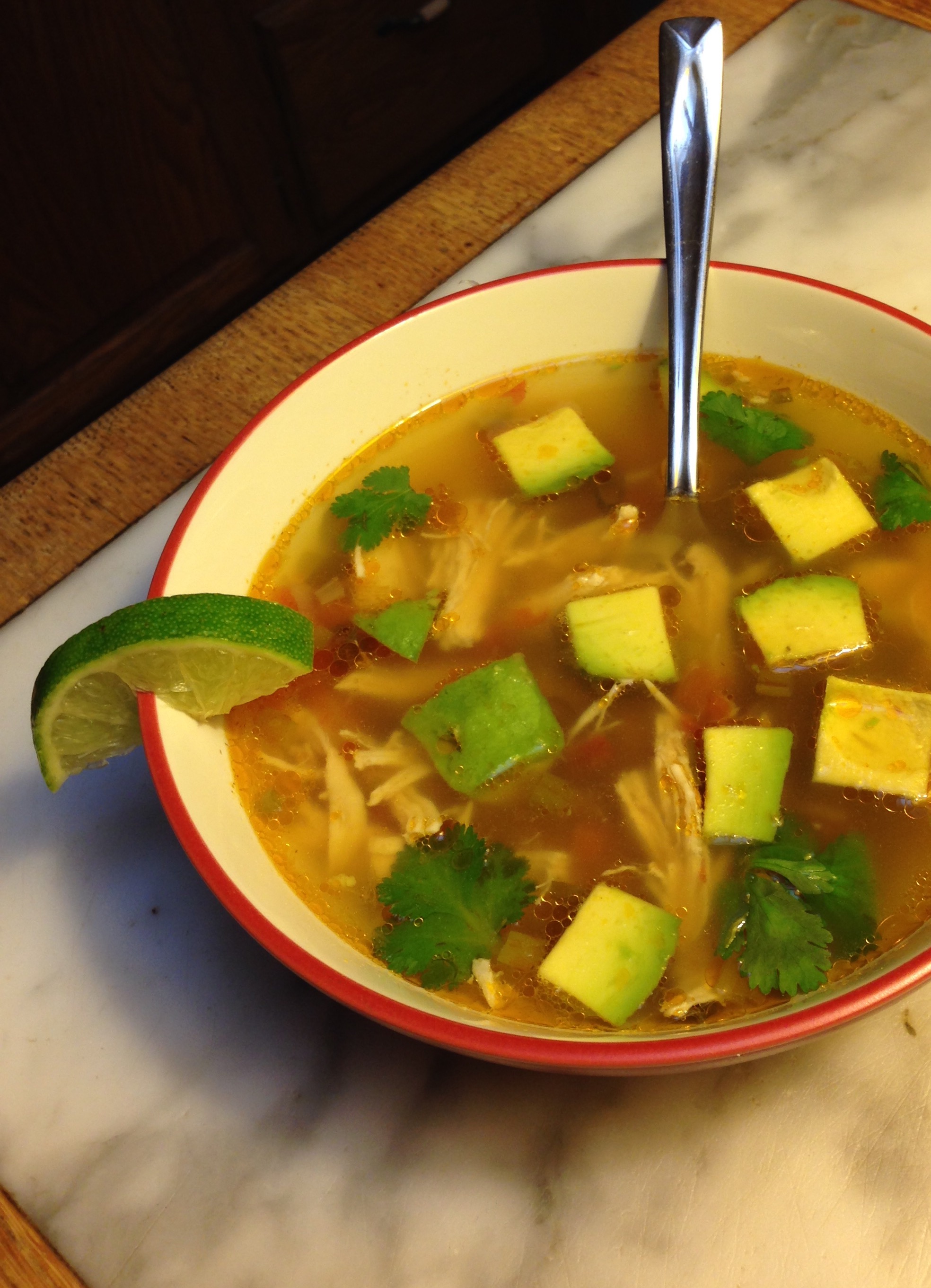
Recipe: Chicken Avocado Soup

FullSizeRender

This blew my mind. Avocados in soup? Yeah, I was skeptical, too. But it works amazingly well. Since I provide the nutritional analysis below, you can easily work this into the Low-Carb Mediterranean Diet, Ketogenic Mediterranean Diet, Paleobetic Diet, or Advanced Mediterranean Diet.

Ingredients

1.5 lb (680 g) boneless skinless chicken breast

1 tbsp (15 ml) olive oil

1 cup (240 ml) chopped green onions

1/2 jalapeno pepper (or 1 or 2 peppers if you wish), seeded and minced (use the seeds, too, if you want it very spicy hot)

2 roma tomatoes (5 oz or 140 g), seeded and diced

2 garlic cloves, minced

60 oz (1,700 g) low-sodium chicken broth

salt and pepper to taste (nutritional analysis below assumes no salt added)

1/2 tsp (2.5 ml) ground cumin

1/3 cup (80 ml) chopped cilantro

3 tbsp (45 ml) fresh lime juice (2 limes should be enough)

3 medium California avocados, peeled, seeded, and cubed

Instructions

Heat up the olive oil in a large pot over medium heat, then add the green onions and jalapeño; sauté until tender (1–2 minutes) then add the garlic and cook another 30 seconds or so. Next into the pot goes the chicken broth, cumin, tomatoes, chicken breasts, and optional salt and pepper. If adding salt, I’d wait until just before serving: taste it and then decide if it needs salt. Bring to a boil with high heat, then reduce heat but keep it boiling, covering with a lid while the chicken cooks through-out. Cooking time depends on thickness of the breasts and may be 15 to 45 minutes. When done, it should be easy to shred with a fork. Reduce heat to low or warm then remove the chicken breasts and allow them to cool for 5–10 minutes. When cool enough, shred the chicken with your fingers and return it to the pot. Add the cilantro. Ladle 1.5 cups (355 ml) into a bowl, add one fifth or sixth of the avocado cubes (half of an avocado) and the juice of 1/4 to 1/2 lime. Enjoy!

IMG_2233

Serving size: 1.5 cup of soup plus 1/2 of an avocado

Servings per Batch: 5

Advanced Mediterranean Diet boxes: 1 veggie, 1 fat, 1 protein

Nutritional Analysis per Serving:

43 % fat

13 % carbohydrate

44 % protein

350 calories

12 g carbohydrate

8 g fiber

4 g digestible carb

638 mg sodium

1,180 mg potassium

Prominent features: Rich in protein, vitamin B6, vitamin C, niacin, pantothenic acid, phosphorus, selenium; plus a fair amount of fiber

PS: If you’re not eating pure paleo, you can fancy this up just before serving by adding a couple large triangular corn tortilla chips (broken into a few bits) or half of a 6-inch (15 cm) corn tortilla (first, microwave for 20 seconds, then break into chunks). Both items each add 5 g of digestible carbohydrate; the tortilla chip option adds 60 calories and the corn tortilla adds 25 calories. Shredded cheese might be a nice topper, too.


A New Cookbook: Does “Primal” Now Always Refer to Mark Sisson’s Version of the Paleo Diet?

Carolyn at All Day I Dream About Food brought my attention to a new cookbook called The Primal Low-Carb Kitchen, by Kyndra Holley.

The book’s detail page at Amazon.com doesn’t define “primal.”

When I see the word “primal,” I think of Mark Sisson’s version of the paleo diet. I’m no expert on Mark’s diet, but off the top of my head I know it includes dairy products. Also, one of the Amazon reviews of The Primal Low-Carb Kitchen mentions use of green beans, a staple in low-carb diets but not considered “paleo” by many because they’re legumes. So a paleo purist will find some recipes they won’t use.

You can’t please everybody. A reviewer of my Paleobetic Diet (barebones version) didn’t like it because she was expecting a raw-foods diet and also didn’t appreciate my allowance of canned tuna. (BTW, if you want that barebones version, you might grab it now because I’m thinking about killing it.)

Anyway…

I bring this to your attention mainly for the book’s inclusion of basic nutritional analysis like carb counts and calories. That’s important if you have diabetes, prediabetes, or are overweight. I wish more paleo diet cookbooks provided the same info.

If I’m wrong about Kyndra’s book being paleo-friendly, let me know.

Steve Parker, M.D.

Become Your Own Drug Expert

Hmmm......did I already take my pills today or not?

Hmmm……did I already take my pills today or not?

I recommend you become the expert on the diabetic drugs you take. Don’t depend solely on your physician or pharmacist. Do research at reliable sources and keep written notes. With a little effort, you could quickly surpass your doctor’s knowledge of your specific drugs.

For example, what are your drug’s side effects? How common are they? How soon do they work? Any interactions with other drugs? What’s the right dose, and how often can it be changed? Do you need blood tests to monitor for toxicity? How often? Who absolutely should not take this drug?

She can't know everything, despite her best efforts

She can’t know everything, despite her best efforts

Along with everything else your doctor has to keep up with, he prescribes about a hundred drugs on a regular basis. You only have to learn about two or three. It could save your life.

Steve Parker, M.D.

Easy and Not-So-Easy Weight-Loss Tips


Left, right, or straight ahead (the road less travelled)?

Left, right, or straight ahead (the road less travelled)?

Record-keeping is often the key to success. Depending on the weight loss program you choose, you might need to track: carbohydrate grams, calories, daily weight, all food consumption, blood sugars, etc. For example, I provide daily logs for all of my diets: Paleobetic Diet, Low-Carb Mediterranean Diet, Ketogenic Mediterranean Diet, and Advanced Mediterranean Diet.

Accountability is another key to success. Consider documenting your program and progress on a free website such as FitDay, SparkPeople, 3FatChicks, Calorie Count (http://caloriecount.about.com), or others. Consider blogging about your adventure on a free platform such as WordPress or Blogger. Such a public commitment may be just what you need to keep you motivated. Do you have a friend or spouse who wants to lose weight? Start the same program at the same time and support each other. That’s built-in accountability.

If you tend to over-eat, floss and brush your teeth after you’re full. You’ll be less likely to go back for more anytime soon.

Eat at least two or three meals daily. Skipping meals may lead to uncontrollable overeating later on. On the other hand, ignore the diet gurus who say you must eat every two or three hours. That’s BS.

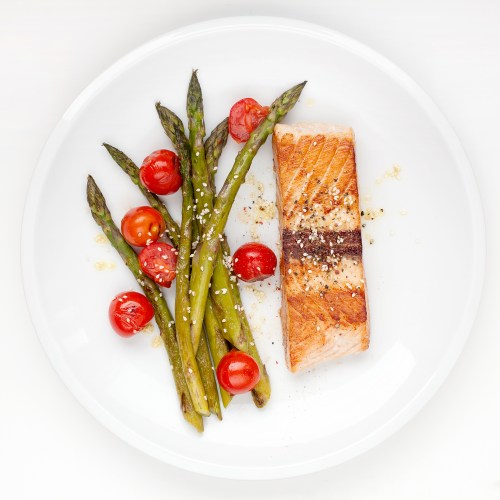
Eat meals at a leisurely pace, chewing and enjoying each bite thoroughly before swallowing.
Savor every bite

Savor every bite

Plan to give yourself a specific reward for every 10 pounds (4.5 kg) of weight lost. You know what you like. Consider a weekend get-away, a trip to the beauty salon, jewelry, an evening at the theater, a professional massage, home entertainment equipment, new clothes, etc.

Carefully consider when would be a good time to start your new lifestyle. It should be a period of low or usual stress. Bad times would be Thanksgiving day, Christmas/New Years’ holiday, the first day of a Caribbean cruise, and during a divorce.

If you know you’ve eaten enough at a meal to satisfy your nutritional requirements yet you still feel hungry, drink a large glass of water and wait a while.

Limit television to a maximum of a few hours a day.

shutterstock_67484833

Maintain a consistent eating pattern throughout the week and year.

Eat breakfast routinely.

Control emotional eating.

Weigh frequently: daily during active weight-loss efforts and during the first two months of your maintenance-of-weight-loss phase. After that, cut back to weekly weights if you want. Daily weights will remind you how hard you worked to achieve your goal.

Be aware that you might regain five or 10 pounds (2–4 kg) of fat now and then. You probably will. Don’t freak out. It’s human nature. You’re not a failure; you’re human. But draw the line and get back on the old weight-loss program for one or two months. Analyze and learn from the episode. Why did it happen? Slipping back into your old ways? Slacking off on exercise? Too many special occasion feasts or cheat days? Allowing junk food back into the house?

Learn which food item is your nemesis—the food that consistently torpedoes your resolve to eat right. For example, mine is anything sweet. Remember an old ad campaign for a potato chip: “Betcha can’t eat just one!”? Well, I can’t eat just one cookie. So I don’t get started. I might eat one if it’s the last one available. Or I satisfy my sweet craving with a diet soda, small piece of dark chocolate, or sugar-free gelatin. Just as a recovering alcoholic can’t drink any alcohol, perhaps you should totally abstain from…? You know your own personal gastronomic Achilles heel. Or heels. Experiment with various strategies for vanquishing your nemesis.

If you’re not losing excess weight as expected (about a pound or half a kilogram per week), you may benefit from eating just two meals a day. This will often turn on your cellular weight-loss machinery even when total calorie consumption doesn’t seem much less than usual. The two meals to eat would be breakfast and a mid-afternoon meal (call it what you wish). The key is to not eat within six hours of bedtime. Of course, this trick could cause dangerous hypoglycemia if you’re taking drugs with potential to cause low blood sugars, like insulin and sulfonylureas; talk to your dietitian or physician before instituting a semi-radical diet change like this.

One of the bloggers I follow is James Fell. He says, “If you want to lose weight you need to cook. Period.” James blogs at http://www.sixpackabs.com, with a focus on exercise and fitness.

Regular exercise is much more important for prevention of weight regain rather than for actually losing weight.

Steve Parker, M.D.


Which Diabetes Drugs Cause Hypoglycemia?

From 97 to 90 mg/dl

You shouldn’t notice low blood sugars unless under 65-70 mg/dl (3.7 mmol/l)

DRUGS THAT RARELY, IF EVER, CAUSE HYPOGLYCEMIA

Diabetics not being treated with pills or insulin rarely need to worry about hypoglycemia. That’s usually true also for prediabetics. Yes, some type 2 diabetics control their condition with diet and exercise alone, without drugs.

Similarly, diabetics treated only with diet, metformin, colesevalam, sodium-glucose co-transport 2 inhibitor (SGLT2 inhibitor), and/or an alpha-glucosidase inhibitor (acarbose, miglitol) should not have much, if any, trouble with hypoglycemia. The DPP4-inhibitors (sitagliptan and saxagliptin) do not seem to cause low glucose levels, whether used alone or combined with metformin or a thiazoladinedione. Thiazolidinediones by themselves cause hypoglycemia in only 1 to 3% of users, but might cause a higher percentage in people on a reduced calorie diet. Bromocriptine may slightly increase the risk of hypoglycemia. GLP-1 analogues rarely cause hypoglycemia, but they can.

DRUGS THAT CAUSE HYPOGLYCEMIA

Regardless of diet, diabetics are at risk for hypoglycemia if they use any of the following drug classes. Also listed are a few of the individual drugs in some classes:

  • insulins
  • sulfonylureas: glipizide, glyburide, glimiperide, chlorpropamide, acetohexamide, tolbutamide
  • meglitinides: repaglinide, nateglinide
  • pramlintide plus insulin
  • possibly GLP-1 analogues
  • GLP-1 analogues (exanatide, liragultide, albiglutide, dulaglutide) when used with insulin, sufonylureas, or meglitinides
  • possibly thiazolidinediones: pioglitazone, rosiglitazone
  • possibly bromocriptine

Click for a review of drugs for diabetes.

Steve Parker, M.D.

Do You Have Hypoglycemia Unawareness?

Steve Parker MD

Watch out for hypoglycemia particularly if you exercise vigorously and take drugs with the potential to cause hypoglycemia, like insulin and sulfonylureas

If you take drugs that can cause hypoglycemia, you need to know about “hypoglycemia unawareness.” (Click for a quick review of diabetes drugs.)

Some people with diabetes, particularly after having the condition for many years, lose the ability to detect hypoglycemia just by the way they feel. This hypoglycemia unawareness is obviously more dangerous than being able to detect and treat hypoglycemia early on. Blood sugar levels may continue to fall and reach a life-threatening degree.

Hypoglycemia unawareness can be caused by impairment of the nervous system (autonomic neuropathy) or by beta blocker drugs prescribed for high blood pressure or heart disease. It’s more common in folks who have had diabetes for many years. People with hypoglycemia unawareness need to check blood sugars more frequently, particularly if driving a car or operating dangerous machinery.

Steve Parker, M.D.

What Did Corn, Watermelon, and Peaches Look Like Thousands of Years Ago?

The answer is at an article at Vox. In brief, they didn’t look like anything you’d recognize today, thanks to selective breeding. That’s also why most of us today  can’t eat a true Paleolithic diet. Regarding corn:

As maize became domesticated in Mesoamerica, it was radically altered through selective breeding. Early farmers would examine their plants and save the seeds of those that were larger or tastier, or whose kernels were easier to grind. By 4000 BC, cobs were already an inch long. Within just a few thousand years, cobs had grown to many times that size. Later on, plant hybridization became an important breeding method to further cultivate certain traits.

Click through for well-done infographics.


Have You Heard About Dulaglutide for Diabetes?

I forgot to tell you about a new drug for diabetes that hit the market in the U.S. last fall. My preferred initial treatment approach to type 2 diabetes is diet and exercise in most cases, but in many cases that’s not enough.

If your blood sugar’s 400 mg/dl (22 mmol/l) and you’re fairly symptomatic from it, I’ll probably have to start you out on insulin while initiating dietary changes at the same time. Later we’ll try to get you off insulin, onto metformin, and perhaps off drugs entirely within a couple months. (Type 1 diabetics have to keep taking insulin shots, of course.)

Where this new drug fits into our armamentarium isn’t clear. Click here for links to professional association guidelines on diabetes drug prescribing.

In September, 2014, the Food and Drug Administration approved the fourth drug in the GLP-1 analogue class: dulaglutide. The granddaddy in the class is exenatide (Byetta). The new GLP-1 receptor agonist will be sold in the U.S. under the name of Trulicity. It’s a once-weekly injection.

This is only a summary and is liable to change. Get full information from your prescribing healthcare provider and pharmacist.

Resistance training helps control blood sugar

Resistance training helps control blood sugar

Uses

For adults with type 2 diabetes, in conjunction with diet and exercise. It’s not a first-line drug. It can be used by itself or in combination with metformin, pioglitazone, glimiperide (and presumably other sulfonylureas), and insulin lispro (e.g., Humalog, a rapid-acting insulin). The drug has not been tried with basal (long-acting) insulins.

Dose

Start with 0.75 mg subcutaneously every week. Can go up to 1.5 mg weekly if needed.

Adverse Effects

Hypoglycemia is rare, but possible, when GLP-1 analogues are used as the sole diabetes drug. When it happens, it’s rarely severe. But the risk increases substantially when dulaglutide is used along with insulin or insulin secretagogues such as sulfonylureas or meglitinides.

Common side effects are nausea, vomiting, diarrhea, abdominal pain, decreased appetite, dyspepsia, and fatigue.

It might cause thyroid tumors and pancreatitis.

Do Not Use If…

…you have a family or personal history of medullary thyroid cancer, or if you have Multiple Endocrine Neoplasia syndrome type 2 or pre-existing severe gastrointestinal disease. Those who are pregnant or nursing babies should probably not take it since we have no data on safety. Don’t use for diabetic ketoacidosis.

Use only with caution if you have a history of pancreatitis or known liver impairment.

Steve Parker, M.D.

Click for full prescribing information.