Tag Archives: paleo diet

What’s For Dinner? Flank Steak, Guacamole, Cucumber, and an Orange

paleo diet, low-carb, Steve Parker MD

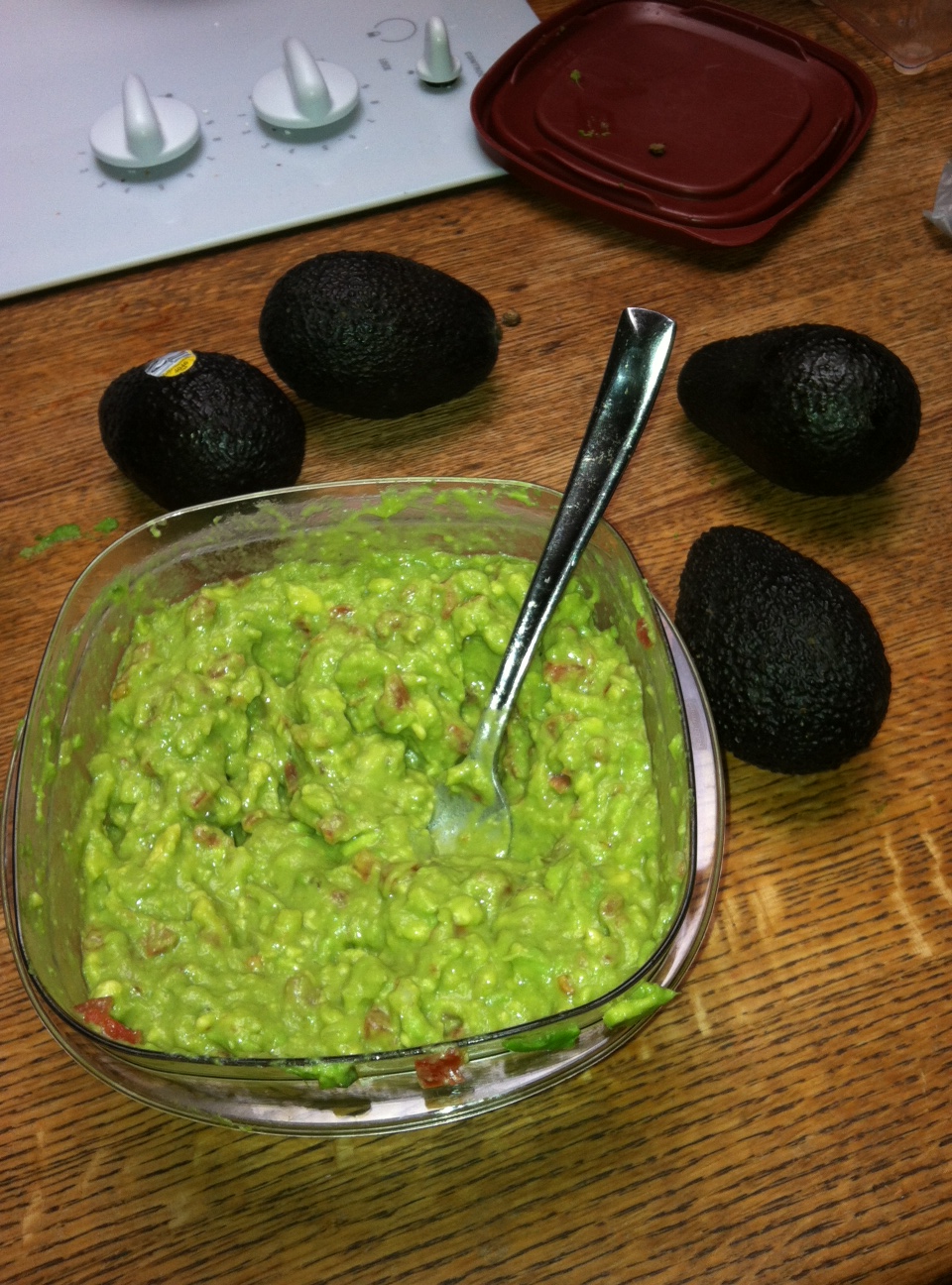
Guacamole salad

This is another staple at our house. Flank steak is sometimes called London broil or jiffy steak. If you can’t find those, use skirt steak.  In any case, the beef steak used in this is never over an inch (2.54 cm) thick. These are not particularly tender cuts, so have your butcher run the steak through a mechanical tenderizer. This recipe serves two.

Ingredients:

  • flank steak, mechanically tenderized, 24 oz (680 g) (this cooks down to 14 oz or 400 g)
  • California avocados, 2 (about 5.5 oz or 155 g each, measuring 2.5 x 3.5 inches or 6.4 x 9 cm)
  • tomato, fresh, 1.5 0z (43 g), finely diced
  • onion, fresh, 0.5 oz (14 g), finely diced
  • salt, a pinch or 1/16 tsp
  • black pepper to taste
  • low-s0dium steak seasoning (I use McCormick Grill Mates Montreal Steak Seasoning, which is coarse salt (1/4 tsp has 180 mg sodium), spices including black and red peppers, garlic, sunflower oil, natural flavor, extractives of paprika) (or just use salt and pepper to taste)
  • oranges, 2 medium sized (2.6 inch or 6.5 cm diameter)
  • cucumber, fresh, 1 large (8 inches or 20 cm long), peeled and sliced

Instructions:
paleo diet, low-carb, Steve Parker MD

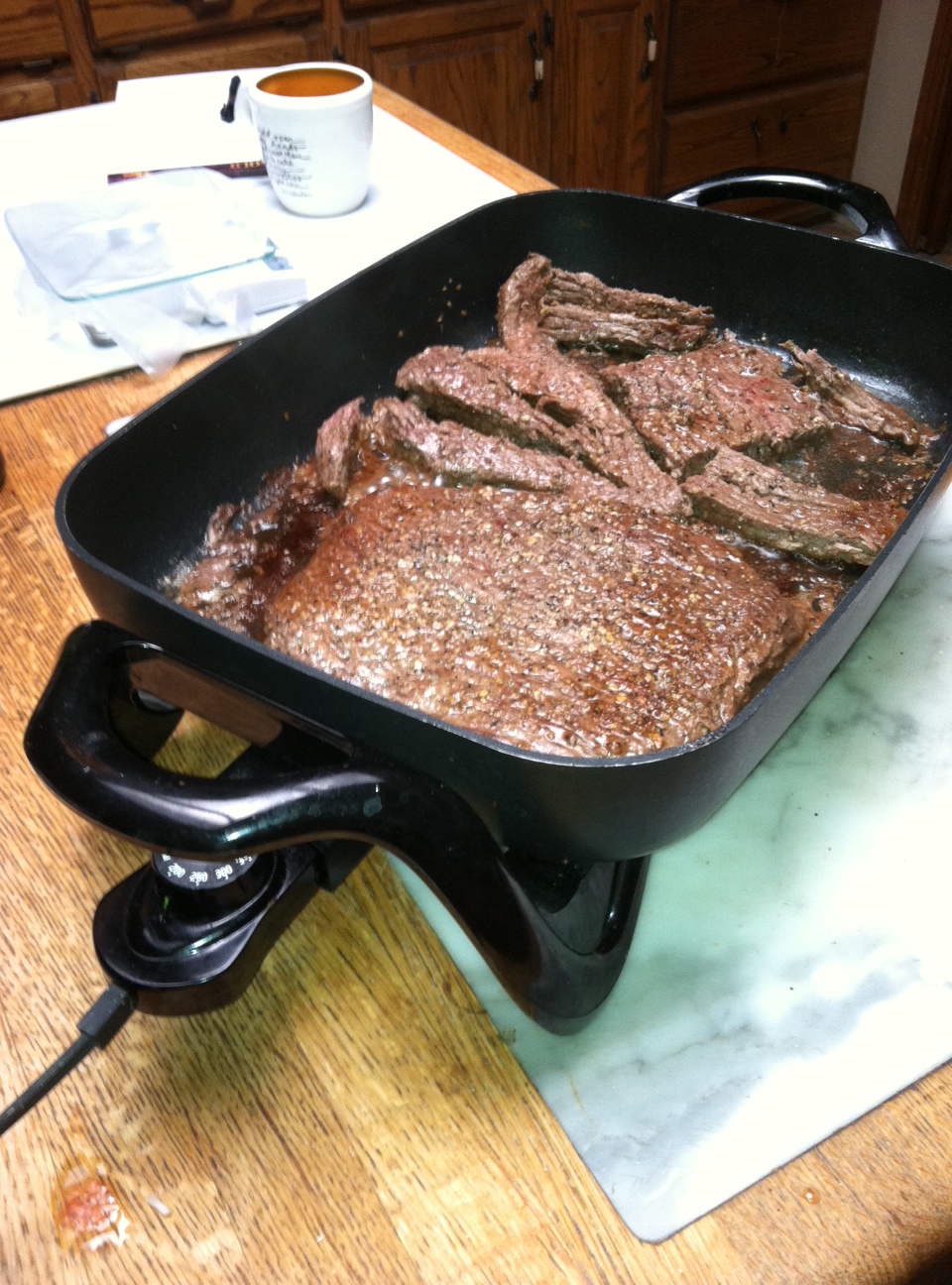
Flank steak cooking in what I’d call an electric frying pan

First, start the steak frying in a pan over medium heat. Sprinkle with steak seasoning or salt and pepper. Cook until done to your liking.

While the steak’s cooking, make your guacamole. Slice the avocados in half and remove the seeds, then scoop out the flesh into a bowl and mash it with a fork until pasty yet still a little chunky. Blend in the tomato, onion, and a pinch of salt. It’s done.

Enjoy the cucumber as a side dish and the orange for desert.

Servings: 2 servings of 7-oz steak (200 g), 8 tbsp (120 ml) quacamole, half a cucumber, and an orange

Nutritional Analysis Per Serving:

  • 46% fat
  • 16% carbohydrate
  • 38% protein
  • 730 calories
  • 31.5 g carbohydrate
  • 13.7 g fiber
  • 18 g digestible carbohydrate
  • 968 mg sodium
  • 2,065 mg potassium
  • Prominent features: rich in fiber, protein, B6, B12, C, copper, iron, niacin, pantothenic acid, phosphorus, riboflavin, selenium, thiamine, and zinc 

What’s For Dinner? Baked Trout, Vegetable Medley, and an Apple

Trout are one of the cold-water fatty fishes loaded with the omega-3 fatty acids that are so good for our hearts and brains. Paleolithic man ate much more omega-3 and much less omega-6 fatty acids than modern man. Eating cold-water fatty fish is a great way to get back to that ancestral balance. This recipe serves two.

paleo diet, low-carb, Steve Parker MD

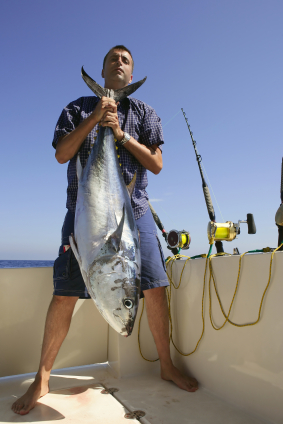
This hunter-gatherer snagged himself a brown trout

Ingredients:

  • trout, fresh filets, 16 oz (450 g)
  • broccoli, raw, fresh, 4.5 oz (130 g), bite-size chunks
  • cauliflower, raw, fresh 4.5 oz (130 g), bite-size chunks
  • carrots, raw, fresh, 4.5 0z (130 g), bite-size chunks
  • olive oil, extra virgin, 7 tbsp (100 ml)
  • garlic, raw, 4 cloves (12 g), thinly sliced or finely diced
  • parsley, raw, 1.5 tbsp (6 g), chopped
  • basil, fresh, 4 leaves (1.5 g), chopped
  • lemon juice, 3/4 fl oz (22 ml)
  • salt, 1/2 tsp (2.5 ml)
  • black pepper, 1 tsp (5 ml)
  • commercial low-sodium vegetable seasoning of your choice
  • apples (2), fresh, medium size, (2.75-inch or 7-cm diameter)

Instructions:

First, make a marinade. In a glass or plastic bowl, mix 5 tbsp (75 ml) of the olive oil, 3 of the diced garlic cloves (9 g), parsley, salt, pepper, lemon juice, and basil.

Place the trout in a medium sized (8 or 9-inch or 20–23 cm diameter) glass baking dish, then cover with the marinade. Let sit in the refrigerator for 1–2 hours, turning occasionally. Preheat oven to 375°F (190°C). Pull the fish dish out of the refrigerator once you start the preheat process. Cover the glass dish with aluminum foil, then bake in oven for 20–40 minutes. This is a judgment all. When done, it should flake apart readily with a fork. This cooking method works well for trout salmon, cod, tilapia, and perhaps others. Consider squeezing fresh lemon juice on the cooked fish for extra zing.

paleo diet, Steve Parker MD, low-carb, vegetables

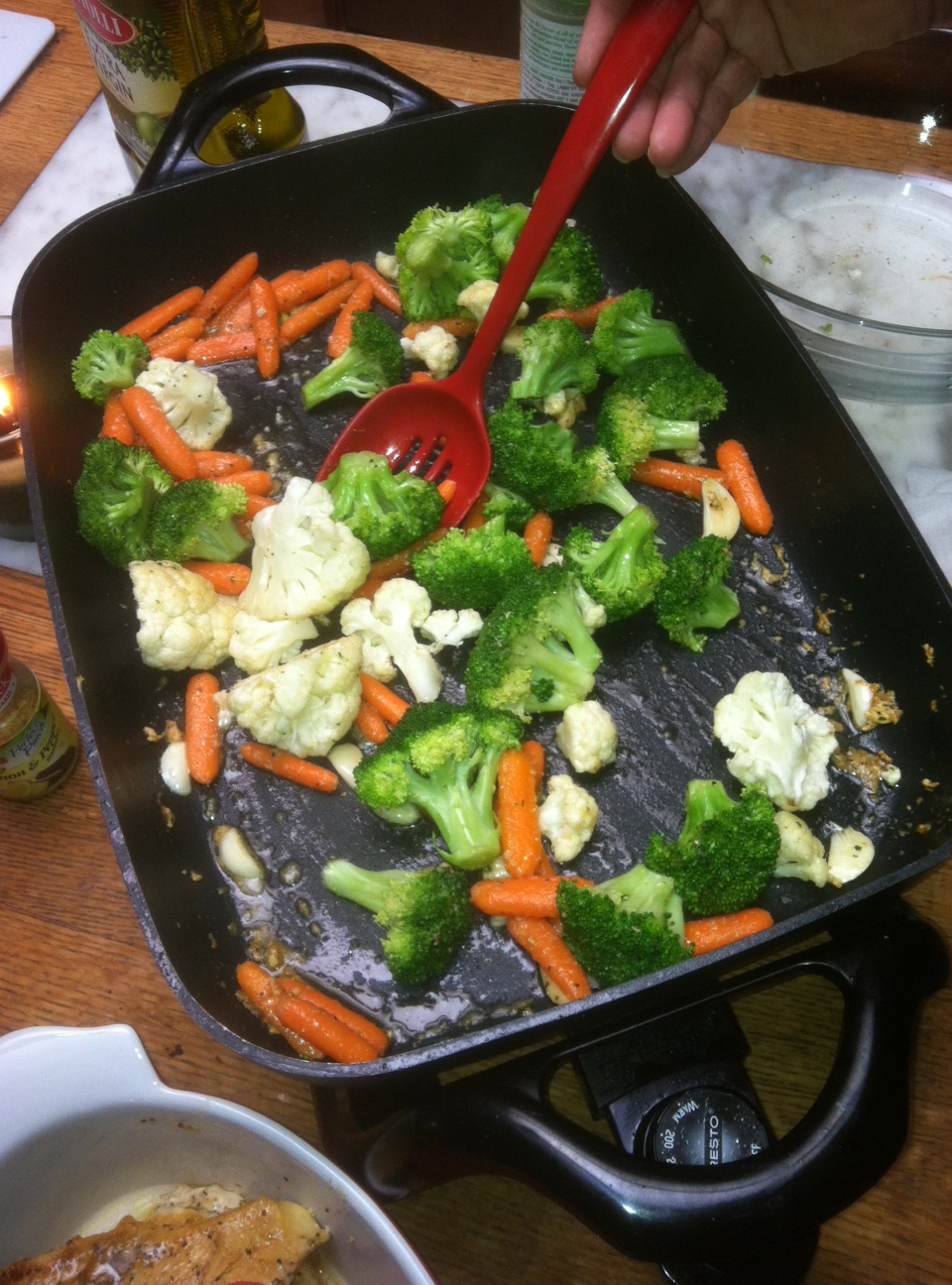
We buy this vegetable medley by the bag at Sam’s Club

Start on the vegetables about ten minutes after the fish go in the oven. Put the broccoli, cauliflower, and carrots in a microwave-safe dish, add about four fl oz (120 ml) of water, and microwave (covered) on high for four minutes. If you don’t have a cover, just use a water-moistened paper towel. While they cook, heat 2 tbsp (30 ml) of the olive oil in a medium-sized pan over medium heat (with one clove of diced garlic) for a couple minutes to release the garlic flavor. Drain the water off the microwaved vegetables, then sauté them in the olive oil pan for a couple minutes, stirring frequently. Add your commercial vegetable seasoning when you start sautéing or at any point thereafter, even at the table.

Enjoy the apple for desert.

Servings: 2

Nutritional Analysis Per Serving:

  • 59% fat
  • 16% carbohydrate
  • 25% protein
  • 840 calories
  • 36 g carbohydrate
  • 9 g fiber
  • 27 g digestible carbohydrate
  • 790 mg sodium (plus your vegetable seasoning amount)
  • 1,620 mg potassium
  • Prominent features: rich in protein, A, B6, B12, C, E, iron, manganese, niacin, pantothenic acid, phosphorus, riboflavin, selenium, thiamine, and zinc 
Recipe: Chili

If you’re making chili, you might as well make a batch you can dip into over several days. It only gets better with time (up to a point!).

Ingredients:

  • ground beef (80% lean, 20% fat), raw, 20 oz (570 g)
  • pork Italian sausage, raw, 20 oz (570 g)
  • onion, 1 large, diced
  • tomatoes, diced, canned, 14.5 oz (410 g)
  • tomato paste, 4 oz (115 g)
  • garlic, 5 cloves, peeled and thinly sliced
  • salt, 1/2 tsp (2.5 ml)
  • allspice, ground, 1/4 tsp (1.2 ml)
  • chili powder, 2 tbsp (30 ml)
  • cinnamon, ground, 1/2 tbsp (7.5 ml)
  • cayenne pepper, ground, 1/4 tsp (1.2 ml)
  • water, 1 cup (240 ml)

Instructions:

Cut the Italian sausage into small pieces. Sauté the sausage, ground beef, onion, and garlic in a large pot. Don’t just brown the meat; cook it thoroughly. When done, drain off the fat if desired (but why waste those good calories?). Add the remainder of ingredients, bring to a boil, then simmer for about an hour. Add additional water if the chili looks too thick.

Servings: 8 servings of 1-cup (240 ml) each

Nutritional Analysis Per Serving:

  • 70% fat (if not drained off after cooking)
  • 9% carbohydrate
  • 21% protein
  • 475 calories
  • 11.4 g carbohydrate
  • 2.3 g fiber
  • 9.1 g digestible carbohydrate
  • 860 mg sodium
  • 722 mg potassium
  • Prominent features: goodly amounts of protein, B12, iron, niacin, selenium, thiamine, and zinc

A Final Note:

You can make a simple meal out of this by increasing the serving size to one-and-a-half cups (360 ml) and adding a side order of peeled and sliced 7-inch (18 cm or 200 g) cucumber. The new nutritional analysis would be:

  • 68% fat
  • 10% carbohydrate
  • 21% protein
  • 780 calories
  • 23 g carbohydrate
  • 5 g fiber
  • 18 g digestible carbohydrate
  • 1,384 mg sodium
  • 1,429 mg potassium

Recipe: Lemon-Pepper Chicken, Vegetable Medley, and Salad

paleo diet, Steve Parker MD, low-carb meal

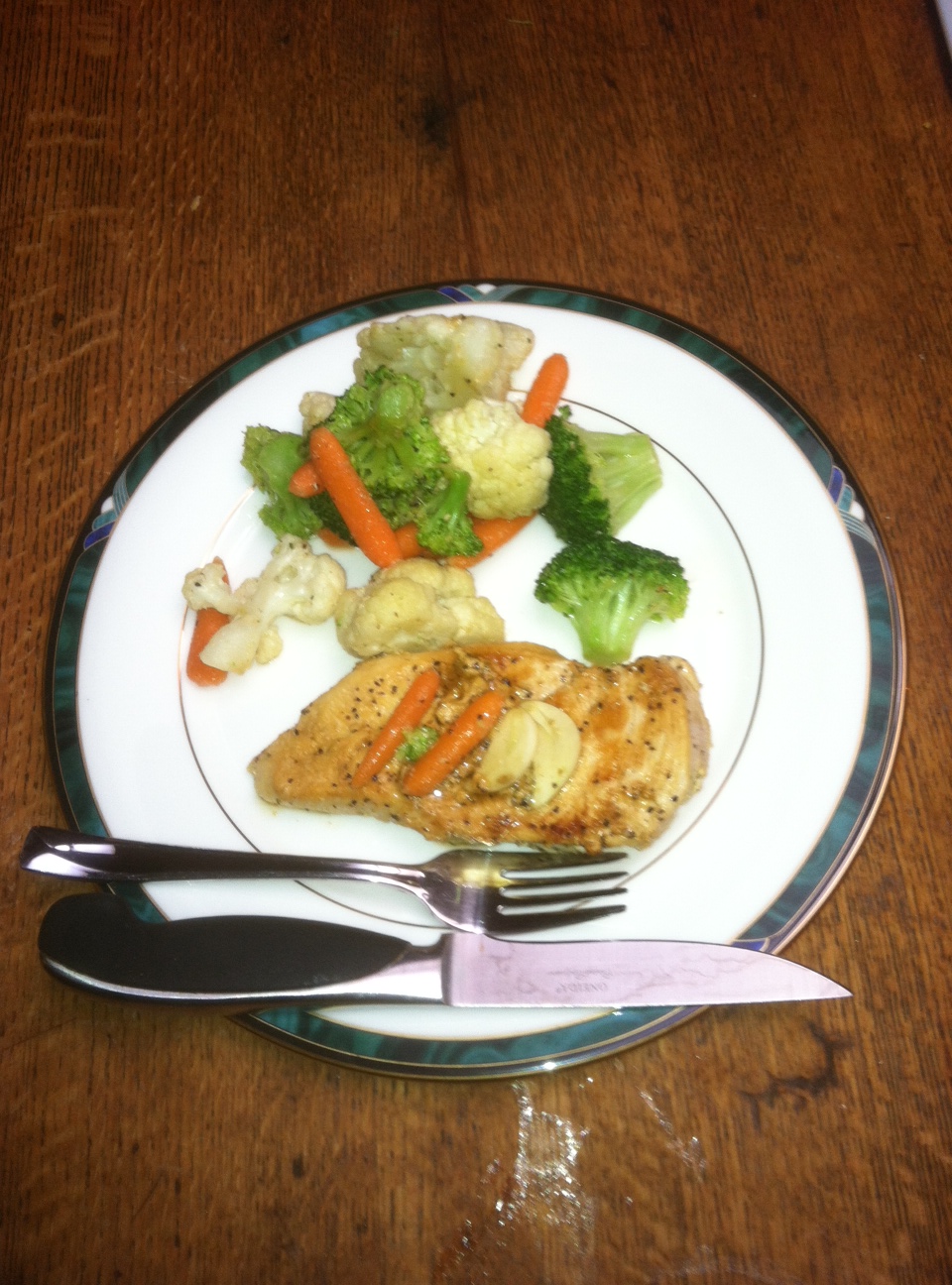
Sauteed chicken and vegetables

This meal is a staple at our house. The chicken we use is frozen breast because it’s less expensive but tastes just as good as fresh. Use never-frozen chicken or another part of the chicken if you prefer. Remember the sitcom “Everybody Loves Raymond”?  Lemon chicken was Debra’s signature meal. Now you can make it!

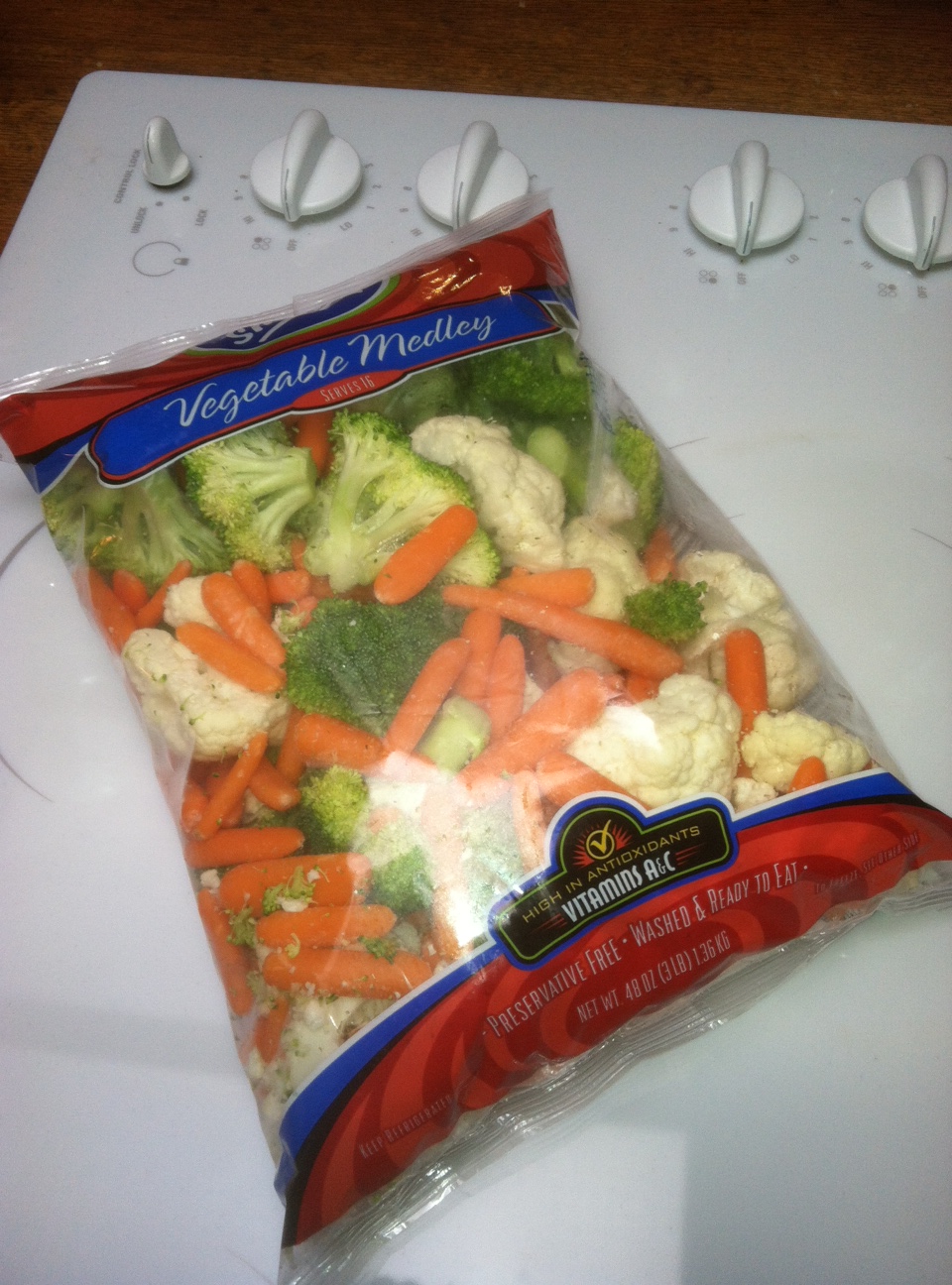
The ingredients here are for two servings. We buy a large bag of vegetables called “vegetable medley” that has equal parts broccoli, cauliflower, and carrots.

Ingredients:

  • chicken breasts, boneless, skinless, frozen, 16 oz (450 g)
  • commercial lemon pepper seasoning (choose one with low sodium and the fewest non-paleo ingredients like sugar)
  • broccoli, fresh, raw, 4.5 oz (130 g)
  • cauliflower, fresh, raw, 4.5 oz (130 g)
  • carrots, fresh, raw, 4.5 oz (130 g), peeled and sliced
  • commercial low-sodium vegetable seasoning (e.g., Weber Roasted Garlic and Herb. We tried Mrs. Dash Seasoning Blend Garlic and Herb—didn’t work well with this)
  • lettuce, Romaine, 6 oz (170 g), bite-size chunks
  • tomatoes, raw, 6 oz (170 g), bite-size chunks
  • cucumber, raw, 4 oz (115 g), peeled and sliced
  • celery, raw, 4 oz (115 g), sliced
  • sunflower seeds kernels, dry roasted, w/o salt, 1 oz (30 g)
  • bacon bits (aka crumbled bacon), 2 tbsp (15 g)
  • olive oil, extra virgin, 5 tbsp (75 ml)
  • vinegar, 1 tbsp (15 ml) (your choice of red wine, white wine, balsamic, or apple cider vinegar)
  • garlic, raw, 1 clove, sliced very thinly
  • salt and pepper to taste (not counted in the nutritional analysis below)
  • lemon, fresh (optional)

Instructions:

paleo diet, Steve Parker MD, sauteing chicken, cooking chicken

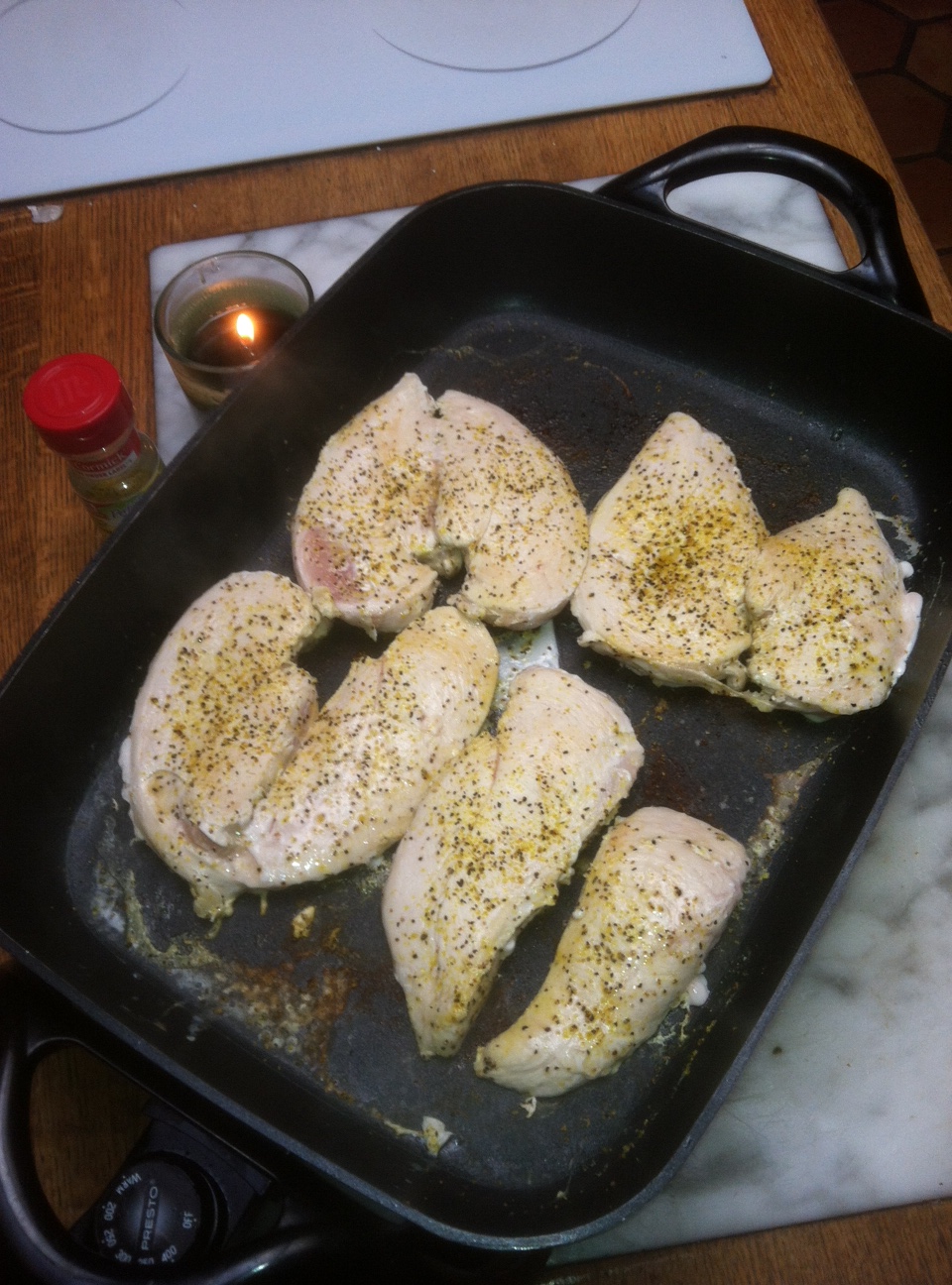
Thick chicken breasts sliced down the middle and opened up like a clam (or butterfly) to reduce cooking time

Start on the chicken first. Sauté the breasts in a pan over medium heat. You don’t need to thaw it beforehand. While cooking, sprinkle with the lemon pepper seasoning. If the breasts are thick, you may want to “butterfly” them with a knife when half done, to speed up the cooking process. If you over-cook, the meat will be tougher. It should be done in roughly 10–15 minutes. While the chicken is cooking, get to work on your other items.

Cook the vegetables thusly. Put the broccoli, cauliflower, and carrots in a microwave-safe dish, add about four fl oz (120 ml) of water, and microwave (covered) on high for four minutes. If you don’t have a cover, just use a water-soaked paper towel. While they cook, heat 2 tbsp (30 ml) of the olive oil in a medium-sized pan over medium heat, with the garlic, for a couple minutes to release the garlic flavor. Drain the water off the microwaved vegetables, then sauté them in the olive oil pan for a couple minutes, stirring frequently. Add your commercial vegetable seasoning when you start sautéing or at any point thereafter, even at the table.

Steve Parker MD, paleo diet, vegetables, vegetable medley

Only $3.50 (USD) for this whole bag of Vegetable Medley at Sam’s Club

Finally the salad. In a large bowl, place the lettuce, tomatoes, sunflower seeds, cucumber, celery, bacon bits, 3 tbsp (45 ml) olive oil, and vinegar. Mix thoroughly.

For a bit of zing, you might enjoy a few squirts of fresh lemon juice on the vegetables or salad just before eating.

Servings: 2

Nutritional Analysis Per Serving:

  • 55% fat
  • 12% carbohydrate
  • 32% protein
  • 800 calories
  • 27 g carbohydrate
  • 11 g fiber
  • 16 g digestible carb
  • 970 mg sodium (not counting any you add, such as in commercial seasonings)
  • 1830 mg potassium
  • Prominent features: rich in protein, A, B6, C, E, copper, iron, manganese, niacin, pantothenic acid, phosphorus, and selenium

Too Much Calcium May Be Worse Than Too Little

I’ve been fretting that the paleo diet may not provide enough calcium to keep aging bones strong. On the other hand, the writer(s) at the Joslin Diabetes Blog point out that too much calcium may promote cardiovascular disease.

The February, 2013, issue of British Medical Journal has a pertinent research report. The Joslin blogger writes:

Participants were women from a mammography cohort who were asked about their calcium consumption, using a food frequency questionnaire, at baseline and seven-to-ten years later. The 61, 433 women were followed for a period of 19 years. During that time, 6894 participants died of cardiovascular disease or stroke. The researchers found that the women taking over 1400mg of calcium per day had a higher incidence of cardiovascular disease. Participants whose calcium consumption remained within suggested bounds, between 600mg and 1000mg per day, did not appear to have a greater vulnerability to cardiac disease.

Read the rest.

I confess I haven’t read the BMJ article.

I always wonder about overall death rates when I see results like this. A group may have higher or lower rates of cardiovascular disease, and yet live longer than the comparison group. An intervention could prevent cardiovascular disease and cardiovascular death, yet increase the incidence of death from infection, cancer, accidents, or suicide, etc.

I bet a lot of adults eating a paleo-style diet approach or exceed 600 mg a day of calcium. I’m feeling better about the calcium in paleo diets. But I don’t want to have to depend on feelings.

The Joslin blogger notes that, “Perhaps it is time to have a conversation with your health care provider to determine what the best dose of calcium is for you.” Problem is, I’m not sure any healthcare provider really knows the best “dose” of calcium for the average person, whether supplemental or dietary calcium.

Sorry, men. These findings may or may not apply to you. At least you don’t have to worry about osteoporosis nearly as much as women.

Steve Parker, M.D.

PS: In case you hadn’t run across it elsewhere, note that taking a calcium supplement without a concomitant vitamin D supplement may be more harmful than taking calcium with vitamin D.


Is the Paleo Diet Truly Low-Carb After All?

Lifextension argues that very case in a recent blog post. If the paleo diet is low carb, then it’s going to be heavily animal-based. According to Lifextension:

Diachronic and comparative analysis of the skeletal data of human hunters and cultivators from across the globe has revealed that – prior to the onset of agriculture – carbohydrates must have comprised only a rare and occasional component of ancestral eating patterns. Furthermore, the impact of the introduction of carbohydrates to human diets was almost immediate in its deterioration of human health and biology.

However, paradoxically, many proponents of a ‘Paleo’ (i.e.: pre-agricultural) diet have promoted the use of tubers and other starches as – not only benign – but necessary health foods to consume for the correction of metabolic and endocrine disorders. Potatoes, rice, and other oxymoronically-labelled ‘safe’ starches, are being promoted in spite of the fact that they are exclusively Neolithic foods. Consequently, it is the conflation of starches, safe, and ancestral that I now wish to address, and hopefully correct.

Lifextension concludes:

The intake of plant foods by hominids was most plausibly and conceivably minimal. This is due to their limited, seasonal availability; the physiological ceiling on fibre and toxin intake; the biological evolution of early Homo physiology; along with the technological, spatial and temporal limitations of obligatory pre-consumption preparations. Consequently, evolutionary arguments for the consumption of what are quite blatantly Neolithic foods are rendered paradoxical and absurd. Starches are neither ‘Paleo’; nor does our evolutionary biology sanction them as ‘safe’.

Lifextension neither pulls punches nor takes prisoners. This could get interesting.

Read the rest.

What’s for Dinner? Cabbage Soup and Salad

paleo diet, Steve Parker MD, cabbage soup

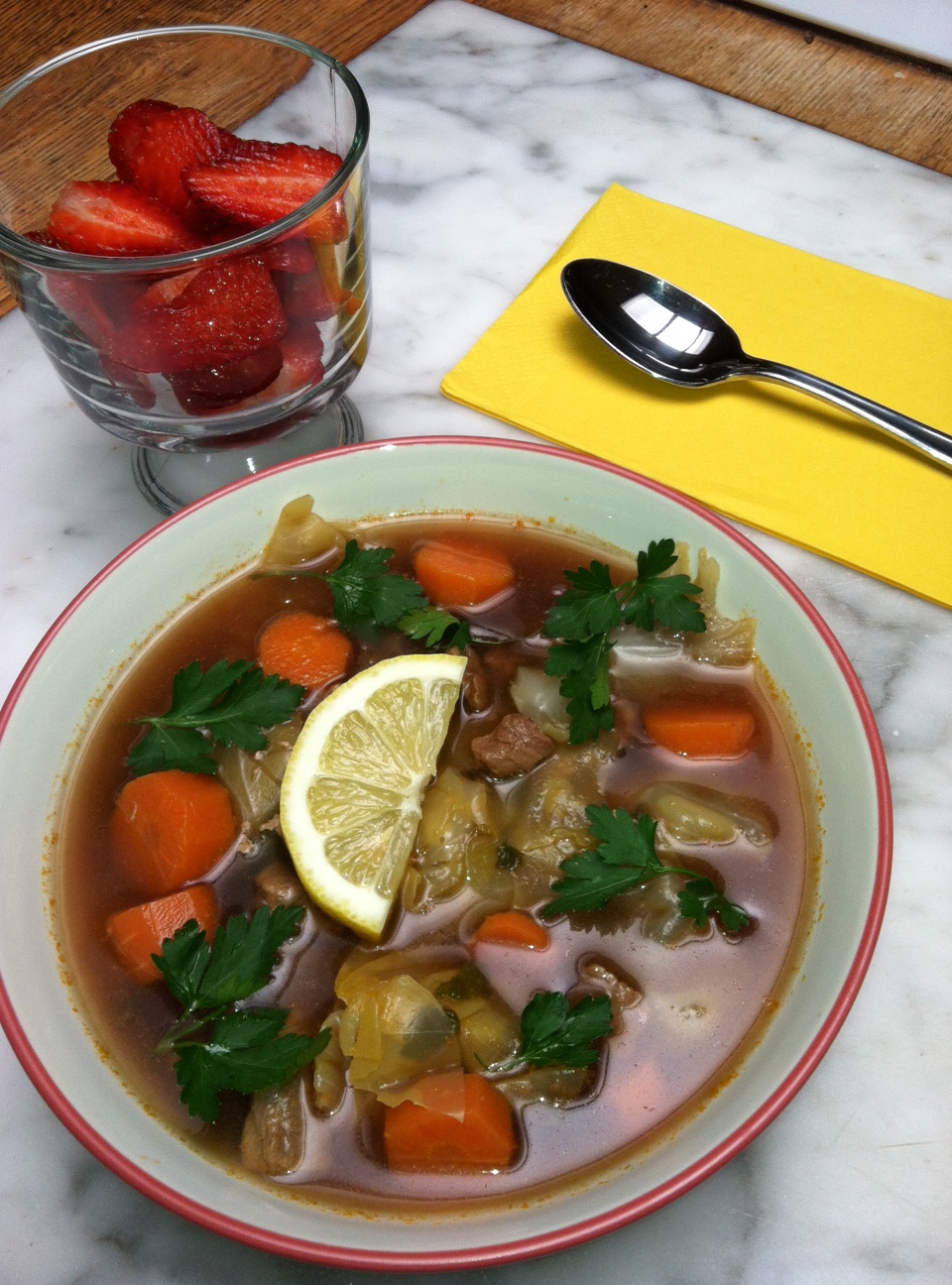
This cabbage soup only has 9 grams of digestible carbohydrate per 2-cup serving

I’m putting together some paleo diabetic meals for you. Today’s offering works for lunch or dinner (where I come from, dinner is the evening meal).

Ingredients:

  • Hearty Cabbage Soup, 2 cups
  • baby spinach, 2 oz (60 g)
  • lettuce, romaine, 2 oz (60 g)
  • tomatoes, chunked, 3 oz (85 g)
  • cucumbers, peeled and sliced, 2 oz (60 g)
  • olive oil, extra virgin,  2 tbsp (30 ml)
  • vinegar, 2 tsp (10 ml)
  • salt and pepper to taste (not counted in nutritional analysis below)
  • apple, medium (2.75-inch or 7-cm diameter)

Instructions:

See my recipe for Hearty Cabbage Soup.

Salad: In a bowl, place the lettuce, spinach, tomato chunks, sliced cucumber, adn finally, the olive oil and vinegar. Mix thoroughly. Salt and pepper to taste. If you’re avoiding salt, consider substituting a few squirts of fresh lemon juice.

Enjoy the apple for desert.

Servings: 1

Nutritional Analysis:

  • 61% fat
  • 26% carbohydrate
  • 13% protein
  • 550 calories
  • 38.7 g carb
  • 10.3 g fiber
  • 28.4 g digestible carb
  • 1,252 mg sodium (plus any you add)
  • 1,328 mg potassium
  • Prominent features: rich in sodium (not good?), A, B12, C, E, copper, iron, manganese, and zinc

Seminal Article by Loren Cordain, Ph.D.

I have little to say about it. Just wanted it in my database:

The Nutritional Characteristics of a Contemporary Diet Based Upon Paleolithic Food Groupsin Journal of the American Neutraceutical Association,  2002; 5:15-24.

The title of that journal doesn’t fill me with confidence, but it is what it is. Many of the ideas in the article are likely in his popular books.

Recipe: Tossed Tuna Salad and Almonds

tuna, fishing, Steve Parker MD, paleo diet, tuna salad

Has anyone even bothered to ask why the tuna are eating mercury? —Jim Gaffigan

This is an easy lunch or dinner. For a different flavor and twice the calcium, you could substitute canned sardines for the tuna, but I’ve never tried it.

Ingredients:

  • lettuce, romaine, 3.5 oz (100 g)
  • onion, chopped, 1.5 oz (42 g)
  • tomatoes, chunked, 5.5 oz (150 g)
  • tuna, canned, albacore/white, packed in water (drain and discard the fluid), 5-oz can (140 g)
  • olive oil, extra virgin, 1.5 tbsp (22 ml)
  • vinegar, balsamic, 1/2 tbsp (7.5 ml)
  • salt and pepper to taste (not counted in nutritional analysis below)
  • almonds, 1.5 oz (45 g)

Instructions:

In a 3-quart (3 liter) bowl, put lettuce, onion, tomatoes, and tuna (3.25 oz or 90 g at this point). Add olive oil, balsamic vinegar, and salt and pepper to taste Mix well with a fork. Enjoy almonds separately, before, during, or after salad.

For extra zing, add a few squirts of fresh lemon juice. This is a neat trick if you’re trying to avoid salt.

Servings: 1

Nutritional Analysis:

  • 58% fat
  • 12% carbohydrate
  • 30% protein
  • 711 calories
  • 22.3 g carb
  • 9.4 g fiber
  • 12.9 digestible carb
  • 670 mg sodium
  • 1,392 mg potassium
  • Prominent features: rich in protein, B12, C, E, copper, iron, magnesium, manganese, niacin, phosphorus, and selenium

A Paleo Problem: Calcium

paleo diet, Steve Parker MD,calcium, osteoporosis

I worry about her bones 50 years hence

It appears difficult to meet the Recommended Dietary Allowance (RDA) for calcium while eating most versions of the paleo diet.  That’s because they don’t include milk products.  The Linus Pauling Institute at Oregon State University has a review of calcium as related to nutrition and health, last updated in late  2010. They say that few Americans hit their recommended daily calcium goal.

I see lots of little old ladies with hip and other fractures related to osteoporosis. Trust me, you don’t want to go there. It’s difficult to reverse osteoporosis, an insidious process that’s been going on for decades before the fracture.

Osteoporosis may be related to years of inadequate calcium consumption. Adequate vitamin D is  an important part of the equation, too. Blood calcium levels are strictly regulated, and if they’re too low, calcium is pulled from the bones to fill the blood’s tank.

Broccoli and bok choy are fair sources of calcium, but pale in comparison to milk. Bok choy isn’t a part of my diet; I’m not even sure I’ve ever had it. Below is a video on bok choy cooking. Looks simple enough.  I need to look into kale, too.

Many paleophiles promote bone broth, but I haven’t figured out why yet. Is it high in calcium? (Hat tip to Wendy Schwartz for the word “paleophile”.)

A can of sardines looks like a good source of calcium: 350 mg or 35% Daily Value.

Can you help me worry less about calcium deficiency?