Monthly Archives: March 2013

QOTD: Calcium and the Paleo Diet

“Low calcium intake, which is often considered as a potential disadvantage of the Paleolithic diet model, should be weighed against the low content of phytates and the low content of sodium chloride, as well as the high amount of net base yielding vegetables and fruits.”
L.M. Kowalski and J. Bujko

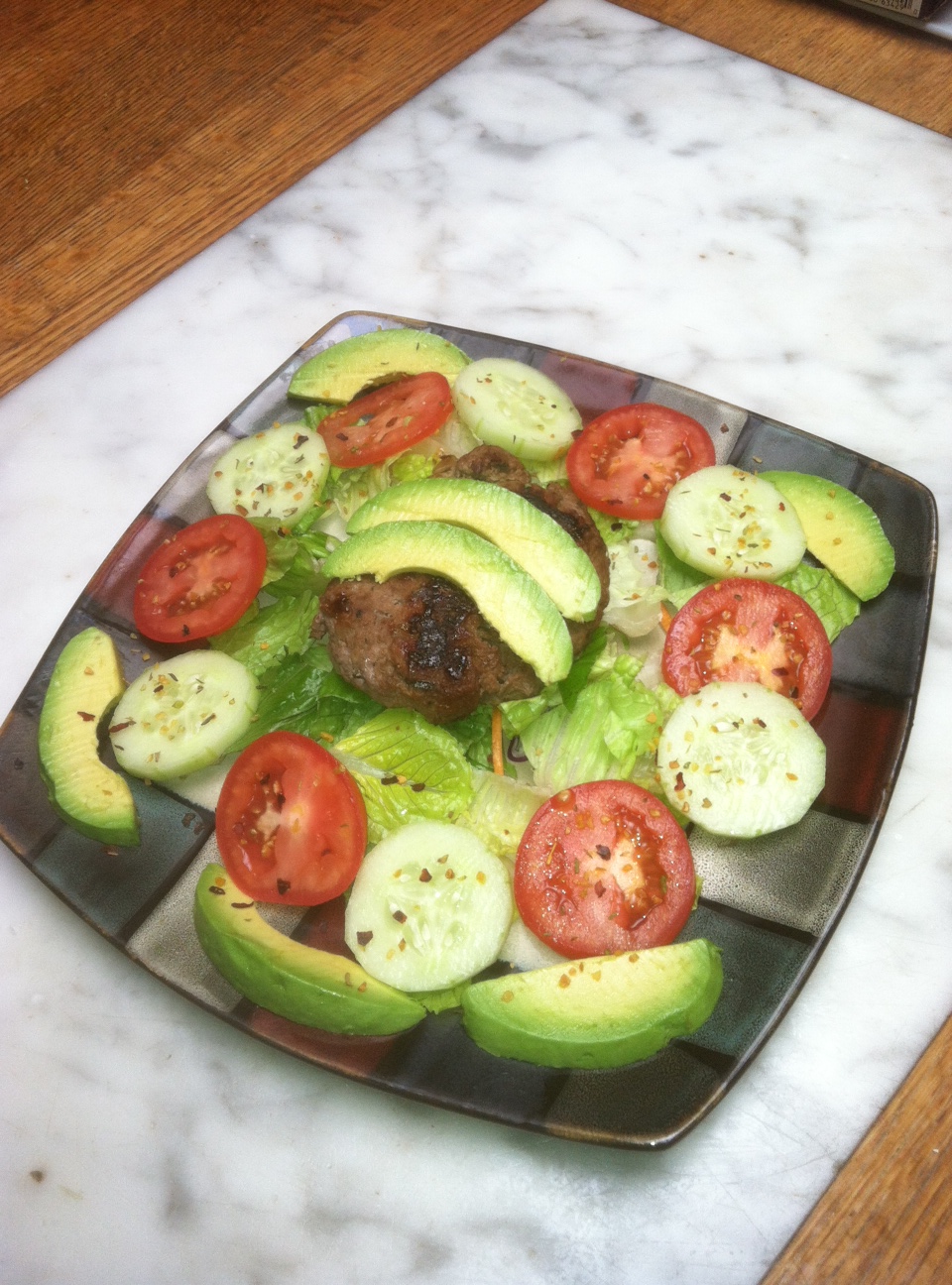
Hamburger-Avocado Salad with tomatoes, cucumbers, lettuce, salt/pepper, and olive oil vinaigrette

Hamburger-Avocado Salad with tomatoes, cucumbers, lettuce, salt/pepper, and olive oil vinaigrette

PS: Low calcium consumption is thought to predispose to osteoporosis, a bone-thinning disease that causes fractures.  It affects women far more than men.  If you don’t live past 50 or 60, it’s not much of a problem.  Kowalski and Bujko imply that low phytate and sodium content, plus alkaline veggies and fruit, counteract any adverse bone effects of low calcium consumption.  I’m not sure because I don’t read Polish.  Loren Cordain’s paleo diet website talks about the diet being healthy for bones, citing the acid-base issue.

h/t Amy Kubal (Twitter: @AmykRd)

If Teeth Are So Important For Survival…

…why do modern cultures have so many dental problems?

An oldie but goodie from Dr. Stephan Guyenet:

Our ancestors had straight teeth, and their wisdom teeth came in without any problem. The same continues to be true of a few non-industrial cultures today, but it’s becoming rare. Wild animals also rarely suffer from orthodontic problems.

Today, the majority of people in the US and other affluent nations have some type of malocclusion, whether it’s crooked teeth, overbite, open bite or a number of other possibilities.

Read the rest.

I rarely hear dentists or orthodontists talk about these ideas.  Wonder why.

Do Tomatoes Have Too Many Carbohydrates?

Eat greens for vitamin K

Looks reasonable to me

Dr. Richard Bernstein wrote a great book advocating strict carbohydrate restriction for folks with diabetes.  I’m talking about a max of 30 grams a day, compared to 250–300 g in the standard American diet.

Dr. Bernstein cautions his diabetic patients and readers of Diabetes Solution to keep a tight lid on consumption of tomatoes.  An excerpt from page 149:

If you have them uncooked in salad, limit yourself to one slice or a single cherry tomato per cup of salad.

His concern is that tomatoes will raise your blood sugar too high.

That doesn’t make sense to me.  A 3-inch diameter tomato has 7 grams of carbohydrate, 2 of which are fiber.  So the digestible carb count is only 5 grams.  That’s not much.  So do tomatoes have a high glycemic index?  Unlikely, although it’s hard to be sure.  Good luck finding a reliable GI for tomatoes on the Internet.

I think Dr. Bernstein’s wrong about this one, which is rare.  I suppose it’s possible that tomatoes deliver some other substance to the bloodstream that interferes with carbohydrate metabolism, but Dr. Bernstein doesn’t mention that.

Do tomatoes play havoc with your blood sugars?

Steve Parker, M.D.