Monthly Archives: March 2013

Is the Overbite We Take for Granted Only a Few Centuries Old?

The New Yorker has a review of Bee Wilson’s book, Consider the Fork: A History of How We Cook and Eat.  The book touches on everything from daggers to toothpicks to chopsticks.  It’s about the evolution of cutlery.  Even if you don’t have the time or interest for the book, the review by Jane Kramer is interesting.  An excerpt:

This new cutlery [forks and various knives] transformed the way people ate. By the late eighteenth century in Europe, people were slicing their food into bite-size morsels and carrying them to their mouths with forks—those formerly weird things, Wilson calls them. And they hardly needed to chew such tiny pieces, which in most cases were already softened by pounding, overcooking, or long, gentle braisings. At the same time, the modern overbite began to appear prominently in upper-class Western European jaws. Do not confuse this with the seriously inconvenient condition known to the world as buck teeth (without which we would have no orthodontists, and no mortified adolescents with mouthfuls of rubber bands and wire braces). Wilson’s modern overbite refers to “the way our top layer of incisors hangs over the bottom layer, like a lid on a box,” as she nicely puts it, and is “the ideal human occlusion” for the way we now eat. Why this happened and how long it took to happen is open to some debate, but it’s clear that until it happened most humans had the bite of other primates—“where the top incisors clash against the bottom ones, like a guillotine blade.”

Read more: http://www.newyorker.com/arts/critics/books/2013/03/18/130318crbo_books_kramer#ixzz2NVA79mWJ

Bee Wilson is a food writer and historian, not an anthropologist or orthodontist.

Matthew Yglesias Says “Paleo Diet Is Nonsense Science”

Here’s his brief article at Slate.  Mr. Yglesias was apparently influenced by Marlene Zuk.

Well, now that that’s settled, I can shut down this blog and start another hobby.

https://twitter.com/johndurant/status/311369697658564608

Man’s Best Friend For How Long?

Dogs May Have Been Domesticated 33,000 Years Ago according to an article at Yahoo!News.  The DNA in the old skull found in Siberia was a closer match to dogs than to wolves.  Apart from the DNA evidence, the skull appeared more similar to a dog’s than an wolf’s.  Earlier evidence suggested dogs were first domesticated in the Middle East or East Asia.

Here’s the report in PLOS One.

Sarah Ballantyne, Ph.D., Recommends Against Stevia

See her pertinent post, an excerpt from her book.

I’m not convinced, but readily admit I’ve not studied the issue in detail.  I’ve got a raging sweet tooth, so maybe I’m biased.  Is Dr. Ballantyne’s proscription of stevia another over-application of the Precautionary Principle?


h/t Aglaée Jacobs, RD (twitter: @aglaee_paleoRD)

Fruit May Not Sabotage Control of Type 2 Diabetes

…according to an article in Nutrition Journal.  Fruit is a prominent component of the paleo diet.  It can be good for us, containing phytonutrients, fiber, etc.  But fruit has the potential to increase blood sugars, too, which may be harmful over the long run.  So whadda you do?

Researchers took newly diagnosed type 2 diabetics and split them into two groups. One group was told to eat at least two pieces of fruit daily, the other was told to eat no more than two pieces.

The researchers conclusions: 

A recommendation to reduce fruit intake as part of standard medical nutrition therapy in overweight patients with newly diagnosed type 2 diabetes resulted in eating less fruit. It had however no effect on HbA1c, weight loss or waist circumference. We recommend that the intake of fruit should not be restricted in patients with type 2 diabetes.

Read the full research report.


PS: I haven’t read the full report yet.

More Ancient Cultures Found With Atherosclerosis

…according to a report by Larry Husten at CardioBrief.  Mummies in the study were from Egypt (the majority), the American southwest, Peru, and Alaska.  Atherosclerosis was detected by CT scanning.  The Associated Press reports the mummies were between 100 and 6,000 years old.  At least one of the four cultures was described as hunter-gatherer (Anangan).

MedPageToday also covered the story.

Mr. Husten quotes the investigators:

Our findings greatly increase the number of ancient people known to have atherosclerosis and show for the first time that the disease was common in several ancient cultures with varying lifestyles, diets, and genetics, across a wide geographical distance and over a very long span of human history. These findings suggest that our understanding of the causative factors of atherosclerosis is incomplete, and that atherosclerosis could be inherent to the process of human ageing.

All of the studied ancient peoples probably had significant exposure to smoke from fires, which could cause atherosclerosis.

Perhaps atherosclerosis is just part of being human.  I’ve always told my patients they’ll get atherosclerosis if they live long enough.

Since atherosclerosis causes heart attacks and strokes and death, we like to think we can prevent it or modify it’s course through diet and other lifestyle modifications.  That’s true…to an uncertain extent.

Adam Lived 340,000 Years Ago

African Savanna

African Savanna

…according to a headline at NewScientist.  That’s a tad off the 6,000 years or so suggested by some Bible scholars.  You’ll enjoy this article if you’re interested in human evolution.

Africa is said to be the cradle of humanity, but the exact coordinates of the nursery are unknown.

When you read of the Y chromosome below, remember that only men have them.  Women have two X chromosomes; men have one Y and one X.  Sounding familiar?

Some snippets from the article:

Hundreds of thousands of people have now had their DNA tested. The data from these tests had shown that all men gained their Y chromosome from a common male ancestor. This genetic “Adam” lived between 60,000 and 140,000 years ago.

Scientists analyzed the DNA of Albert Perry, and African-American who recently died in South Carolina.

Michael Hammer, a geneticist at the University of Arizona in Tucson, heard about Perry’s unusual Y chromosome and did some further testing. His team’s research revealed something extraordinary: Perry did not descend from the genetic Adam. In fact, his Y chromosome was so distinct that his male lineage probably separated from all others about 338,000 years ago.

The first anatomically modern human fossils date back only 195,000 years, so Perry’s Y chromosome lineage split from the rest of humanity long before our species appeared.

What are the implications? One possibility is that Perry’s Y chromosome may have been inherited from an archaic human population that has since gone extinct. If that’s the case, then some time within the last 195,000 years, anatomically modern humans interbred with an ancient African human.

Read the rest.

QOTD: Ken Hutchins on Exercise Versus Recreation

Perhaps the most destructive as well as most misunderstood concept in fitness today among researchers, the commercial health facilities, and the general public alike is  the confusion of exercise and recreation.

Ken Hutchins

Applying Paleo Diet Principles to Dentistry: Dr. John Sorrentino

tooth structure, paleo diet, caries, enamel

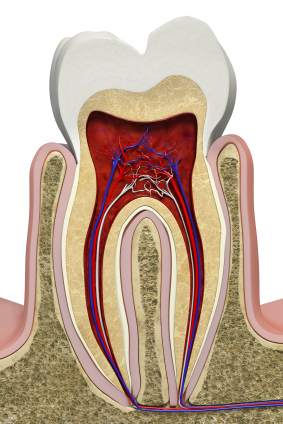
Cross-section of a tooth

When I think about a Paleolithic approach to dental disease, the first expert that comes to mind is dentist John Sorrentino, D.D.S.  The only other living “authority” that pops up is Stephan Guyenet, Ph.D., and he’s not even a dentist.  Stephan focused his literature review more on malocclusions than teeth per se, as I recall.  Dr. Sorrentino cites dentist Weston A. Price as a ground-breaker, documenting the deterioration of dental health as traditional cultures moved to modern diets loaded with refined and concentrated sugars and starches.

Fortunately for us, Dr. Sorrentino has blogged about the intersection of dentistry, evolution, and the paleo diet.  Malocclusion and caries (cavities) weren’t  problems for our Paleolithic ancestors, although “…they wore thru their enamel by the time they were middle aged.”  Then what happened?

Regarding caries, Dr. Sorrentino wrote:

Caries was just about non-existent because simple sugars and the refined carbohydrates that cause them were just not present in any Paleolithic diet.  Since the Paleolithic covered such a vast period of time and many, many different populations it is important to remember that there is no one “Paleolithic Diet,” but rather a continuum or “envelope” of certain related types of foodstuffs that were consumed. These included but were not limited to fish, shellfish, leafy green plants, root vegetables, and fruit in season.  It was interesting to note that there is decay in some lowland gorillas.  It is present mostly as interproximal decay on the upper anterior teeth.  It was speculated that sucking on fruit or raiding human garbage dumps, common in the area, caused this.  In either case it shows that our closest living relatives are not very well adapted to eat sugar either.

Read the rest.

paleo diet, teeth, smile

Are these healthy teeth a result of proper diet, dental self-care, dentistry, Photoshop, or a combination?

I was perusing his website looking for reliable information on flossing and Water Pik-like devices and their proper roles in periodontal disease and caries prevention.  I didn’t find much other than recommendations to eat a paleo diet, naturally low in concentrated sugars and refined starches, especially grains.

Steve Parker, M.D.

QOTD: Horace Kephart on the Wild Outdoors

“To him in whom the primitive virtues of courage, energy and love of adventure have not been slapped, there is scarce a joy comparable to that of roaming at will through wild region, viewing the glories of the unspoiled earth and feeling the inexpressible thrill of manliness sore tested by privation and hazard but armed and undismayed”.

—Horace Kephart, Camping and Woodcraft, 1917