Monthly Archives: June 2013

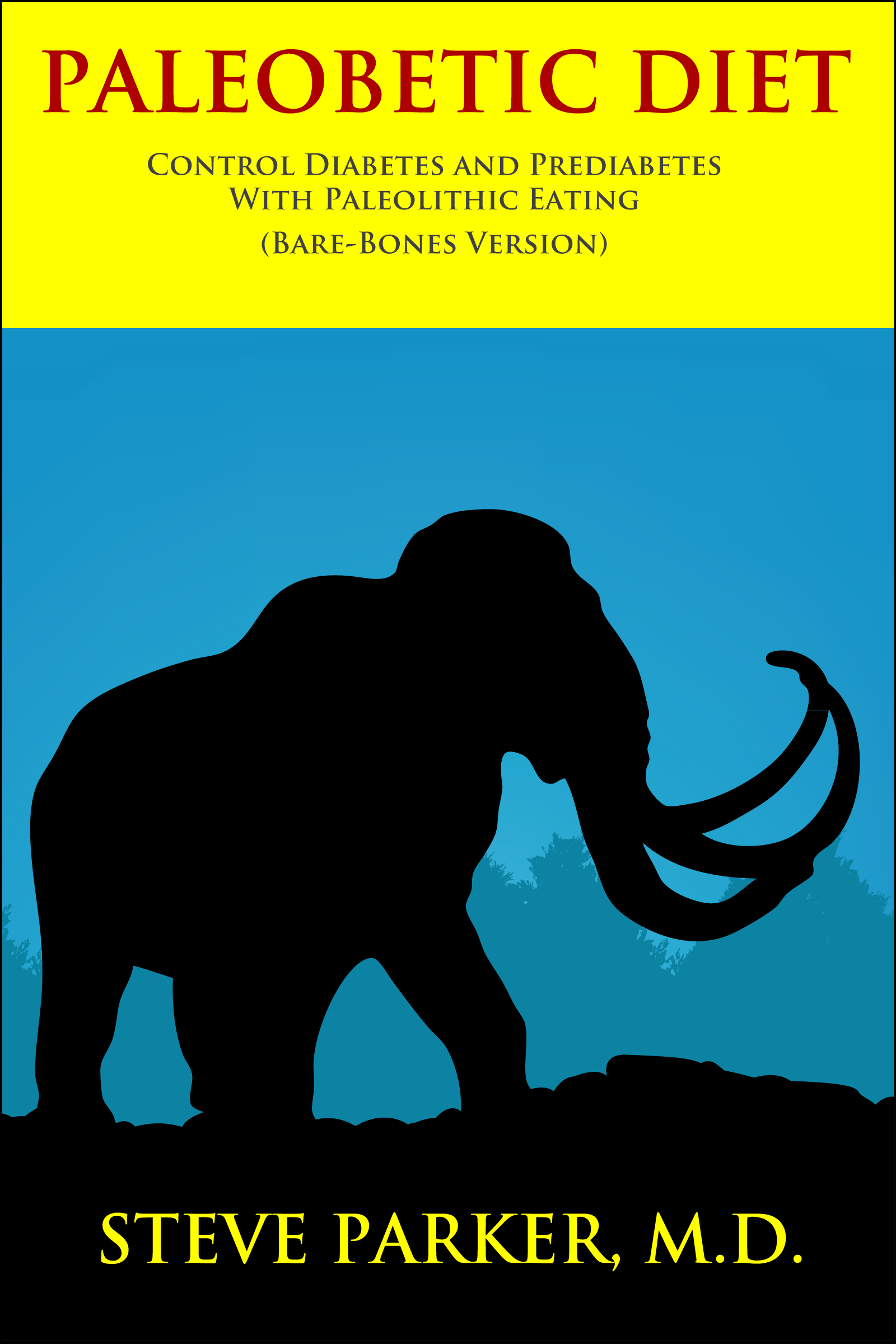
Win a Paleobetic Diet E-Book – It’s Easy!

Paleobetic diet, Steve Parker MD,paleo diet, diabetic diet, diabetes

Cover designed by my 14-year-old son, Paul

Just be one of the first 100 people to email me asking for it.

Why am I giving it away? I need some feedback on it.

You don’t have to be a PWD to get a copy. Perhaps you’re just a curious dietitian, nutritionist, certified diabetes educator, nurse, or physician.

If you get the e-book, please seriously consider giving me feedback via email:

  • What do you think of the Paleobetic Diet?
  • How could I make it better?
  • How was your experience with the distributor, Smashwords?
  • Would more recipes be helpful?
  • What did you think of the sections on diabetes drugs, hypoglycemia, and exercise?
  • If you tried it, did it affect your blood sugars? How did you feel, physically? Was your healthcare provider supportive? Did you lose any excess weight?
  • What do you think of the food options on the diet?

Be aware that the Paleobetic Diet e-book bare-bones version is only 9,000 words long. That’s short. It’s a how-to primer. I don’t go into evolutionary theory and the scientific underpinnings of the diet.

Here’s How You Win:

  1. Email a request for the e-book, to steveparkermd (at) gmail (dot) com, putting “paleobetic diet” in the subject line.
  2. I’ll email you back a coupon code that gives you a 100% discount on the e-book at Smashwords.
  3. You set up a free account at Smashwords, then act like you’re purchasing the book. Before checkout, you’ll be asked for the coupon code or discount code I gave you. Enter it. Bingo! Free e-book. You’ll get a choice of multiple e-book formats.
  4. Note that I only check my email every week or two, so don’t get in a big hurry.

Thanks in advance for your thoughts! If you win the e-book and never give me feedback, I won’t bug you about it.

Steve Parker, M.D.

PS: Remember, this offer is only for the first hundred people who email me. I don’t know if those copies will be gone in a few days or six months.

But, Doc, I’m Too Fat to Exercise!

IF YOU ARE MARKEDLY OBESE

The more overweight you are, the harder it will be to exercise. At some point even light exercise becomes impossible. Average-height women tipping the scales at about 280 pounds (127 kg) and men at 360 pounds (164 kg) aren’t going to be able to jog around the block, much less run a marathon. These weights are 100 percent over ideal or healthy levels. An actual “exercise program” probably won’t be possible until some weight is lost simply through very-low-carb eating, calorie restriction, or bariatric surgery. The initial exercise goal for you may just be to get moving through activities of daily living and perhaps brief walks and calisthenics while sitting in a chair.

Markedly obese people who aren’t up to the aforementioned extreme weights can usually tolerate a low-intensity physical activity program. At 50 percent over ideal weight, an average-height woman of 210 pounds (95 kg) is carrying 70 excess pounds (32 kg) of fat. Her male counter-part lugs around 90 pounds (41 kg) of unnecessary fat. This weight burden causes dramatic breathlessness and fatigue upon exertion, and makes the joints and muscles more susceptible to aching and injury. If you’re skinny, just imagine trying to walk or run a mile carrying a standard five-gallon (19 liter) water cooler bottle, which weighs only 43 pounds (19.5 kg) when full. The burden of excess fat makes it quite difficult to exercise.

If you’re markedly obese, several tricks will enhance your exercise success. I want you to avoid injury, frustration, and burn out. Start with light activity for only 10 or 15 minutes, gradually increase session length (e.g., by two to four minutes every two to four weeks) and increase exercise intensity only after several months. Your joints and muscles may appreciate easy, low-impact exercises such as stationary cycling, walking, swimming, and pool calisthenics/water aerobics. You may also benefit from the advice of a personal fitness trainer arranged through a health club, gym, or YMCA/YWCA. Check out several health clubs before you join. Some of them are primarily meat markets for beautiful slender yuppies. You may feel more comfortable in a gym that welcomes and caters to overweight people. Hospitals are increasingly developing fitness centers with obese orthopedic, heart, and diabetic patients in mind.


Aside

I don’t think it’ll catch on. “IH” isn’t much better. Some of the old-timers still call it AODM: adult onset diabetes mellitus. Read the rationale at MedPageToday.