Category Archives: Longevity

Prevent Cardiovascular Events By Taking Hypertension Meds at Bedtime

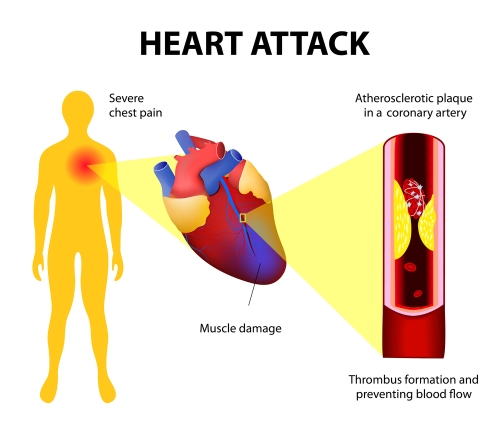
High blood pressure is linked to heart attacksVery

This may be the most important biomedical research of 2019. Very recently I have noticed hypertension patients taking their medications at bedtime. Now I know why.

From Medscape:

Taking antihypertensive medication at bedtime led to an almost halving of cardiovascular events in a new study.

The Hygia Chronotherapy Trial is the largest ever study to investigate the effect of the time of day when people take their antihypertensive medication on the risk of cardiovascular events.

The trial randomly assigned 19,084 patients to take their medication on waking or at bedtime and followed them for an average of 6 years.Results showed that patients who took their pills at bedtime had a 45% reduction in overall cardiovascular events. This included a 56% reduction in cardiovascular death, a 34% reduction in myocardial infarction (MI), a 40% reduction in coronary revascularization [bypass surgery and angioplasty/stenting], a 42% reduction in heart failure, and a 49% reduction in stroke, all of which were statistically significant.

***

“We showed that if blood pressure is elevated during sleep then patients have increased cardiovascular risk regardless of daytime pressure, and if blood pressure during sleep is normal then cardiovascular risk is low even if the [doctor’s] office pressure is elevated,” Hermida said.

***

Results showed that during the 6.3-year median patient follow-up, 1752 participants experienced the primary cardiovascular disease (CVD) outcome (a composite of CVD death, MI, coronary revascularization, heart failure, or stroke).

Drug classes as physicians’ disposal were ARBs (angiotensin receptor blockers, calcium channel blockers, ACE inhibitors, and diuretics. Preventative effects were most pronounced for ARBs and ACE inhibitors.

Don’t change your BP medication dosing until you check with your personal physician.

Source: Bedtime Dosing of Hypertension Meds Reduces CV Events

Did you know most heart attacks occur in the morning, and those tend to be the most serious?

Steve Parker, M.D.

Click pic to purchase book at Amazon.com. E-book versions available at Smashwords.com.


Marriage Linked to Longer Lifespan

dementia, memory loss, Mediterranean diet, low-carb diet, glycemic index, dementia memory loss

“Sweat Pea, let’s schedule you a check-up with Dr. Gupta.”

From UPI:

Married men in 2017 had an age-adjusted death rate of 943 per 100,000, compared to 2,239 for widowers. The death rate was 1,735 per 100,000 for lifelong bachelors and 1,773 for divorced men.

Married women had a death rate of 569 per 100,000, two-and-a-half times lower than the 1,482 rate for widows. The death rate was 1,096 for divorcees and 1,166 for never-married women.

*  *  *

While the death rate for married men and women declined by the same 7 percent, women’s overall death rate was much lower.

But the death rates among men in all other marital categories remained essentially the same between 2010 and 2017, researchers found.

On the other hand, the death rate for widowed women rose 5 percent, while the rate for never-married women declined by 3 percent and remained stable for divorced women.

Source: Marriage linked to longer lifespan, new data shows – UPI.com

Steve Parker, M.D.

Click pic to purchase book at Amazon.com. E-book versions available at Smashwords.com.
 

Dog Ownership Reduces Risk of Premature Death

paleobetic diet, paleo diet for diabetes

Parker Compound guard dogs waiting for bacon

From UPI:

A pair of new reports found that dog owners have a lower risk of early death than people without canine companionship, particularly when it comes to dying from a heart attack or stroke.

Dog ownership decreases a person’s overall risk of premature death by 24 percent, according to researchers who conducted a review of the available medical evidence.

The benefit is most pronounced in people with existing heart problems. Dog owners had a 65 percent reduced risk of death following a heart attack and a 31 percent reduced risk of death from heart disease, the researchers said.

Source: Having a dog can lower risk of death from heart attack, stroke – UPI.com

Steve Parker, M.D.

Click pic to purchase book at Amazon.com. E-book versions available at Smashwords.com.

 

Red Meat Not Quite as Deadly as Imagined

From New York Times:

Public health officials for years have urged Americans to limit consumption of red meat and processed meats because of concerns that these foods are linked to heart disease, cancer and other ills.

But on Monday, in a remarkable turnabout, an international collaboration of researchers produced a series of analyses concluding that the advice, a bedrock of almost all dietary guidelines, is not backed by good scientific evidence.

Whew…What a relief! Dodged that bullet.

Click for Gina Kolata’s article.

Steve Parker, M.D.

Click pic to purchase book at Amazon.com. E-book versions available at Smashwords.com.

Raman May Increase Risk of Fatal Stroke

…at least if you’re Japanese. I rarely eat ramen, but understand it’s fairly popular among young adults in the U.S, particularly among college students, because it’s cheap, quick, and tasty.

Click for details of the study in Nutrition Journal. Some background from the article:

Ramen is one of the most popular foods in Japan, despite being of Chinese origin [11]. Since its original introduction in Japan, ramen has been adapted and now consists of wheat noodles served in broth topped with sliced pork, seaweed, or menma (a Japanese condiment made from lacto-fermented bamboo shoots; Additional file 1). Being tasty and inexpensive, ramen became a popular food that was available from street food stands in Japan after World War ΙΙ. Although the number of ramen stands has decreased markedly, ramen remains highly popular in Japan. High dietary sodium content was recently reported to be a risk factor for stroke [12]; ramen has a high sodium content. However, the relationship between stroke and ramen consumption remains unclear. In this study, we investigated the association between the number of ramen restaurants in each Japanese prefecture and stroke mortality in that prefecture.

Steve Parker, M.D.

Click pic to purchase book at Amazon.com. E-book versions available at Smashwords.com.
Tighter Blood Pressure Control Benefits Folks With Diabetes

Not bad

For decades, physicians thought a blood pressure of under 140/90 was adequate for preventing heart attacks, strokes, and premature death. Not so.

From Diabetes Self-Management:

The new study evaluated roughly 11,000 people with type 2 diabetes in 20 countries over four years, finding that those who received the blood pressure drugs perindopril and indapamide to keep their blood pressure levels at or below 130/80 had fewer heart attacks, strokes and other complications than those receiving placebo (inactive treatment). They also had a “lower overall risk of dying from any cause.”

Source: Tight Blood Pressure Control Benefits Type 2 Diabetes: Study – Diabetes Self-Management

You may think the aforementioned health benefits stem from use of perindopril and/or indapamide. It’s either that, or simply the result of BP lowering. I suspect it’s the latter while admitting that not all BP drugs are created equal. As a hospitalist in Scottsdale, AZ, I rarely run across patients taking perindopril, and only occasionally folks on indapamide. The popularity of various drugs often depends on which part of the country you’re in and the attractiveness of the drug reps visiting the prescribers. We need to be more scientific than that.

Steve Parker, M.D.

PS: Losing excess weight and exercise are two ways to lower blood pressure without the expense and side effects of drugs.

Click pic to purchase book at Amazon.com

Soft Drink Consumption Linked to Premature Death

The study at hand involved Europeans. It’s the first time I’ve seem artificially-sweetened soft drinks linked to premature death.

From JAMA Network:

This study found that consumption of total, sugar-sweetened, and artificially sweetened soft drinks was positively associated with all-cause deaths in this large European cohort; the results are supportive of public health campaigns aimed at limiting the consumption of soft drinks.

Source: Association Between Soft Drink Consumption and Mortality in 10 European Countries | Cardiology | JAMA Internal Medicine | JAMA Network

Click pic to purchase book at Amazon.com

Paleolithic diet is associated with lower resistant starch intake, different gut microbiota composition and increased serum TMAO concentrations

Doomed to premature death?

Ever heard of TMAO? Click that link and you’ll find that “In humans, a positive correlation between elevated plasma levels of TMAO and an increased risk for major adverse cardiovascular events and death is reported.” Uh-oh!

From European Journal of Nutrition:

Abstract

BACKGROUND:

The Paleolithic diet is promoted worldwide for improved gut health. However, there is little evidence available to support these claims, with existing literature examining anthropometric and cardiometabolic outcomes.

OBJECTIVE:

To determine the association between dietary intake, markers of colonic health, microbiota, and serum trimethylamine-N-oxide (TMAO), a gut-derived metabolite associated with cardiovascular disease.DESIGN:In a cross-sectional design, long-term (n = 44, > 1 year) self-reported followers of a Paleolithic diet (PD) and controls (n = 47) consuming a diet typical of national recommendations were recruited. Diets were assessed via 3-day weighed diet records; 48-h stool for short chain fatty acids using GC/MS, microbial composition via 16S rRNA sequencing of the V4 region using Illumina MiSeq. TMAO was quantified using LC-MS/MS.

RESULTS:

Participants were grouped according to PD adherence; namely excluding grains and dairy products. Strict Paleolithic (SP) (n = 22) and Pseudo-Paleolithic (PP) (n = 22) groups were formed. General linear modelling with age, gender, energy intake and body fat percentage as covariates assessed differences between groups. Intake of resistant starch was lower in both Paleolithic groups, compared to controls [2.62, 1.26 vs 4.48 g/day (P < 0.05)]; PERMANOVA analysis showed differences in microbiota composition (P < 0.05), with higher abundance of TMA-producer Hungatella in both Paleolithic groups (P < 0.001). TMAO was higher in SP compared to PP and control (P < 0.01), and inversely associated with whole grain intake (r = - 0.34, P < 0.01).

CONCLUSIONS:

Although the PD is promoted for improved gut health, results indicate long-term adherence is associated with different gut microbiota and increased TMAO. A variety of fiber components, including whole grain sources may be required to maintain gut and cardiovascular health.

Source: Long-term Paleolithic diet is associated with lower resistant starch intake, different gut microbiota composition and increased serum TMAO concentr… – PubMed – NCBI

Click pic to purchase book at Amazon.com

If You Want to Live Long, It Helps If You Have a Purpose

She’s got purpose…

From JAMA Network:

Question:

Does an association exist between life purpose and all-cause or cause-specific mortality among people older than 50 years participating in the US Health and Retirement Study?

Findings:

This cohort study of 6985 adults showed that life purpose was significantly associated with all-cause mortality.

Meaning:

Life purpose is a modifiable risk factor and as such the role of interventions to improve life purpose should be evaluated for health outcomes, including mortality.

Source: Association Between Life Purpose and Mortality Among US Adults Older Than 50 Years | Cardiology | JAMA Network Open | JAMA Network

Eating right and exercise also improve longevity.

Steve Parker, M.D.

Click pic to purchase book at Amazon.com

Older Women Gain Longevity Benefit With Just 4,400 Steps a Day

Among older women [average age 72], as few as approximately 4400 steps/d was significantly related to lower mortality rates compared with approximately 2700 steps/d. With more steps per day, mortality rates progressively decreased before leveling at approximately 7500 steps/d. Stepping intensity was not clearly related to lower mortality rates after accounting for total steps per day.

Source: Association of Step Volume and Intensity With All-Cause Mortality in Older Women | Geriatrics | JAMA Internal Medicine | JAMA Network

10,000 steps is about five miles, depending on stride length. 6,000 steps would be about three miles. Walking at two miles per hour, a leisurely stroll, it would take 90 minutes to walk three miles.

Steve Parker, M.D.

Click pic to purchase book at Amazon in the U.S.