Category Archives: Weight Loss

8 Tips for Overcoming a Weight-Loss Stall

It’s common on any weight-loss program to be cruising along losing weight as promised, then suddenly the weight loss stops although you’re still far from goal weight. This is the mysterious and infamous stall.

Once you know the cause for the stall, the way to break it becomes obvious. The most common reasons are:

  • you’re not really following the full program any more; you’ve drifted off the path, often unconsciously
  • instead of eating just until you’re full or satisfied on a very-low-carb diet, you’re stuffing yourself
  • you need to start or intensify an exercise program
  • you’ve developed an interfering medical problem such as adrenal insufficiency (rare) or an underactive thyroid; see your doctor
  • you’re taking interfering medication such as a steroid; see your doctor
  • your strength training program is building new muscle that masks ongoing loss of fat (not a problem!).

If you still can’t figure out what’s causing your stall, do a nutritional analysis of one weeks’ worth of eating, with a focus on daily digestible carbs (net carbs) and calorie totals. You can do this analysis online at places like FitDay or Calorie Count .

How Does That Help?

What you do with your data depends on whether you’re losing weight through portion control (usually reflecting calorie restriction) or carb counting. Most people lose weight with one of these two methods. (Exercise alone is hardly ever effective for significant amounts of body fat loss.)

If you’re a carb counter, you may find you’ve been sabotaged by “carb creep”: excessive dietary carbs have insidiously invaded you. You need to cut back. Even if you’re eating very-low-carb, it’s still possible to have excess body fat, even gain new fat, if you eat too many calories from protein and fat. It’s not easy, but it’s possible.

Those who have followed a calorie-restriction weight loss model for awhile may have become lax in their record-keeping. The stall is a result of simply eating too much. Call it “portion creep.” You need to re-commit to observing portion sizes.

“Doc, I’m Doing Everything You Say and It’s Still Not Working. Help!”

A final possible cause for a weight loss stall is that you just don’t need as many calories as you once did. Think about this. Someone who weighs 300 lb (136 kg) is eating perhaps 3300 calories a day just to maintain a steady weight. He goes on a calorie-restricted diet (2800/day) and loses a pound (0.4 kg) a week. Eventually he’s down to 210 lb (95.5 kg) but stalled, aiming for 180 lb (82 kg). The 210-lb body (95.5 kg) doesn’t need 3300 calories a day to keep it alive and steady-state; it only needs 2800 and that’s what it’s getting. To restart the weight loss process, he has to reduce calories further, say down to 2300/day. This is not the “slowed down metabolism” we see with starvation or very-low-calorie diets. It’s simply the result of getting rid of 90 pounds of fat (41 kg) that he no longer needs to feed.

Steve Parker, M.D.

Easy and Not-So-Easy Weight-Loss Tips


Left, right, or straight ahead (the road less travelled)?

Left, right, or straight ahead (the road less travelled)?

Record-keeping is often the key to success. Depending on the weight loss program you choose, you might need to track: carbohydrate grams, calories, daily weight, all food consumption, blood sugars, etc. For example, I provide daily logs for all of my diets: Paleobetic Diet, Low-Carb Mediterranean Diet, Ketogenic Mediterranean Diet, and Advanced Mediterranean Diet.

Accountability is another key to success. Consider documenting your program and progress on a free website such as FitDay, SparkPeople, 3FatChicks, Calorie Count (http://caloriecount.about.com), or others. Consider blogging about your adventure on a free platform such as WordPress or Blogger. Such a public commitment may be just what you need to keep you motivated. Do you have a friend or spouse who wants to lose weight? Start the same program at the same time and support each other. That’s built-in accountability.

If you tend to over-eat, floss and brush your teeth after you’re full. You’ll be less likely to go back for more anytime soon.

Eat at least two or three meals daily. Skipping meals may lead to uncontrollable overeating later on. On the other hand, ignore the diet gurus who say you must eat every two or three hours. That’s BS.

Eat meals at a leisurely pace, chewing and enjoying each bite thoroughly before swallowing.

Savor every bite

Savor every bite

Plan to give yourself a specific reward for every 10 pounds (4.5 kg) of weight lost. You know what you like. Consider a weekend get-away, a trip to the beauty salon, jewelry, an evening at the theater, a professional massage, home entertainment equipment, new clothes, etc.

Carefully consider when would be a good time to start your new lifestyle. It should be a period of low or usual stress. Bad times would be Thanksgiving day, Christmas/New Years’ holiday, the first day of a Caribbean cruise, and during a divorce.

If you know you’ve eaten enough at a meal to satisfy your nutritional requirements yet you still feel hungry, drink a large glass of water and wait a while.

Limit television to a maximum of a few hours a day.

shutterstock_67484833

Maintain a consistent eating pattern throughout the week and year.

Eat breakfast routinely.

Control emotional eating.

Weigh frequently: daily during active weight-loss efforts and during the first two months of your maintenance-of-weight-loss phase. After that, cut back to weekly weights if you want. Daily weights will remind you how hard you worked to achieve your goal.

Be aware that you might regain five or 10 pounds (2–4 kg) of fat now and then. You probably will. Don’t freak out. It’s human nature. You’re not a failure; you’re human. But draw the line and get back on the old weight-loss program for one or two months. Analyze and learn from the episode. Why did it happen? Slipping back into your old ways? Slacking off on exercise? Too many special occasion feasts or cheat days? Allowing junk food back into the house?

Learn which food item is your nemesis—the food that consistently torpedoes your resolve to eat right. For example, mine is anything sweet. Remember an old ad campaign for a potato chip: “Betcha can’t eat just one!”? Well, I can’t eat just one cookie. So I don’t get started. I might eat one if it’s the last one available. Or I satisfy my sweet craving with a diet soda, small piece of dark chocolate, or sugar-free gelatin. Just as a recovering alcoholic can’t drink any alcohol, perhaps you should totally abstain from…? You know your own personal gastronomic Achilles heel. Or heels. Experiment with various strategies for vanquishing your nemesis.

If you’re not losing excess weight as expected (about a pound or half a kilogram per week), you may benefit from eating just two meals a day. This will often turn on your cellular weight-loss machinery even when total calorie consumption doesn’t seem much less than usual. The two meals to eat would be breakfast and a mid-afternoon meal (call it what you wish). The key is to not eat within six hours of bedtime. Of course, this trick could cause dangerous hypoglycemia if you’re taking drugs with potential to cause low blood sugars, like insulin and sulfonylureas; talk to your dietitian or physician before instituting a semi-radical diet change like this.

One of the bloggers I follow is James Fell. He says, “If you want to lose weight you need to cook. Period.” James blogs at http://www.sixpackabs.com, with a focus on exercise and fitness.

Regular exercise is much more important for prevention of weight regain rather than for actually losing weight.

Steve Parker, M.D.


Diabetes Drug Liraglutide Going Mainstream, for Weight Loss

Just before Christmas last year, the U.S. Food and Drug Administration approved a new weight-loss drug: Saxenda. It’s the same drug—liraglutide or Victoza—they approved for treatment of diabetes in 2010.

Click for my brief review of the drug class for diabetics.

Click for the CBS News report on Saxenda. A snippet:

One clinical trial that involved patients without diabetes found that patients taking Saxenda had an average weight loss of 4.5 percent after one year. Of the people treated with the drug, 62 percent lost at least 5 percent of their body weight. Meanwhile, only 34 percent of those given an inactive placebo had the same result.

Another clinical trial that included patients with type 2 diabetes found that patients had an average weight loss of almost 4 percent after one year. Of those given Saxenda, 49 percent lost at least 5 percent of their body weight, compared to 16 percent of those who were given a placebo treatment.

Click for the FDA’s press release.

Oh, by the way. You have to inject it daily under the skin (subcutaneous). And if you were hoping for a shortcut to weight loss, this ain’t it. You’re still supposed to follow a reduced-calorie diet and exercise regularly.

I’d try the Paleobetic Diet first if I had diabetes. Lose excess weight and control blood sugars.

Steve Parker, M.D.

PS: Full prescribing information.

Low-Carb Diet Beats Low-Fat for Weight Loss While Improving Cardiovascular Risk Factors

…according to an article at MedPageToday.

Many physicians have been reluctant to recommend low-carb diets out of fear that they increase cardiovascular risk. How could that happen? By replacing carbohydrates with fats, especially saturated fats, leading to atherosclerosis. I don’t buy that theory (here’s why).

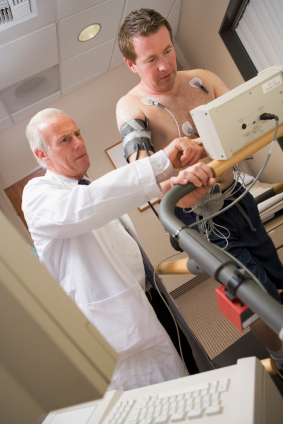
medical clearance, treadmill stress test

This treadmill stress test is looking for atherosclerotic heart disease, aka coronary artery disease and coronary heart disease

A recent study compared low-carb to low-fat dieting over 12 months and actually found better improvements in cardiovascular disease risk factors on the low-carb diet (max of 40 grams a day).

After 12 months, folks on a low-carbohydrate diet had lost 5.3 kg (11.7 lb), while those on a low-fat diet with similar caloric value had lost 1.8 kg (3.9 lb). Both groups showed lowering of LDL cholesterol, while the low-carbers had better improvements in HDL cholesterol and triglycerides.

DietDoctor Andreas Eenfeldt can add this study to his list of others that show better weight loss with low-carb diets compared to low-fat.

Steve Parker, M.D.

QOTD: J. Stanton on Weight Loss and Exercise

Let me be clear. Exercise is not important because it burns calories! Exercise without calorie restriction is a remarkably ineffective weight loss intervention, because it usually makes us hungry enough to replace the calories we burn. Exercise is important because it restores your ability to oxidize fat—both when fasting and after meals. And we can tie this in with mitochondrial dysfunction by noting that exercise is proven to increase mitochondrial volume.

J. Stanton

The Mellberg Study: Paleo Diet and Obese Postmenopausal Women

Sweden's Flag. Most of the researchers involved with this study are in Sweden

Sweden’s Flag

Swedish researchers compared a Paleolithic-type diet against a lower-fat, higher-carb diet so often recommend in Nordic countries and in the U.S. Test subjects were obese but otherwise healthy older women. The study lasted two years. Dieters could eat as much as they wanted.

They found that the paleo-style dieters lost more weight, lost more abdominal fat, and lowered their trigyceride levels. When measured six months into the study, the paleo dieters had lost 6.5 kg (14 lb) of body fat compared to 2.6 (6 lb) kg in the other group.

Measured at two years out, the paleo dieters had lost 4.6 kg (10 lb) of body fat compared to 2.9 kg (6 lb) in the other group, but this difference wasn’t statistically significant.

The greatest weight loss was clocked at 12 months: Paleo dieters were down 8.7 (19 lb) kg compared to 4.4 kg (10 lb)  in the other group.

But this study was about more than weight loss. The investigators were also interested in cardiometabolic risk factors and overall body composition.

The Set-Up

I don’t know what the researchers told the women to get them interested. Weight loss versus healthier diet versus ?  This could have influenced the type of women who signed up, and their degree of commitment.

A newspaper ad got the attention of 210 women in Sweden; 70 met the inclusion criteria, which included a body mass index 27 or higher and generally good health. Average age was 60. Average BMI was 33. Average weight was 87 kg (192 lb). Average waist circumference was 105 cm (41 inches). The women were randomized into one of two diet groups (N=35 in each): paleolithic-type diet (PD) or Nordic Nutrition Recommendations diet (NNR). There were no limits on total caloric consumption. (Were the women told to “work on weight loss”? I have no idea.)

We don’t know the ethnicity of these women.

Here’s their version of the paleo diet:

  • 30% of energy (calories) from protein
  • 40% of energy from fat
  • 30% of energy from carbohydrate
  • high intake of mono- and polyunsaturated fatty acids
  • based on lean meat, fish, eggs, vegetables, fruits, berries, and nuts
  • additional fat sources were avocado and oils (rapeseed [canola] and olive) used in dressings and food preparation
  • cereals (grains), dairy products, added salt and refined fats and sugar were excluded
  • no mention of legumes, potatoes, or tubers

The NNR diet:

  • 15% of energy from protein
  • 25-30% of energy from fat
  • 55-60% of energy from carbohydrate
  • emphasis on high-fiber products and low-fat dairy products

Over the 24 months of the study, each cohort had 12 group meetings with a dietitian for education and support, including “dietary effects on health, behavioral changes and group discussion.”

Various blood tests and body measurements were made at baseline and periodically. Body measurements were made every six months. Body composition was measured by dual energy x-ray absorptiometry. Diet intake was measured by self-reported periodic four-day food records.

Stockholm Palace

Stockholm Palace

Results

30% of participants (21) eventually dropped out by the end of the study and were lost to follow-up, leaving 27 in the PD group and 22 in the NNR cohort.

Food record analysis indicated the PD group indeed reduced their carb intake while increasing protein and fat over baseline. Baseline macronutrient energy percentages were about the same for both groups: 17% protein, 45% carb, 34% (I guess the percentages don’t add to 100 because of alcohol, which wads not mentioned at all in the article.) Two years out, the PD group’s energy sources were 22% protein, 34% carb, 40% fat. For the NNR group, the energy sources at two years were 17% protein, 43% carb, and 34% fat. As usual, dietary compliance was better at six months compared to 24 months. The PD group failed to reach target amounts of protein energy (30%) at six and 24 months; the NNR group didn’t reach their goal of carbohydrate energy (55-60%). The PD group ate more mono- and poly unsaturated fatty acids than the NNRs.

In contrast to the food record estimates of protein intake, the urine tests for protein indicated poor adherence to the recommended protein consumption in the PD group (30% of energy). Both groups ate the same amount of protein by this metric. (This is an issue mostly ignored by authors, who don’t say which method is usually more accurate.)

“Both groups had statistically significant weight loss during the whole study, with significantly greater weight loos in the PD group at all follow up time points except at 24 months.” Largest weight loss was measured at 12 month: 8.7 kg (19 lb) in the PD group versus 4.4 kg (10 lb) in the NNRs.

The PD group lost 6.5 kg (14 lb) of body fat by six months but the loss was only 4.6 kg (10 lb) measured at 24 months. Corresponding numbers for the NNR group were 2.6 and 2.9 kg (about 6 lb). So both groups decreased their total fat mass to a significant degree. The difference between the groups was significant (P<0.001) only at six months. The greatest weight loss was clocked at 12 months: PD dieters were down 8.7 kg (19 lb) compared to 4.4 kg (10 lb) in the NNRs. Both groups saw a significant decrease in waist circumference during the whole study, with a more pronounce decrease in the PD group at six months: 11 versus 6 cm (4.3 versus 2.4 inches).

Fasting blood sugars, fasting insulin levels, and tissue plasminogen activator activity didn’t change.

Both groups had improvements in blood pressure, heart rate, c-reactive protein, LDL cholesterol, PAI-1 activity, and total cholesterol. The PD group saw a greater drop in triglycerides (by 19% at two years, but levels were normal to start with at 108 mg/dl or 1.22 mmol/l).

Reported daily energy intake fell over time for both groups, without statistically significant differences between them.
paleo diet, Steve Parker MD, diabetic diet

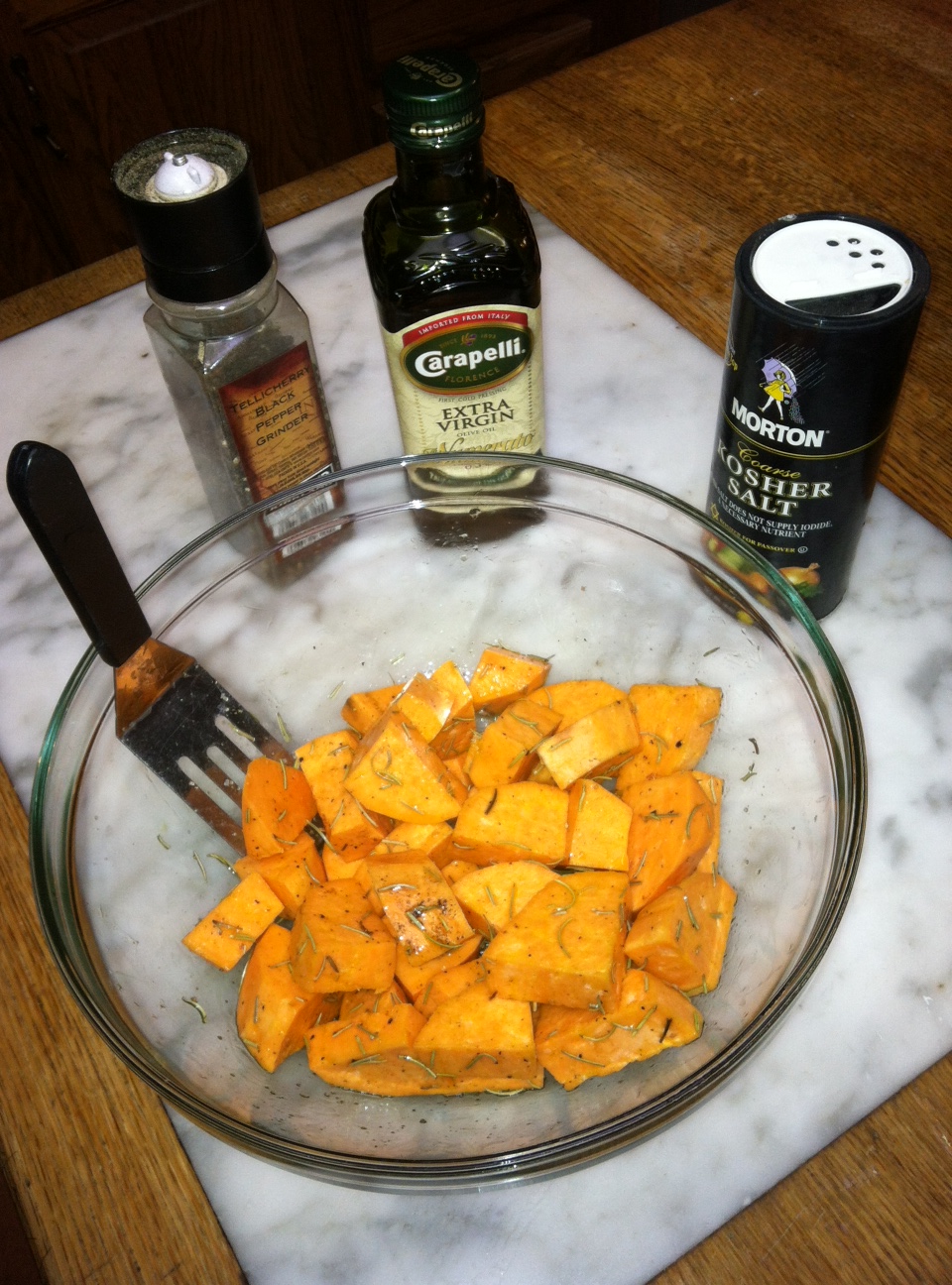
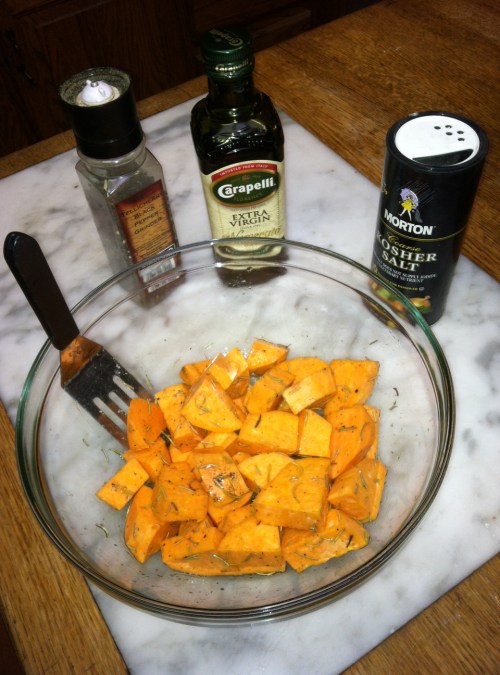
Sweet potato chunks brushed with olive oil, salt, pepper, and rosemary. Ready for the oven.

Discussion

As measured at six months, the paleo dieters lost 10% of their initial body weight, compared to 5% in the NNR group. That’s worth something to many folks. However, the researchers didn’t find much, if any, difference in the groups in terms of cardiometabolic risk factors. They wonder if that reflects the baseline healthiness of these women. Would a sicker study population show more improvement on one of the diets?

I’m surprised the NNR group lost any weight at all. In my experience it’s hard for most folks to lose weight and keep it off while eating as much as they want, unless they’re eating very-low-carb. We’ve seen short-term weight loss with ad libitum paleo diets before (here for example, and here, and here). I bet the women signing up for this study were highly motivated to change. 

Legumes and potatoes are a debatable part of the paleo diet. Most versions exclude legumes. We don’t know if these women ate legumes and potatoes. Other than this oversight, the study paleo diet is reasonable.

The authors noted that the paleo diet group failed to reach their protein intake goal (30% of total calories), and suggested reasons “such as protein-rich foods being more expensive, social influences on women’s food choices or a lower food preference for protein-rich food among women.”

The results of this study may or may not apply to other population subgroups and non-Swedes.

The authors write:

In conclusion, a Palaeolithic-type diet during two years with ad libitum intake of macronutrients, including an increased intake of polyunsaturated fatty acids and monounsaturated fatty acids reduces fat mass and abdominal obesity with significantly better long-term effect on triglyceride levels vs an NNR diet. Adherence to the prescribed protein intake was poor in the PD group suggesting that other component of the PD diet are of greater importance.

Does this study have anything to do with diabetes? Not directly. But it suggests that if an overweight diabetic needs to lose excess body fat without strict calorie control, a lower-carb paleo-style diet may be more effective than a low-fat, higher-carb diet. I would have liked to have seen lower fasting blood sugar and insulin levels in the paleo dieters, but wishing doesn’t make it so.

Steve Parker, M.D.

PS: Carbsane Evelyn has taken a look at this study and blogged about it here and here. I’ve not read those yet, but will now.

Reference: Mellberg, C., et al (including M. Ryberg and T Olsson). Long-term effects of a Palaeolithic-type diet in obese postmenopausal women: a 2-year randomized trial. European Journal of Clinical Nutrition, advance online publication January 29, 2014. doi: 10.1038/ejcn.2013.290


Dr. Roy Taylor on the Cause of Type 2 Diabetes and What To Do About It

diabetic diet, low-carb Mediterranean Diet, low-carb, Conquer Diabetes and Prediabetes

Warning: this is a sciencey post

According to Roy Taylor, M.D., “type 2 diabetes is a potentially reversible metabolic state precipitated by the single cause of chronic excess intraorgan fat.” The organs accumulating fat are the pancreas and liver. He is certain “…that the disease process can be halted with restoration of normal carbohydrate and fat metabolism.” I read Taylor’s article published last year in Diabetes Care.

(Do you remember that report in 2011 touting cure of T2 diabetes with a very low calorie diet? Taylor was the leader. The study involved only 11 patients, eating 600 calories a day for eight weeks.)

Dr. Taylor says that severe calorie restriction is similar to the effect of bariatric surgery in curing or controlling diabetes. Within a week of either intervention, liver fat content is greatly reduced, liver insulin sensitivity returns, and fasting blood sugar levels can return to normal. During the first eight weeks after intervention, pancreatic fat content falls, with associated steadily increasing rates of insulin secretion by the pancreas beta cells.

bariatric surgery, Steve Parker MD

Band Gastric Bypass Surgery (not the only type of gastric bypass): very successful at “curing” T2 diabetes if you survive the operation

Taylor’s ideas, by the way, dovetail with Roger Unger’s 2008 lipocentric theory of diabetes. Click for more ideas on the cause of T2 diabetes.

Here are some scattered points from Taylors article. He backs up most of them with references:

  • In T2 diabetes, improvement in fasting blood sugar reflects improved liver insulin sensitivity more than muscle insulin sensitivity.
  • The more fat accumulation in the liver, the less it is sensitive to insulin. If a T2 is treated with insulin, the required insulin dose is positively linked to how much fat is in the liver.
  • In a T2 who starts insulin injections, liver fat stores tend to decrease. That’s because of suppression of the body’s own insulin delivery from the pancreas to the liver via the portal vein.
  • Whether obese or not, those with higher circulating insulin levels “…have markedly increased rates of hepatic de novo lipogenesis.” That means their livers are making fat. That fat (triglycerides or triacylglycerol) will be either burned in the liver for energy (oxidized), pushed into the blood stream for use elsewhere, or stored in the liver. Fatty acids are components of triglycerides. Excessive fatty acid intermediaries in liver cells—diglycerides and ceramide—are thought to interfere with insulin’s action, i.e., contribute to insulin resistance in the liver.
  • “Fasting plasma glucose concentration depends entirely on the fasting rate of hepatic [liver] glucose production and, hence, on its sensitivity to suppression by insulin.”
  • Physical activity, low-calorie diets, and thiazolidinediones reduce the pancreas’ insulin output and reduce liver fat levels.
  • Most T2 diabetics have above-average liver fat content. MRI scans are more accurate than ultrasound for finding it.
  • T2 diabetics have on average only half of the pancreas beta cell mass of non-diabetics. As the years pass, more beta cells are lost. Is the a way to preserve these insulin-producing cells, or to increase their numbers? “…it is conceivable that removal of adverse factors could result in restoration of normal beta cell number, even late in the disease.”
  • “Chronic exposure of [pancreatic] beta cells to triacylglycerol [triglycerides] or fatty acids…decreases beta cell capacity to respond to an acute increase in glucose levels.” In test tubes, fatty acids inhibit formation of new beta cells, an effect enhanced by increased glucose concentration.
  • There’s a fair amount of overlap in pancreas fat content comparing T2 diabetics and non-diabetics. It may be that people with T2 diabetes are somehow more susceptible to adverse effects of the fat via genetic and epigenetic factors.
  • “If a person has type 2 diabetes, there is more fat in the liver and pancreas than he or she can cope with.”
  • Here’s Dr. Taylor’s Twin Cycle Hypothesis of Etiology of Type 2 Diabetes: “The accumulation of fat in liver and secondarily in the pancreas will lead to self-reinforcing cycles that interact to bring about type 2 diabetes. Fatty liver leads to impaired fasting glucose metabolism and increases export of VLDL triacylglcerol [triglycerides], which increases fat delivery to all tissues, including the [pancreas] islets. The liver and pancreas cycles drive onward after diagnosis with steadily decreasing beta cell function. However, of note, observations of the reversal of type 2 diabetes confirm that if the primary influence of positive calorie balance is removed, the the processes are reversible.”
diabetic diet, etiology of type 2 diabetes, Roy Taylor, type 2 diabetes reversal

Figure 6 from the article: Dr. Taylor’s Twin Cycle Hypothesis of Etiology of Type 2 Diabetes

  • The caption with Figure 6 states: “During long-term intake of more calories than are expended each day, any excess carbohydrate must undergo de novo lipogenesis [creation of fat], which particularly promotes fat accumulation in the liver.”
  • “The extent of weight gloss required to reverse type 2 diabetes is much greater than conventionally advised.” We’re looking at around 15 kg (33 lb) or 20% of body weight, assuming the patient is obese to start.  “The initial major loss of body weight demands a substantial reduction in energy intake. After weight loss, steady weight is most effectively achieved by a combination of dietary restriction and physical activity.”

Dr. Taylor doesn’t specify how much calorie restriction he recommends, but reading between the lines, I think he likes his 600 cals/day for eight weeks program. That will have a have a high drop-out rate. I suspect a variety of existing ketogenic diets may be just as successful and more realistic, even if it takes more than eight weeks. I wonder how many of the 11 “cures” from the 2011 study have persisted.

Steve Parker, M.D.

Reference: Taylor, Roy. Type 2 diabetes: Etiology and reversibility. Diabetes Care, April 2013, vol. 36, no. 4, pp:1047-1055.

Update: Some wild and crazy guys tried the Taylor method at home. Click for results.

Gastric Bypass Cures Half of Type 2 Diabetes Cases

…according to Seattle researchers.

Steve Parker MD, bariatric surgery, gastric bypass

Band Gastric Bypass Surgery

Investigators looked at over 4,000 diabetics who had gastric bypass surgery for weight loss, following their cases over many subsequent years. Almost seven in 10 had a “complete diabetes remission” within five years of surgery. Remission was defined as non-diabetic lab values on blood tests and absence of diabetic drug use. Of those going into remission, 35% redeveloped diabetes within five years of surgery. Those with the more severe or longstanding cases of diabetes before surgery were  more likely to have a recurrence of diabetes.

So it looks to me like, on average, gastric bypass surgery “cures” half of the cases of type 2 diabetes, as measured five years after surgery. As the years pass, even more failures are likely to arise. Nevertheless, that’s an impressive improvement. In view of the potential complications of bypass surgery, I’d try a very-low-carb diet before going under the knife. Surgery is a last resort primarily because the odds of death are 1 in 200.

Steve Parker, M.D.

PS: Cure or remission of type 2 diabetes could be defined in other ways. For instance, a more reliable definition of cure might include return of normal pancreas/insulin function as judged by insulin levels and insulin sensitivity. If you have normal blood sugar levels and hemoglobin A1c, yet have ongoing insulin resistance, you’re more likely to develop overt diabetes going forward.

David Mendosa On Weight Loss and Long-Term Management

Maybe his method works only for him, but I doubt it. David has diabetes, by the way. See his 2012 article at HealthCentral for details. Here’s a bit:

One cornerstone of this new way to lose weight and maintain weight loss is a twist on a standard dieting recommendation. But instead of weighing myself once a week, I weigh myself every morning.

Supposedly people get discouraged from daily weigh-ins because our weight seems to fluctuate up or down a couple of pounds every day for no good reason, or for at least for no reason that we can figure out. The fluctuations are certainly true in my experience. But, of course, the same fluctuations happen when we make our weigh-ins once a week, and that would be even more misleading.

Then, when the scales tell me that my weight is up that morning from the previous morning, I make an immediate course correction, which we know is easier in the long run than to wait until things get totally out of hand. My immediate course correction is simple. I skip dinner that day.

Note well, however, that skipping dinner could lead to major hypoglycemia if you’re taking certain diabetes drugs. Work with your personal healthcare provider on drug dose adjustments.

Steve Parker, M.D.

But, Doc, My Back and Joints Hurt Too Much To Exercise!

EXERCISE WITH JOINT AND BACK PAIN

Many of my obese patients have chronic low back and joint pains.  Painful lower limb joints and chronic or recurrent back pain are an exercise barrier to many people, whether skinny or fat. Those affected should consult a physician for a diagnosis, treatment, and advice on appropriate physical activity. If the physician isn’t sure about an exercise prescription, consultation with an orthopedist, physiatrist, or physical therapist should be helpful. Generally, weight-bearing on bad joints should be minimized by doing pool calisthenics, stationary cycling, swimming, etc. Use your imagination. Particularly bothersome joints may not tolerate exercise, if ever, until weight is lost by some method other than exercise. (Exercise by itself is typically an ineffective way to lose major weight.)

Light to moderate exercise actually reduces the pain and disability of knee degenerative arthritis. The effect is modest and comes with a small risk of injury such as bone fracture, cartilage tears, arthritis flare, and soft tissue strain.