Low-Carb Eating Isn’t for Every PWD

diabetic diet, Paleobetic diet, diabetes,

Sunny’s Super Salad. Use search box for recipe and nutritional analysis. 

(PWD is person with diabetes.)

Healthline has an article by Christina Crowder Anderson, a certified diabetes educator and pediatric registered dietitian nutritionist:

While I was in my dietetic internship at Duke University, I met a person with diabetes who had morbid obesity and who had participated in Dr. Eric Westman’s “low carb clinic.” They did well on that regimen until they ended up gaining back all the weight plus some, along with a resurgence in their type 2 diabetes.

At that moment, my iron-clad nutrition paradigm started to shift, as the sadness and shame from “diet failure” was palpable. Most individuals would say they “didn’t try hard enough.” But when you meet an actual person and hear their story, you’ll learn there are many factors that play into their success with a specific dietary approach.

Even though I was moved by this experience, my practice philosophies still didn’t change in terms of my recommended dietary approach for type 1 or type 2 diabetes — low carbohydrate. Over the next few years as I worked in a pediatric and adult endocrinology clinic, I steered most patients toward the more severe end of the “low carbohydrate spectrum” and was enthralled by the ability of the low carb approach to produce a flat line continuous glucose monitor (CGM) tracing.

That was, until I worked with 10 young adults in a clinical trial (for my graduate thesis), who chose to participate for a total of 8 months: 3 months on the low carbohydrate diet (60 to 80g day), 2 months of a “washout” period back on their own preferred diet, and another 3 months on the “standard diabetes diet” of >150 g carbs per day.

Source: When Low Carb Eating Backfires for Diabetes

Steve Parker, M.D.

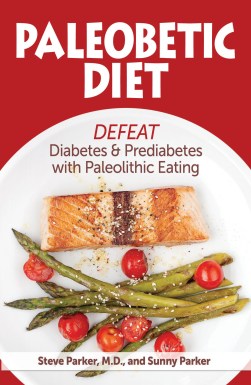
PS: The Paleobetic Diet is low-carb.

Click pic to purchase book at Amazon.com. E-book versions available at Smashwords.com.

Housekeeping: Future Posts About #Coronavirus #COVID19

Artist’s conception of coronavirus

I’ve been cross-posting about coronavirus and COVID-19 among my three blogs. In view of time limitations and efficiency, I’m going to be posting nearly all my coronavirus thoughts at Advanced Mediterranean Diet. Check it out if interested.

Thus far I haven’t treated a confirmed case of COVID-19 although I’m a full-time hospitalist in Scottsdale, AZ. I’ve been off-duty for four days but return to work soon. If the mainstream media is correct, I’m about to be overwhelmed by cases. So far, I’m overwhelmed by the damage this thing is doing to our economy.

Steve Parker, M.D.

Click pic to purchase book at Amazon.com. E-book versions available at Smashwords.com.

Here Are the Specific Conditions That Increase Your Risk of Serious #CoronaVirus Infection #COVID-19

This mask probably won’t protect her.

The U.S. Centers for Disease Control website notes that the you are at risk for serious—even life-threatening—illness from Coronavirus if you are over age 60–65 or have a serious chronic medical condition, like…

  • heart disease
  • diabetes
  • kidney disease
  • lung disease

Well, there are at least a couple hundred heart diseases, a couple hundred kidney diseases, a couple hundred lung diseases, and at least three kinds of diabetes. There are entire thick medical textbooks written specifically for heart disease, lung disease, and kidney disease. All of those individual diseases don’t make you particularly vulnerable to Coronavirus.

And what’s a “serious condition?” Doctors don’t always tell you how serious a disorder is, and patients don’t always hear and remember when the doctor does. So you have a heart murmur. It’s likely chronic but is it serious? It depends.

I’ve even seen hypertension listed as a risk factor for serious flu complications, but I don’t believe it.

And what’s chronic? Say five years ago you had a mild heart attack, a stent was put in the only blocked artery, you take your prescribed drugs, and your doctor told you last month you’re doing great. Do you still have a serious chronic medical ailment?

By the way, physicians are calling the disease caused by Coronavirus “COVID-19.”

Is Age Really Important?

Yes. Here’s a chart from the report of UK’s Imperial College COVID-19 Response Team dated March 16, 2020:

Age-specific hospitalization and ICU admission rates from the Imperial College COVID-19 Response Team

TL;DR version: The need for hospitalization and ICU (intensive care unit) admission starts to rise dramatically for patients aged 50-59 and shoots up from there. If you make it into the ICU with COVID-19, you’ll quite likely have a tube down your throat and be on a ventilator (a mechanical “breathing machine”), or getting ECMO.

BTW, the Response Team figures you have only a 50:50 chance of surviving if you end up on a ventilator.

How Do I Know If I Have a Serious Chronic Medical Condition?

If you’re uncertain, the answer should come from your personal medical specialist or primary care physician. I know many of you will be unsure.

Here’s a simple test you can do to see if you might have a serious chronic medical condition:

  • Walk up two flights of stairs without stopping

If you can’t do that without stopping to rest and without much shortness-of-breath (you should be able to carry on a conversation): you flunk. Possible explanations (among many) include serious heart or lung disease, being badly overweight, or just “out of shape” from lack of regular exercise. A couple of those conditions you can rectify, and should.

Artist’s rendition of coronavirus

If You Have One of the Following Conditions, You Need to Be Extra Careful When Coronavirus Is Around

Having practiced medicine for over three decades—and I’ll keep practicing until I get it right—here’s my current list of conditions that raise your risk of serious disease if you contract Coronavirus:

  • age over 60–65 (may not be much of a risk factor if you are otherwise healthy, physically fit, and eat well)
  • needing supplemental oxygen at home, whether continuously, at night only, or just as needed
  • moderate or severe valvular heart disease, whether the valve is leaky or blocked
  • a weak heart muscle called cardiomyopathy with left ventricular ejection fraction under 50% or on home oxygen
  • history of congestive heart failure with current left ventricular ejection fraction under 50% or on home oxygen
  • moderate to severe diastolic heart failure (sometimes call “heart failure with preserved ejection fraction”)
  • serious coronary artery disease (e.g., frequent chest pains, multiple heart attacks, residual blockages in arteries)
  • asthma that requires daily drugs or that has frequent or severe exacerbations
  • COPD (chronic obstructive pulmonary disease) or emphysema requiring daily scheduled drugs or frequent “as needed” drugs or home oxygen
  • chronic liver disease (such as cirrhosis) with serum bilirubin over 2.0 mg/dL or albumin under 3.0 g/dL or elevated prothrombin time
  • serious active cancer, particularly if on chemotherapy that suppresses the immune system
  • prior organ transplant requiring immunosuppressive drug therapy to prevent organ rejection
  • immunoglobulin deficiency
  • very sedentary lifestyle
  • poor nutrition and/or malnutrition
  • morbid obesity
  • body mass index over 35
  • on chronic corticosteroid therapy
  • end-stage renal disease on dialysis
  • chronic kidney disease with serum creatinine over 2 mg/dL
  • nephrotic syndrome
  • diabetes mellitus, especially if poorly controlled and/or concomittant chronic organ impairment such as nephropathy, neuropathy, or retinopathy
  • active autoimmune disease (e.g., systemic lupus erythematosis, rheumatoid arthritis, Crohn’s disease), particularly if on drug therapy that impairs immune system function
  • chronic low white blood cell count
  • chronic active infection (e.g., tuberculosis, hepatitis, AIDS)
  • you “always catch what’s going around” (possible immune system disorder or poor hygeine?)

Why Do These Conditions Increase Risk of Serious Illness?

Many of these infirmities impair your immune system and increase your risk of serious complications from any infection, whether viral, bacterial, or fungal. Just as importantly, these disorders may impair your body’s ability to respond to the increased physical stress of infection. Clearly, the more of these ailments you have, the greater your chance of a bad outcome.

Here’s the problem when you come down with flu or any other infection. The infection increases the workload on various organ systems that keep you alive day in and day out. Even if you take an antibiotic or anti-viral drug, you still need various organ systems to keep you alive. I’m thinking particularly about your lungs, cardiovascular, and immune systems, working together at maximal capacity. You heart, for example, pumps about five liters of blood every minute while you’re at rest, blood that’s carrying life-preserving oxygen to all your other organs in addition to the heart muscle. That blood also carries a waste product—carbon dioxide—to your lungs for delivery to the outside world. If you exercise vigorously your heart increases it’s pumping output to twenty liters a minute, if you’re young and healthy. By the same token, your lungs have a certain but limited capacity to take up oxygen from the air and blow off carbon dioxide both at rest and during exercise. As we age, the capacity the heart and lungs to do their jobs diminishes no matter what. Same with the immune system. That’s why folks over 60 are at risk for serious complications from viral and other infections. Because infections increase the workload on the heart, lungs, and immune system. When Coronavirus infects your lungs, fluid and inflammatory debris builds up in the gas-exchanging tissues, impairing your ability to absorb oxygen from the air. So your lungs and heart have to work harder, and long enough for your immune system to eradicate there virus.

I hope you find this list more helpful than CDC’s. Nevertheless, I’m sure it’s incomplete. I’m not trying to scare you. I’m trying to help you survive the pandemic, as most of us will. Forewarned in forearmed.

If You Have One or More of the Listed Conditions, What Does “Being Extra Careful Around Coronavirus” Mean?

Avoid the virus if at all possible. The U.S. Centers for Disease Control and state governments have been issuing guidelines. One major issue is that the virus incubates in the body without symptoms for 5–7 days, and the affected individual may be infectious—shedding the virus that could get into you if you’re nearby—for 24 hours or so before the virus carrier even knows they’re sick. For folks that get sick with the virus, symptoms last for 1–2 weeks, and their oral or respiratory secretions (and feces? tears?) could infect you if the they enter your body via the mouth, nose, or eyes (or gastrointestinal tract?). Even after recovery, infected individuals can shed infectious virus for about a week. Further complicating the situation is that infected individuals may just have mild symptoms like a cough (or runny nose or sneezing?), and won’t be quarantining themselves or avoiding other people. They won’t know they have the virus. Other people can harbor the virus in their bodies and never feel sick—we don’t know how infectious these folks are. So what specifically can you do if you have risk factors for serious disease?

  • Monitor your local news reports to know how common is the virus in your community. If there’s an outbreak there or where your’e going…
  • Avoid crowds (0f 10 people? 50?)
  • Stay home as much as possible.
  • Don’t be around people with symptoms of possible COVID-19: c0ugh, shortness of breath, fever, ?sneezing, ?runny nose. Sure, they could just have common illnesses like bronchitis, pneumonia, hay fever, allergies, the common cold, or a sinus infection. You just don’t know. The virus won’t get into your residence unless you allow an infected person in.
  • Avoid touching high-touch surfaces in public places, like hand rails, elevator buttons, door handles, handshakes, etc. If you must touch, cover the surface with a tissue or disinfect it first.
  • Wash your hands frequently with soap and water. Particularly after touching high-touch surfaces in public places.
  • Avoid cruises, mass transit, air travel. Again: crowds.
  • If you can’t avoid someone who’s coughing or sneezing, offer them a surgical mask.
  • Don’t touch your mouth, nose, or eyes. That’s how germs on your hands can enter you.

Steve Parker, M.D.

PS: It’s still very early in this pandemic and there’s much we don’t know. Some of the above information is probably wrong. Stay tuned.

Click pic to purchase book at Amazon.com. E-book versions available at Smashwords.com.
 

Dr Muccioli on #Coronavirus and Diabetes #COVID-19

Artist’s rendition of coronavirus

From Dr Muccioli at Diabetes Daily:

Why are people with diabetes more vulnerable to infections and complications of infections? It has been shown that people with diabetes are at a higher risk for infections and related complications, and, in particular, for various bacterial infections. Although the reasons for this are not completely elucidated yet and are likely multifactorial, research has shown that high blood glucose levels can directly and negatively impact the immune system and that  “…good control of blood sugar in diabetic patients is a desirable goal in the prevention of certain infections and to ensure maintenance of normal host defense mechanisms that determine resistance and response to infection.”As it relates to the COVID-19 outbreak, it follows that maintaining target blood glucose levels is an important preventative strategy for avoiding serious related complications, such as a secondary bacterial infection (i.e., pneumonia) and is likely an important determinant in the patient prognosis for anyone who becomes infected.

Source: Coronavirus & Diabetes: Your Questions Answered – Diabetes Daily

Read the whole thing.

Steve Parker, M.D.

Would We Be Healthier If We Imitated the Resting Postures of Hunter-Gatherers?     #squatting

Should she be squatting instead? Is sitting the new smoking?

An abstract from Science Advances:

Recent work suggests human physiology is not well adapted to prolonged periods of inactivity, with time spent sitting increasing cardiovascular disease and mortality risk. Health risks from sitting are generally linked with reduced levels of muscle contractions in chair-sitting postures and associated reductions in muscle metabolism. These inactivity-associated health risks are somewhat paradoxical, since evolutionary pressures tend to favor energy-minimizing strategies, including rest. Here, we examined inactivity in a hunter-gatherer population (the Hadza of Tanzania) to understand how sedentary behaviors occur in a nonindustrial economic context more typical of humans’ evolutionary history. We tested the hypothesis that nonambulatory rest in hunter-gatherers involves increased muscle activity that is different from chair-sitting sedentary postures used in industrialized populations. Using a combination of objectively measured inactivity from thigh-worn accelerometers, observational data, and electromygraphic data, we show that hunter-gatherers have high levels of total nonambulatory time (mean ± SD = 9.90 ± 2.36 h/d), similar to those found in industrialized populations. However, nonambulatory time in Hadza adults often occurs in postures like squatting, and we show that these “active rest” postures require higher levels of lower limb muscle activity than chair sitting. Based on our results, we introduce the Inactivity Mismatch Hypothesis and propose that human physiology is likely adapted to more consistently active muscles derived from both physical activity and from nonambulatory postures with higher levels of muscle contraction. Interventions built on this model may help reduce the negative health impacts of inactivity in industrialized populations.

Source: Sitting, squatting, and the evolutionary biology of human inactivity. – PubMed – NCBI

Nurse Practitioners May Advocate for Paleo Diet

The Nurse Practitioner has an article indicating that the paleo diet may prevent or treat prediabetes and diabetes:

Lifestyle changes that include adopting a healthy diet, such as the paleo diet, can help prevent prediabetes and T2DM [type 2 diabetes]. This article explores the potential benefits of replacing low-calorie diets with the paleo diet. As primary care providers, NPs [nurse practitioners] are positioned to help inform patients, particularly those with prediabetes and T2DM, about healthy lifestyle choices and provide them with resources to achieve weight loss success.

Source: Combating insulin resistance with the paleo diet : The Nurse Practitioner

I confess I haven’t read the entire article, just the abstract.

Steve Parker, M.D.

Click pic to purchase book at Amazon.com. E-book versions available at Smashwords.com.

Weight-Loss Pill Lorcaserin Linked to Cancer

From the U.S. Food and Drug Administration:

ISSUE: FDA has requested that the manufacturer of Belviq, Belviq XR (lorcaserin) voluntarily withdraw the weight-loss drug from the U.S. market because a safety clinical trial shows an increased occurrence of cancer. The drug manufacturer, Eisai Inc,. has submitted a request to voluntarily withdraw the drug. When FDA approved lorcaserin in 2012, we required the drug manufacturer to conduct a clinical trial to evaluate the risk of cardiovascular problems. A range of cancer types was reported, with several different types of cancers occurring more frequently in the lorcaserin group, including pancreatic, colorectal, and lung.

BACKGROUND: In January 2020, FDA announced we were reviewing clinical trial data and alerted the public about a possible risk of cancer associated with lorcaserin based on preliminary analysis of the data.

RECOMMENDATION: PatientsPatients should stop taking lorcaserin and talk to your health professionals about alternative weight-loss medicines and weight management programs.

Source: Belviq, Belviq XR (lorcaserin) by Eisai: Drug Safety Communication – FDA Requests Withdrawal of Weight-Loss Drug | FDA

Steve Parker, M.D.

PS: I think there are better alternatives to pills for weight loss.

Click pic to purchase book at Amazon.com. E-book versions available at Smashwords.com.

What’s the Ideal Calcium Intake Level?

paleo diet, Steve Parker MD,calcium, osteoporosis

That milk mustache is a tell-tale sign she’s not eating pure paleo

I don’t know, and I’m not sure anybody knows.

The biggest concern about inadequate calcium consumption is that your bones will be weak and brittle, leading to fractures.

Dr Harriet Hall at Science Based Medicine reviewed a New England Journal of Medicine article written by Drs Willets and Ludwig on the health effects of milk.

From Dr Hall:

I was surprised to learn that the US recommendations for milk consumption were based on small, flawed studies of calcium balance. Other countries recommend lower levels of calcium intake. The US recommends 1000–1200 mg for adults, the UK 700 mg, and the World Health Organization, 500 mg. Counterintuitively, countries with high milk and calcium intake actually have the highest rates of hip fracture. Clinical trials of calcium for fracture prevention are complicated, because of confounding factors like vitamin D, phosphorous, and adult height. High calcium intake during childhood and adolescence was thought to serve as a way to “bank” calcium, but studies have not supported that hypothesis. In fact, men’s risk of hip fracture increased by 9% for every additional glass of milk consumed during adolescence.

Source: Milk and Health: The Evidence – Science-Based Medicine

Paraphrasing Churchill’s comments on Russia, ideal calcium consumption is “a riddle, wrapped in a mystery, inside an enigma….”

Steve Parker, M.D.

PS: Use the search box at upper left for my other posts on calcium.

Click pic to purchase book at Amazon.com. E-book versions available at Smashwords.com.

 

Low-Carb Diets Improve Cardiovascular Disease Risk Factors

This Shrimp Salad is truly low-carb

A meta-analysis by Chinese investigators found that low-carb diets improve cardiovascular risk factors. Specifically: body weight (lowered), triglycerides (lowered), HDL-cholesterol (raised), blood pressure (lowered systolic and diastolic, but less than 2 points).

Additionally, they found increases in total cholesterol  and HDL-cholesterol. Some consider those to be going in the wrong direction, increasing cardiovascular risk. The study authors, however, considered these increases “slight,” implying lack of real-world significance.

I’ll not fisk the entire research paper. Have a go at it yourself by clicking the link to full-text below.

The researchers included 12 randomized controlled trials in their analysis. They defined low-carb diets as having less than 40% of calories derived from carbohydrates. If you’re eating 2200 calories a day, 39% of calories from carb would be 215 g of carbs/day. That’s a lot of carb, and wouldn’t be much lower than average. I scanned the report pretty quickly and didn’t run across an overall average for carb grams or calories in the low-carb diets. The “control diets” had 45–55% of calories from carbohydrate.

Here’s the abstract:

Background

Low-carbohydrate diets are associated with cardiovascular risk factors; however, the results of different studies are inconsistent.

Purpose

The aim of this meta-analysis was to assess the relationship between low-carbohydrate diets and cardiovascular risk factors.

Method

Four electronic databases (PubMed, Embase, Medline, and the Cochrane Library) were searched from their inception to November 2018. We collected data from 12 randomized trials on low-carbohydrate diets including total cholesterol, high-density lipoprotein cholesterol (HDL-C), low-density lipoprotein cholesterol (LDL-C), triglycerides, and blood pressure levels, as well as weight as the endpoints. The average difference (MD) was used as the index to measure the effect of a low-carbohydrate diet on cardiovascular risk factors with a fixed-effects model or random-effects model. The analysis was further stratified by factors that might affect the results of the intervention.

Results

From 1292 studies identified in the initial search results, 12 randomized studies were included in the final analysis, which showed that a low-carbohydrate diet was associated with a decrease in triglyceride levels of -0.15mmol/l (95% confidence interval -0.23 to -0.07). Low-carbohydrate diet interventions lasting less than 6 months were associated with a decrease of -0.23mmol/l (95% confidence interval -0.32 to -0.15), while those lasting 12–23 months were associated with a decrease of -0.17mmol/l (95% confidence interval -0.32 to -0.01). The change in the body weight in the observation groups was -1.58kg (95% confidence interval -1.58 to -0.75); with for less than 6 months of intervention, this change was -1.14 kg (95% confidence interval -1.65 to -0.63),and with for 6–11 months of intervention, this change was -1.73kg (95% confidence interval -2.7 to -0.76). The change in the systolic blood pressure of the observation group was -1.41mmHg (95% confidence interval—2.26 to -0.56); the change in diastolic blood pressure was -1.71mmHg (95% confidence interval—2.36 to -1.06); the change in plasma HDL-C levels was 0.1mmHg (95% confidence interval 0.08 to 0.12); and the change in serum total cholesterol was 0.13mmol/l (95% confidence interval 0.08 to 0.19). The plasma LDL-C level increased by 0.11mmol/l (95% confidence interval 0.02 to 0.19), and the fasting blood glucose level changed 0.03mmol/l (95% confidence interval -0.05 to 0.12),which was not significant.

Conclusions

This meta-analysis confirms that low-carbohydrate diets have a beneficial effect on cardiovascular risk factors but that the long-term effects on cardiovascular risk factors require further research.

Source: The effects of low-carbohydrate diets on cardiovascular risk factors: A meta-analysis

Steve Parker, M.D.

PS: The Paleobetic Diet provides roughly 60 grams/day of digestible carbohydrate.

Click pic to purchase book at Amazon.com. E-book versions available at Smashwords.com.
Is the Ornish diet really the most heart-healthy?

Pulmonary artery arrow is wrong

From Cardiovascular Business:

The Mediterranean diet has been eclipsed as the U.S. News & World Report’s best-ranked heart-healthy diet for the first time in a decade, nudged out of the top spot by the popular Ornish diet.

The Ornish diet—also ranked as the ninth-best overall diet in the 2020 report—was pioneered by physician Dean Ornish more than 40 years ago and restricts the consumption of fats, refined carbohydrates and animal proteins. It also emphasizes the importance of exercise and stress management in living healthfully.

Source: Ornish beats Mediterranean as best heart-healthy diet of 2020

I’ve always associated the Ornish diet with group therapy, meditation, and vegetarianism. But no mention of those in the linked article. I can’t remember the last time I met anybody doing the Ornish diet, it’s been that long. It was popular in the 1990s.

We don’t know how well he paleo diet ranks as a heart-healthy diet because it’s never been adequately tested as such.

Steve Parker, M.D.

Click pic to purchase book at Amazon.com. E-book versions available at Smashwords.com.