Posted onMarch 18, 2020|Comments Off on Dr Muccioli on #Coronavirus and Diabetes #COVID-19
Artist’s rendition of coronavirus
From Dr Muccioli at Diabetes Daily:
Why are people with diabetes more vulnerable to infections and complications of infections? It has been shown that people with diabetes are at a higher risk for infections and related complications, and, in particular, for various bacterial infections. Although the reasons for this are not completely elucidated yet and are likely multifactorial, research has shown that high blood glucose levels can directly and negatively impact the immune system and that “…good control of blood sugar in diabetic patients is a desirable goal in the prevention of certain infections and to ensure maintenance of normal host defense mechanisms that determine resistance and response to infection.”As it relates to the COVID-19 outbreak, it follows that maintaining target blood glucose levels is an important preventative strategy for avoiding serious related complications, such as a secondary bacterial infection (i.e., pneumonia) and is likely an important determinant in the patient prognosis for anyone who becomes infected.
Posted onMarch 12, 2020|Comments Off on Would We Be Healthier If We Imitated the Resting Postures of Hunter-Gatherers? #squatting
Should she be squatting instead? Is sitting the new smoking?
An abstract from Science Advances:
Recent work suggests human physiology is not well adapted to prolonged periods of inactivity, with time spent sitting increasing cardiovascular disease and mortality risk. Health risks from sitting are generally linked with reduced levels of muscle contractions in chair-sitting postures and associated reductions in muscle metabolism. These inactivity-associated health risks are somewhat paradoxical, since evolutionary pressures tend to favor energy-minimizing strategies, including rest. Here, we examined inactivity in a hunter-gatherer population (the Hadza of Tanzania) to understand how sedentary behaviors occur in a nonindustrial economic context more typical of humans’ evolutionary history. We tested the hypothesis that nonambulatory rest in hunter-gatherers involves increased muscle activity that is different from chair-sitting sedentary postures used in industrialized populations. Using a combination of objectively measured inactivity from thigh-worn accelerometers, observational data, and electromygraphic data, we show that hunter-gatherers have high levels of total nonambulatory time (mean ± SD = 9.90 ± 2.36 h/d), similar to those found in industrialized populations. However, nonambulatory time in Hadza adults often occurs in postures like squatting, and we show that these “active rest” postures require higher levels of lower limb muscle activity than chair sitting. Based on our results, we introduce the Inactivity Mismatch Hypothesis and propose that human physiology is likely adapted to more consistently active muscles derived from both physical activity and from nonambulatory postures with higher levels of muscle contraction. Interventions built on this model may help reduce the negative health impacts of inactivity in industrialized populations.
Posted onMarch 4, 2020|Comments Off on Nurse Practitioners May Advocate for Paleo Diet
The Nurse Practitioner has an article indicating that the paleo diet may prevent or treat prediabetes and diabetes:
Lifestyle changes that include adopting a healthy diet, such as the paleo diet, can help prevent prediabetes and T2DM [type 2 diabetes]. This article explores the potential benefits of replacing low-calorie diets with the paleo diet. As primary care providers, NPs [nurse practitioners] are positioned to help inform patients, particularly those with prediabetes and T2DM, about healthy lifestyle choices and provide them with resources to achieve weight loss success.
Posted onMarch 3, 2020|Comments Off on Weight-Loss Pill Lorcaserin Linked to Cancer
From the U.S. Food and Drug Administration:
ISSUE: FDA has requested that the manufacturer of Belviq, Belviq XR (lorcaserin) voluntarily withdraw the weight-loss drug from the U.S. market because a safety clinical trial shows an increased occurrence of cancer. The drug manufacturer, Eisai Inc,. has submitted a request to voluntarily withdraw the drug. When FDA approved lorcaserin in 2012, we required the drug manufacturer to conduct a clinical trial to evaluate the risk of cardiovascular problems. A range of cancer types was reported, with several different types of cancers occurring more frequently in the lorcaserin group, including pancreatic, colorectal, and lung.
BACKGROUND: In January 2020, FDA announced we were reviewing clinical trial data and alerted the public about a possible risk of cancer associated with lorcaserin based on preliminary analysis of the data.
RECOMMENDATION: PatientsPatients should stop taking lorcaserin and talk to your health professionals about alternative weight-loss medicines and weight management programs.
Posted onMarch 2, 2020|Comments Off on What’s the Ideal Calcium Intake Level?
That milk mustache is a tell-tale sign she’s not eating pure paleo
I don’t know, and I’m not sure anybody knows.
The biggest concern about inadequate calcium consumption is that your bones will be weak and brittle, leading to fractures.
Dr Harriet Hall at Science Based Medicine reviewed a New England Journal of Medicine article written by Drs Willets and Ludwig on the health effects of milk.
From Dr Hall:
I was surprised to learn that the US recommendations for milk consumption were based on small, flawed studies of calcium balance. Other countries recommend lower levels of calcium intake. The US recommends 1000–1200 mg for adults, the UK 700 mg, and the World Health Organization, 500 mg. Counterintuitively, countries with high milk and calcium intake actually have the highest rates of hip fracture. Clinical trials of calcium for fracture prevention are complicated, because of confounding factors like vitamin D, phosphorous, and adult height. High calcium intake during childhood and adolescence was thought to serve as a way to “bank” calcium, but studies have not supported that hypothesis. In fact, men’s risk of hip fracture increased by 9% for every additional glass of milk consumed during adolescence.
Posted onFebruary 26, 2020|Comments Off on Low-Carb Diets Improve Cardiovascular Disease Risk Factors
This Shrimp Salad is truly low-carb
A meta-analysis by Chinese investigators found that low-carb diets improve cardiovascular risk factors. Specifically: body weight (lowered), triglycerides (lowered), HDL-cholesterol (raised), blood pressure (lowered systolic and diastolic, but less than 2 points).
Additionally, they found increases in total cholesterol and HDL-cholesterol. Some consider those to be going in the wrong direction, increasing cardiovascular risk. The study authors, however, considered these increases “slight,” implying lack of real-world significance.
I’ll not fisk the entire research paper. Have a go at it yourself by clicking the link to full-text below.
The researchers included 12 randomized controlled trials in their analysis. They defined low-carb diets as having less than 40% of calories derived from carbohydrates. If you’re eating 2200 calories a day, 39% of calories from carb would be 215 g of carbs/day. That’s a lot of carb, and wouldn’t be much lower than average. I scanned the report pretty quickly and didn’t run across an overall average for carb grams or calories in the low-carb diets. The “control diets” had 45–55% of calories from carbohydrate.
Here’s the abstract:
Background
Low-carbohydrate diets are associated with cardiovascular risk factors; however, the results of different studies are inconsistent.
Purpose
The aim of this meta-analysis was to assess the relationship between low-carbohydrate diets and cardiovascular risk factors.
Method
Four electronic databases (PubMed, Embase, Medline, and the Cochrane Library) were searched from their inception to November 2018. We collected data from 12 randomized trials on low-carbohydrate diets including total cholesterol, high-density lipoprotein cholesterol (HDL-C), low-density lipoprotein cholesterol (LDL-C), triglycerides, and blood pressure levels, as well as weight as the endpoints. The average difference (MD) was used as the index to measure the effect of a low-carbohydrate diet on cardiovascular risk factors with a fixed-effects model or random-effects model. The analysis was further stratified by factors that might affect the results of the intervention.
Results
From 1292 studies identified in the initial search results, 12 randomized studies were included in the final analysis, which showed that a low-carbohydrate diet was associated with a decrease in triglyceride levels of -0.15mmol/l (95% confidence interval -0.23 to -0.07). Low-carbohydrate diet interventions lasting less than 6 months were associated with a decrease of -0.23mmol/l (95% confidence interval -0.32 to -0.15), while those lasting 12–23 months were associated with a decrease of -0.17mmol/l (95% confidence interval -0.32 to -0.01). The change in the body weight in the observation groups was -1.58kg (95% confidence interval -1.58 to -0.75); with for less than 6 months of intervention, this change was -1.14 kg (95% confidence interval -1.65 to -0.63),and with for 6–11 months of intervention, this change was -1.73kg (95% confidence interval -2.7 to -0.76). The change in the systolic blood pressure of the observation group was -1.41mmHg (95% confidence interval—2.26 to -0.56); the change in diastolic blood pressure was -1.71mmHg (95% confidence interval—2.36 to -1.06); the change in plasma HDL-C levels was 0.1mmHg (95% confidence interval 0.08 to 0.12); and the change in serum total cholesterol was 0.13mmol/l (95% confidence interval 0.08 to 0.19). The plasma LDL-C level increased by 0.11mmol/l (95% confidence interval 0.02 to 0.19), and the fasting blood glucose level changed 0.03mmol/l (95% confidence interval -0.05 to 0.12),which was not significant.
Conclusions
This meta-analysis confirms that low-carbohydrate diets have a beneficial effect on cardiovascular risk factors but that the long-term effects on cardiovascular risk factors require further research.
The Mediterranean diet has been eclipsed as the U.S. News & World Report’s best-ranked heart-healthy diet for the first time in a decade, nudged out of the top spot by the popular Ornish diet.
The Ornish diet—also ranked as the ninth-best overall diet in the 2020 report—was pioneered by physician Dean Ornish more than 40 years ago and restricts the consumption of fats, refined carbohydrates and animal proteins. It also emphasizes the importance of exercise and stress management in living healthfully.
I’ve always associated the Ornish diet with group therapy, meditation, and vegetarianism. But no mention of those in the linked article. I can’t remember the last time I met anybody doing the Ornish diet, it’s been that long. It was popular in the 1990s.
We don’t know how well he paleo diet ranks as a heart-healthy diet because it’s never been adequately tested as such.
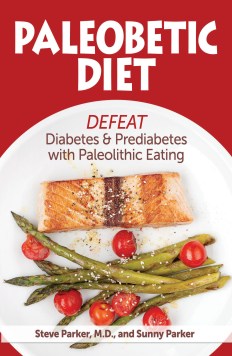
Steve Parker, M.D.
Click pic to purchase book at Amazon.com. E-book versions available at Smashwords.com.
Posted onFebruary 21, 2020|Comments Off on No: Should Your DNA or Gut Microbiome Determine What You Eat or Your Nutritional Supplements?
I take this to help control blood pressure
From Scott Gavura at Science Based Medicine:
Our ability to collect DNA data is progressing quickly, and in time we may have more evidence to inform decisions about nutrition and possibly even supplements. At this time, however, there is a big gap between what we know, and what, if anything, to do with that information. You don’t need a DNA test or a stool sample to know that eating a varied, healthy diet, minimizing highly processed foods, eliminating trans fats, and keeping alcohol consumption moderate are reasonable approaches to designing your diet. It’s worth noting again, as we have blogged about many times before, that the evidence for taking supplementary vitamins, in general, is neutral to negative. In the absence of a specific medical need (e.g., pregnancy) there a few circumstances where routine supplementation is necessary or warranted. There is no robust evidence to date to show that personalized, “DNA-based” or “microbiome-based” nutritional recommendations give useful, actionable nutrition advice that actually improve health outcomes.
Posted onFebruary 20, 2020|Comments Off on Ketogenic Diet May Help Knee Osteoarthritis
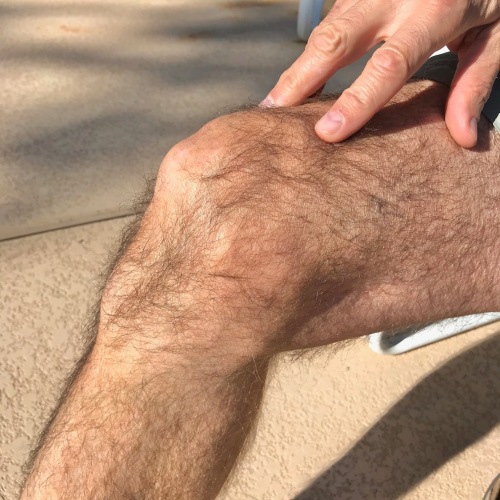
Photo credit: Steven Paul Parker II
Dr Ken Berry published at YouTube a 4-minute video on a diet he believes will lessen the effects and incidence of knee osteoarthritis. For men, the lifetime risk of developing knee osteoarthritis is 40%. For women, 47%. The effects of arthritis are pain and impaired functional status. The title of the video even mentions reversing arthritis. I suppose improved pain and functional ability would be at least a partial reversal.
In short, Dr Berry suggests a diet free of all sugar (no mention of fruits), all grains, and all vegetable oils.
The twenty-one study participants were folks with knee osteoarthritis between 65 and 75-years-old. Nine men, 12 women. Average baseline weight was 194 lb (88 kg). The 21 participants were randomly assigned to one of three diets they would follow for 12 weeks:
L0w-carb diet group (8 participants). Restricted daily total carbohydrates (not net carbs) to 20 grams or less for the first three weeks. Then could go up to 40 grams “if required” (not explained). No fat or protein or calorie restriction. Limited amount of vegetables were OK (e.g., 2 cups/day of leafy greens, 1 cup of non-starchy vegetables). Carb-free sweeteners (stevia, sucralose) were allowed but maltodextrin-containing sweeteners were limited (stevia, sucralose, aspartame, saccharin). This group had no drop-outs.
Low-fat diet group (6 participants). 800–1,200 calories/day. It looks like the men were put on reduced calorie diets—500 cals under estimated baseline or maintenance calories. Women’s calories were reduced by 250-300/day from baseline. Calories were reduced mainly through reduction of fats. They ate veggies, fruit, low-fat foods, whole grains, low-fat dairy, and limited cholesterol and saturated fats. Macronutrient distribution: 60% of calories from carb, 20% from protein, 20% from fat. (Yet Table 1 indicates 50–67 g of fat/day. Twenty percent of 1,200 of calories is only 27 g of fat. So misprint in table 1?) This group had one drop-out.
Control group (N=7), eating as per their usual routine although given documents on portion control. Two drop-outs.
The authors indicate that groups 1 and 2 ate about 100 g of protein/day.
All participants filled out surveys documenting knee pain levels and were put through periodic supervised tests like a timed walk and repeatedly arising from a chair with their hands placed on opposite shoulders.
Results
The low-carb diet group is the only one that demonstrated decreased pain intensity and unpleasantness in some functional pain tasks. In other words, improved quality of life.
The low-carb group lost an average of 20 lb (9 kg) compared to the low-fat weight loss of 14 lb (6.5 kg), not a statistically significant difference. Even the control group lost 4 lb (1.8 kg).
A blood test—thiobarbituric acid reactive substances or TBARS—indicated reduced oxidative stress in the low-carb dieters.
The authors hypothesize that the improvement in arthritis pain in the low-carb group was related to the reduction in oxidative stress, which reduces pain and inflammation.
Will these old knees make it up Humprheys Peak one more time?
Implications
With so few participants, you know this was a pilot study that ultimately may not be entirely valid or replicable. But it’s promising. Next, we need a study with 150 participants.
Dr Berry is getting a bit ahead the the science here. He gives a powerful personal testimony in his video. And perhaps he’s seen many of his patients improve their arthritis with a very low-carb diet.
The carb consumption of the low-carb dieters would be ketogenic in most folks. Yet I didn’t even see “ketogenic” in their report. Perhaps because they didn’t measure ketone levels?
The authors of the report mention other studies finding improvement of osteoarthritis pain and inflammation by the Mediterranean diet. The Mediterranean diet even helps rheumatoid arthritis.
How about combining a very low-carb and Mediterranean diet? As in my Ketogenic Mediterranean Diet. If you have the funds to run the study, I can probably get you a nice discount on books. Have your people contact my people.
Given the safety of very low-carb diets, I can’t argue against a 12-week trial if you have bothersome knee osteoarthritis. Get your doctor’s clearance first.
Steve Parker, M.D.
References:
Strath LJ, et al. The effect of low-carbohydrate and low-fat diets in individuals with knee osteoarthritis. Pain Medicine, 21(1), 2020, pp 150-160.
Oliviero, F, et al. How the Mediterranean diet and some of its components modulate inflammatory pathways in arthritis. Swiss Med Wkly, 2015; 145; w14190.
Veronese, N, et al. Adherence to the Mediterranean diet is associated with better quality of life: Data from the Osteoarthritis Initiative. American Journal of Clinical Nutrition 2016: 104(5): 1403-9.
McKellar, G. et al. A pilot study of a Mediterranean-like diet intervention in female patients with rheumatoid arthritis living in areas of social deprivation in Glasgow. Ann Rheum Dis 2007;66(9):1239-43.
Slöldstam, LB, et al. Weight reduction is not a major reason for improvement in rheumatoid arthritis from lacto-vegetarian, vegan or Mediterranean diets. Nutr J 2005;4(15).
The problem with case reports is that an individual’s response to intervention may simply reflect placebo effect or spontaneous improvement of the underlying condition, rather than a true response to the treatment applied.
Crohn’s disease is one of two “inflammatory bowel diseases,” the other being ulcerative colitis. Both of these are felt to be autoimmune, meaning the body is attacking its own tissues as if they were foreign invaders, like germs. Crohn’s disease causes abdominal pain, diarrhea (sometimes bloody), bloating, nausea, malnutrition, and other effects. Ulcerative colitis is similar in presentation. I wrote many years ago about a paleo diet improving at least one case of ulcerative colitis.
Moving along….
Hungarian physicians (?) reported a case of a 16-year-old who was diagnosed with Crohn’s disease at age 14 and wasn’t doing well at all despite standard medical therapy. At one point, intestinal surgery was recommended but he (or his parents) declined.
On the paleolithic ketogenic diet, the patient went into remission within months, off medications, and has been in remission for 15 months. The patient’s BMI rose from 17.7 to 19.5.
So, what was this diet?
“animal fat, meat, offal and eggs with an approximate 2:1 fat:protein ratio” [is that ratio grams or calories? Not stated]
no grains, milk, dairy, refined sugars, vegetable oils, oilseeds (sic), nightshades, and artificial sweeteners
honey OK in small amounts
poultry OK but discouraged
at one point the patient added small amounts of vegetables and fruits but the authors favor “no plants at all”
Why did this carnivore diet seem to work? The authors propose it improves the pathological intestinal permeability seen in Crohn’s disease.
This is a radical diet compared to the Standard American Diet featuring dairy, grains, industrial seed oils, and ultra-processed foods. As usual, check with your personal physician before making any radical diet change. Odds are, however, your doctor doesn’t know much about this diet and won’t approve.