Which T2 Diabetes Drugs Are Popular in the U.S.?

Better living through chemistry

You may be able to avoid some of these through diet and exercise

Diabetes Care recently published results of a survey covering 1997 to 2012. The focus was on T2 diabetics age 35 or older:

“Between 1997 and 2012 biguanide [metformin] use increased, from 23% … to 53% … of treatment visits. Glitazone use grew from 6% in 1997 to 41% of all visits in 2005, but declined to 16% by 2012. Since 2005, DPP-4 inhibitor [e.g., Januvia] use increased steadily, representing 21% of treatment visits by 2012. GLP-1 agonists [e.g., Byetta] accounted for 4% of treatment visits in 2012. Visits where two or more drug compounds were used increased nearly 40% from 1997 to 2012. Between 2008 and 2012, drug expenditures increased 61%, driven primarily by use of insulin glargine [e.g., Lantus] and DPP-4 inhibitors.”

We have 12 classes of drugs for the treatment of T2 diabetes now. It’s not entirely clear which ones are the best. Since the long-term side effects of many drugs are unknown, if I had T2 diabetes I’d try to limit my need for drugs by restricting my carbohydrate consumption, maintaining a reasonable weigh, and exercising. And, no, they don’t always work.

Steve Parker, M.D.

Another Ancestral Community Bites the Dust

This may be old news to you, but I’d not heard of the Oji-Cree tribe before. They live south of Hudson Bay.

Here live the Oji-Cree, a people, numbering about thirty thousand, who inhabit a cold and desolate land roughly the size of Germany. For much of the twentieth century, the Oji-Cree lived at a technological level that can be described as relatively simple. As nomads, they lived in tents during the summer, and in cabins during the winter. Snowshoes, dog sleds, and canoes were the main modes of transportation, used to track and kill fish, rabbits, and moose for food. A doctor who worked with the Oji-Cree in the nineteen-forties has noted the absence of mental breakdowns or substance abuse within the population, observing that “the people lived a rugged, rigorous life with plenty of exercise.” The Oji-Cree invariably impressed foreigners with their vigor and strength. Another visitor, in the nineteen-fifties, wrote of their “ingenuity, courage, and self-sacrifice,” noting that, in the North, “only those prepared to face hardship and make sacrifices could survive.”

 ***

But, in the main, the Oji-Cree story is not a happy one. Since the arrival of new technologies [starting in the 1960s], the population has suffered a massive increase in morbid obesity, heart disease, and Type 2 diabetes. Social problems are rampant: idleness, alcoholism, drug addiction, and suicide have reached some of the highest levels on earth. Diabetes, in particular, has become so common (affecting forty per cent of the population) that researchers think that many children, after exposure in the womb, are born with an increased predisposition to the disease. Childhood obesity is widespread, and ten-year-olds sometimes appear middle-aged. Recently, the Chief of a small Oji-Cree community estimated that half of his adult population was addicted to OxyContin or other painkillers.

Read the rest at The New Yorker.

QOTD: Rippetoe on the Best Single Exercise

The below-parallel squat is the best exercise in the entire catalog for whole-body strength, power, balance, coordination, bone density, joint integrity, and mental toughness — good things to develop if you don’t have them.

—Mark Rippetoe

Recipe: Shrimp Salad and Fresh Fruit

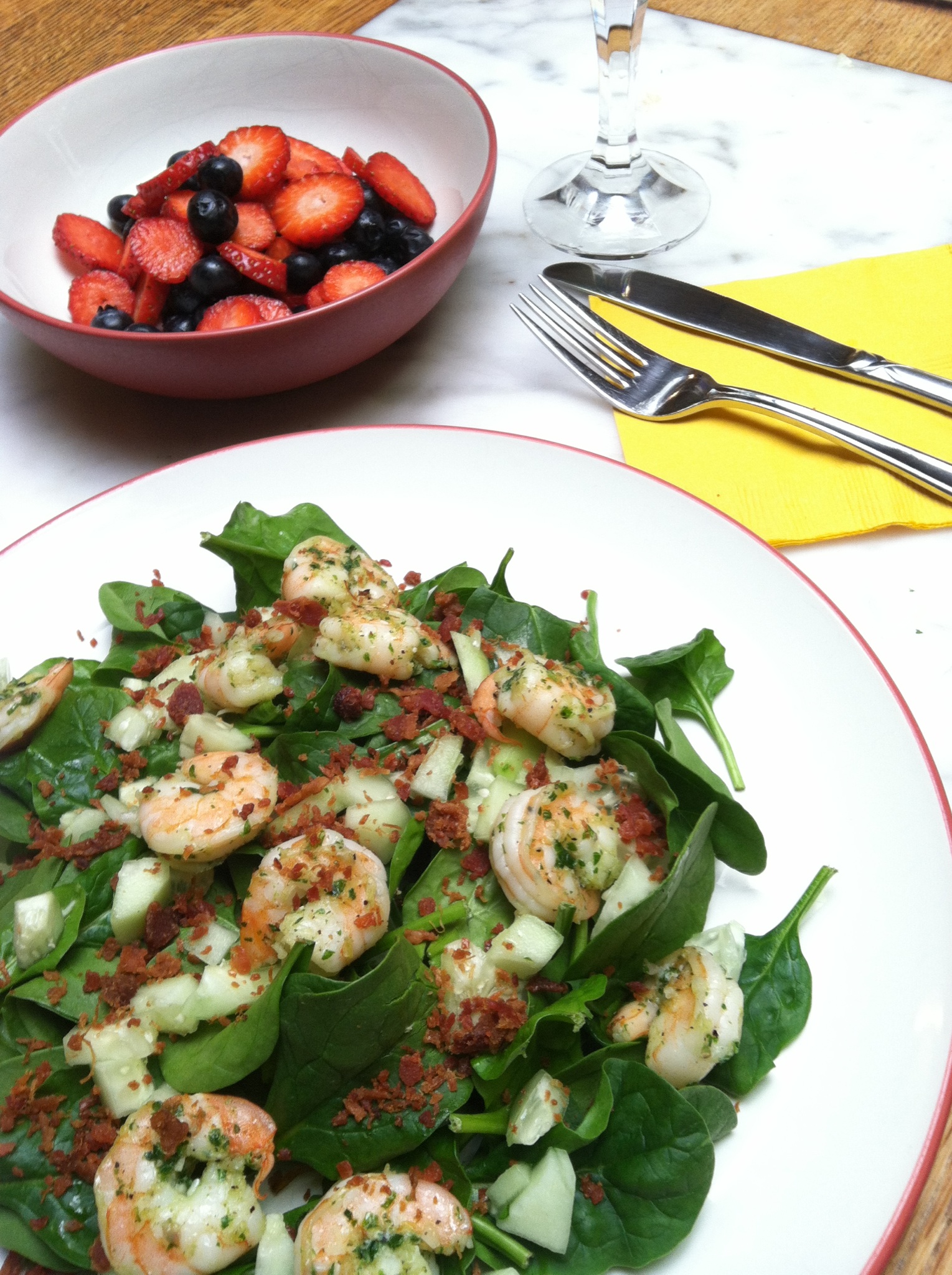
Ignore the bacon bits you may see; they're superfluous

Ignore the bacon bits you may see; they’re superfluous

This was inspired by a shrimp/spinach salad I like at Applebee’s. But here I eschew the sweetness of their sauce and delete the bacon bits.

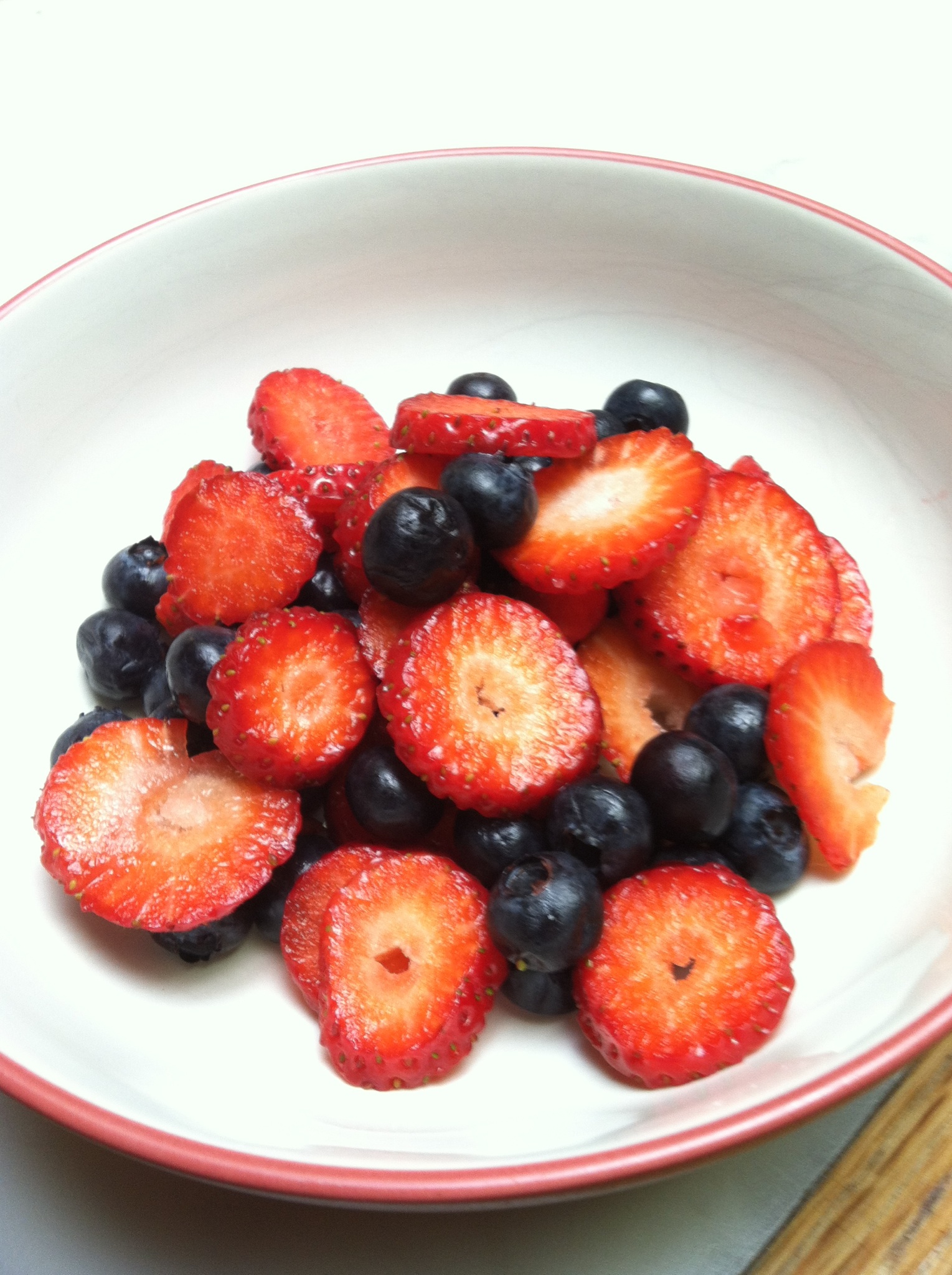
If these aren't in season, substitute cantaloupe, honeydew melon, or 14 sweet raw cherries

If these aren’t in season, substitute cantaloupe, honeydew melon, or 14 sweet raw cherries

Ingredients:

5 oz (140 g) raw shrimp tails, shell removed

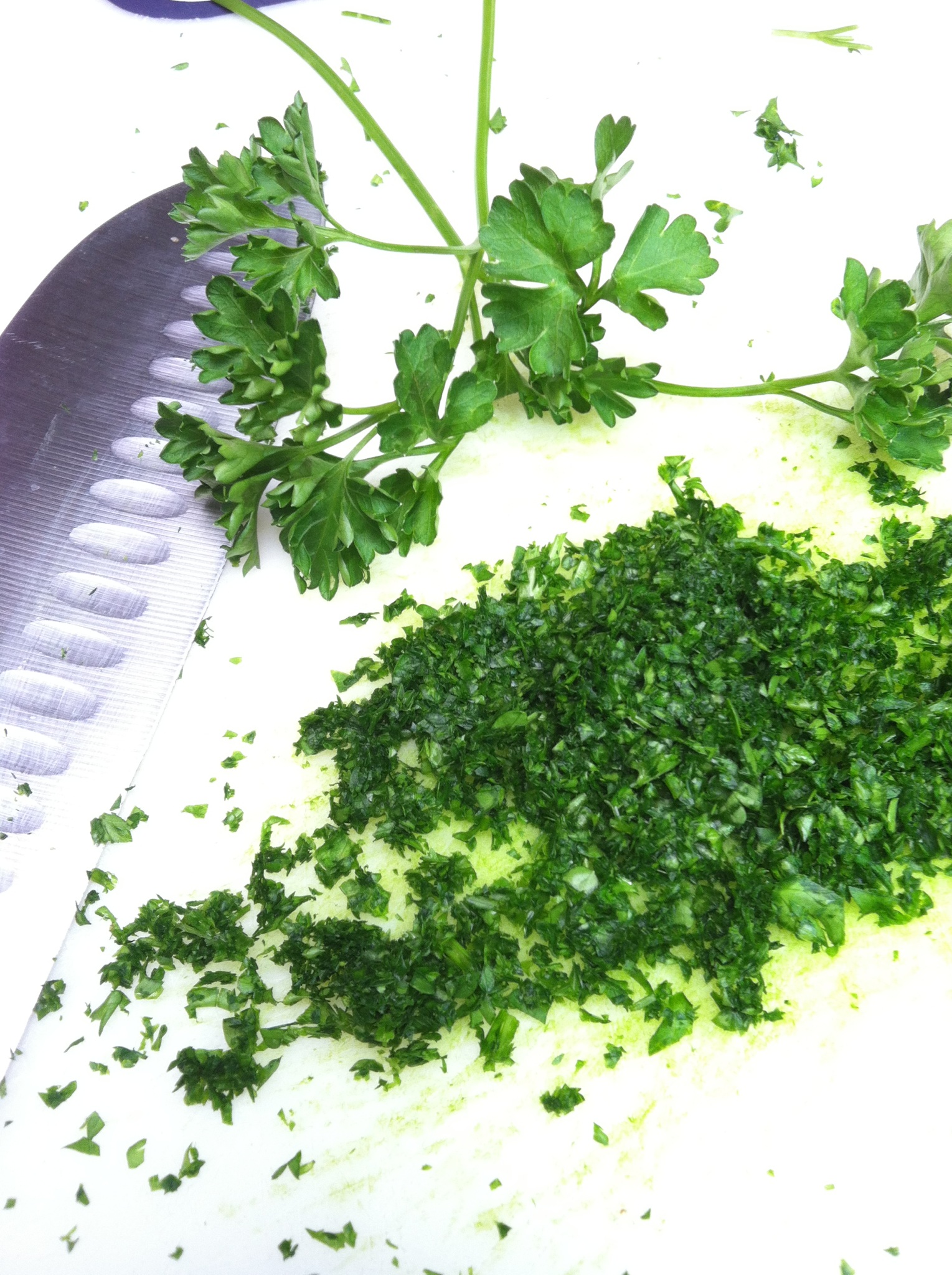
1 tbsp (15 ml) parsley, finely chopped (we used the curly variety)

1 garlic clove, finely chopped

1/4 tsp (1.2 ml) pepper

1/4 tsp (1.2 ml) salt

1 tbsp (15 ml) extra virgin olive oil

1/2 tsp (2.5 ml) extra virgin olive oil

2 0z (57 g) baby spinach (or romaine lettuce or mix of both)

2 oz (57 g) cucumber, peeled and diced

2 tbsp AMD vinaigrette (or commercial dressing with 2 or fewer digestible carbohydrate grams per 2 tbsp or 30 ml)

2 and 3/8 oz or 1/2 cup (67 g or 120 ml) fresh strawberries, sliced (3–4 medium berries)

2 and 3/4 oz or 1/2 cup (78 g or 120 ml) blueberries

Finely chopped parsley

Finely chopped parsley

Instructions:

Make the vinaigrette first so the components have some time to synergize.

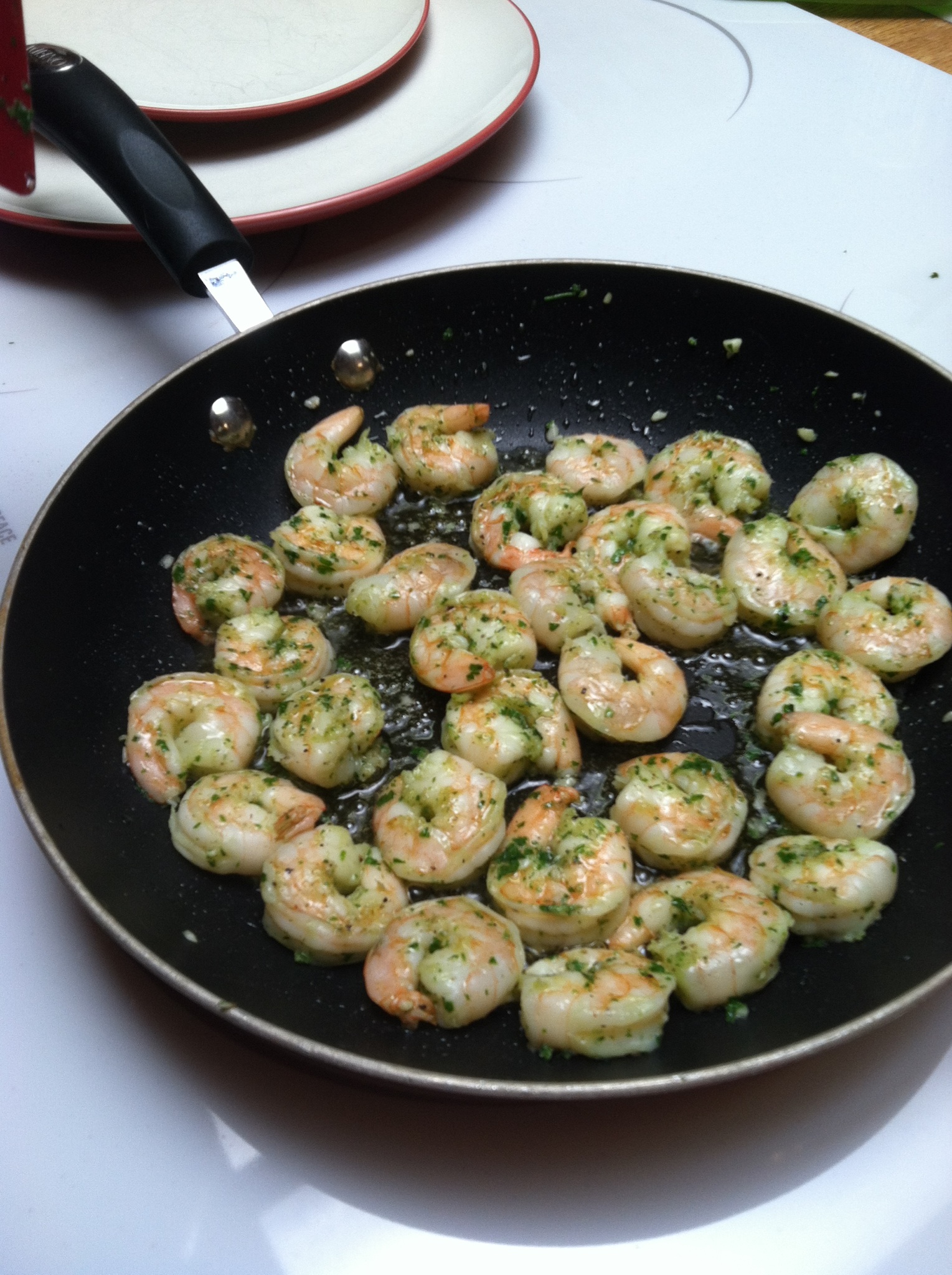
Next, you’ll sauté the shrimp. In a bowl, combine the raw shrimp, parsley, 1/2 tsp (2.5 ml) olive oil, garlic, salt, and pepper, then mix thoroughly to evenly coat the shrimp. Alternatively, you could do that mixing in a plastic baggie (bisphenol-A!). Add 1 tbsp (15 ml) olive oil to a frying pan and cook the shrimp over medium heat until opaque, stirring continuously. When done, it will be patchy  pink and white. It only takes about three minutes.

On a large plate, lay out a bed of spinach or lettuce, over which you’ll scatter the cucumber and cooked shrimp, then the vinaigrette.

Enjoy the fruit for desert.

I don't recall mercury contamination being linked to shrimp

I don’t recall mercury contamination being linked to shrimp. BTW, this is more shrimp than in the recipe.

 Servings: 1

Nutritional Analysis:

63% fat

14% carbohydrate

23% protein

590 calories

23 g carbohydrate

6 g fiber

17 g digestible carbohydrate

1,349 mg sodium

904 mg potassium

Prominent features: Rich in protein, vitamin B12, A, C, E, copper, iron, manganese, and selenium.

Master multi-tasker: wife, chef, photographer

Master multi-tasker: wife, chef, photographer

Recipe: AMD Vinaigrette

Try this on salads, fresh vegetables, or as a marinade for chicken, fish, or beef. If using as a marinade, keep the entree/marinade combo in the refrigerator for 4–24 hours. Seasoned vinaigrettes taste even better if you let them sit for several hours after preparation.

I’ll warn you, this is pretty spicy and tangy. If you prefer less flavor (is that the right word?), either use less of it, or reduce these particular ingredients by half: lemon juice, salt, pepper, paprika, and mustard.

This recipe was in my first book, The Advanced Mediterranean Diet from 2007; hence, “AMD vinaigrette.”

Ingredients:

2 garlic cloves (6 g), minced

juice from 1 lemon (40–50 ml)

2/3 cup (160 ml) extra virgin oil olive

4 tbsp (16 g or 60 ml) fresh parsley, finely chopped

1 tsp (5 ml) salt

1 tsp (5 ml) yellow mustard

1 tsp (5 ml) paprika

4 tbsp (60 ml) red wine or apple cider vinegar

Preparation:

In a bowl, combine all ingredients and whisk together. Alternatively, you can put all ingredients in a jar with a lid and shake vigorously—my preferred method. Let sit at room temperature for an hour, for flavors to meld. Then refrigerate. It should “keep” for at least 5 days in refrigerator. The olive oil will solidify, so take it out and set at room temperature for an hour before using. Shake before using.

Number of Servings: 6 servings of 2 tbsp (30 ml). (In Australia and NZ, you guys say “serves” instead of servings, right mate?)

Nutritional Analysis:

98 % fat

2 % carbohydrate

0 % protein

220calories

1.4 g carbohydrate

0.3 g fiber

1 g digestible carbohydrate

400 mg sodium

41 mg potassium

(You may see a slightly different nutritional analysis—2 g of digestible carb versus 1 g here—at one of my other blogs. That’s the difference between Fitday.com (here) and NutritionData, and rounding.)

Recipe: Slow-Cooker Chicken, Roasted Vegetables, and Tangerine

low-carb diet, diabetic diet, Paleobetic diet

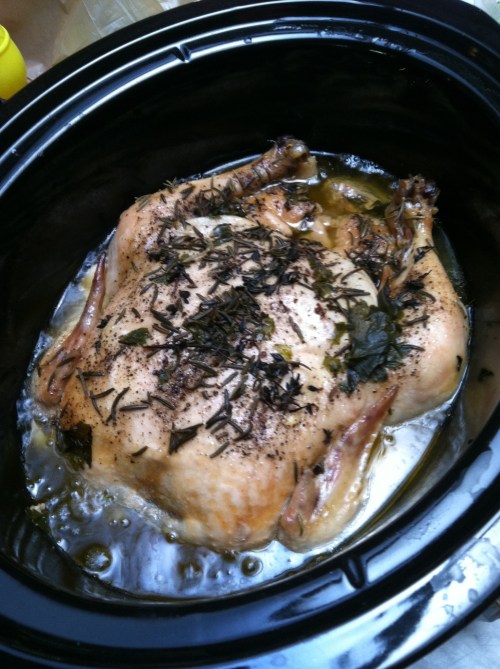
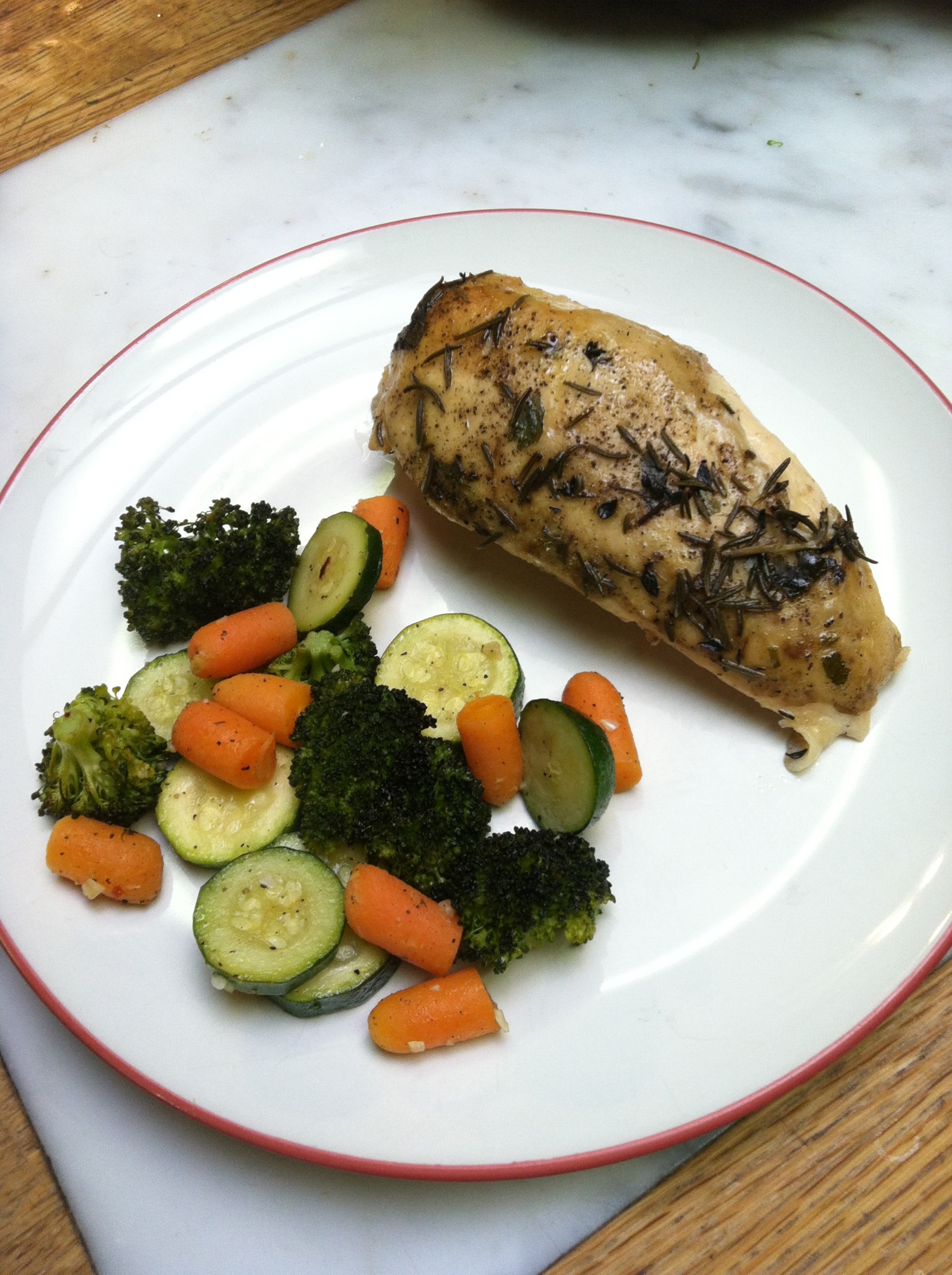
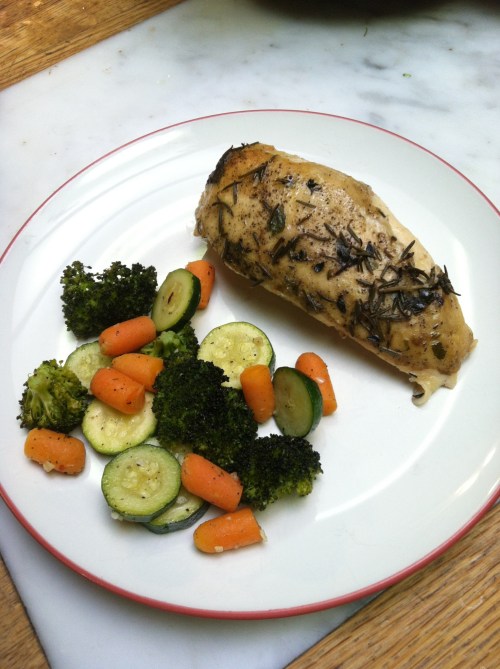
Slow-cooker chicken and roasted veggies

Guess the percentage of light versus dark meat in a chicken.

It’s 50:50. Along with the breasts, the wings are considered light or white meat.

Guess how much meat and skin you have left after you cook and debone a whole chicken. No peaking.

About half the raw weight you started out with. Not counting the giblets you feed to the coyotes.

The nutritional analysis of this meal (see below) assumes that you eat the chicken skin and the onion on the bottom of the slow-cooker (sometimes called a Crock♦Pot although that’s a registered trademark). Much of the chicken fat will stay in the bottom of the slow-cooker after you remove the chicken and onion. Now you’ve got chicken stock to use in other recipes.
diabetic diet, low-carb, Paleobetic diet

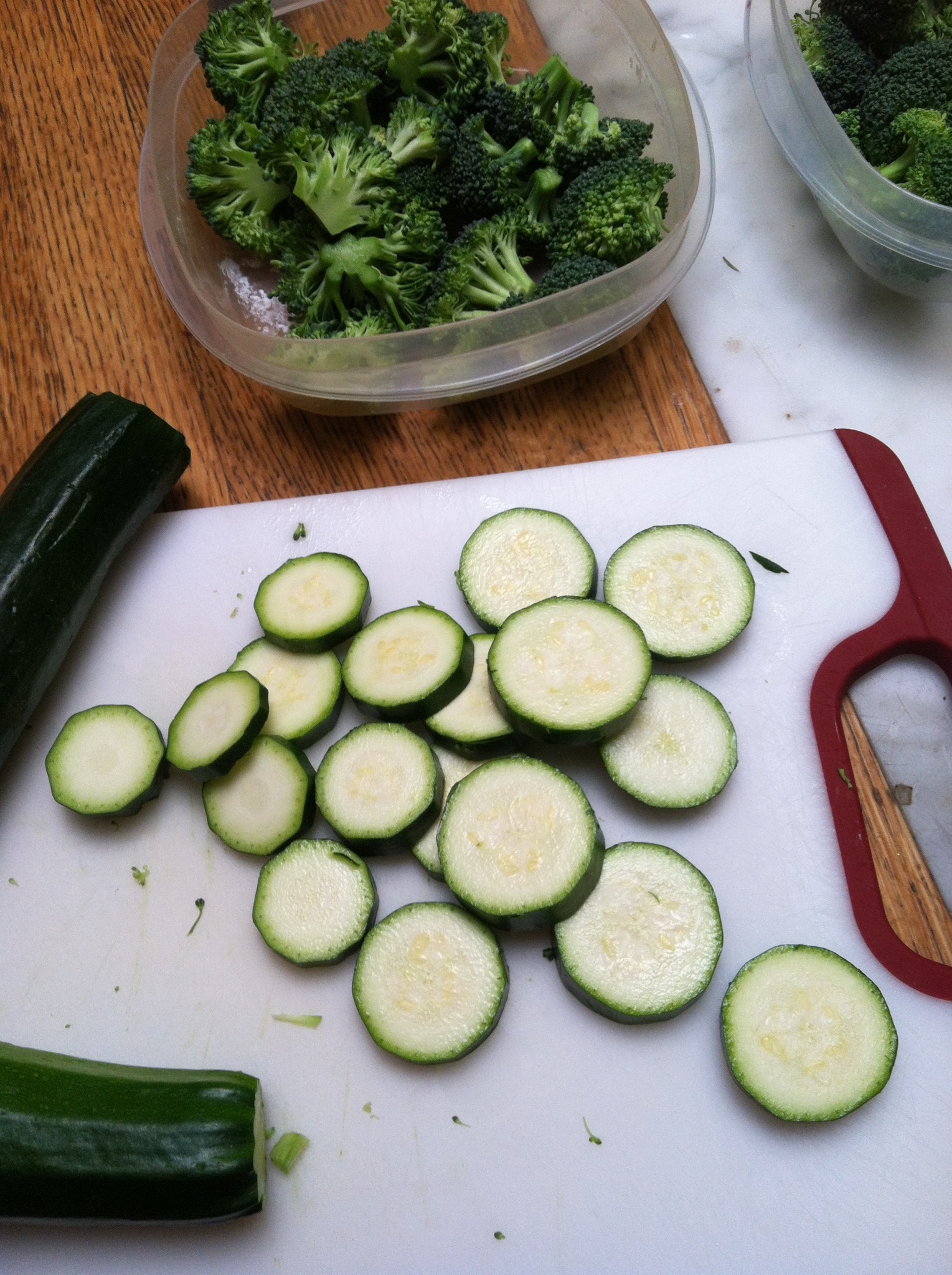
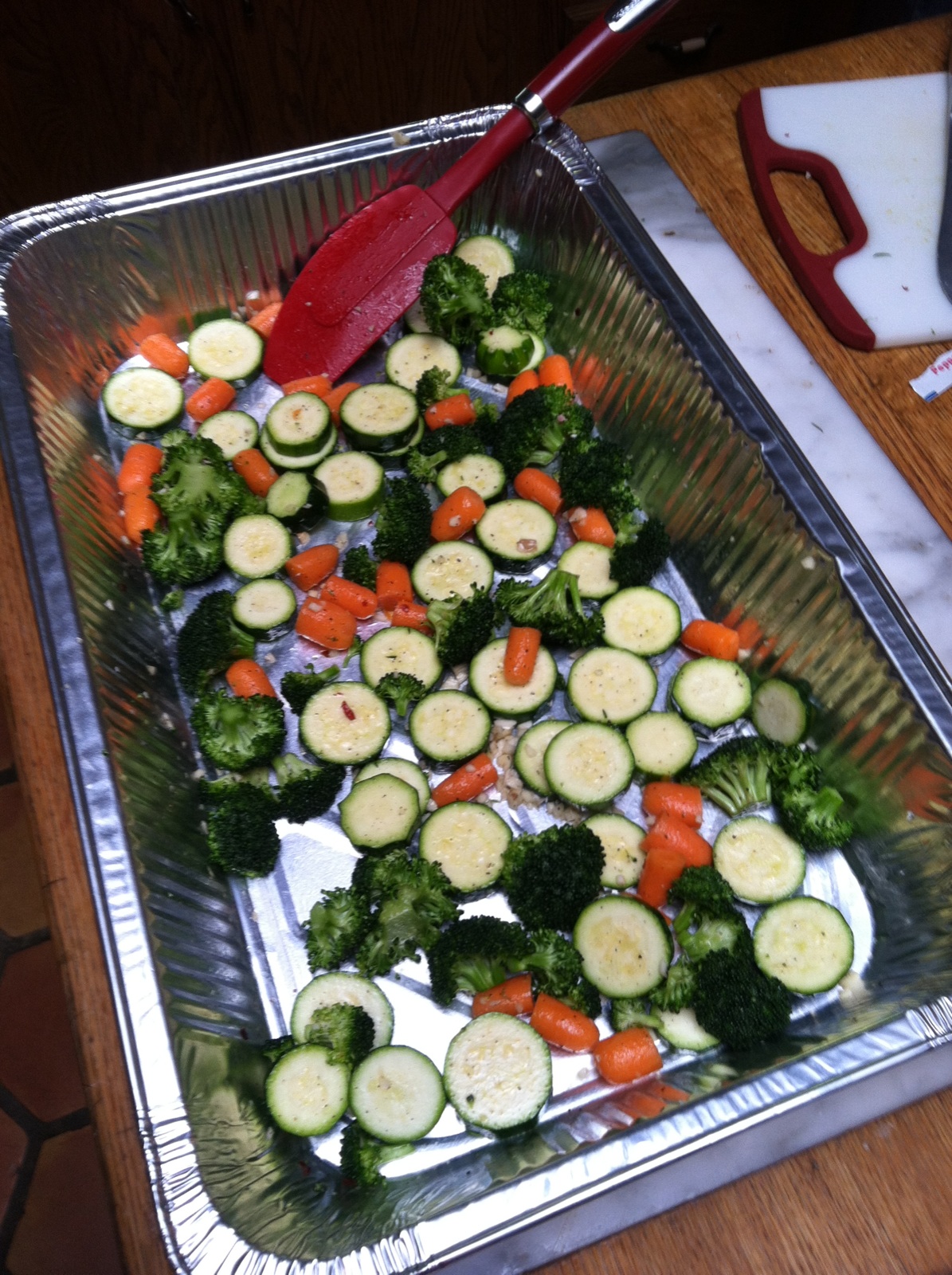
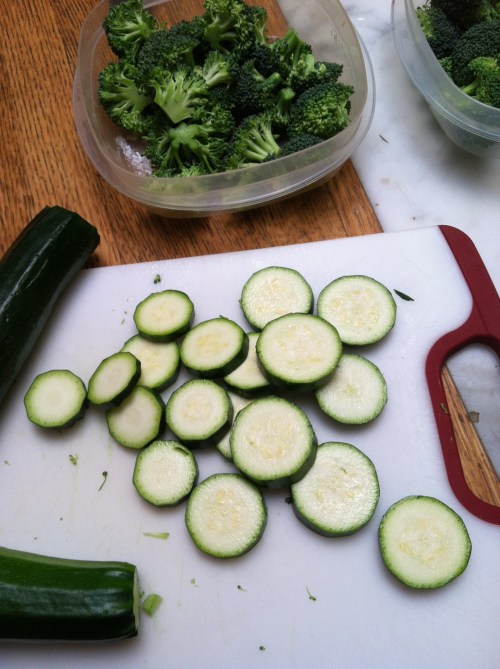
Meal prep: zucchini and broccoli

Ingredients:

1 whole young chicken, about 5 lb (2.3 kg) raw gross weight

1 medium onion, 6.5 oz (185 g), peeled and cut into 1-cm thick discs or circles

3 tbsp (45 ml) olive oil

5 garlic cloves

5 sprigs fresh thyme leaves, about 1/2 tsp (2.5 ml) (or a third of that if using dried thyme—I’ve read that dried thyme is better to add early in the cooking process whereas fresh may be best if added toward the end)

3/4 tsp (3.7 ml) fresh ground black pepper (or to taste)

3/4 tsp (3.7 ml) salt (or to taste)

1/2 tbsp (7.4 ml) fresh or dried rosemary

2 sprigs fresh parsley, leaves only, chopped

8 oz (240 ml) canned chicken broth

1.5 cups (360 ml) broccoli florets (aka flowerets)

3 zucchini squashes (6.5 oz or 185 g each), cut into 1/2-inch or 1-cm discs

5.5 oz (155 g) fresh carrots, peeled and cut into bite-sized pieces

2 tsp (10 ml) lemon juice

1/4 tsp (1.2 ml) lemon zest (optional)

1/4 tsp (1.2 ml) pepper flakes (do you have a left-over packet from your old pizza-eating days?)

5 medium (2 and 3/8 inch or 6-cm diameter) tangerines
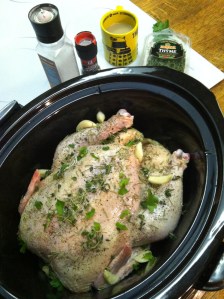
low-carb, diabetic diet, Paleobetic diet

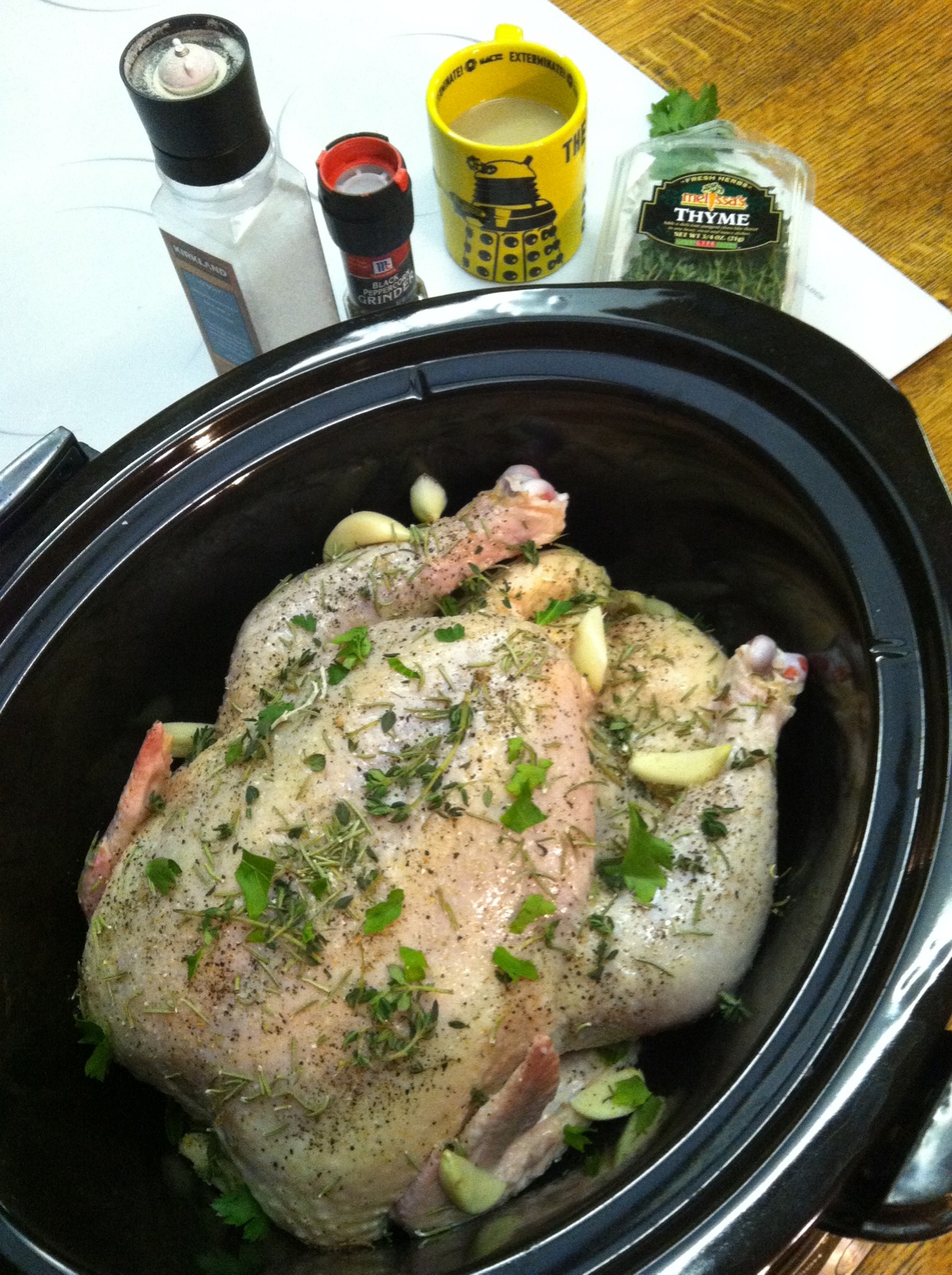
Slow-cooker loaded and just about ready to fire up

Instructions:

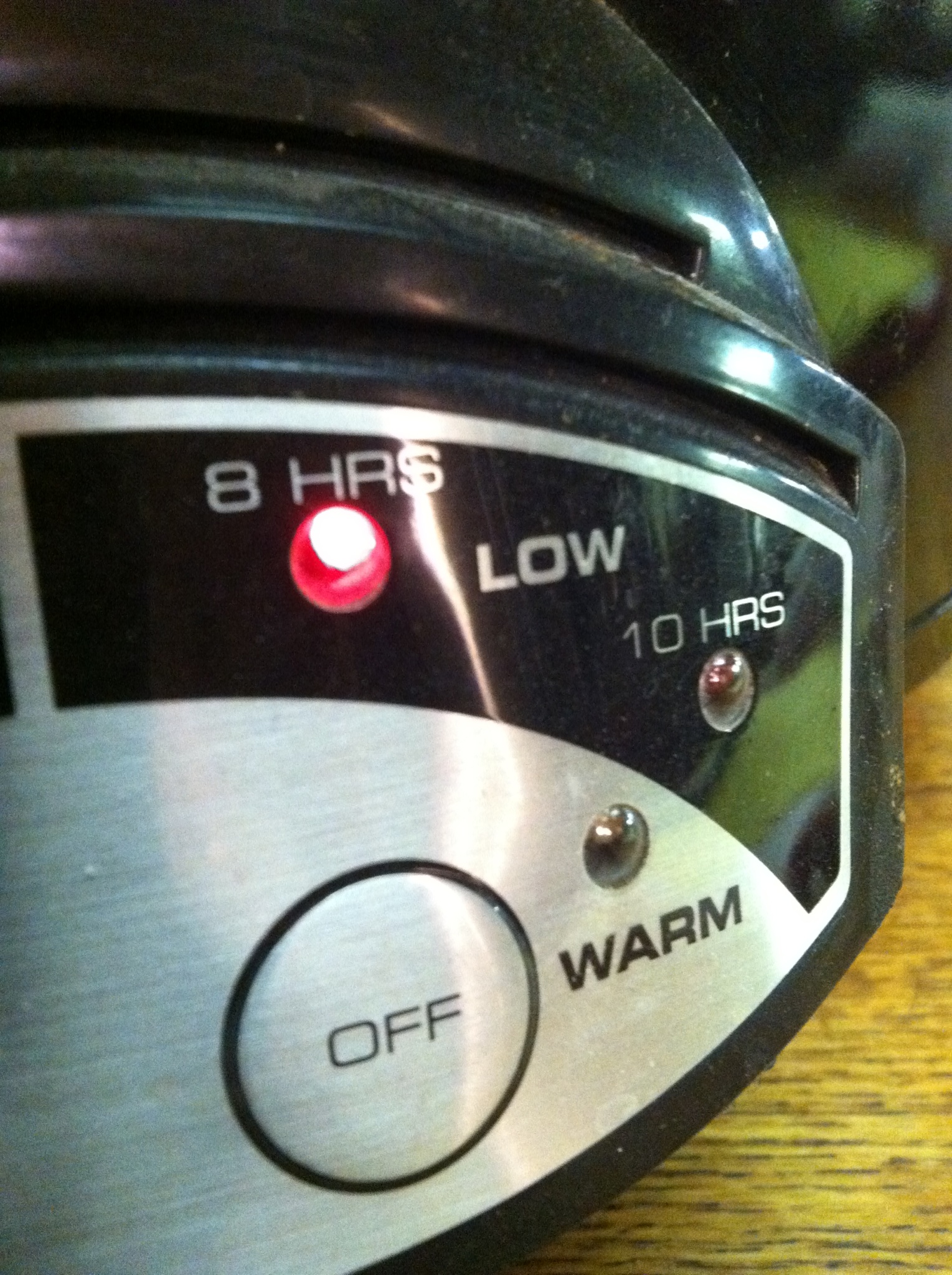
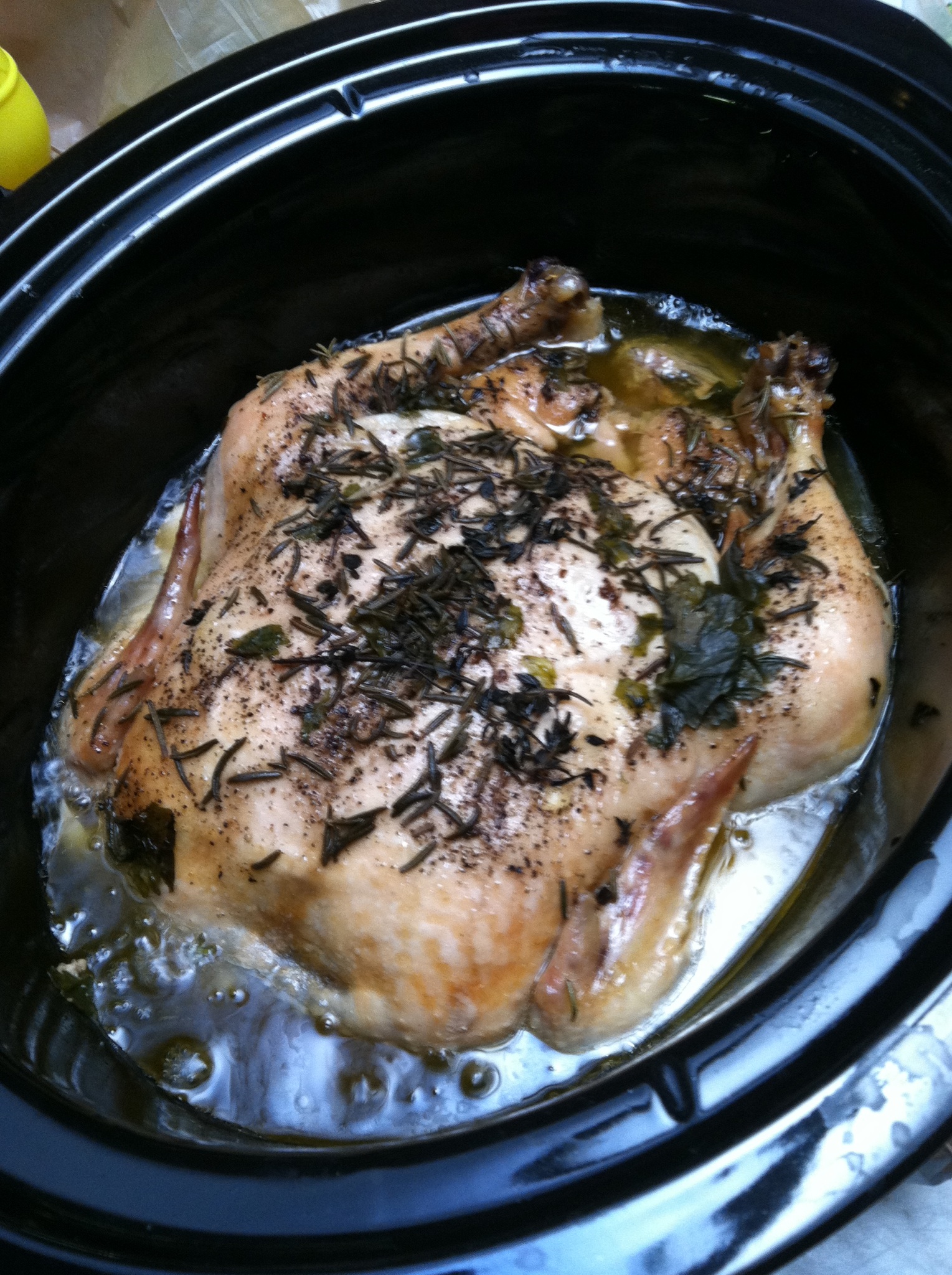
First, the slow-cooker chicken. This cooks for eight hours, so you’ll want to start in the morning. Place the cut onion in the bottom of the cooker. Do what you want with the chicken giblets (neck, liver, heart, gizzard), even eat them after cooking. The coyotes don’t care if cooked or not. Rub 1 tbsp (15 ml) of the olive oil onto the top of the chicken, then place in the cooker on the bed of onion. Cut three of the garlic cloves into thirds and drop into the cooker. Add the chicken broth to the cooker. Sprinkle the thyme leaves on top of the chicken, along with 1/4 tsp (1.2 ml) of black pepper and 1/4 tsp (1.2 ml) salt. Sprinkle the rosemary and parsley into the cooker. Close the lid and cook on low heat for eight hours.
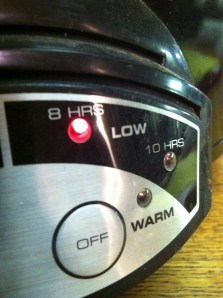
At the base of the slow-cooker

At the base of the slow-cooker

Now the roasted vegetables. Preheat the oven to 400 ºF or 200 ºC. In a large baking dish or sheet, place the broccoli, zucchini, carrots, 2 minced garlic cloves, the lemon juice and zest, the pepper flakes, 1/2  tsp salt (2.5 ml) , 1/2 tsp pepper (2.5 ml), and 2 tbsp olive oil (30 ml). Mix thoroughly. You could do the mixing in a bowl if you wish, then transfer to a cooking sheet. You want these cooking as a thin layer rather than bunched on top of each other. Place in oven and cook for 15–20 minutes, depending on how crisp you like your veggies. The carrots will always end up firmer than the others.

Enjoy a tangerine for desert.
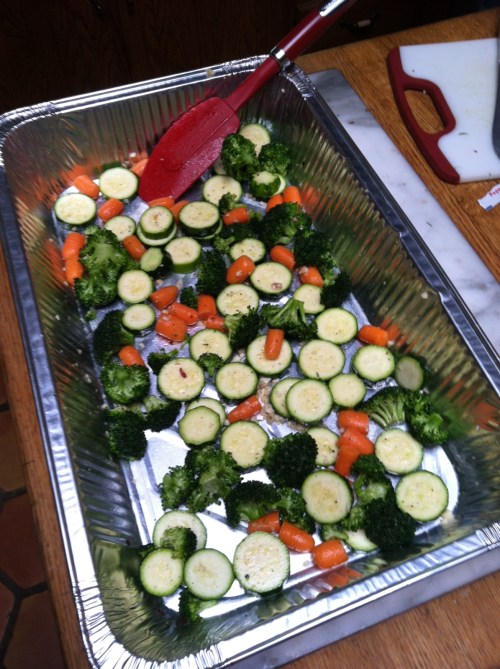
low-carb, diabetic diet, Paleobetic diet

Next step is the oven

low-carb, diabetic diet, Paleobetic diet

Eight hours later…

Servings: 5 (a serving is 7 oz of chicken (with skin), 1 cup of veggies, and 1 tangerine)

Nutritional Analysis per Serving: 

49% fat

13% carb

38% protein

692 calories

24 g carbohydrate

5 g fiber

19 g digestible carbs

1,409 mg sodium

1,132 mg potassium

Prominent features: Rich in protein, vitamin A, B6, C, iron, niacin, pantothenic acid, phosphorus, selenium, and zinc.
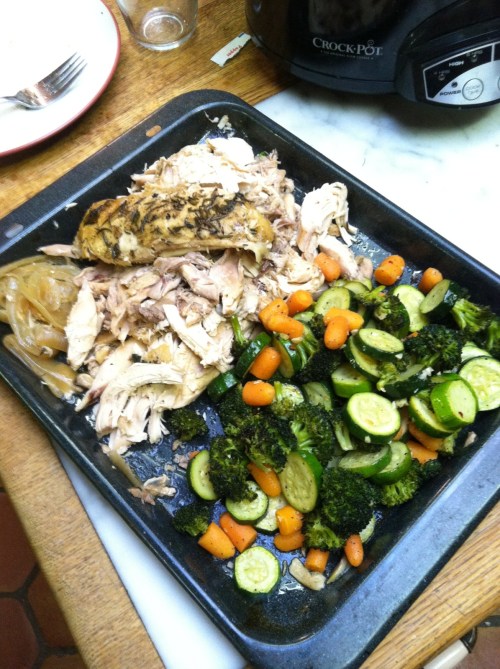
diabetic diet, Paleobetic diet, low-carb

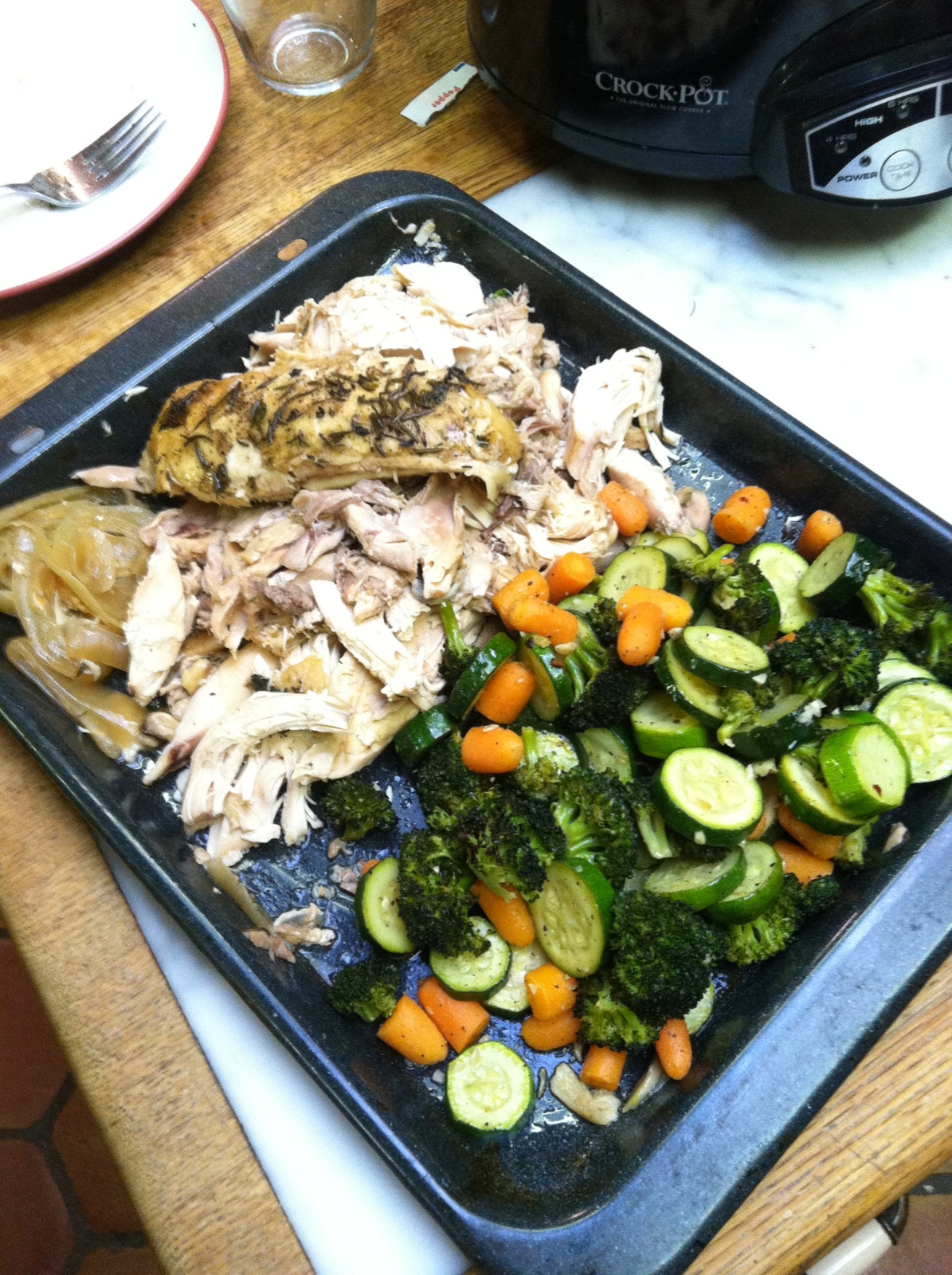
Here’s all of it except the tangerines. To do my nutritional analysis, I had to debone the bird and weigh the meat and skin.

Recipe: Sunny’s Super Salad

diabetic diet, Paleobetic diet, diabetes,

You won’t be able to eat this in one sitting if you’re small or sedentary

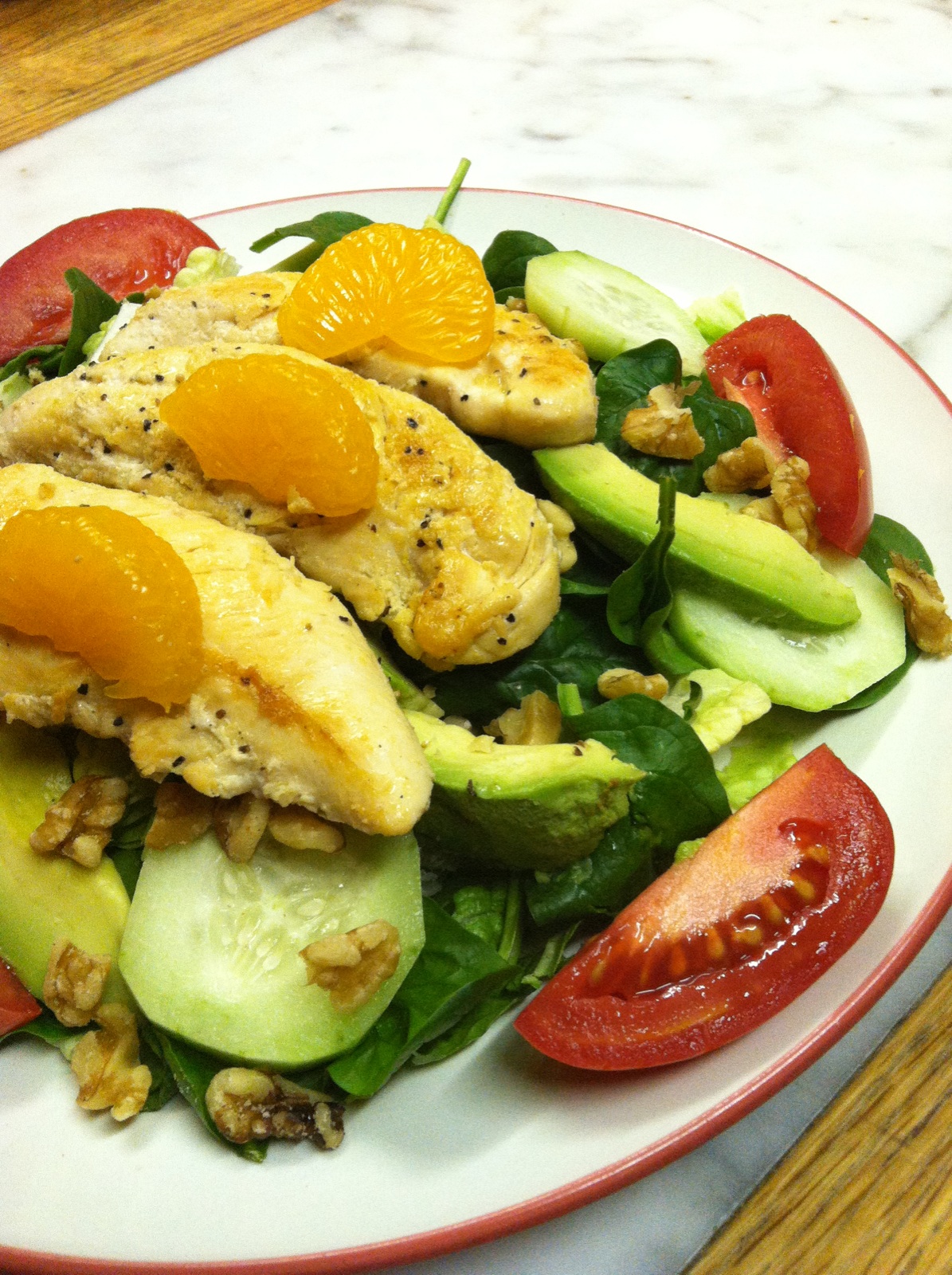
This huge salad is a full meal. It fills a 10-inch plate (25 cm). Since it contains five vegetables, you should feel virtuous eating it. Who says the paleo diet’s all about meat?

Ingredients:

8 oz (230 g) raw chicken breast tenderloin (it cooks down to 5 oz)

1/4 cup (60 ml) canned mandarin orange wedges (6-7 wedges) (if you can only find these packed in syrup or light syrup, add 3 g to the digestible carb count below)

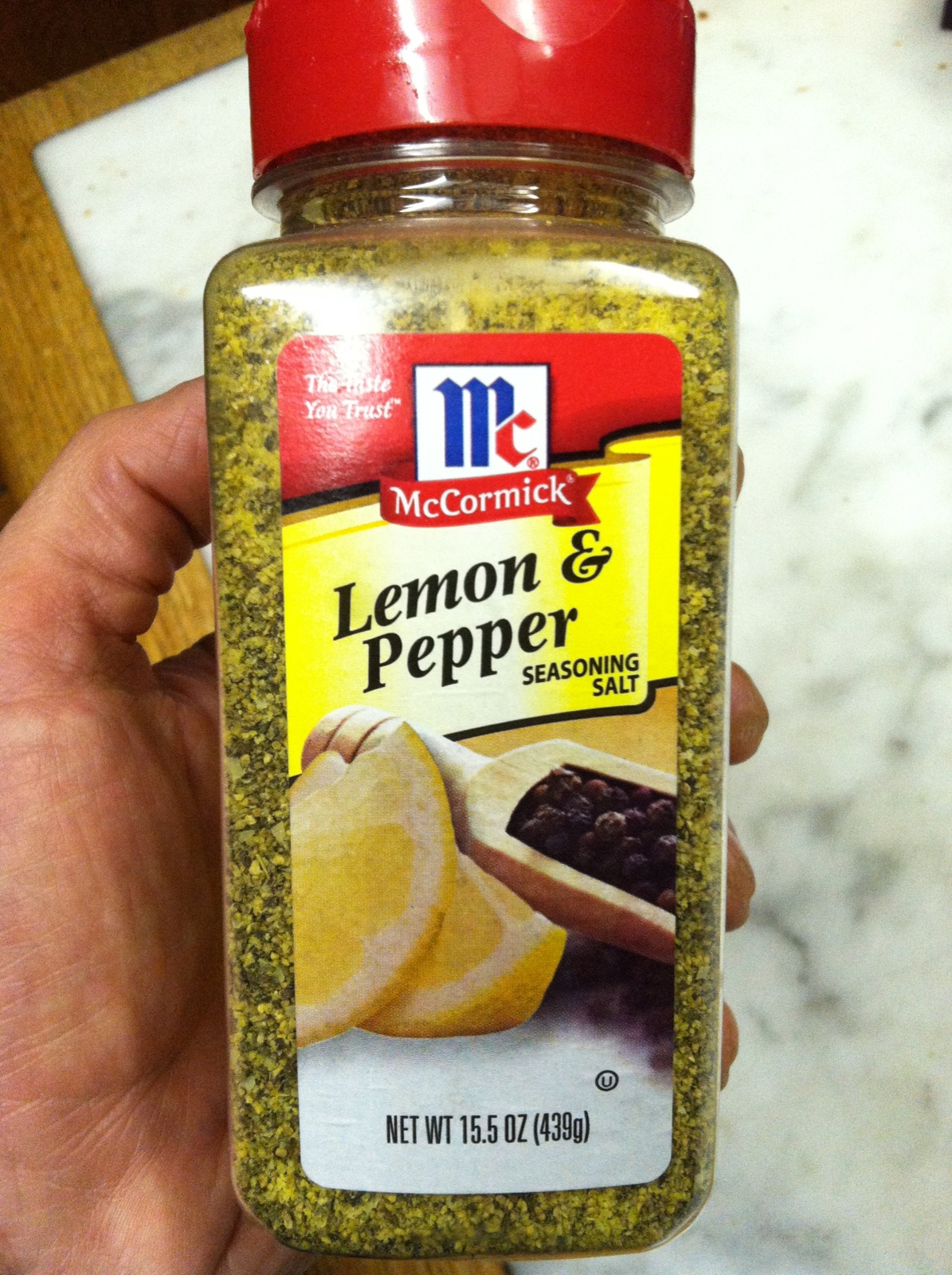
1/4 tsp (1.2 ml) lemon pepper seasoning

4 oz (110 g) hearts of romaine lettuce

1 oz (30 g) baby spinach

2.5 oz (1/4 cucumber or 70 g) cucumber, peeled and sliced into discs

2 oz (60 g) California avocado, peeled and seeded, cut into wedges (1/2 of standard-sized avocado)

3 oz (85 g) fresh tomato (a typical roma or small tomato)

1 oz (30 g) walnuts

6 tbsp (90 ml) extra virgin olive oil

2 tbsp (30 ml) vinegar (we used balsamic)

1/4 tsp (1.2 ml) salt

1/4 tsp (1.2 ml) fresh ground black pepper

1/4 tsp (1.2 ml) crushed dried rosemary

diabetic diet, Paleobetic diet, low-carb, seasoning

Like Deborah on “Everybody Loves Raymond,” my wife often makes lemon chicken

Instructions:

First cook the chicken breast over medium heat in a skillet. If you think the meat will stick to the pan, add a smidgen (1/2 tsp or 2.5 ml) of olive oil to the pan. Don’t overcook or the meat will get tough. It’ll take five or 10 minutes.

While that’s cooking, prepare your vinaigrette. In a jar with a lid, place the olive oil, vinegar, salt, pepper, and rosemary, then shake vigorously for 20 seconds. Not 21 or you’ll ruin it. You’re done.

If you use a commercial vinaigrette instead, use one that has no more than 2 g of carbohydrate per 2 tbsp. You may have trouble finding that since so many of the commercial guys add sugar.

Place the lettuce and spinach on a plate then add the cucumber, avocado, tomato, cooked chicken, walnuts, and mandarin orange wedges on top. Drizzle two or three tbsp of the vinaigrette over it (nutritional analysis assumes three). Enjoy.

Servings: 1

(Actually, you’ll have enough vinaigrette left over for one or two more salads or vegetable servings. Save it in the refrigerator.)

Nutritional Analysis:

57 % fat

12 % carbohydrate

31 % protein

710 calories

25 g carbohydrate

10 g fiber

15 g digestible carb

990 mg sodium

1,570 mg potassium

Prominent features: Rich in protein, vitamin A, B6, C, copper, iron, manganese, magnesium, pantothenic acid, selenium, and phosphorus.

low-carb diet, diabetic diet, Paleobetic diet, balsamic vinaigrette,

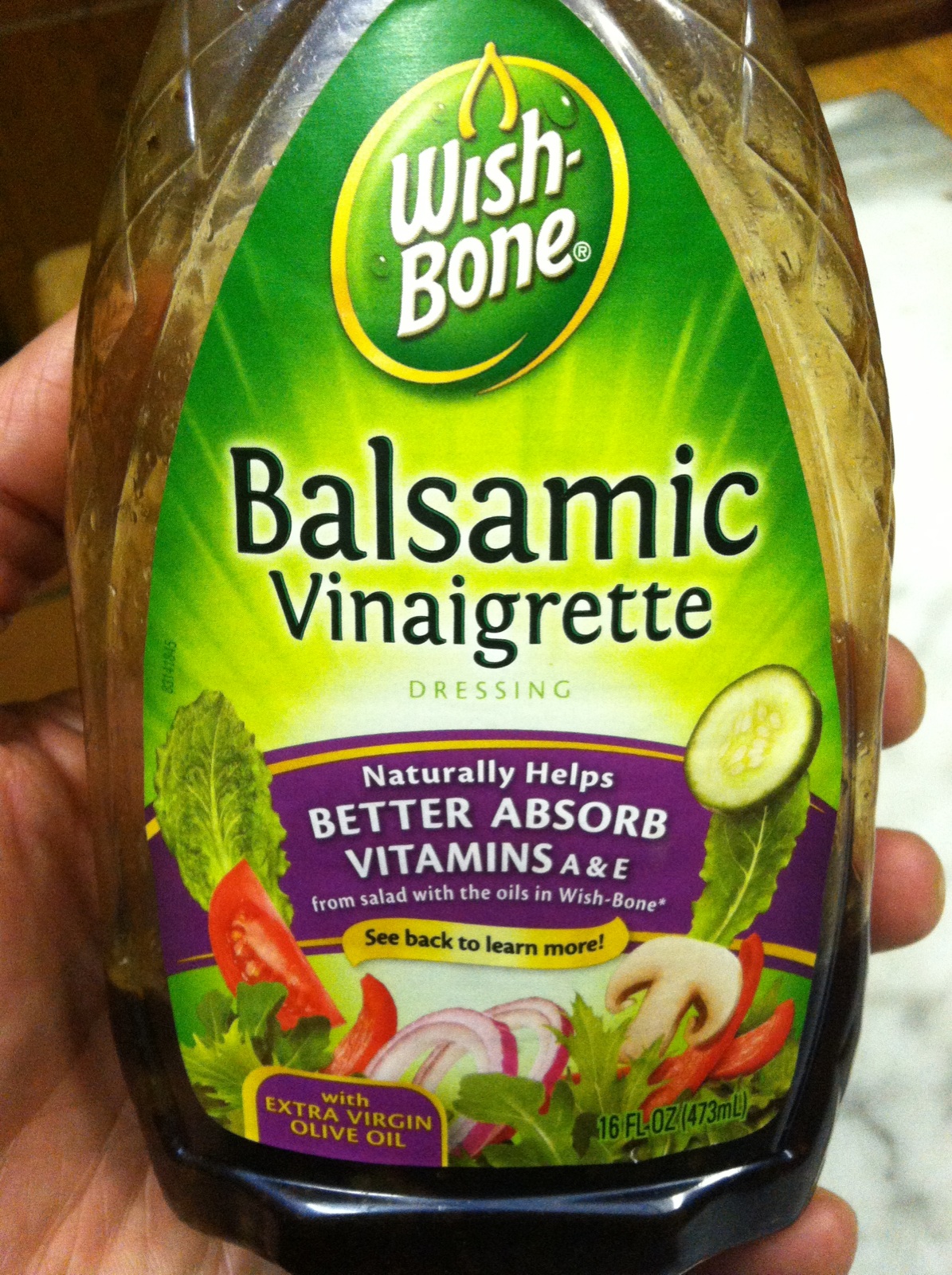
I like this and use it. The lower left corner says “with EXTRA VIRGIN OLIVE OIL.” In order, the listed ingredients are water, balsamic vinegar, soybean oil and extra virgin olive oil, sugar….  2 tbsp has 3 grams of carb. Which oil would you guess predominates? BTW, balsamic has the most carbs of all the vinegars.

Worried About Inadequate Calcium on Your Paleo Diet?

Bix at Fanatic Cook has a post on calcium and dairy consumption as regards to protection against broken hips from thin bones (osteoporosis). Or rather the lack of protection!

I’ve worried before that most paleo diets could be deficient in calcium because they don’t include milk products. Osteoporosis in adults or inadequate bone growth in kids are about the only significant problems you might see if that’s the case.

Bix quotes Harvard professor and pediatrician Dr. David Ludwig:

“Humans have no nutritional requirement for animal milk, an evolutionary recent addition to diet. Anatomically modern humans presumably achieved adequate nutrition for millennia before domestication of dairy animals, and many populations throughout the world today consume little or no milk for biological reasons (lactase deficiency), lack of availability, or cultural preferences.

Adequate dietary calcium for bone health, often cited as the primary rationale for high intake of milk, can be obtained from many other sources. Indeed, the recommended levels of calcium intake in the United States, based predominately on balance studies of 3 weeks or less, likely overestimate actual requirements and greatly exceed recommended intakes in the United Kingdom.

Throughout the world, bone fracture rates tend to be lower in countries that do not consume milk compared with those that do. Moreover, milk consumption does not protect against fracture in adults, according to a recent meta-analysis.”

Read the whole enchilada.

Another article mentions Dr. Ludwig:

People with a high-quality diet — those who get adequate protein, vitamin D and calcium from things like leafy greens, legumes, nuts and seeds — may get little or no added nutritional benefit from consuming three servings of dairy a day, Ludwig argues.

Hmmm. Wonder how he feels about grains. Sounds paleoish so far.

I’m just about ready to stop worrying about calcium.

Steve Parker, M.D.

NYT on the Search for the Perfect Natural Zero-Calorie Sweetener

Are noncaloric sweeteners any better than an teaspoon of sugar in your coffee? Is honey better?

Are noncaloric sweeteners any better than an teaspoon of sugar in your coffee? Is honey healthier?

Daniel Engber has an article at the online New York Times on the quest for natural no-calorie sweeteners. Some quotes:

As badly as stevia needs the soft-drink companies, the soft-drink companies may need stevia even more. While sweetened carbonated beverages still make up around one-fifth of all the liquids we consume, the volume sold has dropped, per capita, every year since 1998. We’re more afraid of sugar than we’ve ever been. What yesterday were seen as “empty calories” have today been designated “toxic.” Doctors warn that cans of soda put fat into your liver, weaken your response to insulin and increase your risk of heart disease and diabetes. The panic over sugar has grown so pervasive that other dietary boogeymen — salt and fat and gluten — seem like harmless flunkies in comparison. (In 2012, when the market-research firm Mintel asked consumers which ingredients or foods they were trying to avoid, sugar and added sugar topped the list, by a wide margin.)

***

Some consumers also wonder if the natural sweeteners aren’t simply different flavors of the products they’ve been trying to avoid. At the beginning of July, just as PepsiCo got approval for Reb-D and Coca-Cola said it would be working on Reb-X, a 58-year-old woman living in Hawaii filed suit against Big Stevia. In March she bought a box of Truvia at Walmart because she thought it was a natural product. Now she’s convinced it’s no such thing. Her complaint declared that “Reb-A is not the natural crude preparation of stevia,” and that its manufacture is not “similar to making tea,” as Cargill’s packaging suggests. Rather, it’s “a highly chemically processed and purified form of stevia-leaf extract.”

Hers was not the only attack on Cargill’s natural sweetener. In ongoing negotiations to settle a similar suit, Cargill has offered to remove the phrase “similar to making tea” from the packaging and/or add an asterisk to the product’s tagline, “Nature’s Calorie-Free Sweetener,” directing people to a website F.A.Q. That page would explain that Truvia contains very little stevia, by weight, and that its main ingredient — erythritol — comes from yeast that may be fed with genetically modified corn sugar. “As with almost all finished food products,” the F.A.Q. would say, “the journey from field to table involves some processing.”

***

But what’s “natural” mean anyway?

It’s a question that has bedeviled beverage-makers, too. In the fall of 2012, a German food company surveyed 4,000 people in eight European countries, to find out how they understood the “natural” claim. Almost three-quarters said they thought that natural products were more healthful and that they’d pay a premium to get them. More than half argued that natural products have a better taste. But the respondents weren’t sure what degree or form of processing would be enough to strip a product of its natural status. Some drew a line between sea salt (natural) and table salt (artificial). Others did the same for dried pasta and powdered milk, though both are made by dehydration.

 Read the whole enchilada.

Dr. Roy Taylor on the Cause of Type 2 Diabetes and What To Do About It

diabetic diet, low-carb Mediterranean Diet, low-carb, Conquer Diabetes and Prediabetes

Warning: this is a sciencey post

According to Roy Taylor, M.D., “type 2 diabetes is a potentially reversible metabolic state precipitated by the single cause of chronic excess intraorgan fat.” The organs accumulating fat are the pancreas and liver. He is certain “…that the disease process can be halted with restoration of normal carbohydrate and fat metabolism.” I read Taylor’s article published last year in Diabetes Care.

(Do you remember that report in 2011 touting cure of T2 diabetes with a very low calorie diet? Taylor was the leader. The study involved only 11 patients, eating 600 calories a day for eight weeks.)

Dr. Taylor says that severe calorie restriction is similar to the effect of bariatric surgery in curing or controlling diabetes. Within a week of either intervention, liver fat content is greatly reduced, liver insulin sensitivity returns, and fasting blood sugar levels can return to normal. During the first eight weeks after intervention, pancreatic fat content falls, with associated steadily increasing rates of insulin secretion by the pancreas beta cells.

bariatric surgery, Steve Parker MD

Band Gastric Bypass Surgery (not the only type of gastric bypass): very successful at “curing” T2 diabetes if you survive the operation

Taylor’s ideas, by the way, dovetail with Roger Unger’s 2008 lipocentric theory of diabetes. Click for more ideas on the cause of T2 diabetes.

Here are some scattered points from Taylors article. He backs up most of them with references:

  • In T2 diabetes, improvement in fasting blood sugar reflects improved liver insulin sensitivity more than muscle insulin sensitivity.
  • The more fat accumulation in the liver, the less it is sensitive to insulin. If a T2 is treated with insulin, the required insulin dose is positively linked to how much fat is in the liver.
  • In a T2 who starts insulin injections, liver fat stores tend to decrease. That’s because of suppression of the body’s own insulin delivery from the pancreas to the liver via the portal vein.
  • Whether obese or not, those with higher circulating insulin levels “…have markedly increased rates of hepatic de novo lipogenesis.” That means their livers are making fat. That fat (triglycerides or triacylglycerol) will be either burned in the liver for energy (oxidized), pushed into the blood stream for use elsewhere, or stored in the liver. Fatty acids are components of triglycerides. Excessive fatty acid intermediaries in liver cells—diglycerides and ceramide—are thought to interfere with insulin’s action, i.e., contribute to insulin resistance in the liver.
  • “Fasting plasma glucose concentration depends entirely on the fasting rate of hepatic [liver] glucose production and, hence, on its sensitivity to suppression by insulin.”
  • Physical activity, low-calorie diets, and thiazolidinediones reduce the pancreas’ insulin output and reduce liver fat levels.
  • Most T2 diabetics have above-average liver fat content. MRI scans are more accurate than ultrasound for finding it.
  • T2 diabetics have on average only half of the pancreas beta cell mass of non-diabetics. As the years pass, more beta cells are lost. Is the a way to preserve these insulin-producing cells, or to increase their numbers? “…it is conceivable that removal of adverse factors could result in restoration of normal beta cell number, even late in the disease.”
  • “Chronic exposure of [pancreatic] beta cells to triacylglycerol [triglycerides] or fatty acids…decreases beta cell capacity to respond to an acute increase in glucose levels.” In test tubes, fatty acids inhibit formation of new beta cells, an effect enhanced by increased glucose concentration.
  • There’s a fair amount of overlap in pancreas fat content comparing T2 diabetics and non-diabetics. It may be that people with T2 diabetes are somehow more susceptible to adverse effects of the fat via genetic and epigenetic factors.
  • “If a person has type 2 diabetes, there is more fat in the liver and pancreas than he or she can cope with.”
  • Here’s Dr. Taylor’s Twin Cycle Hypothesis of Etiology of Type 2 Diabetes: “The accumulation of fat in liver and secondarily in the pancreas will lead to self-reinforcing cycles that interact to bring about type 2 diabetes. Fatty liver leads to impaired fasting glucose metabolism and increases export of VLDL triacylglcerol [triglycerides], which increases fat delivery to all tissues, including the [pancreas] islets. The liver and pancreas cycles drive onward after diagnosis with steadily decreasing beta cell function. However, of note, observations of the reversal of type 2 diabetes confirm that if the primary influence of positive calorie balance is removed, the the processes are reversible.”
diabetic diet, etiology of type 2 diabetes, Roy Taylor, type 2 diabetes reversal

Figure 6 from the article: Dr. Taylor’s Twin Cycle Hypothesis of Etiology of Type 2 Diabetes

  • The caption with Figure 6 states: “During long-term intake of more calories than are expended each day, any excess carbohydrate must undergo de novo lipogenesis [creation of fat], which particularly promotes fat accumulation in the liver.”
  • “The extent of weight gloss required to reverse type 2 diabetes is much greater than conventionally advised.” We’re looking at around 15 kg (33 lb) or 20% of body weight, assuming the patient is obese to start.  “The initial major loss of body weight demands a substantial reduction in energy intake. After weight loss, steady weight is most effectively achieved by a combination of dietary restriction and physical activity.”

Dr. Taylor doesn’t specify how much calorie restriction he recommends, but reading between the lines, I think he likes his 600 cals/day for eight weeks program. That will have a have a high drop-out rate. I suspect a variety of existing ketogenic diets may be just as successful and more realistic, even if it takes more than eight weeks. I wonder how many of the 11 “cures” from the 2011 study have persisted.

Steve Parker, M.D.

Reference: Taylor, Roy. Type 2 diabetes: Etiology and reversibility. Diabetes Care, April 2013, vol. 36, no. 4, pp:1047-1055.

Update: Some wild and crazy guys tried the Taylor method at home. Click for results.