Not-So-Obvious Reasons To Be Fit and Athletic

PaleoPeriodical has the details. Highly recommended. A quote:

One of MovNat’s direct predecessors (and forefather of Parkour) is Georges Hébert, who I’ve quoted in the title of this post. As a French naval officer stationed off the coast of Martinique in 1902, he witnessed a volcanic eruption that wiped out the town of St. Pierre. He and his fellow shipmen rescued some 700 people in the chaos. When Hébert returned to France, he scanned the crowds of people and came to the sad realization that very few could save themselves if they had to. In response, he developed his “Natural Method”:

The final goal of physical education is to make strong beings. In the purely physical sense, the Natural Method promotes the qualities of organic resistance, muscularity and speed, towards being able to walk, run, jump, move on all fours, to climb, to keep balance, to throw, lift, defend yourself and to swim.

Sadly, when I scan a crowd of people today, I see the same problems Hébert saw over a hundred years ago. I can only imagine his shock at how much worse it is today.

Read the rest.

I sometimes scan survivalist blogs, where they consider “sh*t hits the fan” situations and TEOTWAWKI (the end of the world as we know it). Are you ready, physically?

Jamie Scott wrote about survival of the fittest in context of the devastating Christchurch, New Zealand, earthquake of 2012.

Resistance Versus Aerobic Training: Which Is Better?

iStock_000007725919XSmall

Weight training, also known as resistance training, may be just as effective as, or even superior to, aerobic training in terms of overall health promotion.  Furthermore, it’s less time-consuming according to a 2010 review by Stuart Phillips and Richard Winett.

I don’t like to exercise but I want the health benefits.  So I look for ways to get it done quickly and safely.

Here’s a quote from Phillips and Winett:

A central tenet of this review is that the dogmatic dichotomy of resistance training as being muscle and strength building with little or no value in promoting cardiometabolic health and aerobic training as endurance promoting and cardioprotective, respectively, largely is incorrect.

Over the last few years (decade?), a new exercise model has emerged.  It’s simply intense resistance training for 15–20 minutes twice a week.  It’s not fun, but you’re done and can move on to other things you enjoy.  None of this three to five hours a week of exercise some recommend.  We have no consensus on whether the new model is as healthy as the old.

More tidbits from Phillips and Winett:

  • they hypothesize that resistance training (RT) leads to improved physical function, fewer falls, lower risk for disability, and potentially longer life span
  • only 10–15% of middle-aged or older adults in the U.S. practice RT whereas 35% engage in aerobic training (AT) or physical activity to meet minimal guidelines
  • they propose RT protocols that are brief, simple, and feasible
  • twice weekly training may be all that’s necessary
  • RT has a beneficial effect on LDL cholesterol and tends to increase HDL cholesterol, comparable to effects seen with AT
  • blood pressure reductions with RT are comparable to those seen with AT (6 mmHg systolic, almost 5 mmHg diastolic)
  • RT improves glucose regulation and insulin activity in those with diabetes and prediabetes
  • effort is a key component of the RT stimulus: voluntary fatigue is the goal (referred to as “momentary muscular failure” in some of my other posts)
  • “In intrinsic RT, the focus and goal are to target and fatigue muscle groups.  A wide range of repetitions and time under tension can be used to achieve such a goal.  Resistance simply is a vehicle to produce fatigue and only is adjusted when fatigue is not reached within the designated number of repetitions and time under tension.”

Our thesis is that an intrinsically oriented (i.e., guided by a high degree of effort intrinsic to each subject) program with at minimum of one set with 10–15 multiple muscle group exercises (e.g., leg press, chest press, pulldown, overhead press) executed with good form would be highly effective from a public health perspective.

The authors cite 60 other sources to support their contentions.

These ideas are the foundation of time-efficient resistance training of the sort promoted by Dr. Doug McGuff, Skyler Tanner, Fred Hahn, Chris Highcock, James Steele II, and Jonathan Bailor, to name a few.

Only a minority will ever exercise as much as the public health authorities recommend.  This new training model has real potential to help the rest of us.

For folks with diabetes, the combination of aerobic and resistance training may be better than either alone, for control of glucose levels.

Steve Parker, M.D.

Reference:  Phillips, Stuart and Winett, Richard.  Uncomplicated resistance training and health-related outcomes: Evidence for a public health mandate.  Current Sports Medicine Reports, 2010, vol. 9 (#4), pages 208-213.

QOTD: Downtown Joshua Brown on Email

Email is totally out of control and needs to be made illegal effective immediately. It is the worst thing that’s ever happened to humanity. Unless you consider the alternative – phone calls – which I view as an act of violence. “Why is he calling me? What emergency necessitated his dialing my number and waiting for it to ring, what utter atrocity required the disruptively instantaneous back-and-forth of a voice conversation?”

…A wise man once said that your inbox is like a To Do list that someone else makes for you. To which I say, no thanks.

Joshua M. Brown

In T2 Diabetes, Which Comes First: High Insulin Levels or Insulin Resistance?

pancreas, liver, insulin, woman, teacher, books, diabetes, cause of diabetes

I couldn’t find a decent picture of a liver or pancreas, so this will have to do….

I’ve written elsewhere about the potential causes of T2 diabetes (here and here, for example). There’s a new theory on the block.

Excessive insulin output by the pancreas (hyperinsulinemia) is the underlying cause of type 2 diabetes, according to a hypothesis from Walter Pories, M.D., and G. Lynis Dohm, Ph.D.  The cause of the hyperinsulinemia is a yet-to-be-identified “diabetogenic signal” to the pancreas from the gastrointestinal tract.

This is pretty sciencey, so you’re excused if you stop reading now.  You probably should.

They base their hypothesis on the well-known cure or remission of many cases of type 2 diabetes quite soon after roux-en-y gastric bypass surgery (RYGB) done for weight loss.  (Recent data indicate that six years after surgery, the diabetes has recurred in about a third of cases.)  Elevated fasting insulin levels return to normal within a week of RYGB and remain normal for at least three months.  Also soon after surgery, the pancreas recovers the ability to respond to a meal with an appropriate insulin spike.  Remission or cure of type 2 diabetes after RYGB is independent of changes in weight, insulin sensitivity, or free fatty acids.

Bariatric surgery provides us with a “natural” experiment into the mechanisms behind type 2 diabetes.

The primary anatomic change with RYGB is exclusion of food from a portion of the gastrointestinal tract, which must send a signal to the pancreas resulting in lower insulin levels, according to Pories and Dohm. (RYGB prevents food from hitting most of the stomach and the first part of the small intestine.)

Why would fasting blood sugar levels fall so soon after RYGB?  To understand, you have to know that fasting glucose levels primarily reflect glucose production by the liver (gluconeogenesis).  It’s regulated by insulin and other hormones.  Insulin generally suppresses gluconeogenesis.  The lower insulin levels after surgery should raise fasting glucose levels then, don’t you think?  But that’s not the case.

Pories and Dohm surmise that correction of hyperinsulinemia after surgery leads to fewer glucose building blocks (pyruvate, alanine, and especially lactate) delivered from muscles to the liver for glucose production.  Their explanation involves an upregulated Cori cycle, etc.  It’s pretty boring and difficult to follow unless you’re a biochemist.

The theory we’re talking about is contrary to the leading theory that insulin resistance causes hyperinsulinemia.  Our guys are suggesting it’s the other way around: hyperinsulinemia causes insulin resistance.  It’s a chicken or the egg sort of thing.

If they’re right, Pories and Dohm say we need to rethink the idea of treating type 2 diabetes with insulin except in the very late stages when there may be no alternative.  (I would add my concern about using insulin secretagogues (e.g., sulfonylureas) in that case also.)  If high insulin levels are the culprit, you don’t want to add to them.

We’d also need to figure out what is the source of the “diabetogenic signal” from the gastrointestinal tract to the pancreas that causes hyperinsulinemia.  A number of stomach and intestinal hormones can affect insulin production by the pancreas; these were not mentioned specifically by Pories and Dohm.  Examples are GIP and GLP-1 (glucose-dependent insulinotropic polypeptide and glucagon-like peptide-1).

Keep these ideas in mind when you come across someone who’s cocksure that they know the cause of type 2 diabetes.

Steve Parker, M.D.

Reference:  Pories, Walter and Dohm, G. Lynis.  Diabetes: Have we got it all wrong?  Hyperinsulinism as the culprit: surgery provides the evidence.  Diabetes Care, 2012, vol. 35, p. 2438-2442.

Recipe: Pico De Gallo

According to Wikipedia, pico de gallo is Spanish for rooster’s beak. I always thought it was peck of the rooster, because it’s got some bite to it. You decide how spicy you want it based on how much jalapeño you use. Also note that one batch of jalapeños is different in heat from the next.

paleo diet, Steve Parker MD, diabetic diet

Our rooster, Chuck: handsome but mean!

Pico de gallo is a condiment that compliments eggs, meat, and guacamole, to name a few. I throw it in a bowl of soup sometimes.

Ingredients:

  • tomatoes, fresh, 7 oz (200 g), chopped very finely
  • onion, fresh, 2 oz (60 g), chopped very finely
  • jalapeño pepper, fresh, 1 whole (14 g), chopped very finely after discarding stem
  • cilantro, fresh, 10–15 sprigs chopped finely to yield 3–4 tbsp (2 g)
  • salt, 2 pinches (2/16 tsp) or to taste

Instructions:

If you prefer less spicy heat, use less jalapeno and don’t use the seeds. Combine all ingredients and you’re done. Eat at room temperature, chilled, or heated at medium heat in a saucepan (about 5 minutes, until jalapenos lose their intense green color).

Servings: 3 servings of 1/2 cup (120 ml) each.

Nutritional Analysis Per Serving:

  • 8% fat
  • 81% carbohydrate
  • 11% protein
  • 21 calories
  • 4.5 g carbohydrate
  • 1.2 g fiber
  • 3.3 g digestible carbohydrate
  • 104 mg sodium (2 pinches of added salt)
  • 216 mg potassium
paleo diet, Steve Parker MD, pico de gallo

Some prefer it coarsely chopped like this – it’s quicker

Harvard Physician Recommends More Potassium, Less Sodium

…to prevent cardiovascular disease and stroke. Those mineral trends are natural with the paleo diet, although not mentioned by Dr. Pande.

For detail: http://www.health.harvard.edu/blog/getting-more-potassium-and-less-salt-may-cut-heart-attack-stroke-risk-201304126067

Alan Aragon Jumps On the Anti-Paleo Bandwagon

Click for a slide set of a presentation by Alan Aragon given last month. The overall tone is anti-paleo. I file the link here for future reference.

One of his key points is that humans have been eating grains (and legumes) for much longer than many in the paleosphere think. That may indeed be true, but it’s difficult to imagine them eating them in the large and year-round quantities we do today. Same for industrial seed oils.

Also, Alan has no problem with our current high omega-6/omega-3 fatty acid ratio and overall omega-6 FA consumption. I think the jury’s still out on those. 

Otherwise, Alan makes some good points and slays a few straw men.

I was surprised to see photos of Sisson and Wolf supplements.


h/t non-paleo Melissa McEwan

Should Paleo Women Go Bra-Less?

A breast researcher would say, “Yes.” A quote from tomorrow’s The Sun:

Professor Jean-Denis Rouillon, from the University of Besancon, led the 15-year study into women’s breasts.

He said: “Medically, physiologically, anatomically – breasts gain no benefit from being denied gravity.

“On the contrary, they get saggier with a bra”.

Here’s more extensive coverage.

Ann Althouse weighs in.

What’s the Difference Between White Potatoes and Sweet Potatoes?

The sweet taters have more vitamin A and, at least where I live, they’re more expensive. That’s all.

paleo diet, Steve Parker MD, diabetic diet

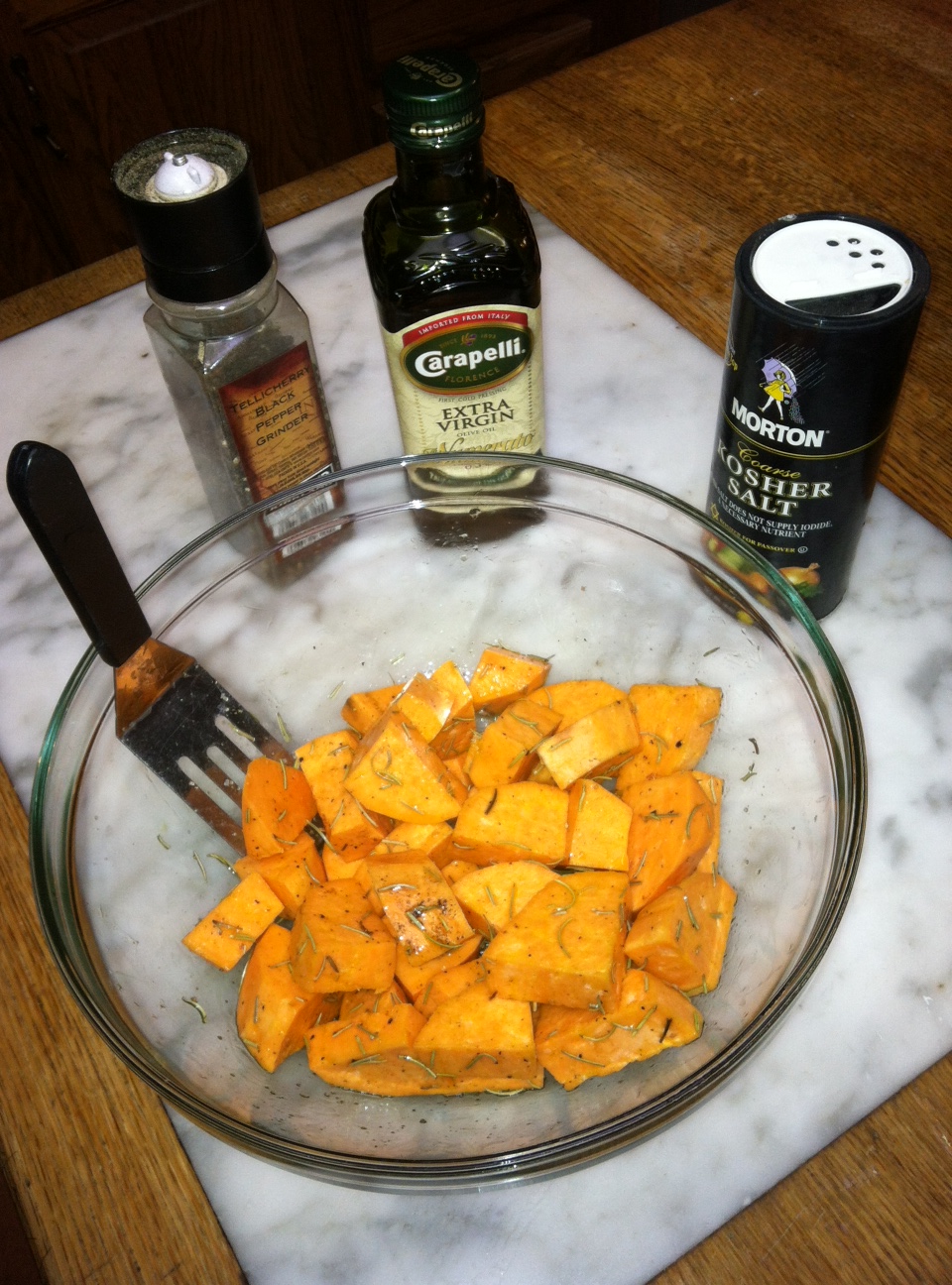
Sweet potato chunks brushed with olive oil, salt, pepper, rosemary

Oh, I forgot. Different colors, too.

AncestralChef has the details.

PS: I know a lot of nutrition bloggers and other health nuts use the nutrient database at NutritionData.com. That’s based version 21 of the U.S. Department of Agriculture’s Nutrient Database. The current version, however, is 25. About two years ago, the focus at NutritionData switched to referral of visitors to Self magazine. For my nutrient analysis, I’ve been using FitDay.com. Or you can go straight to the USDA.

paleo diet, Steve Parker MD

Ready to pop in the oven

New Cochrane Review Supports Population-Wide Sodium Restriction


A pinch of salt helps reduce bitterness in coffee

A pinch of salt helps reduce bitterness in coffee

Details are at the British Medical Journal.

If you read it, note that the authors usually refer to salt in grams per day. In the U.S., we typically talk about dietary salt in terms of its sodium content, also in grams per day. Table salt, remember, is NaCl (sodium chloride).

The theory is that high salt intake raises blood pressure, which leads to premature death or disability from heart attacks, strokes, atherosclerosis, and aneurysms. Cut your salt consumption, and blood pressure comes down to a safer level.

You can find studies that don’t support the theory.

From the BMI article:

In the United States, it is recommended that sodium intake should be reduced to less than 2.3 g/day (equivalent to about 6 g/day salt) for most adults, with a further reduction to 1.5 g/day (4 g/d salt) for about half the population, including African Americans, all adults aged 51 and older, and individuals with hypertension, diabetes, or chronic kidney disease.

From the evidence above, it is clear that the recommendations to reduce salt from the current levels of about 9-12 g/day to 5-6 g/day will have a significant effect on blood pressure but are not ideal. A further reduction to 3 g/day will have a much greater effect on blood pressure, and we consider that this should become the long term target for population salt intake.

A pure paleo diet is a low-sodium diet.