Video Demonstration of HIIT on Bicycle

Classic Tabata intervals use a stationary bike, but this is more fun

Gretchen Reynolds is the Phys Ed blogger at the New York Times.  She posted a short demonstration of high intensity interval training on a stationary bicycle.  It’s narrated by a leading researcher in this type of exercise, Martin Gibala of McMaster University.

No mention of Tabata, as usual.

-Steve

We’re Fat Because We Eat Too Much

At least one group of hunter-gatherers doesn’t burn any more calories in physical activity than Western cultures.  So much for blaming our fatness on low activity levels and labor-saving technology.

Cliff Notes version from the BBC.

—Steve

h/t Colby Vorland at nutsci.org

Do Cordain, Wolf, Konner, and Eaton Have It All Wrong?

The Face of Iconoclasm

In case you missed it, here’s a link to the recent Scientific American article arguing that the paleo diet is vegetarian.  I’ll read it when I have time.

—Steve

Alcohol May Impair Vision In Diabetics

MedPage Today reported that long-term consumption of alcohol may impair vision in diabetics.  Drinkers performed less well on vision chart tests than non-drinkers. This is not a diabetic retinopathy issue.

Beer and distilled spirits were riskier than wine.

The paleo community is divided on whether alcohol should be part of the program.  Undoubtedly, we drink much more alcohol than did our prehistoric ancestors.  Remember, however, that rotting fruits can provide alcohol.  I remember a news report about an elk in northern Europe who got drunk on rotting (fermenting) fruit and stranded himself in a tree.

The MedPage Today article didn’t comment on the potential health benefits of alcohol consumption. You can bet I’ll keep an eye on this.  (Did you get the pun?)

Steve Parker, M.D.

Buck Fever

Deer hunters call this “glassing”

I have a mysterious new fascination with deer hunting.

I don’t know why I’ve been thinking about this.  It may be related to a book on raising boys I read about six months ago.  The author talked about rites of passage for adolescent boys.  In his social circle, hunting was one such rite.  Boys on the cusp of adulthood were invited to the hunting camp to mingle with the experienced men and learn about manly things.  My son is almost 14.

Jews have the bar mitzvah.  The rest of us in Western societies don’t have much in the way of a rite of passage for adolescent boys (“young bucks”).  The scarification practiced by some West African tribes is not what I had in mind.  I guess we’ve decided as a culture that adolescent rites of passages aren’t needed any more.  I’m not so sure.

I bet hunter-gatherer societies have rites of passage.

Perhaps my son’s path to Eagle scout will be his rite of passage.  Or maybe it’ll be a deer hunt.

-Steve

PS: I’ve never killed a deer, nor even shot at one.  I went on a deer hunt as a yoot but no one in the party got lucky.  I’ve never even fired a rifle more powerful than a .22.

Quote of the Day

Your car is designed to run on gasoline.  When you put diesel fuel into its tank, the results are disastrous for the engine.  The same principle is true for us: We are designed to run best on the wild plant and animal foods that all humans gathered and hunted just 500 generations ago.  The staples of today’s diet—cereals, dairy product, refined sugars, fatty meats, and salted processed foods—are like diesel fuel to our body’s metabolic machinery.  These foods clog our engines, make us fat, and cause disease and ill health.

Loren Cordain in The Paleo Diet

Don’t put diesel in this baby!

Quote of the Day

….built into our genes is a blueprint for optimal nutrition—a plan that spells out the foods that make us healthy, lean, and fit.  Whether you believe the architect of that blueprint is God, or God acting throughout evolution by natural selection, or by evolution alone, the end result is still the same: We need to give our bodies the foods we were originally designed to eat.

Loren Cordain in The Paleo Diet

Lean and fit Australian Aborigine

The Carbohydrate and Chronic Disease Connection

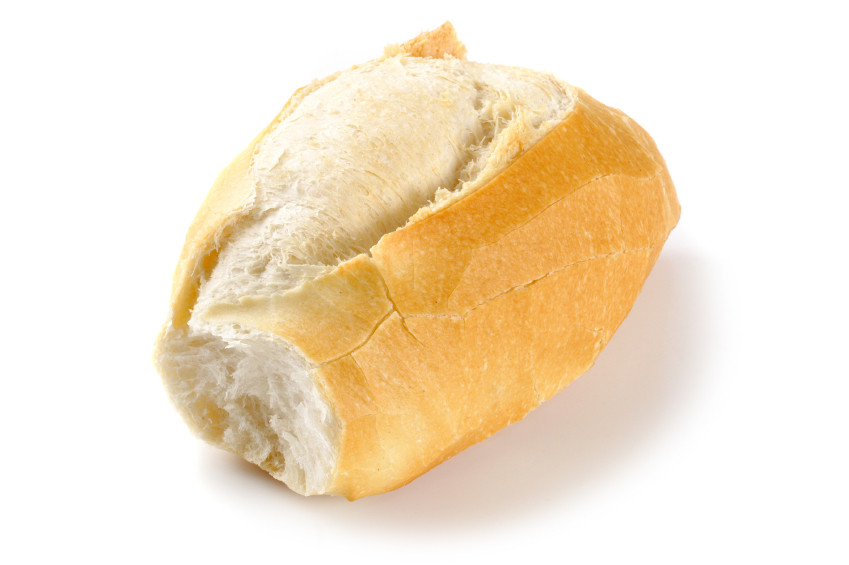
Simple dinner roll, or a future HEART ATTACK?

Adherents of the paleo diet and low-carb diets will love this post; it supports their choices.

Dentists are considering a return to an old theory that dietary carbohydrates first cause dental diseases, then certain systemic chronic diseases, according to a review in the June 1, 2009, Journal of Dental Research.  It’s written by Dr. Philippe P. Hujoel, who has been active in dental research for decades and is affiliated with the University of Washington (Seattle). He is no bomb-throwing, crazed, radical.

We’ve known for years that some dental and systemic diseases are associated with each other, both for individuals and populations. For example, gingivitis and periodontal disease are associated with type 2 diabetes and coronary heart disease. The exact nature of that association is not clear. In the 1990s it seemed that infections – chlamydia, for example – might be the unifying link, but this has not been supported by subsequent research.

The “old theory” to which I referred earlier is the Cleave-Yudkin idea from the 1960s and ’70s that excessive intake of digestible carbohydrates, in the absence of good dental care, leads both to certain dental diseases – caries (cavities), periodontal disease, certain oral cancers, and leukoplakia – and to some common systemic chronic non-communicable diseases such as coronary heart disease, type 2 diabetes, some cancers, and dementia. In other words, dietary carbohydrates cause both dental and systemic diseases – not all cases of those diseases, of course, but some.

In the context of excessive carbohydrate intake, the article frequently mentions sugar, refined carbs, and high-glycemic-index carbs. Dental effects of excessive carb intake can appear within weeks or months, whereas the sysemtic effects may take decades.

Hujoel compares and contrasts Ancel Keys’ Diet-Heart/Lipid Hypothesis with the Cleave-Yudkin Carbohydrate Theory. In Dr. Hujoel’s view, the latest research data favor the Carbohydrate Theory as an explanation of many cases of the aforementioned dental and systemic chronic diseases. If correct, the theory has important implications for prevention of dental and systemic diseases: namely, dietary carbohydrate restriction.

I agree with Dr. Hujoel that we need a long-term prospective trial of serious low-carb eating versus the standard American high-carb diet. Take 20,000 people, randomize them to one of the two diets, follow their dental and systemic health over 15-30 years, then compare the two groups. Problem is, I’m not sure it can be done. It’s hard enough for most people to follow a low-carb diet for four months. And I’m asking for 30 years?!

Dr. Hujoel writes:

Possibly, when it comes to fermentable carbohydrates, teeth would then become to the medical and dental professionals what they have always been for paleoanthropologists: “extremely informative about age, sex, diet, health.”

Dr. Hujoel mentioned a review of six studies that showed a 30% reduction in gingivitis score by following a diet moderately reduced in carbs. He mentions the aphorism: “no carbohydrates, no caries.” Anyone prone to dental caries or ongoing periodontal disease should do further research to see if switching to low-carb eating might improve the situation.

Don’t be surprised if your dentist isn’t very familiar with the concept.

Steve Parker, M.D.

Reference: Hujoel, P. Dietary carbohydrates and dental-systemic diseasesJournal of Dental Research, 88 (2009): 490-502.

Mendosa, David. Our dental alarm bell. MyDiabetesCentral.com, July 12, 2009.

Jimmy Moore’s 2012 interview with Dr. Hujoel.

Can A Christian Be A Paleo Advocate?

If you’re squeamish about discussions of religion and God, read no further! What follows is controversial and much of it not subject to scientific investigation.

In case you’re wondering, I’m a Christian.  This simply means I believe I was given life by God, that His son Jesus became a man and died for my sins, and that I will have everlasting life in heaven for believing on this.  I strive to live the way God would want me to live, as written in the Holy Bible.  I was brought up in the Catholic faith, even attending parochial school in grades 1-8, but I’m Protestant now.  I went through an agnostic period between the ages of 19 to about 38—I’m glad I made it through that alive!

I’ve been learning more about paleo eating over the last year since it overlaps a fair amount with low-carb eating. (Paleo-style eating is also referred to as ancestral, Old Stone Age, hunter-gatherer, or the caveman diet.) The Paleolithic Era covers about 1.5 to 2 million years of human evolution, admitting that there probably hasn’t been much genetic change over the last 50,000 years (debatable). The cornerstone of paleo eating is that we should eat the things we are evolutionarily adapted to eat. We’ll be healthier that way. We didn’t have corn chips, soda pop, and candy bars 20,000 years ago, so we shouldn’t be eating them now.

Sounds reasonable, doesn’t it? Various species of animals thrive on certain foods and not others. My horses eat three meals a day – all hay; you and I couldn’t survive on that.

I have a college degree in Zoology, so I was thoroughly indoctrinated in Charles Darwin‘s evolutionary theory, at least the version current in the mid-1970s. Darwin’s theory requires no God, or didn’t include a role for God or gods. How Darwinians answer the question of Creation, I don’t know.

Many proponents of evolutionary theory seem to be atheist or agnostic. Natural selection determines who lives or dies, not the hand of God. Some brands of Christianity, but not all, reject the idea of human evolution in its entirety. They believe God created us just as we are about 6,000 years ago. So can a Christian be a paleo diet advocate?

(I don’t know where Judaism, Islam, and other major religions stand on evolution.)

Human evolution is central to paleo diet theory. A religious person may reject the idea of human evolution; can he nevertheless participate in the modern “paleo community”?

I believe God made us and the universe. There’s no proof – it’s a matter of faith. I don’t know if He made us 6,000 years ago or two million.  The bulk of the science speaks clearly against 6,000 years ago.

Our bodies are made to thrive on certain foods and not others.  That’s true for all animals.  If you find an injured bird in your yard and hope to nurse it back to health,  you better find out what it eats naturally and provide it, or you’ll fail.  The range of foods humans can thrive on is pretty broad. Whether the optimal way of eating is determined by godless evolutionary processes or by the intelligent design of a Creator doesn’t matter so much if you’re looking at it from a purely nutritional viewpoint.

From an “everlasting life” viewpoint, it matters.  Big time.

The paleo guys might be right about the best way to eat. Science continues to accumulate evidence one way or the other.

Christianity and paleo diet theory are not mutually exclusive. A Christian can ignore the possiblity of a million years of evolution, believing instead that God made our bodies in such a way that we’d be healthier eating certain foods and not others. Those foods may be the components of the paleo diet, whatever that is.

Steve Parker, M.D.

Further reading:

Carl Drews has written extensively on Christianity and Evolution, including his essay on Theistic Evolution.

Phil Porvaznik’s article on theistic evolution and the Roman Catholic Church.

Wikipedia: Catholic Church and Evolution.

Can a Christian follow a paleo low-carb diet? at Jimmy Moore’s Livin’ La Vida Low-Carb blog.

A few questions for the atheists.  Where did the universe come from?  Was it created? By whom or what?  What if God exists, and he made us for a reason and wants us to live a certain way?

Consider this excerpt from Walter Isaacson’s book, “Einstein: His Life and Universe”:

One evening in Berlin, [Albert] Einstein and his wife were at a dinner party when a guest expressed a belief in astrology. Einstein ridiculed the notion as pure superstition. Another guest stepped in and similarly disparaged religion. Belief in God, he insisted, was likewise a superstition.

At this point the host tried to silence him by invoking the fact that even Einstein harbored religious beliefs.

“It isn’t possible!” the skeptical guest said, turning to ask Einstein if he was, in fact, religious.

“Yes, you can call it that,” Einstein replied calmly. “Try and penetrate with our limited means the secrets of nature and you will find that, behind all the discernible laws and connections, there remains something subtle, intangible and inexplicable. Veneration for this force beyond anything we can comprehend is my religion. To that extent, I am, in fact, religious.”


Quote of the Day

A general dissolution of principles and manners will more surely overthrow the liberties of America than the whole force of the common enemy. While the people are virtuous they cannot be subdued; but when once they lose their virtue then will be ready to surrender their liberties to the first external or internal invader.

             —Samuel Adams, 1779