Tag Archives: diabetes

Recipe: Turkey Tomato Bowl + Macadamia Nuts

paleobetic diet, low-carb

This Turkey Tomato Bowl fits criteria for the Paleobetic Diet

This is what I did with some of our leftover Thanksgiving turkey. If you don’t have leftover turkey, I bet leftover chicken or steak would be  fine substitutes. Heck, I’m tempted to try it with salmon or canned tuna or chicken. In addition to the flavor, what I like about this meal is that it’s crazy quick.

Ingredients:

6 oz (170 g) cooked turkey chunks, light meat (or 8 oz (225 g) if you’re starting raw and planning to cook it)

5 oz (140 g) raw tomato (2 small roma tomatoes, for example), cut into chunks

2 tbsp (30 ml) balsamic vinaigrette

black pepper to taste

1 oz (30 g) roasted macadamia nuts

paleobetic diet, low-carb, diabetes, diabetic diet, paleo diet

These roma tomatoes were amazingly flavorful for late Fall in the northern hemisphere. Before cooking, my wife injected the bird with olive oil, massaged periodically over 30 minutes, then popped it in the oven.

Instructions:

Toss the turkey and tomato chunks in a bowl, splash on the vinaigrette, then microwave for 60-80 seconds. Pepper as desired. Drink the leftover juice right out of the bowl. Enjoy with macadamia nuts for dessert and you’ve got a full meal.

Discussion:

paleobetic diet, low-carb, diabetes, diabetic diet

Grok wouldn’t have access to this

I was lazy when I made this so I just used a commercial salad dressing rather than making my own vinaigrette. Wish-Bone Balsamic Vinaigrette Dressing “with extra virgin olive oil.” Here are the top ingredients, in order: water, balsamic vinegar, soybean oil and extra virgin olive oil (sic), sugar, salt, spices, etc. So the oil could have been soybean oil (from a legume—the horror!!!) with one drop of EVOO for all I know. Olive oil is a rich source of monounsaturated fatty acid, so you might be able to calculate how much EVOO was in the dressing if I tell you there were five grams of fat per two tbsp (30 ml) serving, of which 1.5 grams were monounsaturated. That serving also has three grams of carbohydrate (all sugar) and only 60 calories. Right there on the bottle is says gluten-free and “no high fructose corn syrup.” I bet it had HFCS in it three years ago and there would be no mention of the trendy “gluten-free.”

I don’t know any home cooks who add water to vinaigrettes. They are essentially oil and vinegar (in a ratio of 3:1) and spices. The ones I make have quite a bit more than 60 calories per two tbsp (30 ml); more like 220 cals. All of the oils you would use have about 120 calories per tbsp all from fat. If you make this recipe with home-made vinaigrette, add 150 calories to the nutritional analysis below. It won’t affect the carb count.

Note that of the common vinegars, balsamic has the most carbohydrates—some vinegars have zero. If you use typical amounts of balsamic vinaigrette, you shouldn’t need to worry about the carbohydrates unless perhaps you’re on a strict ketogenic diet and limited to 20-30 grams of carb daily.

Servings: 1

Nutritional Analysis:

58% fat

7% carbohydrate

35% protein

620 calories

11.5 g carbohydrate

3.7 g fiber

8 g digestible carbohydrate

743 mg sodium

877 mg potassium

Prominent features: High in protein, vitamin B6, iron, manganese, niacin, phosphorus, selenium, and zinc.

paleobetic diet, low-carb, diabetic diet, paleo diet

Bonus pic! A new horse at the Parker Compound. He’s an old-style Morgan.

Recipe: Naked Chicken Fajitas with Walnuts and Pear

paleobetic diet

It looks more appealing if you use green and red bell peppers

My earliest recollection of fajitas is from Austin, Texas, in 1981. I had just moved there from Oklahoma City to start my internship and residency in Internal Medicine. Back then fajitas were made with skirt steak, the diaphragm of a cow or steer. It was considered a cheap low-quality cut of meat. You can also make fajitas with chicken. The contents of a fajita are wrapped in a tortilla usually made with flour. Since we’re a paleo crowd, we’ll skip the tortilla. Use lettuce as a wrapper if you wish.

I wonder if the El Azteca Restaurant is still in business. Best Mexican food I ever had. I think it was on 6th Street or so, about 3/4 mile east of I-35. Good times.

By the way, the j in fajita is pronounced “h.” Accent on second syllable. “Fuh-HEET-uh.”

Today we’re using chicken and making four servings

paleobetic diet, paleo diet for diabetics

Pre-cut chicken breasts and sweet mini-peppers

Ingredients:

1 lb (454 kg) chicken breast, raw, boneless and skinless, cut in strips about 1/4-inch wide (you can often buy it this way)

7 oz onion, raw, cut in long crescent shapes about a 1/4-inch wide (0.6 cm)

6 oz (170 g) bell pepper, raw, cut in long strips roughly a 1/4-inch wide (these are also called sweet peppers; a combination of the red and green ones is eye-pleasing)

2 tbsp (30 ml) olive oil

5 or 6 oz (155 g) tomato, raw, cut in long strips

1 tsp (5 ml) salt

1/2 tsp (2.5 ml) pepper

1/2 tsp (2.5 ml) chili powder

1 tsp (5 ml) parsley flakes

1/2 tsp (2.5 ml) oregano leaves

1 pinch of cumin

1/2 tsp (2.5 ml) paprika

(Optional: You could replace all these spices with a 1-oz (28 g) pack of Lawry’s Chicken Fajitas Spices & Seasoning. The sodium and potassium values below would be different.)

1/3 cup (80 ml) water

16 oz (454 g) lettuce (e.g., iceberg, romaine, or bibb)

4 oz (113 g) walnuts

4 pears, small (about 1/3 lb or 150 g each))

Instructions:

Add the onions, peppers, and 1 tbsp (15 ml)  olive oil to a 12-inch (30 cm) skillet and cook at medium-high heat until tender, stirring occasionally. This’ll take about 10 minutes. Set the skillet contents aside.

paleobetic diet, paleo diet for diabetes

This is double the recipe amount since there are six humanoids in my household

paleobetic diet, paleo diet for diabetics

The vegetables reduce volume by half while cooking

In the same pan, add 1 tbsp (15 ml) olive oil and the chicken and cook at medium to medium-high heat, stirring frequently, until chicken is thoroughly cooked. For me, this cooked quicker than the vegetables. But don’t overcook or the chicken will get tough. Then add the water and all the spices. Bring to a boil while stirring occasionally, then simmer on low heat a few minutes. This is your fajita filling.

My original plan was to make “fajita wraps,” wrapping the cooked fajitas into a large leaf of iceberg lettuce. This was pretty messy, especially since I love the sauce in the bottom of the pan. I tried two leafs as a base: still messy. Finally I just made a bed of lettuce (4 oz) and loaded the fajita concoction right on top. Mess gone. Try a different lettuce? Skip the lettuce entirely and you can reduce digestible carb count in each serving by 2 grams.

Enjoy the walnuts and pear with your meal.

Leftovers taste just as good as fresh-cooked, perhaps even better.

I have another fajita recipe using skirt steak marinated in commercial Zesty Italian Dressing in the refrigerator overnight or for at least four hours. Grill it over coals outside. Yum! I don’t recall whether I added lemon juice to the marinade or squirted it on the meat just before serving. You would just cook the onions and peppers on a pan on the stove as above, with salt and pepper to taste. Garnish with a margarita and I’ll make you an honorary Texan.

Number of servings: 4

Serving size: A cup (240 ml) of the fajita mixture, 4 oz (113 g) lettuce, 1 oz (28 g) walnuts, 1 small pear. One cup makes two lettuce wraps.

Nutritional Analysis Per Serving:

48% fat

26% carbohydrate

26% protein

Calories: 514

37 g carbohydrate

10 g fiber

27 g digestible carbohydrate (25 g if you skip the lettuce)

928 mg sodium

904 mg potassium

Prominent features: Rich in protein, vitamin B6, vitamin B12, vitamin C,copper, iron, manganese, niacin, phosphorus, and selenium.

paleobetic diet

Another view, prior to rolling it up (wrapping)

Effects of a Paleo-Style Diet on One Case of LADA

Dietitian Kelly Schmidt has a blog interview with Intrepid Pioneer, who has LADA—Latent Autoimmune Diabetes of Adulthood. LADA is much closer to type 1 than type 2 diabetes, so he’s on insulin. He was inspired initially by a “Whole 30 Challenge.” He makes room for cheese and home-brewed beer; so not pure paleo. Samples:

I was diagnosed May 2011 during my routine annual physical. At that time my blood sugars were up around 360 and my AC1’s ran around 12.3. At first I was treated as if I was a Type 2 with Metformin. The medicine only helped to control my blood sugars down to around 250 or so. At that time my endocrinologist informed me that I probably have LADA or Latent Autoimmune Diabetes, which basically has been coined type 1.5 Meaning I developed adult on-set Type 1. My father has had Type 1 all his life and was diagnosed as a child.

***

Since eating the Paleo lifestyle, and I hate it when one calls it a diet because then it feels temporary, I’ve pretty much stop taking my fast acting mealtime insulin. Meaning I only inject fast acting when I know I’m having Pizza for dinner as a treat, or for a thanksgiving meal, etc. My long acting insulin has reduced by over 10 units since starting this diet. All of that said, Paleo is great and it all tastes so good because it’s real food, but I have found that I also need to exercise, eating Paleo combined with exercise has yielded dynamic results. My endocrinologist was blown away by all that I had done, reduced my insulin injections and basically had my A1C’s in check — my last appointment I was 7.3. Still a bit more to go but the last time I was pushing 9 just six months before.

Read the whole thing (it’s brief).

High Blood Sugars Again Linked to Dementia

dementia, memory loss, Mediterranean diet, low-carb diet, glycemic index, dementia memory loss

“Let’s work on getting those blood sugars down, honey.”

On the heels of a report finding no association between Alzheimer’s disease and abnormal blood sugar metabolism, MedPageToday features a new study linking high blood sugars to future development of dementia. And diabetics with sugar levels higher than other diabetics were more prone to develop dementia.

Some of you have already noted that not all cases of dementia are Alzheimer’s dementia. But Alzheimer’s accounts for a solid majority of dementia cases.

Some quotes from MedPageToday:

During a median follow-up of 6.8 years, 524 participants [of the 2,000 total] developed dementia, consisting of 74 with diabetes and 450 without. Patients without diabetes and who developed dementia had significantly higher average glucose levels in the 5 years before diagnosis of dementia (P=0.01). The difference translated into a hazard ratio of 1.18 (95% CI 1.04-1.33).

Among the patients with diabetes, glucose levels averaged 190 mg/dL in those who developed dementia versus 160 mg/dL in those who did not. The difference represented a 40% increase in the hazard for dementia (HR 1.40, 95% CI 1.12-1.76).

Steve Parker, M.D.

Reference: Crane PK et al. “Glucose Levels and Risk of Dementia” N Engl J Med 2013; 369: 540-548.

Reminder: Conquer Diabetes and Prediabetes is now available on Kindle.

Do Environmental Contaminants Cause Type 2 Diabetes or Obesity?

"Today we're going to learn about odds ratios and relative risk."

“Today we’re going to learn about odds ratios and relative risk.”

A month ago I watched part of a documentary called “Plastic Planet” on Current TV (Now Al Jazeera TV). It was alarming. Apparently chemicals are leaking out of plastics into the environment (or into foods contained by plastic), making us diabetic, fat, impairing our fertility, and God knows what else. The narrator talked like it was a sure thing. I had to go to work before it was over. A couple chemicals I remember being mentioned are bisphenol A (BPA) and phthalates. I sorta freaked my wife out when I mentioned it to her. I always take my lunch to work in plastic containers and often cover microwaved food with Glad Press’n Seal plastic wrap.

A few days later I saw a report of sperm counts being half of what they were just half a century ago. (It’s debatable.) Environmental contaminants were mentioned as a potential cause.

So I spent a couple hours trying to figure out if chemical contamination really is causing obesity and type 2 diabetes. In the U.S., childhood obesity has tripled since 1980, to a current rate of 17%. Even preschool obesity (age 2-5) doubled from 5 to 10% over that span. In industrial societies, even our pets, lab animals (rodents and primates), and feral rats are getting fatter! The ongoing epidemics of obesity and type 2 diabetes, and our lack of progress in preventing and reversing them, testify that we may not have them figured out and should keep looking at root causes to see if we’re missing anything.

Straightaway, I’ll tell you it’s not easy looking into this issue. The experts are divided. The studies are often contradictory or inconsistent. One way to determine the cause of a condition or illness is to apply Bradford Hill criteria (see bottom of page for those). We could reach a conclusion faster if we did controlled exposure experiments on humans, but we don’t. We look at epidemiological studies and animal studies that don’t necessarily apply to humans.

Regarding type 1 diabetes and chemical contamination, we have very little data. I’ll not mention type 1 again.

What Does the Science Tell Us?

For this post I read a couple pertinent scientific reviews published in 2012, not restricting myself to plastics as a source of chemical contaminants.

The first was REVIEW OF THE SCIENCE LINKING CHEMICAL EXPOSURES TO THE HUMAN RISK OF OBESITY AND DIABETES from non-profit CHEM Trust, written by a couple M.D., Ph.D.s. I’ll share some quotes and my comments. My clarifying comments within a quote are in [brackets].

“It should be noted that diabetes itself has not been caused in animals exposed to these chemicals [a long list] in laboratory studies, but metabolic disruption closely related to the pathogenesis of Type 2 diabetes has been reported for many chemicals.”

“In 2002, Paula Baillie-Hamilton proposed a hypothesis linking exposure to chemicals with obesity, and this is now gaining credence. Exposure to low concentrations of some chemicals leads to weight gain in adult animals, while exposure to high concentrations causes weight loss.”

“The obesogen hypothesis essentially proposes that exposure to chemicals foreign to the body disrupts adipogenesis [fat tissue growth] and the homeostasis and metabolism of lipids (i.e., their normal regulation), ultimately resulting in obesity. Obesogens can be functionally defined as chemicals that alter homeostatic metabolic set-points, disrupt appetite controls, perturb lipid homeostasis to promote adipocyte hypertrophy [fat cells swelling with fat], stimulate adipogenic pathways that enhance adipocyte hyperplasia [increased numbers of fat cells] or otherwise alter adipocyte differentiation during development. These proposed pathways include inappropriate modulation of nuclear receptor function; therefore, the chemicals can be termed EDCs [endocrine disrupting chemicals].”

Don't assume mouse physiology is the same as human's

Don’t assume mouse physiology is the same as human’s

Literature like this talks about POPs: persistent organic pollutants, sometimes called organohalides. The POPs and other chemical contaminants that are currently suspicious for causing obesity and type 2 diabetes include arsenic, pesticides, phthalates, metals (e.g., cadmium, mercury, organotins), brominated flame retardants, DDE (dichloro-diphenyldichloroethylene), PCBs (polychlorinated biphenyls), trans-nonachlor, dioxins.

Another term you’ll see in this literature is EDCs: endocrine disrupting chemicals. These chemicals mess with hormonal pathways. EDCs that mimic estrogen are linked to obesity and related metabolic dysfunction. Some of the chemicals in the list above are EDCs.

The fear—and some evidence—is that contaminants, whether or not EDCs, are particularly harmful to embryos, fetuses, and infants. For instance, it’s pretty well established that mothers who smoked while pregnant predispose their offspring to obesity in adulthood. (Epigenetics, anyone?) Furthermore, at the right time in the life cycle, it may only take small amounts of contaminants to alter gene expression for the remainder of life. For instance, the number of fat cells we have is mostly determined some time in childhood (or earlier?). As we get fat, those cells simply swell with fat. When we lose weight, those cells shrink, but the total cell number is unchanged. What if contaminant exposure in childhood increases fat cell number irrevocably? Does that predispose to obesity later in life?

The authors note that chemical contaminants are more strongly linked to diabetes than obesity. They do a lot of hemming and hawing, using “maybe,” “might,” “could,” etc. They don’t have a lot of firm conclusions other than “Hey, people, we better wake up and look into this further, and based on the precautionary principle, we better cut back on environmental chemical contamination stat!” [Not a direct quote.] It’s clear they are very concerned about chemical contaminants as a public health issue.

Here’s the second article I read: Role of Environmental Chemicals in Diabetes and Obesity: A National Toxicology Program Workshop Review. About 50 experts were empaneled. Some quotes and my comments:

“Overall, the review of the existing literature identified linkages between several of the environmental exposures and type 2 diabetes. There was also support for the “developmental obesogen” hypothesis, which suggests that chemical exposures may increase the risk of obesity by altering the differentiation of adipocytes [maturation and development of fat cells] or the development of neural circuits that regulate feeding behavior. The effects may be most apparent when the developmental [early life] exposure is combined with consumption of a high-calorie, high-carbohydrate, or high-fat diet later in life.”

“The strongest conclusion from the workshop was that nicotine likely acts as a developmental obesogen in humans. This conclusion was based on the very consistent pattern of overweight/obesity observed in epidemiology studies of children of mothers who smoked during pregnancy (Figure 1) and was supported by findings from laboratory animals exposed to nicotine during prenatal [before birth] development.”

I found some data that don’t support that conclusion, however. Here’s a graph of U.S. smoking rates over the years since 1944. Note that the smoking rate has fallen by almost half since 1983, while obesity rates, including those of children, are going the opposite direction. If in utero cigarette smoke exposure were a major cause of U.S. childhood obesity, we’d be seeing less, not more, childhood obesity. I suppose we could still see a fall-off in adult obesity rates over the next 20 years, reflecting lower smoking rates.  But I doubt that will happen.

The CDC suggests a slight drop in childhood obesity in recent years (2010 data).

“The group concluded that there is evidence for a positive association of diabetes with certain organochlorine POPs [persistent organic pollutants]. Initial data mining indicated the strongest associations of diabetes with trans-nonachlor, DDT (dichloro-diphenyltrichloroethane)/DDE (dichloro-diphenyldichloroethylene)/DDD (dichloro-chlorophenylethane), and dioxins/dioxin-like chemicals, including polychlorinated biphenyl (PCBs). In no case was the body of data considered sufficient to establish causality [emphasis added].”

“Overall, this breakout group concluded that the existing data, primarily based on animal and in vitro studies [no live animals involved], are suggestive of an effect of BPA on glucose homeostasis, insulin release, cellular signaling in pancreatic β cells, and adipogenesis. The existing human data on BPA and diabetes (Lang et al. 2008Melzer et al. 2010) available at the time of the workshop were considered too limited to draw meaningful conclusions. Similarly, data were insufficient to evaluate BPA as a potential risk factor for childhood obesity.”

“It was not possible to reach clear conclusions about BPA and obesity from the existing animal data. Although several studies report body weight gain after developmental exposure, the overall pattern across studies is inconsistent.”

“The pesticide breakout group concluded the epidemiological, animal, and mechanistic data support the biological plausibility that exposure to multiple classes of pesticides may affect risk factors for diabetes and obesity, although many significant data gaps remain.”

“Recently, the focus of investigations has shifted toward studies designed to understand the consequences of developmental exposure to lower doses of organophosphates [insecticides], and the long-term effects of these exposures on metabolic dysfunction, diabetes, and obesity later in life. [All or nearly all the studies cited here were rodent studies, not human.] The general findings are that early-life exposure to otherwise subtoxic levels of organophosphates results in pre-diabetes, abnormalities of lipid metabolism, and promotion of obesity in response to increased dietary fat.”

In case it’s not obvious, remember that “association is not the same as causation.” For example, in the Northern hemisphere, higher swimsuit purchases are associated with summer. Swimsuit sales and summer are linked (associated), but one doesn’t cause the other. Swimsuit purchases are caused by the desire to go swimming, and that’s linked to warm weather.

In at least one of these two review articles, I looked carefully at the odds ratios of various chemicals linked to adverse outcomes. One way this is done is too measure the blood or tissue levels of a contaminant in a population, then compare the adverse outcome rates in animals with the highest and lowest levels of contamination. For instance, if those with the highest contamination have twice the incidence of diabetes as the least contaminated, the odds ratio is 2. You could also call it the relative risk. Many of the potentially harmful chemicals we’re considering have a relative risk ratio of 1.5 to 3. Contrast those numbers with the relative risk of death from lung cancer in smokers versus nonsmokers: the relative risk is 10. Smokers are 10 times more likely to die of lung cancer. That’s a much stronger association and a main reason we decided smoking causes lung cancer. Odds ratios under two are not very strong evidence when considering causality; we’d like to have more pieces of the puzzle.

These guys flat-out said arsenic is not a cause of diabetes in the U.S.

Overall, the authors of the second article I read were clearly less alarmed than those of the first. Could the less-alarmed panelists have been paid off by the chemical industry to produce a less scary report, so as not to jeopardize their profits? I don’t have the resources to investigate that possibility. The workshop was organized (and paid for, I assume) by the U.S. government, but that’s no guarantee of pure motivation by any means.

You need a break. Enjoy.

You need a break. Enjoy.

My Conclusions

For sure, if I were a momma rat contemplating pregnancy, I’d avoid all those chemicals like the plague!

It’s premature to say that these chemical contaminants are significant causes of obesity and type 2 diabetes in humans. That’s certainly possible, however. We’ll have to depend on unbiased scientists to do more definitive research for answers, which certainly seems a worthwhile endeavor. Something tells me the chemical producers won’t be paying for it. Universities or governments will have to do it.

You should keep your eyes and ears open for new evidence.

There’s more evidence for chemical contaminants as a potential cause of type 2 diabetes than for obesity. Fetal and childhood exposure may be more harmful than later in life.

If I were 89-years-old, I wouldn’t worry about these chemicals causing obesity or diabetes. For those quite a bit younger, taking action to avoid these environmental contaminants is optional. As for me, I’m drinking less water out of plastic bottles and more tap water out of glass or metal containers. Yet I’m not sure which water has fewer contaminants.

Humans, particularly those anticipating pregnancy and child-rearing, might be well advised to minimize exposure to the aforementioned chemicals. For now, I’ll leave you to your own devices to figure out how to do that. Good luck.

Why not read the two review articles I did and form your own opinion?

Unless the chemical industry is involved in fraud, bribery, obfuscation, or other malfeasance, the Plastic Planet documentary gets ahead of the science. I’m less afraid of my plastic containers now.

Steve Parker, M.D.

Additional Resources:

Sarah Howard at Diabetes and the Environment (focus on type 1 but much on type 2 also).

Jenny Ruhl, who thinks chemical contaminants are a significant cause of type 2 diabetes (search her site).

From Wikipedia:

The Bradford Hill criteria, otherwise known as Hill’s criteria for causation, are a group of minimal conditions necessary to provide adequate evidence of a causal relationship between an incidence and a consequence, established by the English epidemiologist Sir Austin Bradford Hill (1897–1991) in 1965.

The list of the criteria is as follows:

  1. Strength: A small association does not mean that there is not a causal effect, though the larger the association, the more likely that it is causal.
  2. Consistency: Consistent findings observed by different persons in different places with different samples strengthens the likelihood of an effect.
  3. Specificity: Causation is likely if a very specific population at a specific site and disease with no other likely explanation. The more specific an association between a factor and an effect is, the bigger the probability of a causal relationship.
  4. Temporality: The effect has to occur after the cause (and if there is an expected delay between the cause and expected effect, then the effect must occur after that delay).
  5. Biological gradient: Greater exposure should generally lead to greater incidence of the effect. However, in some cases, the mere presence of the factor can trigger the effect. In other cases, an inverse proportion is observed: greater exposure leads to lower incidence.
  6. Plausibility: A plausible mechanism between cause and effect is helpful (but Hill noted that knowledge of the mechanism is limited by current knowledge).
  7. Coherence: Coherence between epidemiological and laboratory findings increases the likelihood of an effect. However, Hill noted that “… lack of such [laboratory] evidence cannot nullify the epidemiological effect on associations”.
  8. Experiment: “Occasionally it is possible to appeal to experimental evidence”.
  9. Analogy: The effect of similar factors may be considered.

Science-Based Medicine blog has more on Hill’s criteria.

Gastric Bypass Cures Half of Type 2 Diabetes Cases

…according to Seattle researchers.

Steve Parker MD, bariatric surgery, gastric bypass

Band Gastric Bypass Surgery

Investigators looked at over 4,000 diabetics who had gastric bypass surgery for weight loss, following their cases over many subsequent years. Almost seven in 10 had a “complete diabetes remission” within five years of surgery. Remission was defined as non-diabetic lab values on blood tests and absence of diabetic drug use. Of those going into remission, 35% redeveloped diabetes within five years of surgery. Those with the more severe or longstanding cases of diabetes before surgery were  more likely to have a recurrence of diabetes.

So it looks to me like, on average, gastric bypass surgery “cures” half of the cases of type 2 diabetes, as measured five years after surgery. As the years pass, even more failures are likely to arise. Nevertheless, that’s an impressive improvement. In view of the potential complications of bypass surgery, I’d try a very-low-carb diet before going under the knife. Surgery is a last resort primarily because the odds of death are 1 in 200.

Steve Parker, M.D.

PS: Cure or remission of type 2 diabetes could be defined in other ways. For instance, a more reliable definition of cure might include return of normal pancreas/insulin function as judged by insulin levels and insulin sensitivity. If you have normal blood sugar levels and hemoglobin A1c, yet have ongoing insulin resistance, you’re more likely to develop overt diabetes going forward.

No Great Benefit to Carb Counting Compared to Other Insulin-Dosing Methods

…according to an article at MedPageToday. Briefly, carb counting involves estimating the digestible carbohydrate grams in a meal (often called net carbs), then dosing rapid-acting insulin based on those grams and the individual’s prior responses to insulin. It turns out there’s not a lot of hard clinical evidence to back up the practice. A quote from the article:

Carbohydrate counting is the best known method for matching insulin dosing to meals, and is the recommended dietary strategy for achieving glycemic control in type 1 diabetes, though that recommendation has been largely based on expert consensus, Bell said.

One commentator said it doesn’t work very well because most folks aren’t very good at it, they’re not vigilant enough. Why do we so often want to blame the patient?

A review panel “compared carbohydrate counting with usual care, which consisted of either general nutrition advice or low dietary glycemic index (GI) advice.” They found no significant differences in hemoglobin a1c between the approaches.

Read the rest.

Exercise for the Diabetic

GENERAL EXERCISE BENEFITS

Regular physical activity postpones death, mostly by its effect on cancer, strokes, and heart attacks.

Consider a personal trainer if you're not familiar with weight training

Consider a personal trainer if you’re not familiar with weight training

Exercise is a fountain of youth. Peak aerobic power (or fitness) naturally diminishes by 50 percent between young adulthood and age 65. Regular exercise increases fitness (aerobic power) by 15–20 percent in middle-aged and older men and women, the equivalent of a 10–20 year reduction in biological age.

Additional benefits of exercise include: 1) enhanced immune function, 2) stronger bones, 3) preservation and improvement of flexibility, 4) lower blood pressure by 8–10 points, 5) diminished premenstrual bloating, breast tenderness, and mood changes, 6) reduced incidence of dementia, 7) less trouble with constipation, 7) better ability to handle stress, 8) less trouble with insomnia, 9) improved self-esteem, 10) enhanced sense of well-being, with less anxiety and depression, 11) higher perceived level of energy, and 12) prevention of weight regain.

EFFECT ON DIABETES

Eighty-five percent of type 2 diabetics are overweight or obese. It’s not just a random association. Obesity contributes heavily to most cases of type 2 diabetes, particularly in those predisposed by heredity. Insulin is the key that allows bloodstream sugar (glucose) into cells for utilization as energy, thus keeping blood sugar from reaching dangerously high levels. Overweight bodies produce plenty of insulin, often more than average. The problem in overweight diabetics is that the cells are no longer sensitive to insulin’s effect. Weight loss and exercise independently return insulin sensitivity towards normal. Many diabetics can improve their condition through sensible exercise and weight management.

Muscles doing prolonged exercise soak up sugar from the blood stream to use as an energy source, a process occurring independent of insulin’s effect. On the other hand, be aware that blood sugar may rise early in the course of an exercise session.

EXERCISE RECOMMENDATIONS

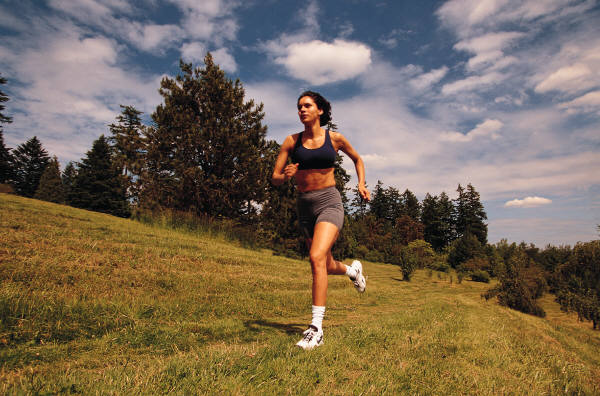
You don’t have to run marathons (26.2 miles) or compete in the Ironman Triathlon to earn the health benefits of exercise. However, if health promotion and disease prevention are your goals, plan on a lifetime commitment to regular physical activity.

For the general public, the U.S. Centers for Disease Control and Prevention recommends:

  • at least 150 minutes per week of moderate-intensity aerobic activity (e.g., brisk walking) and muscle-strengthening activity at least twice a week, OR
  • 75 minutes per week of vigorous-intensity aerobic activity (e.g., running or jogging) plus muscle-strengthening activity at least twice a week. The muscle-strengthening activity should work all the major muscle groups: legs, hips, back, abdomen, chest, shoulders, arms.

I’m working on a program of combined aerobic (high intensity interval training) and strength training for just 70 minutes a week, but it’s not yet ready for prime time.

STRENGTH TRAINING

What’s “strength training”? It’s also called muscle-strengthening activity, resistance training, weight training, and resistance exercise. Examples include lifting weights, work with resistance bands, digging, shoveling, yoga, push-ups, chin-ups, and other exercises that use your body weight or other loads for resistance.

I prefer free weights over machines, but that's just me

I prefer free weights over machines, but that’s just me

Strength training just twice a week increases your strength and endurance, allows you to sculpt your body to an extent, and counteracts the loss of lean body mass (muscle) so often seen during efforts to lose excess weight. It also helps maintain your functional abilities as you age. For example, it’s a major chore for many 80-year-olds to climb a flight of stairs, carry in a bag of groceries from the car, or vacuum a house. Strength training helps maintain these abilities that youngsters take for granted.

According to the U.S. Centers for Disease Control and Prevention: “To gain health benefits, muscle-strengthening activities need to be done to the point where it’s hard for you to do another repetition without help. A repetition is one complete movement of an activity, like lifting a weight or doing a sit-up. Try to do 8–12 repetitions per activity that count as 1 set. Try to do at least 1 set of muscle-strengthening activities, but to gain even more benefits, do 2 or 3 sets.”

If this is starting to sound like Greek to you, consider instruction by a personal trainer at a local gym or health club. That’s a good investment for anyone unfamiliar with strength training, in view of its great benefits and the potential harm or waste of time from doing it wrong. Alternatives to a personal trainer would be help from an experienced friend or instructional DVD. If you’re determined to go it alone, Internet resources may help, but be careful. Consider “Growing Stronger: Strength Training for Older Adults” (ignore “older” if it doesn’t apply).

Current strength training techniques are much different than what you remember from high school 30 years ago—modern methods are better. Some of the latest research suggests that strength training may be even more beneficial than aerobic exercise.

AEROBIC ACTIVITY

“Aerobic activity” is just about anything that mostly makes you huff and puff. In other words, get short of breath to some degree. It’s also called “cardio.” Examples are brisk walking, swimming, golf (pulling a cart or carrying clubs), lawn work, painting, home repair, racket sports and table tennis, house cleaning, leisurely canoeing, jogging, bicycling, jumping rope, and skiing. The possibilities are endless. A leisurely stroll in the shopping mall doesn’t qualify, unless that makes you short of breath. Don’t laugh: that is a workout for many who are obese.

But which aerobic physical activity is best? Glad you asked!

Steve Parker MD

Not ready for this? Consider interval walking then.

Ideally, it’s an activity that’s pleasant for you. If not outright fun, it should be often enjoyable and always tolerable. Unless you agree with Ken Hutchins that exercise isn’t necessarily fun.

Your exercise of choice should also be available year-round, affordable, safe, and utilize large muscle groups. The greater mass and number of muscles used, the more calories you will burn, which is important if you’re trying to lose weight or prevent gain or regain. (Exercise isn’t a great route to weight loss in the real world, although it helps on TV’s Biggest Loser show.) Compare tennis playing with sitting in a chair squeezing a tennis ball repetitively. The tennis player burns calories much faster. Your largest muscles are in your legs, so consider walking, biking, many team sports, ski machines, jogging, treadmill, swimming, water aerobics, stationary cycling, stair-steppers, tennis, volleyball, roller-skating, rowing, jumping rope, and yard work.

Steve Parker MD

Yes, this is exercise, too

Walking is “just what the doctor ordered” for many people. It’s readily available, affordable, usually safe, and requires little instruction. If it’s too hot, too cold, or rainy outside, you can do it in a mall, gymnasium, or health club.

MEDICAL CLEARANCE  

Check this link.

SUMMARY

All I’m asking you to do is aerobic activity, such as walk briskly (3–4 mph or 4.8–6.4 km/h) for 30 minutes most days of the week, and do some muscle-strengthening exercises three times a week. These recommendations are also consistent with the American Diabetes Association’s Standards of Care–2013. This amount of exercise will get you most of the documented health benefits.

Steve Parker, M.D.

First Nation Aborigines Improve Diabetes By Return to Ancestral Diet

…along with improvement in high blood pressure, weight, and heartburn. Dr. Jay Wortman worked with aborigines on the west coast of Canada, convincing some of them to return to their ancestral diet, which happened to be low in carbohydrate. Dr. Wortman shared his experience in a video with DietDoctor Andreas Eenfeldt. Or check out the hour-long documentary, “My Big Fat Diet,” which may be available on YouTube.

Dr. Wortman seems to have cured his own case of type 2 diabetes with an Atkins-style diet.

—Steve

Dr. Richard Bernstein Not a Fan of Insulin Pumps

Click for details at DiabetesHealth. Dr. Bernstein is a type 1 diabetic and one of the first users of a home blood glucose monitor. He’s most famous for recommending very-low-carb eating for folks with diabetes, in his book Diabetes Solution. An excerpt from DiabetesHealth:

I spent a month in a major insulin pump center and saw several things. Many of the female patients seemed to have wings on their sides where the pump tubing was inserted and they got lipohypertrophy [overgrown fat tissue] from localized injections, but that was the least of it. None of them actually had remotely normal blood sugars.