Tag Archives: low-carb

Recipe: Lemon-Pepper Chicken, Vegetable Medley, and Salad

paleo diet, Steve Parker MD, low-carb meal

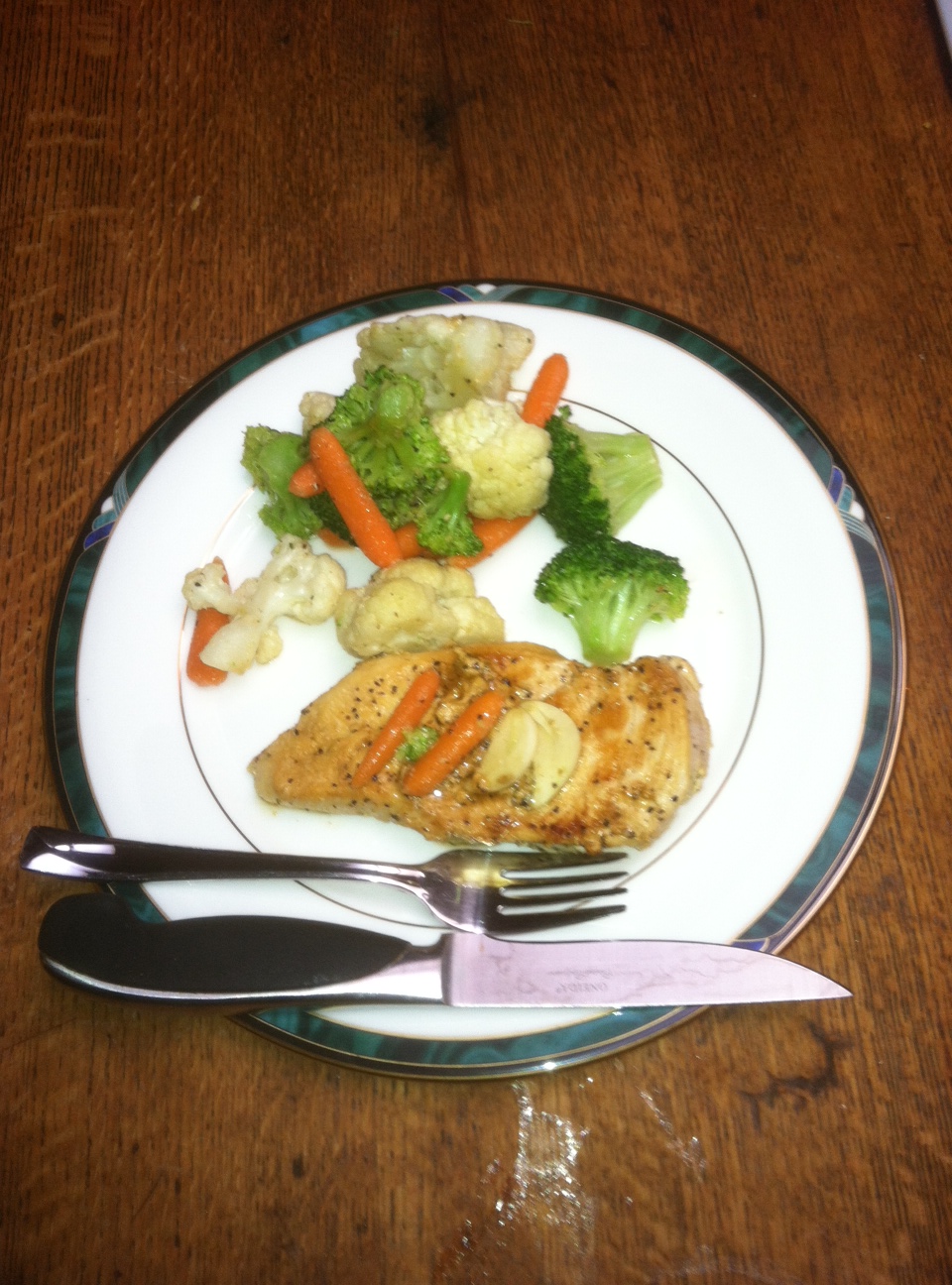
Sauteed chicken and vegetables

This meal is a staple at our house. The chicken we use is frozen breast because it’s less expensive but tastes just as good as fresh. Use never-frozen chicken or another part of the chicken if you prefer. Remember the sitcom “Everybody Loves Raymond”?  Lemon chicken was Debra’s signature meal. Now you can make it!

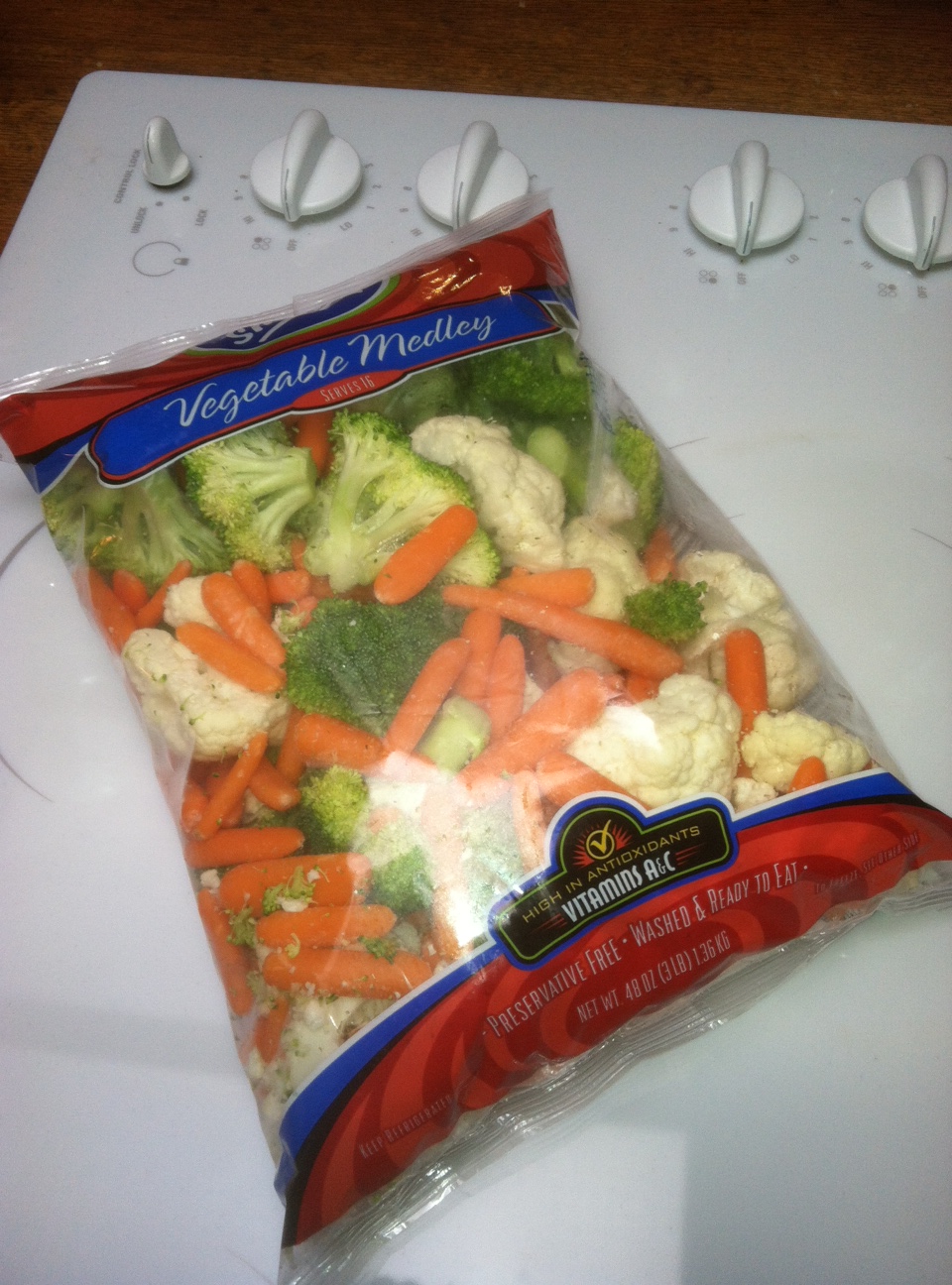
The ingredients here are for two servings. We buy a large bag of vegetables called “vegetable medley” that has equal parts broccoli, cauliflower, and carrots.

Ingredients:

  • chicken breasts, boneless, skinless, frozen, 16 oz (450 g)
  • commercial lemon pepper seasoning (choose one with low sodium and the fewest non-paleo ingredients like sugar)
  • broccoli, fresh, raw, 4.5 oz (130 g)
  • cauliflower, fresh, raw, 4.5 oz (130 g)
  • carrots, fresh, raw, 4.5 oz (130 g), peeled and sliced
  • commercial low-sodium vegetable seasoning (e.g., Weber Roasted Garlic and Herb. We tried Mrs. Dash Seasoning Blend Garlic and Herb—didn’t work well with this)
  • lettuce, Romaine, 6 oz (170 g), bite-size chunks
  • tomatoes, raw, 6 oz (170 g), bite-size chunks
  • cucumber, raw, 4 oz (115 g), peeled and sliced
  • celery, raw, 4 oz (115 g), sliced
  • sunflower seeds kernels, dry roasted, w/o salt, 1 oz (30 g)
  • bacon bits (aka crumbled bacon), 2 tbsp (15 g)
  • olive oil, extra virgin, 5 tbsp (75 ml)
  • vinegar, 1 tbsp (15 ml) (your choice of red wine, white wine, balsamic, or apple cider vinegar)
  • garlic, raw, 1 clove, sliced very thinly
  • salt and pepper to taste (not counted in the nutritional analysis below)
  • lemon, fresh (optional)

Instructions:

paleo diet, Steve Parker MD, sauteing chicken, cooking chicken

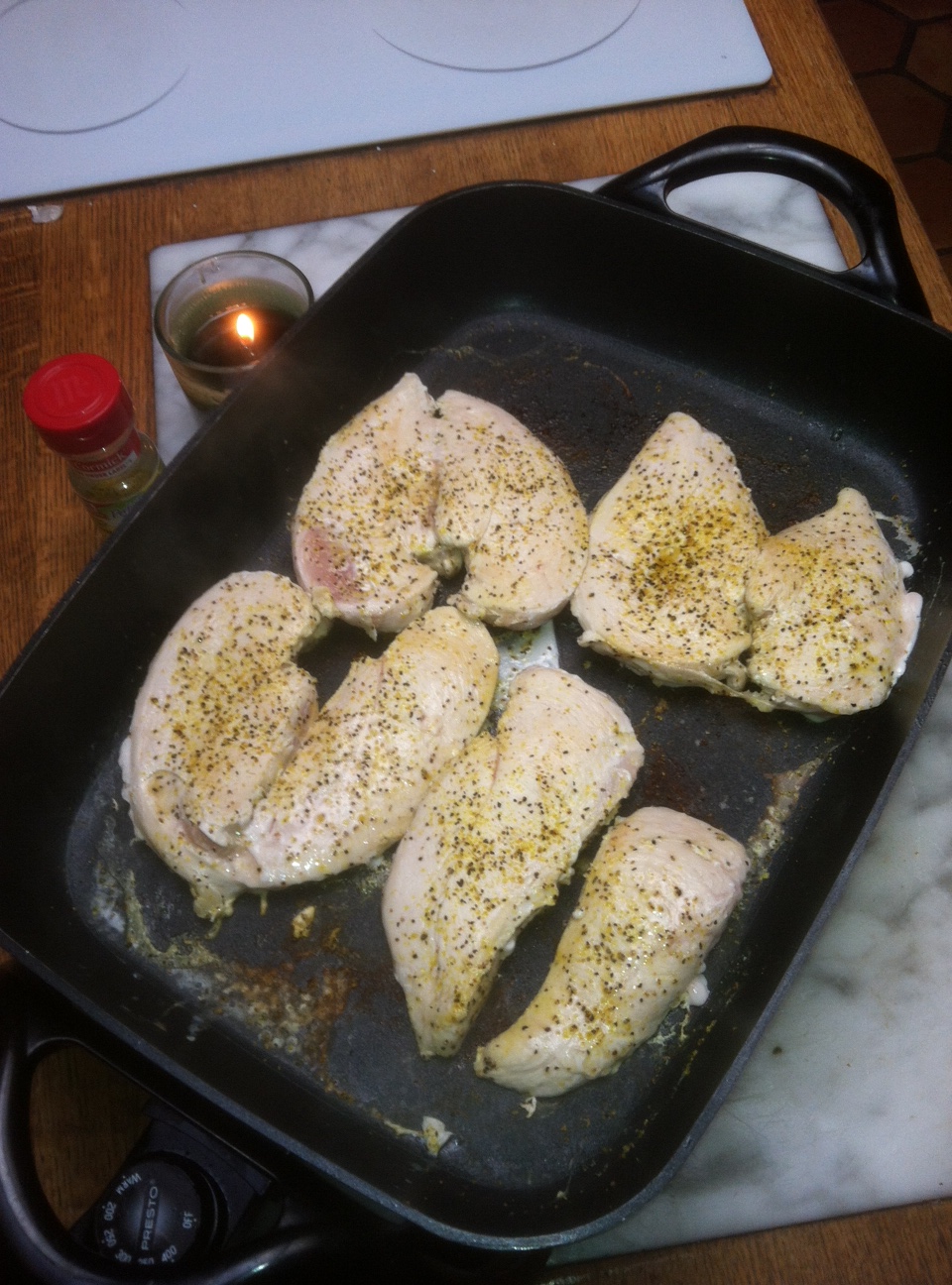
Thick chicken breasts sliced down the middle and opened up like a clam (or butterfly) to reduce cooking time

Start on the chicken first. Sauté the breasts in a pan over medium heat. You don’t need to thaw it beforehand. While cooking, sprinkle with the lemon pepper seasoning. If the breasts are thick, you may want to “butterfly” them with a knife when half done, to speed up the cooking process. If you over-cook, the meat will be tougher. It should be done in roughly 10–15 minutes. While the chicken is cooking, get to work on your other items.

Cook the vegetables thusly. Put the broccoli, cauliflower, and carrots in a microwave-safe dish, add about four fl oz (120 ml) of water, and microwave (covered) on high for four minutes. If you don’t have a cover, just use a water-soaked paper towel. While they cook, heat 2 tbsp (30 ml) of the olive oil in a medium-sized pan over medium heat, with the garlic, for a couple minutes to release the garlic flavor. Drain the water off the microwaved vegetables, then sauté them in the olive oil pan for a couple minutes, stirring frequently. Add your commercial vegetable seasoning when you start sautéing or at any point thereafter, even at the table.
Steve Parker MD, paleo diet, vegetables, vegetable medley

Only $3.50 (USD) for this whole bag of Vegetable Medley at Sam’s Club

Finally the salad. In a large bowl, place the lettuce, tomatoes, sunflower seeds, cucumber, celery, bacon bits, 3 tbsp (45 ml) olive oil, and vinegar. Mix thoroughly.

For a bit of zing, you might enjoy a few squirts of fresh lemon juice on the vegetables or salad just before eating.

Servings: 2

Nutritional Analysis Per Serving:

  • 55% fat
  • 12% carbohydrate
  • 32% protein
  • 800 calories
  • 27 g carbohydrate
  • 11 g fiber
  • 16 g digestible carb
  • 970 mg sodium (not counting any you add, such as in commercial seasonings)
  • 1830 mg potassium
  • Prominent features: rich in protein, A, B6, C, E, copper, iron, manganese, niacin, pantothenic acid, phosphorus, and selenium

Is the Paleo Diet Truly Low-Carb After All?

Lifextension argues that very case in a recent blog post. If the paleo diet is low carb, then it’s going to be heavily animal-based. According to Lifextension:

Diachronic and comparative analysis of the skeletal data of human hunters and cultivators from across the globe has revealed that – prior to the onset of agriculture – carbohydrates must have comprised only a rare and occasional component of ancestral eating patterns. Furthermore, the impact of the introduction of carbohydrates to human diets was almost immediate in its deterioration of human health and biology.

However, paradoxically, many proponents of a ‘Paleo’ (i.e.: pre-agricultural) diet have promoted the use of tubers and other starches as – not only benign – but necessary health foods to consume for the correction of metabolic and endocrine disorders. Potatoes, rice, and other oxymoronically-labelled ‘safe’ starches, are being promoted in spite of the fact that they are exclusively Neolithic foods. Consequently, it is the conflation of starches, safe, and ancestral that I now wish to address, and hopefully correct.

Lifextension concludes:

The intake of plant foods by hominids was most plausibly and conceivably minimal. This is due to their limited, seasonal availability; the physiological ceiling on fibre and toxin intake; the biological evolution of early Homo physiology; along with the technological, spatial and temporal limitations of obligatory pre-consumption preparations. Consequently, evolutionary arguments for the consumption of what are quite blatantly Neolithic foods are rendered paradoxical and absurd. Starches are neither ‘Paleo’; nor does our evolutionary biology sanction them as ‘safe’.

Lifextension neither pulls punches nor takes prisoners. This could get interesting.

Read the rest.

Recipe: Tossed Tuna Salad and Almonds

tuna, fishing, Steve Parker MD, paleo diet, tuna salad

Has anyone even bothered to ask why the tuna are eating mercury? —Jim Gaffigan

This is an easy lunch or dinner. For a different flavor and twice the calcium, you could substitute canned sardines for the tuna, but I’ve never tried it.

Ingredients:

  • lettuce, romaine, 3.5 oz (100 g)
  • onion, chopped, 1.5 oz (42 g)
  • tomatoes, chunked, 5.5 oz (150 g)
  • tuna, canned, albacore/white, packed in water (drain and discard the fluid), 5-oz can (140 g)
  • olive oil, extra virgin, 1.5 tbsp (22 ml)
  • vinegar, balsamic, 1/2 tbsp (7.5 ml)
  • salt and pepper to taste (not counted in nutritional analysis below)
  • almonds, 1.5 oz (45 g)

Instructions:

In a 3-quart (3 liter) bowl, put lettuce, onion, tomatoes, and tuna (3.25 oz or 90 g at this point). Add olive oil, balsamic vinegar, and salt and pepper to taste Mix well with a fork. Enjoy almonds separately, before, during, or after salad.

For extra zing, add a few squirts of fresh lemon juice. This is a neat trick if you’re trying to avoid salt.

Servings: 1

Nutritional Analysis:

  • 58% fat
  • 12% carbohydrate
  • 30% protein
  • 711 calories
  • 22.3 g carb
  • 9.4 g fiber
  • 12.9 digestible carb
  • 670 mg sodium
  • 1,392 mg potassium
  • Prominent features: rich in protein, B12, C, E, copper, iron, magnesium, manganese, niacin, phosphorus, and selenium

Low-Carb Research Update

Grain-based high-carb Neolithic food

Grain-based high-carb Neolithic food

The paleo diet averages about 30% of total calories from carbohydrates, with a range of about 22 to 40%.  That 30% average is much lower than the standard 50–60% in the developed world.  Is that lower percentage healthy or not?  It depends on the quality of the carbs and the remainder of the diet.  It most certainly can be healthy.

As much as possible, I base my nutrition and medical recommendations on science-based research published in the medical literature.  In the early 2000s, a flurry of scientific reports demonstrated that very-low-carb eating (as in the style of Dr. Robert Atkins) was safe and effective for short-term weight management and control of diabetes.  Eighty hours of literature review in 2009 allowed me to embrace low-carbohydrate eating as a logical and viable option for many of my patients. The evidence convinced me that the relatively high fat content of many low-carb diets was nothing to worry about long-term.

I’d like to share with you some of the pertinent low-carb research findings of the last few years.

Low-Carb Diets

  • Low-carb diets reduce weight, reduce blood pressure, lower triglyceride levels (a healtlhy move), and raise HDL cholesterol (another good trend).  These improvements should help reduce your risk of heart disease.  (In the journal Obesity Reviews, 2012.)
  • Dietary fat, including saturated fat, is not a cause of vascular disease such as heart attacks and atherosclerosis (hardening of the arteries).  (Multiple research reports.)
  • If you’re overweight and replace two sugary drinks a day with diet soda or water, you’ll lose about four pounds over the next six months.  (American Journal of Clinical Nutrition, 2012.)
  • United States citizens obtain 40% of total calories from grains and added sugars.  Most developed countries are similar.  Dr. Stephan Guyenet notes that U.S. sugar consumption increased steadily “…from 6.3 pounds [2.9 kg] per person per year in 1822 to 107.7 pounds [50 kg] per person in 1999.  Wrap your brain around this: in 1822 we ate the amount of added sugar in one 12-ounce can of soda every five days, while today we eat that much sugar every seven hours.”
  • A very-low-carb diet improves the memory of those with age-related mild cognitive impairment. Mild cognitive impairment is a precursor to dementia.  (University of Cincinnati, 2012.)
  • High-carbohydrate and sugar-rich diets greatly raise the risk of mild cognitive impairment in the elderly. (Mayo Clinic study published in the Journal of Alzheimers’ Disease, 2012.)
  • Compared to obese low-fat dieters, low-carb dieters lose twice as much fat weight.  (University of Cincinnati, 2011.)
  • Diets low in sugar and refined starches are linked to lower risk of age-related macular degeneration in women.  Macular degeneration is a major cause of blindness.  (University of Wisconsin, 2011.)
  • A ketogenic (very-low-carb) Mediterranean diet cures metabolic syndrome (Journal of Medicinal Food, 2011.)
  • For type 2 diabetics, replacing a daily muffin (high-carb) with two ounces (60 g) of nuts (low-carb) improves blood sugar control and reduces LDL cholesterol (the “bad” cholesterol). (Diabetes Care, 2011.)
  • For those afflicted with fatty liver, a low-carb diet beats a low-fat diet for management. (American Journal of Clinical Nutrition, 2011.)
  • For weight loss, the American Diabetes Association has endorsed low-carb (under 130 g/day) and Mediterranean diets, for use up to two years. (Diabetes Care, 2011.)
  • High-carbohydrate eating doubles the risk of heart disease (coronary artery disease) in women.  (Archives of Internal Medicine, 2010.)
  • One criticism of low-carb diets is that they may be high in protein, which in turn may cause bone thinning (osteoporosis).  A 2010 study shows this is not a problem, at least in women.  Men were not studied.  (American Journal of Clinical Nutrition.)
  • High-carbohydrate eating increases the risk of developing type 2 diabetes (American Journal of Clinical Nutrition, 2010.)
  • Obesity in U.S. children tripled from 1980 to 2000, rising to 17% of all children.  A low-carb, high-protein diet is safe and effective for obese adolescents.  (American Journal of Clinical Nutrition, 2010.

Steve Parker, M.D.

PS:  The paleo diet is also referred to as the caveman diet, Paleolithic diet, hunter-gatherer diet, Stone Age diet, and ancestral diet.

Which Vegetables Are Low in Carbohydrate Content?

Laura Dolson over at About.com has a helpful list of low-carb veggies.  Helpful if you experience excessive

blood sugar spikes from high-carb items, or if you’re restricting carbs for weight management.

-Steve

Are Ketogenic Diets Crazy?

You get it?

Ketogenic diets don’t have anything to do with the paleo diet usually.  However, I think they may play a legitimate role in weight loss for overweight type 2 diabetics.  They could also be helpful in rapid control of blood sugars in out-of-control diabetics (excluding diabetic ketoacidosis).

Has anyone devised a ketogenic paleo diet yet?  I don’t recall one off the top of my head.

Registered Dietitian Franziska Spritzler recently reviewed the concept of low-carb ketogenic diets.  She thinks they are a valid approach to certain clinical situations.  Among dietitians, this puts her in a small but growing minority.

I hesitate to mention this, but I will anyway.  Many, if not most, dietitians too easily just go along with the standard party line on low-carb eating: it’s rarely necessary and quite possibly unhealthy.  Going along is much easier than doing independent literature review and analysis.  I see the same mindset among physicians.

Franziska breaks the mold.

Steve Parker, M.D.

Is the Paleo Diet Low-Carb?

Low-carb diet and paleo diet advocates often align themselves, even though S. Boyd Eaton’s 1988 version of the paleo diet doesn’t appear to be very low-carb at all: 46% of total calories from carbohydrate.  The standard American diet provides 50-55% of calories from carbohydrate.  Paleo proponents and low-carbers do share an affinity for natural, whole foods, and an aversion to grains, milk, and legumes. 

A 2010 article by Kuipers et al (reference below) sugggests that the East African Paleolithic diet derived, on average, 25-29% of calories from protein, 30-39% from fat, and 39-40% from carbohydrate.  That qualifies as low-carb.  Modern Western percentages for protein, fat, and carb are 15%, 33%, and 50%, respectively.

Loren Cordain and associates in 2000 suggested that Paleolithic diets may have derived about a third—22 to 40%—of calories from carbohydrate, based on modern hunter-gatherer societies. 

You can make a good argument that these paleo concepts are healthy: high physical activity, nonsmoking, consumption of natural whole foods while minimizing simple sugars and refined starches.  The paleo community is convinced that grains and legumes are harmful; many others disagree.  Also debatable are the roles of dairy, polyunsaturated to saturated fat ratio, low sodium, and high potassium.  Modern diets tend to be high-sodium and low-potassium, which may predispose to high blood pressure and heart trouble—diseases of modern civilization.

It appears that the average paleo diet may have derived about a third of calories from carbohydrate: that qualifies as low-carb.

For more on the paleo diet and lifestyle, visit Robb Wolf’s website, Mark’s Daily Apple, and Archevore

Steve Parker, M.D.

References:

Kuipers, R., Luxwolda, M., Janneke Dijck-Brouwer, D., Eaton, S., Crawford, M., Cordain, L., & Muskiet, F. (2010). Estimated macronutrient and fatty acid intakes from an East African Paleolithic diet British Journal of Nutrition, 1-22 DOI: 10.1017/S0007114510002679.  Note that one of the authors is Loren Cordain.  Good discussion of various Paleolithic diets.

Eaton, S., Konner, M., & Shostak, M. (1988). Stone Agers in the fast lane: Chronic degenerative diseases in evolutionary perspective. The American Journal of Medicine, 84 (4), 739-749 DOI: 10.1016/0002-9343(88)90113-1

Cordain, L., et al.  Plant-animal subsistance ratios and macronutrient energy estimations in worldwide hunter-gatherer dietsAmerican Journal of Clinical Nutrition, 71 (2000): 682-692.