Tag Archives: paleo diet

Artificial Sweeteners and the Paleoista

Did you know babies under one year of age shouldn’t be given honey?  I saw that warning on a honey container recently and didn’t know why.  Honey may contain bacterial spores that cause botulism in the wee ones.

A pinch of salt helps reduce bitterness in coffee

Paleo diet aficionados can satisfy a sweet tooth with honey or fruit.  Unfortunately for people with diabetes, those items can spike blood sugars too high.  Honey, for instance, has 17 grams of carbohydrate in one tablespoon (15 ml), which is more carb than in a tablespoon of white granulated table sugar.

Most diabetics eating paleo-style will need some limit on consumption of honey and fruit.  Or they could take more diabetes drugs to control blood glucose elevations.  Again, unfortunately, we don’t know the long-term health effects of most of our diabetes drugs.

How about getting a sweet fix with artificial sweeteners?  Paleo purists would say “fuggedaboudit.”  In theory, that’s fine.  But many paleo followers with diabetes won’t forget about it.  They’ll use artificial sweeteners, aka sugar substitutes.

If you’re gonna use ’em, think about stevia.  It’s derived from a natural source, the leaves of a plant in South America.  Admittedly, our forebears in eastern Africa wouldn’t have had access to it 50,000 years ago.  After the plant has been processed, it’s certainly a highly refined product going against the grain of the paleo movement.  Furthermore, one of the stevia market leaders in U.S. (Truvia) is mixed with erythritol.  To help you feel better about the erythritol (a sugar alcohol), note that it is found naturally in some fruits.  Another stevia commercial product in the U.S. is Pure Via.

Dietitian Brenna at her Eating Simple blog reviewed sugar impostors in January, 2012.  She favored stevia over the others, at least for non-diabetics who were tempted.  Brenna also linked to a Mayo Clinic review of artificial sweeteners.

Note that sugar alcohols like erythritol have the potential to raise blood sugar levels.  They shouldn’t raise it as much as table sugar, however.  With regard to sugar alcohols, Dr. Richard K. Bernstein urges caution, if not total avoidance.  Use your meter to see how they effect you.

If you’re in the habit of using one or two teaspoons of honey to sweeten tea or coffee, you’re blood sugar levels should be more stable and manageable if you use stevia instead.  Dr. Bernstein gives the green light to stevia powder or liquid, along with saccharin tablets or liquid, aspartame tablets, and sucralose tablets, acesulfame-K, and neotame tablets.  Stevia is the only one close to “natural.”

Steve Parker, M.D.

What Do Mainstream Dietitians Think of the Paleo Diet?

Australian Aborigine in Swamp Darwin

I’m curious to know what mainstream dietitians think about the Paleolithic diet, so I read an article entitled “Are diets from Paleolithic times relevant today?”  This one-page article is in the August, 2012, issue of the Journal of the American Academy of Nutrition and Dietetics. The author is Eleese Cunningham, RD, of the Academy of Nutrition and Dietetics Knowledge Center Team.

The Academy of Nutrition and Dietetics is the new name of the American Dietetics Association, “the world’s largest organization of food and nutrition professionals.”

Ms. Cunningham notes that “diet books for modern humans are extremely popular, and the Paleolithic diet, sometimes called the “Caveman Diet” or the “Stone Age Diet,” is one of the latest trends.”  You’d think the author would mention one of the popular paleo diet books, such as Loren Cordain’s, Robb Wolf’s, or Mark Sisson’s.  Think again.  She brings up only another dietitian’s review of Richard Nikoley’s paleo diet book, pointing out his lack of professional health credentials and his advocacy of raw milk consumption.  But milk isn’t even considered a component of most paleo diets.  Ms. Cunningham justifiably points out the infectious risks, however small, linked to raw milk consumption.  (I’ve not read Nikoley’s book, Free the Animal.)

(If you click the link to see the review of Nikoley’s book, scroll to page 30.  Sample: “Based more on science fiction than science fact, Nikoley’s recommendations are misguided and reckless…”)

Ms. Cunningham likes the fact that the paleo diet reduces consumption of salt and added sugars, while promoting fruit and vegetables.  However, she immediately notes thereafter that, “a striking counter to the meat-based Paleolithic diet is the evidence that supports the healthfulness of a vegetarian diet and the benefits it may have in the prevention and treatment of certain diseases.  Another review of this approach . . . questions the exclusion of nutrient-rich grains, beans, and low-fat dairy and the potential nutrient shortfalls associated with the Paleolithic diet restrictions.”

This article appears to be in a regular feature of the journal called, “From the Academy: Question of the Month.”  Are diets from Paleolithic times relevant today?  She never answers directly.  I suspect the average dietitian reading this article will conclude that Ms. Cunningham and the Academy are not in favor of the paleo diet.

Steve Parker, M.D.

Reference: Cunningham, Eleese.  Are diets from Paleolithic times relevant today?  Journal of the Academy of Nutrition and Dietetics, 2012 (vol. 112, issue 8): p. 1296.  doi: 10.1016/j.jand.2012.06.019

Position of the American Dietetic Association: Vegetarian diets.  Journal of the American Dietetic Association, 2009 (109): 1266-1282.

Week 1 Recap of the Parker Paleo Diet Trial

I really didn’t need all that meat, but I ate it anyway

It’s going well.  No adverse effects.  Pretty easy to follow.

A prior post outlines the paleo diet version I’m following.  It’s a little more hardcore or purist than some of the others you’ll see.

Only two transgressions.  I absentmindedly drank a diet Coke and I purposefully ate four bacon-wrapped stuffed jalapeño peppers that held a little cheese.  The peppers were too hot for anyone else at home and I couldn’t stand to see them go to waste.

I’ve been working a string of 12-hour shifts.  My wife has cooked my meals; I eat one hot and fresh, and take the leftovers to the hospital for my mid-shift meal.  So two meals a day.

I’m not doing this to lose weight, but I’m down to 169.5 lb, a loss of 1.5 lb in one week.  I think the loss is real, not reflecting my state of hydration or contents of bladder and bowels.

This is fun.

—Steve

PS: The paleo diet is also known as the Paleolithic, Stone Age, Old Stone Age, hunter-gatherer, or caveman diet.

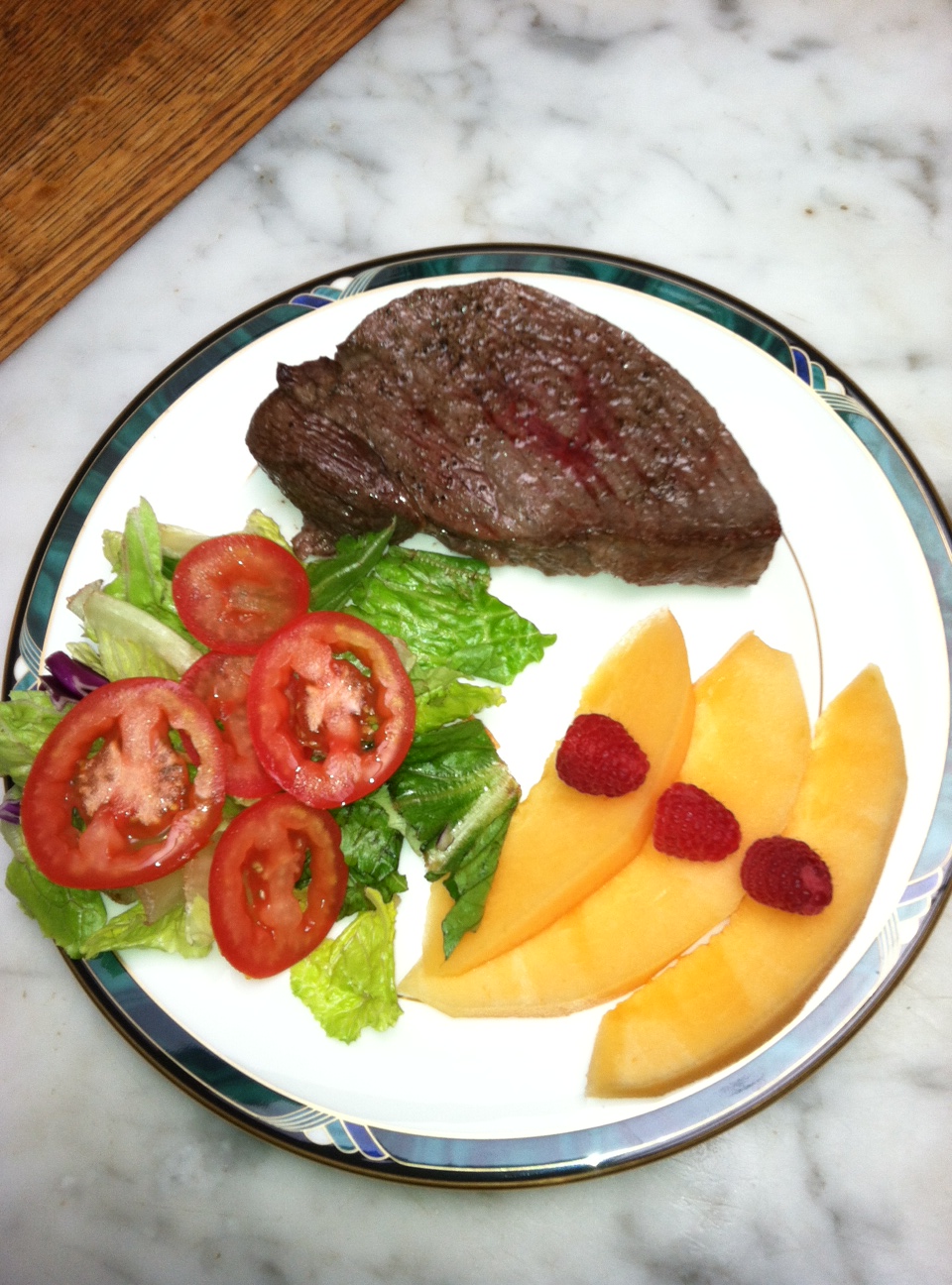
Sirloin steak, salad, cantaloupe, 3 raspberries

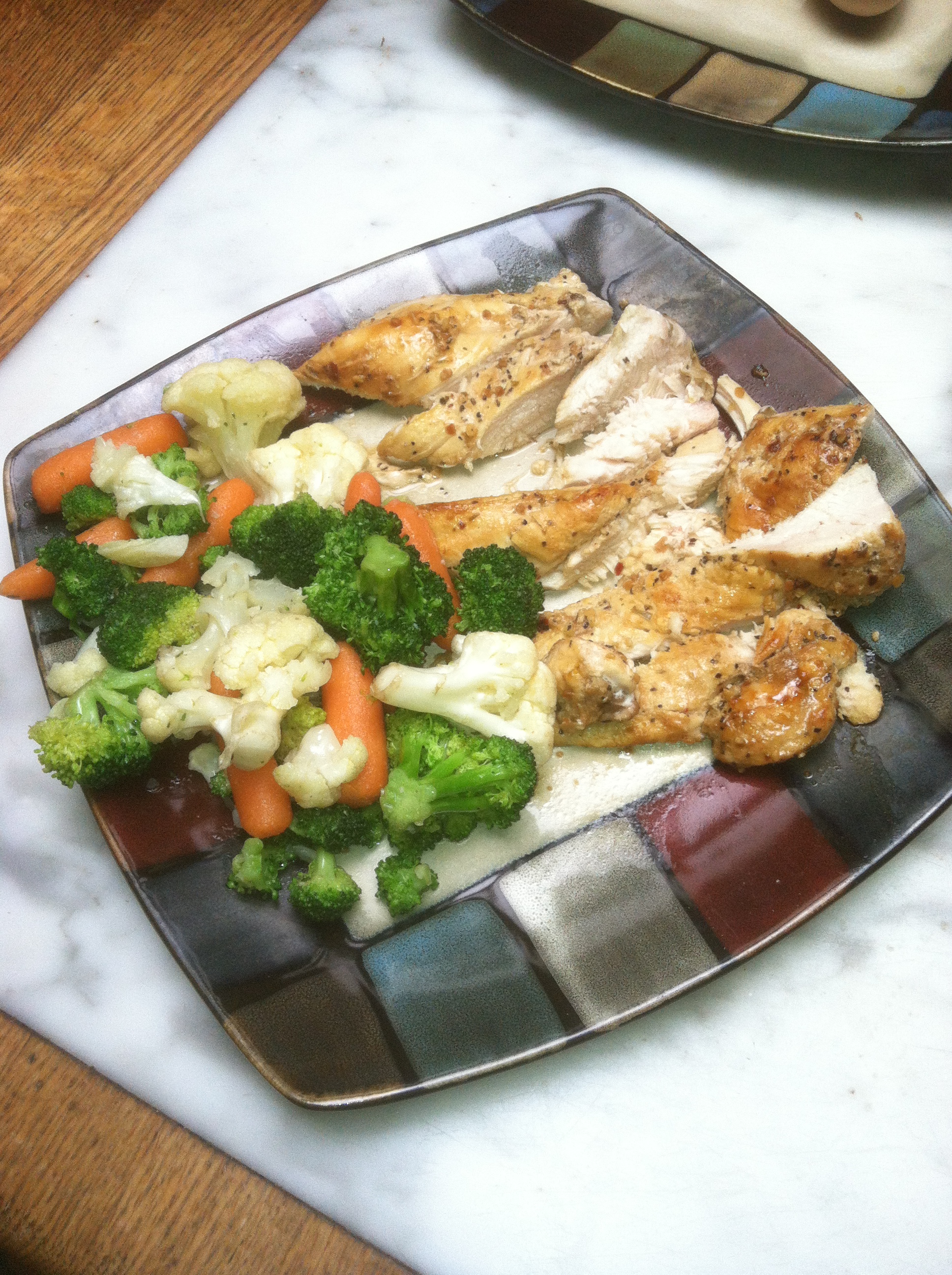
Pan-fried chicken and vegetables

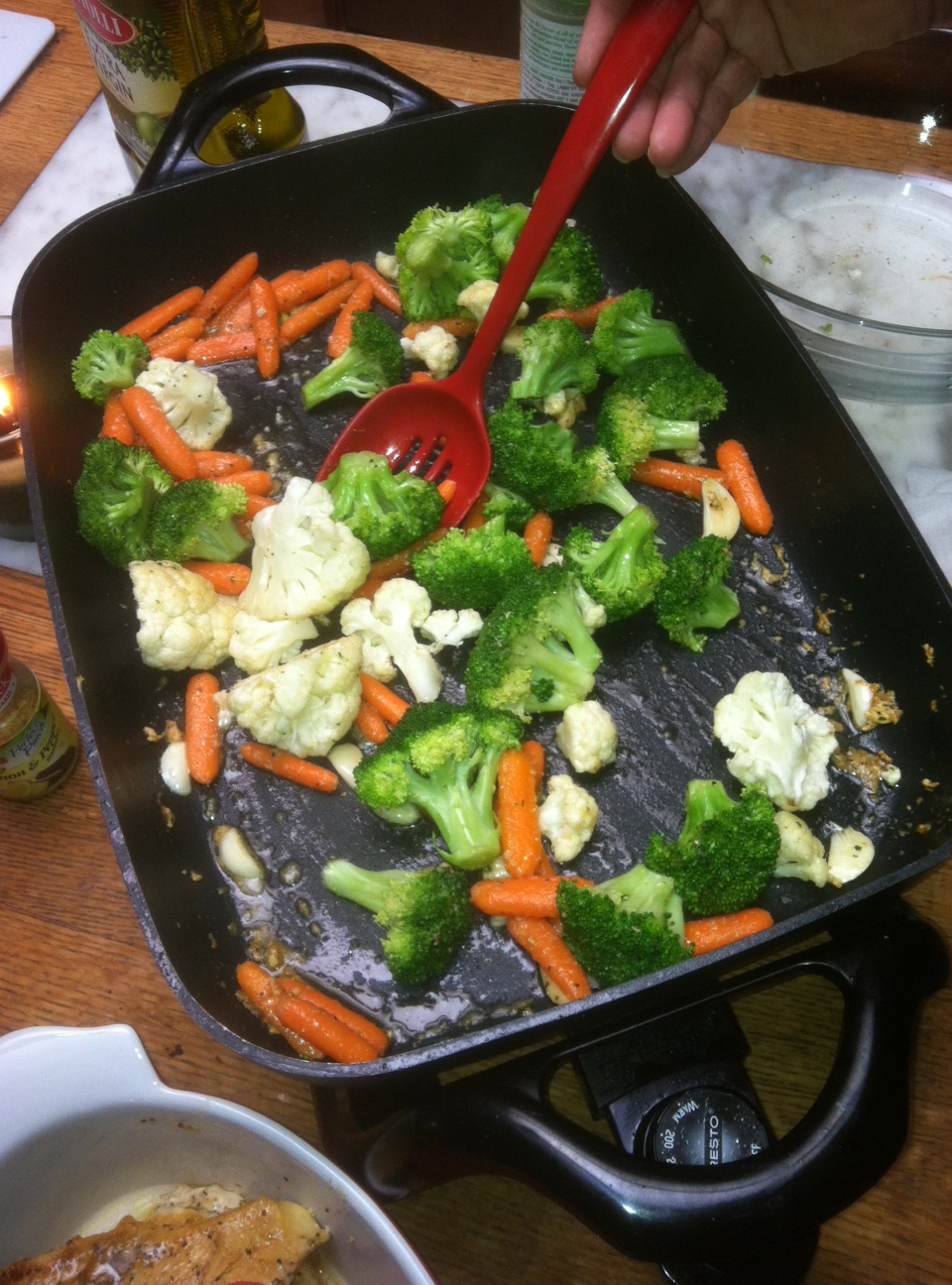
My wife heats these in the microwave for five minutes then sautees them in olive oil with garlic slices

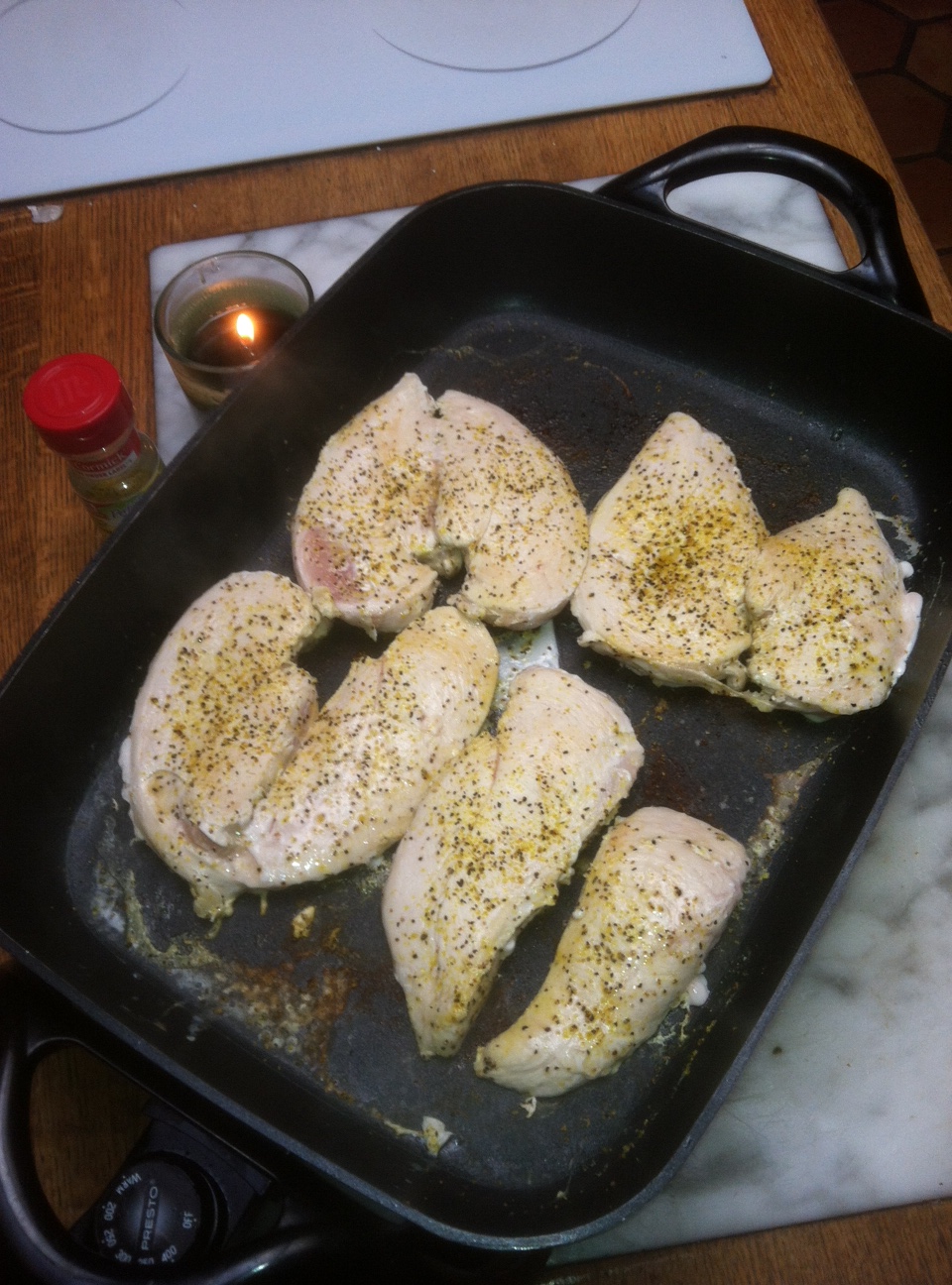
Thick chicken breasts sliced down the middle and opened up like a clam to reduce cooking time

Only $3.50 (USD) for the whole bag at Sam’s Club

Skirt Steak With Guacamole and Pico de Gallo

Another doctor-approved paleo meal

I’m blessed to have a wife who’s a good cook.

When I lived in Austin, Texas, the story was that skirt steak (diaphragm muscle) was a cheap cut of meat favored by Mexicans.  After fajitas caught on, the price went up.  It’s often run through a tenderizing machine or pounded before cooking.

Pico de Gallo is just chopped up tomato, onion, cilantro, jalapeño pepper, and salt.

-Steve

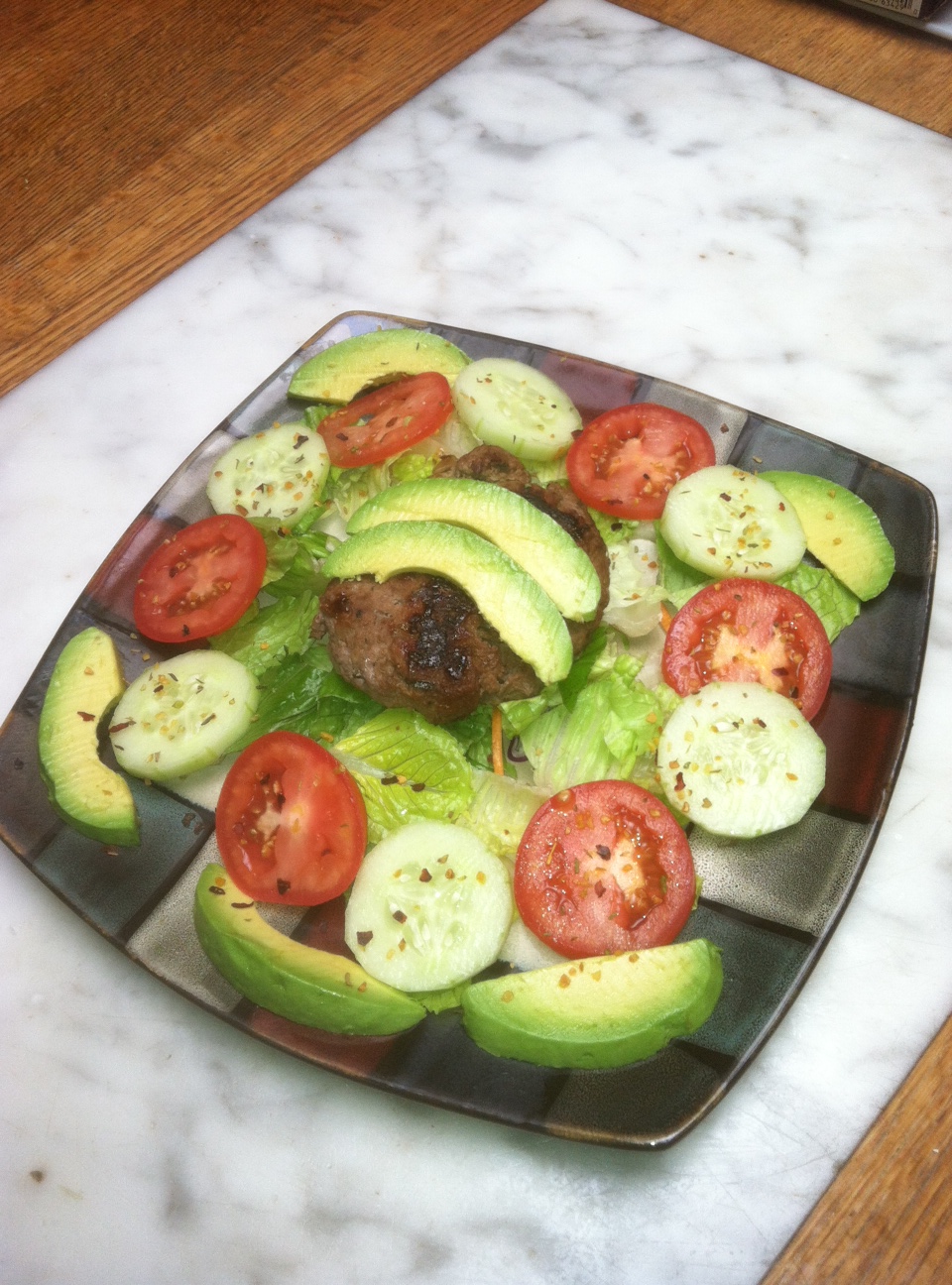
Hamburger and Avocado Salad

Hamburger-Avocado Salad with tomatoes, cucumbers, lettuce, salt/pepper, and olive oil vinaigrette

This was an OK dinner.  My wife didn’t care for it, which may explain why don’t see anything similar on typical restaurant menus.  You see salads with chicken, salmon, or steak strips, usually.  Hamburger’s just not an ideal pairing with the other flavors, I guess. I dressed it with the left-over olive oil vinaigrette I made yesterday.

-Steve

Day 1 of My Paleo Diet

Why do it?

  • Direct experience with implementation obstacles
  • Potential health benefits

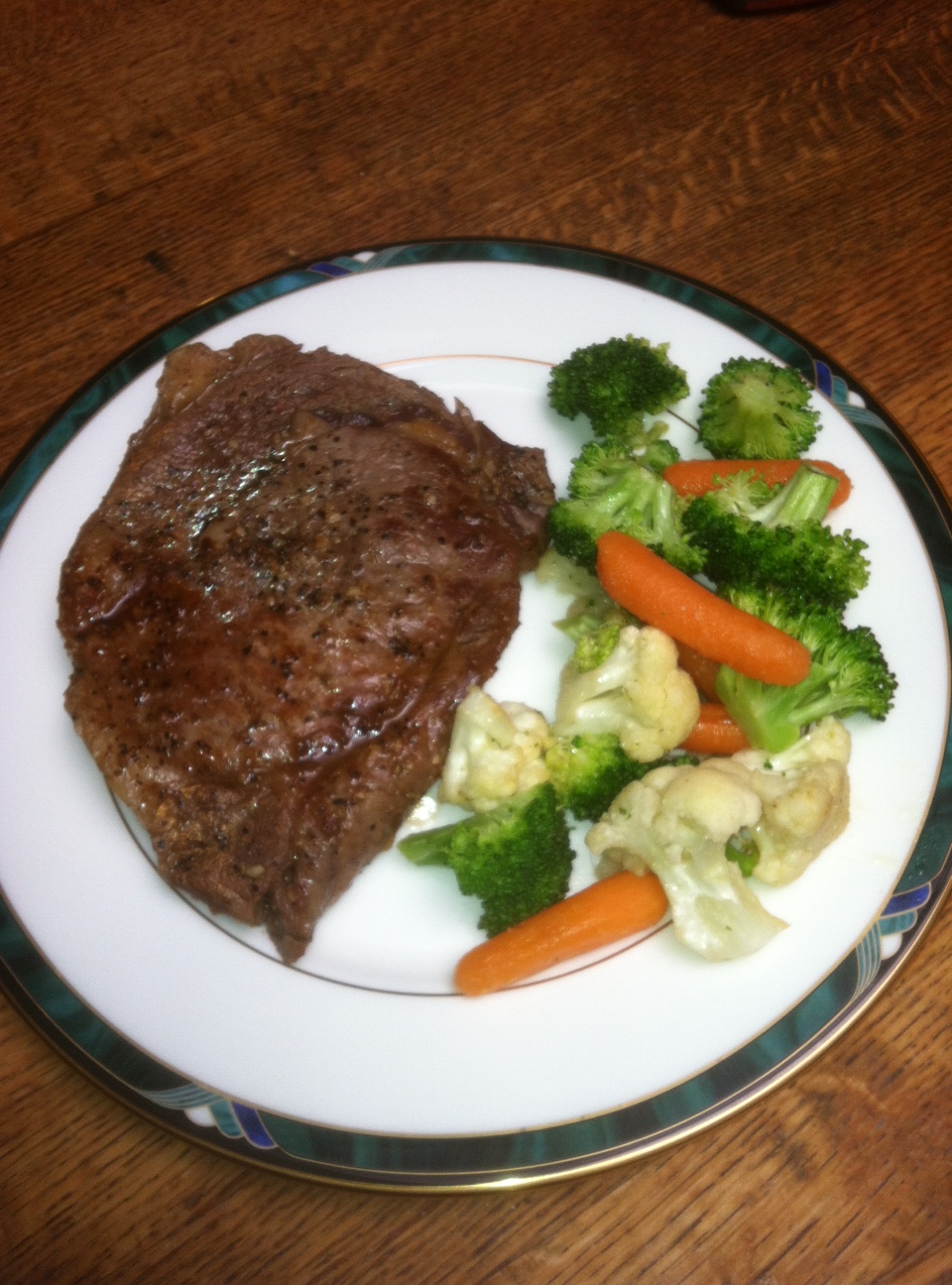
My first Parker Paleo Diet meal: sautéed mixed veggies and pan-fried chicken breast

I’m not doing this to lose weight, although I wouldn’t mind losing 10 lb (4.5 kg).  I weigh 171 lb (77.7 kg, BMI 23.4).  Regarding health benefits, I’m just going to monitor how I feel.  No blood work.  My blood pressure’s normal already.

My current version of paleo is not designed for someone with diabetes or prediabetes.  That may come in the future (Dr. Frassetto, when can we see your latest research results?).  By “current version,” I mean I’ll quite likely tweak it over the coming months.  One of my major issues is whether to keep or delete potatoes.

Here’s what I’ll eat (or not) on the Parker Paleo Diet:

FORBIDDEN FOODS: Grains (e.g., corn, wheat, rice), Dairy, Legumes (peanuts, beans, peas, green beans), Industrial Vegetable Oils (soybean, corn, safflower, etc.), Alcohol, Refined Sugars.

PROTEINS: Meat, fish/seafood, eggs, poultry, and wild game.  Bacon OK; minimize other processed meats.

NUTS & SEEDS: Especially walnuts, macadamia, cachews, almonds.  Limit to 1-2 oz/day.

FRUITS: Limit 2 pieces/day?

VEGETABLES:

Lower-Carb: Greens (lettuce, spinach, chard, collard, mustard geen, kale), radicchio, endive, bok choy, herbs, celery, radishes, mushrooms, cabbage, jicama, avocado, asparagus, okra, cucumbers, cauliflower, broccoli, peppers, summer squash, zucchini, Brussels sprouts, green onions, tomatoes, eggplant, tomatillos, eggplant, artichokes, turnips, rutabagas, spaghetti squash, carrots, onions, leeks, water chestnuts (small serving).  This list generally starts with the lower carb items and gradually increases to higher carb grams.  All these have 5 or fewer carbs per serving; most are  much less.

Starchy, Higher-Carb: Beets (6 g, GI 64), winter squashes (acorn, butternut), water chestnuts, parsnips (9 g, GI 97), potatoes (35 g, GI 87), sweet potatoes, (20 g, GI 61), cassava (37 g), taro (21 g), plantains.  Some categorize carrots as starchy.

HERBS & SPICES: Cilantro, parsley, basil, rosemary, thyme, etc.  Salt (minimal), pepper, vinegar.

OILS: Extra virgin olive, canola, flax, avocado.

CONDIMENTS: Olive oil vinaigrettes, mayonnaise from olive oil & egg yolk, and ?

LIQUIDS: H2O, coffee, tea

I’m not counting calories, fat grams, or carb grams.  I’ll eat until full or satisfied, not stuffed.  This is a two-month trial, excluding 24 hours around Thanksgiving.

Steve Parker, M.D.

What Exactly Is the Paleo Diet?

Pure paleo

Let’s be realistic: There’s no way to eat a Stone Age diet these days unless you live off the land, hunting, fishing, and gathering from what’s naturally available in the wild.  Few can do that, although it’s not impossible.  I’m going to specify my version of the paleo diet because I’m starting a paleo diet trial soon—a first for me.

How long has man had fire?  Biological anthropologist Richard Wrangham estimates hominins tamed fire and started cooking with it 1.8 million years ago.  So I’m cooking my paleo foods if I wish.

As with my beloved Mediterranean diet, definitions of the paleo diet vary.  The following guidelines are influenced by my review of blogs or websites by Loren Cordain, Julianne Taylor, Robb Wolf, and Kurt Harris.  The first three are closely affiliated with each other, so expect lots of overlap.  It’s simplest to define paleo by what’s not allowed.

What’s NOT Paleo?

Industrial vegetable oils (e.g., soybean, corn,safflower), legumes, dairy, refined sugars, grains, alcohol, and high salt consumption.

What Is Paleo? 

The focus is on minimally processed, in-season, locally available foods.  Many favor pastured, grass-fed beef, free-range chickens, “organic,” and the like.  I guess that’s fine if you can afford it; I choose to spend my money elsewhere.

Proteins

Meat, fish/seafood, eggs, poultry, and wild game.  Most paleo proponents favor lean meats over fatty ones; it’s debatable. Undoubtedly, our domesticated feedlot animals are fattier than wild game, generally.  Processed meats such as bacon would not be pure paleo, but many paleo advocates allow it.

Nuts and Seeds

Favor those with the best omega-6/omega-3 ratio (2 or 3:1), such as walnuts, almonds, macadamia, and cashews.  Modern humans eat way more omega-6 fatty acids compared to ancient hunter-gatherers.

Fruits and Vegetables

It’s probably best to favor those with lower glycemic index.  Examples are berries, melons, cauliflower, tomatoes, onions, and broccoli.  Most modern fruits and veggies  have been bred for large size and good looks.  Ancient fruits and veggies were smaller and had much more fiber per serving.

Tubers, Roots, Bulbs

These are OK per Cordain, and I agree.  Examples include potatoes, cassava, taro root, onions.  Some paleo proponents exclude potatoes.

Oils

Cordain favors oils such as canola, flax, olive. Others mention avocado oil.  Aim for a good omega-6/omega-3 ratio.  Lard is probably OK although obviously processed.

Herbs and Spices

Many of our favorites should be OK.  Wolf says balsamic vinegar is allowed, although processed, like all vinegars.  Vinegar is “natural,” as you might have noticed if you ever walked through an apple orchard with rotting fruit on the ground; you can smell the vinegar.

Condiments

Undecided.  Note that you can make mayonnaise from olive oil and egg yolk.

Miscellaneous

Olives?  They’re processed, but I’m inclined to keep them in the mix.  Coffee?  Not paleo, but I ain’t givin’ it up.  Consider limiting nuts to one ounce daily since most of them are high in omega-6 fatty acids.  Fresh foods are more purely paleo than canned or frozen, but I’ll not exclude canned and frozen.  Limit fruit?  Probably: in most environments, they’re available only seasonally.  Diet sodas?  Clearly not paleo, but I enjoy one now and then and don’t see any drawbacks to low consumption.

Steve Parker, M.D.

Update October 8, 2012

I learned today that my version of paleo, by coincidence, is similar to the Hartwigs’s Whole30 plan.  But they allow clarified butter or ghee, green beans, and snow peas.  I include potatoes, but Whole30 doesn’t.

Notable Quotes From Kuipers’ “Multidisciplinary Reconstruction of Palaeolithic Nutrition”

Australian Aborigine in Swamp Darwin

I scored of copy of “A multidisciplinary reconstruction of Palaeolithic nutrition that holds promise for the prevention and treatment of diseases of civilisation” by RS Kuipers, JCA Joordens, and FAJ Muskiet. I’m not going to review it here. I’m just assembling some interesting “facts” for my files, so this could be boring. You won’t offend me much if you stop reading now.

This paper is from the University Medical Center Groningen and Human Origins Group (Faculty of Archaeology, Leiden University), both in The Netherlands. It’s 23 pages long, not counting the 450 references.

I’ll following the spelling conventions of the paper’s publisher.

Introduction

“…our genome has remained basically unchanged since the beginning of the Palaeolithic era.”

“Since the onset of the Agricultural Revolution, some 10 thousand years ago, and notably in the last 200 years following the start of the Industrial Revolution, humans have markedly changed their dietary habits. Consequently, it has been advocated that the current pandemic of diseases of civilization results in part from the mismatch between the current diet and our Palaeolithic genome.”

These are some of the diseases that may result from the mismatch of our Palaeolithic genome and modern lifestyle (including diet): type 2 diabetes, high blood pressure, osteoporosis, fertility problems (polycystic ovary syndrome), pregnancy complications (pre-eclampsia, gestational diabetes), some cancers (colon, breast, prostate), heart disease (such as coronary artery disease), major and postpartum depression, autism, schizophrenia, some neurodegenerative diseases (Parkinsons disease, Alzheimer’s disease). [Sorry, Dr. Cordain – no mention of acne. And I wonder about dental and eye problems.]

Evolutionary Medicine

“Many, if not all, diseases can become explained [sic] by both proximate and ultimate explanations. The science searching for the late explanations has become known as ‘evolutionary medicine.’ Unfortunately, modern medicine deals mostly with proximate explanations, while ultimate explanations seem more prudent targets for long-time disease prevention.”

The term “evolutionary medicine” was coined by Randolph M. Nesse and George C. Williams in the early 1990s. It’s also called Darwinian medicine.

“…about 20% of modern hunter-gatherers reach at least the age of 60 years.”

After the transition to the Agricultural Revolution about 10,000 years ago, life expectancy fell from about 40 years to about 20 years. This is astounding news to me, assuming it’s accurate.  (Remember that for most of human existence, infant and child mortality has been very high. If an infant dies at 6 months old and an adult dies at 40 years, average life expectancy for the two would be about 20 years.)

Average life expectancy among modern hunter-gatherers is about 40 years—same as it was for students of the Harvard College class born in 1880.

Life expectancy in the Neolithic era was stable until the late 18th century, rarely exceeding 25 years in civilized nations.  At that point, life expectancy started to improve dramatically thanks to sanitation, water and food hygiene, immunizations, and quarantine practices. (Thomas Jefferson was the third president of the U.S.  His wife Martha had six children but only two survived to adulthood.)

The earliest species in the genus Homo appeared about  two million years ago.   Homo sapiens appeared about 200,000 years ago in south or east Africa. Several different hominin lines co-existed with modern humans.

The current world population of humans may be derived for only 1000 or so individuals that survived a decimating event.

The ability to store fat is one of the things that differentiate us from other primates.

Hunting and Our Ancient Diet

The composition of the early human diet is still hotly debated.

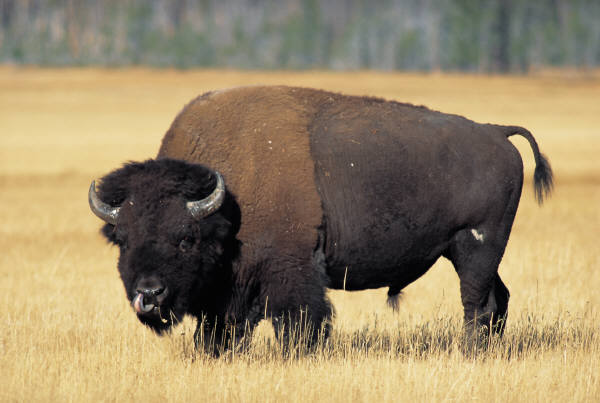
Lotta work to snag one of these

In modern hunter-gatherers, only about 30% of diet energy is derived from hunting, with the rest coming from gathering plant food and aquatic animals.

In contrast to the arid, hot, iconic savanna, “…the combined evidence strongly suggests that early hominins frequented the land-water ecosystem and thus lived there.” If rainfall and other conditions allowed, there would be wooded grasslands.

“…the proportion of the human gut dominated by the small intestine (>56%) suggests adaptation to a diet that is highly digestible, indicating a closer structural analogy with carnivores than to [animals that eat leaves and fruit].”

“The data of combined studies of early hominins and the more recent hominins suggest a gradual increase in dietary animal protein, a part of which may derive from aquatic resources. In the more recent human ancestors, a substantial part of the dietary protein was irrefutably derived from marine resources, and this habit was only abandoned in some cases after the introduction of agriculture at the onset of the Neolithic.”

Sea levels have risen over the past 17,000 years, up to 150 meters.

“In conclusion, there is ample archeological evidence for a shift from the consumption of plant towards animal foods.”

“For a long time period in hominin evolution, hominins derived large amounts of energy from (terrestrial and aquatic) animal fat and protein. This habit became reversed only by the onset of the Neolithic Revolution in the Middle East starting about 10,000 years ago.”

“The Homo genus has been on earth for at least 2.4 million years and for over 99% of this period has lived as hunter-gatherers.”

“We conclude that gathering plays, and most likely always played, the major role in food procurement of humans. Although hunting doubtlessly leaves the most prominent signature in the archaeological record, gathering of vegetables and the collection of animal, notably aquatic, resources (regardless of whether their collection is considered as either hunting or gathering), seems much easier compared with hunting on the hot and arid savanna. We suggest that it seems fair to consider these types of foods as an important part of the human diet, unless proven otherwise. Conversely, while hunting might have played a much more important role at higher latitudes, dietary resources in these ecosystems are rich in n-3-fatty acids (for example, fatty fish and large aquatic mammals), while the hominin invasion of these biomes occurred only after the development of more developed hunting skills.”

Even though traditional Maasai showed extensive atherosclerosis with fibrous changes and lipid infiltration, they had very few complicated arterial lesions and rarely had clinical cardiovascular disease events.

The Agricultural and Industrial Revolutions

“Contrary to earlier belief, the advent of agriculture coincided with an overall decline in nutrition and general health, but at the same time provided an evolutionary advantage since it increased birth rates and thereby promoted net population growth.”  [Both supporting references are from CS Larsen.]
Good news for birth rates

With the advent of the Industrial Revolution, nutritional quality and general health declined even more rapidly.

“Among the many dietary and lifestyle changes are: a grossly decreased n-3:n-6 fatty acid ratio, the combined high intakes of saturated fatty acids and carbohydrates, the introduction of industrially produced trans-fatty acids, reduced intakes of n-3 and n-6 long-chain polyunsaturated fatty acids, reduced exposure to sunlight, low intakes of vitamins D and K, disbalanced anti-oxidant status and high intakes of carbohydrates with high glycaemic indices and loads, such as sucrose and industrially produced high-fructose maize syrup.”  [Aren’t we eating more n-6 fatty acids, not less?]

Potential Benefits of a Palaeolithic Diet

The authors conclude with a review of the few medical scientific studies of Palaeolithic diets in modern humans. These are the ones by Frassetto, Osterdahl, Jönsson, and Lindeberg. I’ve already reviewed those here.  They missed O’Dea and Kerin’s study.

My Overall Impressions

This article seems very well researched.  It lays out a logical framework for the discipline of evolutionary medicine and should spur further clinical research.  It’s well worth a read if you have more than a passing interest in paleo lifestyle theory.

Bear in mind I’m not a paleontologist, anthropologist, paleo-anthropologist, or archeologist.  So caveat lector.

Steve Parker, M.D.  (B.S. degree in zoology)

Reference: Kuipers,RS; Joordens, JCA; and Muskiet, FAJ. A multidisciplinary reconstitution of Palaeolithic nutrition that holds promise for the prevention and treatment of diseases of civilization. Nutrition Research Reviews, 25 (2012): 96-129.  doi: 10.1017/S0954422412000017

PS: The Paleolithic diet is also called paleo, ancestral, hunter-gatherer, Stone Age,  Old Stone Age, and caveman diet.

Are Ketogenic Diets Crazy?

You get it?

Ketogenic diets don’t have anything to do with the paleo diet usually.  However, I think they may play a legitimate role in weight loss for overweight type 2 diabetics.  They could also be helpful in rapid control of blood sugars in out-of-control diabetics (excluding diabetic ketoacidosis).

Has anyone devised a ketogenic paleo diet yet?  I don’t recall one off the top of my head.

Registered Dietitian Franziska Spritzler recently reviewed the concept of low-carb ketogenic diets.  She thinks they are a valid approach to certain clinical situations.  Among dietitians, this puts her in a small but growing minority.

I hesitate to mention this, but I will anyway.  Many, if not most, dietitians too easily just go along with the standard party line on low-carb eating: it’s rarely necessary and quite possibly unhealthy.  Going along is much easier than doing independent literature review and analysis.  I see the same mindset among physicians.

Franziska breaks the mold.

Steve Parker, M.D.

U.S. Diabetes Prevalence: 1935 to 2011

From 1935 to 1996, the prevalence of diagnosed type 2 diabetes [in the U.S.] climbed nearly 765%.

765%—Wow!  This statistic is from the Centers for Disease Control and Prevention as cited in Increased Consumption of Refined Carbohydrates and the Epidemic of Type 2 Diabetes in the United States: an Ecologic Assessment, American Journal of Clinical Nutrition, 2004, vol. 79, no.5, pp: 774-779.

I thought 765% might be a misprint, so I did some digging.  A similar figure is in DHHS Publication No. (PHS) 82-1232 published in 1981:

  • Diabetes prevalence rose from 0.4% of the population in 1935,  to 2.4% in 1979.

This is a six-fold increase.  The major part of the upward trend started in 1960.  Interestingly, that’s when corn syrup started working its way into our food supply.  Coincidence?  The authors of the Department of Human Services paper write:

Preliminary evaluation of these trends suggests that the change in the prevalence of known diabetes has resulted from improvements both in detection of diabetes among high-risk groups and in survivorship among persons with diabetes.

To me, it sounds like they weren’t considering an true increase in the number of new diabetes cases (i.e., incidence), but better detection of existing cases and improved longevity of existing patients (prevalence).  Incidence and prevalence are often confusing.  Wikipedia has a clarifying article.  These days, both incidence and prevalence of diabetes are greatly increased over 1935 levels.

In January, 2011, the U.S. Centers for Disease Control and Prevention released the latest estimates for prevalence of diabetes and prediabetes.

  • 8.3% of the total U.S. population has either diagnosed or undiagnosed diabetes (earlier percentages in this post were for diagnosed cases only)
  • Nearly 27% of American adults age 65 or older have diabetes (overwhelmingly type 2)
  • 6% of the U.S. adult population has diagnosed diabetes (My calculation: Population in 2011 was 311 million; with 18.8 million diagnosed cases of diabetes, 7 million undiagnosed)
  • Half of Americans 65 and older have prediabetes
  • 11% of U.S. adults (nearly 26 million) have diabetes (overwhelmingly type 2)
  • 35% of adults (79 million) have prediabetes, and most of those affected don’t know it

Here’s a post about prevention of type 2 diabetes.

I suspect that overconsumption of concentrated sugars and refined starches (e.g., grains) has contributed to the prevalence of type 2 diabetes and overweight lately.  A paleo-style diet restricts those quite a bit, and therefore, could prevent some cases of diabetes.

Steve Parker, M.D.

PS: The paleo diet is also referred to as the Old Stone Age, Stone Age, hunter-gatherer, caveman, and ancestral diet.