Tag Archives: paleo diet

Low Calcium Intake May Not Matter for Bone Health

paleobetic diet, diabetic diet, calcium

Modern “films” are digital

I’ve worried about the relatively low calcium content of most paleo diets. I see lots of little old ladies eating non-paleo with hip, spine, and wrist fractures related to the bone-thinning disease called osteoporosis. The bones break because they’re not adequately dense. Some experts think low calcium intake causes osteoporosis.

A Vietnamese study published in 2009 compared bone density of Buddhist nuns, who are vegans, with omnivorous controls. Dietary calcium content was 330 mg/day in the vegans, 682 mg/day in the omnivores. Nevertheless, bone density and osteoporosis prevalence were not significantly different between the groups. (Unfortunately, fracture rates were not reported.)

So perhaps the relatively low calcium content of paleo diets isn’t anything to worry about.

Steve Parker, M.D.

h/t Jamie Scott

Recipe: Waldorfian Salad

paleobetic diet, low-carb diet

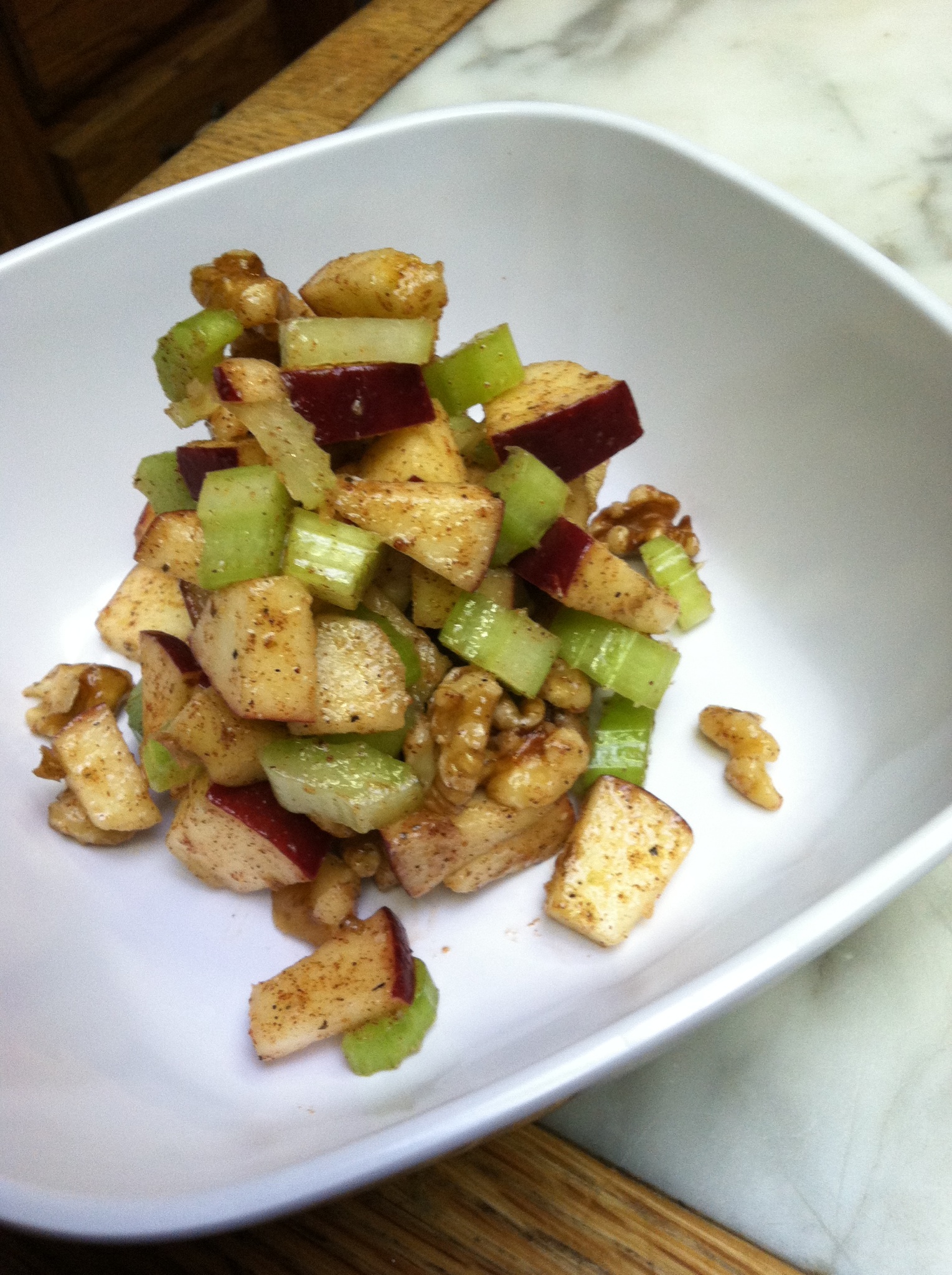
One cup of Waldorfian salad. I doubled the cinnamon in this batch, so yours won’t look quite like this.

Today’s meal is inspired by the classic Waldorf salad, made famous by New York’s Waldorf Hotel over a century ago. The hotel today is called the Waldorf-Astoria.

The primary ingredients are apples, walnuts, and celery.

The original salad was made with mayonnaise, which I’m leaving out since I don’t yet have a paleo-compliant formula. They’re out there, however. Do you have a favorite?

paleobetic diet

Good source of omega-3 fatty acids

Instead of mayonnaise, we use a dressing—a vinaigrette—made with walnut oil. Walnut oil is attractive in part because it is rich in omega-3 fatty acids: 1.77 grams per tbsp (15 ml). Compared with Paleolithic diets, modern Western diets are too low in omega-3s and too high in omega-6s. You can use your left-over walnut oil the way you’d use olive oil.

paleobetic diet, low-carb diet, ketogenic diet

I made my dressing in this BPA-laden plastic container

In composing the Paleobetic Diet, my biggest challenge is breakfast. I’m fine eating eggs almost daily, but that may not be your cup ‘o tea. Most of us in America are accustomed to grain-based options like cold cereal, porridge, bagels, donuts, pancakes, granola, and toast. Plus yogurt. Those aren’t paleo, and they have too many carbohydrates for many diabetics. I came up with Waldorfian salad as a low-carb paleo-style breakfast, reminiscent of Brian’s Berry Breakfast.

This recipe makes two large servings of 2 cups (480 ml) each. Small or sedentary folks may well be satisfied with a 1- or 1.5-cup serving.

paleobetic diet, low-carb diet, ketogenic diet

Apples are the primary source of carbohydrates in this recipe.

Ingredients:

2 apples, raw, medium size, skin on, diced (I used Red Delicious; consider Granny Smith, Fuji, or Gala)

3 celery stalks, 8-inches long (20 cm), diced

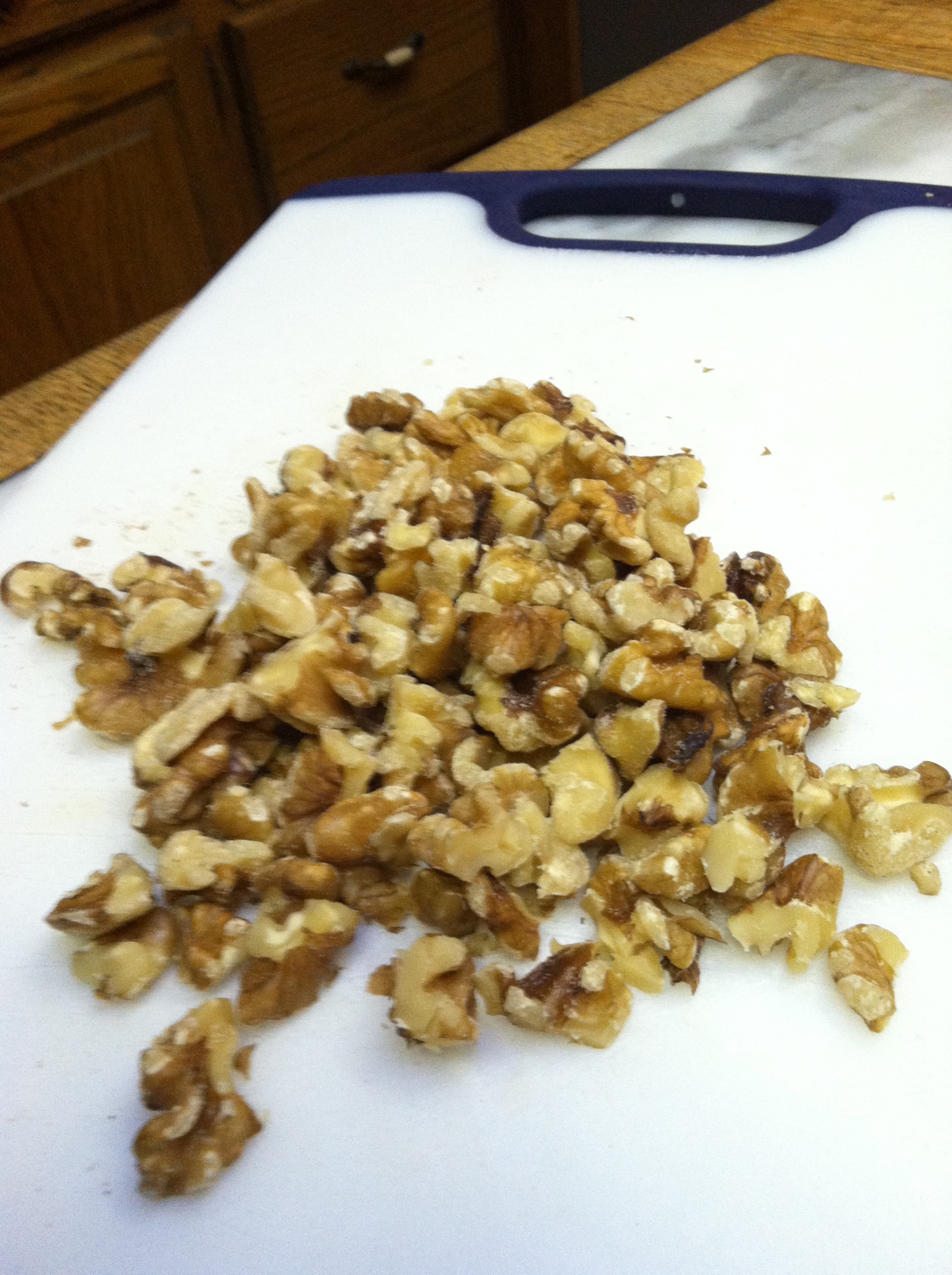
1 cup (240 ml) walnuts, broken by hand into small chunks (Option for ? more flavor: toast in a skillet over medium-high heat for 7-10 minutes or in oven (350 F or 175 C) on baking sheet for 10 minutes

1/4 tsp (1.2 ml) black pepper, ground

1/4 tsp (1.2 ml) salt

1.5 tbsp (22 ml) walnut oil

1 tbsp (15 ml) cider vinegar

1/2 tsp (2.5 ml) cinnamon

1/4 tsp (1.2 ml) nutmeg

Instructions:

First make a dressing with the bottom six ingredients. I put mine in a small container with a lid, then shook vigorously. Or you can put them in a small bowel and whisk them.

paleobetic diet, low-carb diet, ketogenic diet

Walnut pieces

Place the walnuts, apples and celery in a bowel, add the dressing and toss thoroughly. You’re done.

Serve as is, or chill first in the refrigerator. Maybe it was my imagination, but I thought it tasted better after it sat on the counter for 10 minutes. Consider serving on a bed of lettuce (1-2 oz), but if you do, increase your digestible carb count by 1-2 grams.

If you want more calories or protein than this recipe provides, chicken or steak should go well with Waldorfian salad and won’t increase your carb grams.

Number of Servings: 2 (2 cups each)

Nutritional Analysis:

73% fat

21% carbohydrate

6% protein

500 calories

27.5 g carbohydrate

7.6 g fiber

20 g digestible carbohydrate

341 mg sodium

529 mg potassium

Prominent features: High in copper and manganese, low in sodium. This is vegetarian (so much for the paleo diet being meat-centric). On a 2,000 calorie diet, this provides only 15% of the Recommended Dietary Allowance for protein, so you’ll want to eat more protein at some point during the day.

Dr. Guyenet Makes a Case for Beans in the Paleo Diet

As an introduction, he writes…

The canonical Paleolithic diet approach excludes legumes because they were supposedly not part of our ancestral dietary pattern.  I’m going to argue here that there is good evidence of widespread legume consumption by hunter-gatherers and archaic humans, and that beans and lentils are therefore an “ancestral” food that falls within the Paleo diet rubric.  Many species of edible legumes are common around the globe, including in Africa, and the high calorie and protein content of legume seeds would have made them prime targets for exploitation by ancestral humans after the development of cooking.

Richard Wrangham thinks hominins started cooking with fire as long as 1.8 million years ago. There’s no expert consensus yet.

Read the rest.

Recipe: BLT Avocado Wraps and Pecans

paleobetic diet, paleo diet for diabetics

Ready to roll up and eat

BLT = bacon, lettuce, and tomato.

As I’ve written before, bacon isn’t a pure paleo food. Cavemen didn’t eat it. It’s too highly processed. You could make your own if you want. But bacon is convenient and no doubt better for you—at least if you have diabetes—than many of our traditional breakfast foods like cereal with milk, pancakes, instant oatmeal, bagels, or donuts. Those could shoot your blood sugar up to the moon.

Some studies link processed meats with cardiovascular disease and cancer, other studies don’t. If you want to be cautious with your health, don’t go hog-wild with bacon or other processed meats like hot dogs, bologna, and liverwurst.

Avocados come in hundreds of varieties. In the U.S., we mainly have California avocados (aka Hass) and Florida avocados. Californians are by far the market leader. They reign at the Parker Compound.

paleobetic diet

California or Hass avocado

paleobetic diet, paleo diet for diabetes

Florida avocado

California avocados are smaller dark green lumpy-skinned ones. Florida avocados are larger, smoother-skinned, and lighter green. Monica Reinagel has an article comparing the two, with notes on ripening and storage.

Oh, and by the way, avocados are fruits, not vegetables. But you knew that, you smartie.

Ingredients:

1 California (Hass) avocado, raw, medium size (about 4 x 2.5 inches or 10 x 6 cm), peeled and seeded, cut into long strips

6 bacon strips, medium thickness

4 oz (115 g) lettuce (e.g., iceberg, romaine, bibb, or broad-leaf lettuce you prefer)

4 oz (115 g) tomato, raw (this is about one-and-a half roma tomatoes or one medium regular tomato), cut into long strips

1 oz (30 g) pecans (option: substitute your favorite tree nut except for cashews—too many carbs)

Instructions:

Fry your bacon in a skillet over medium to medium-high heat. Next you’re gong to build two wraps. Lay out about two oz (  g) of lettuce and load it with three bacon strips, half your tomato, and half your avocado. Fold or wrap lettuce edges together and enjoy. Repeat with remaining ingredients. The pecans are for dessert.

paleobetic diet, paleo diet for diabetes

Our vicious guard dogs waiting for bacon

Number of Servings: 1 (that’s 2 wraps plus nuts)

Nutritional Analysis:

74% fat

12% carbohydrate

14% protein

720 calories

24 g carbohydrate

15 g fiber

9 g digestible carbohydrate

1137 mg sodium

1507 mg potassium

Prominent features: Good source of fiber, sodium, protein, vitamin B6, niacin, thiamine, pantothenic acid, copper, manganese, phosphorus, and selenium.

Free Online Paleo Recipes

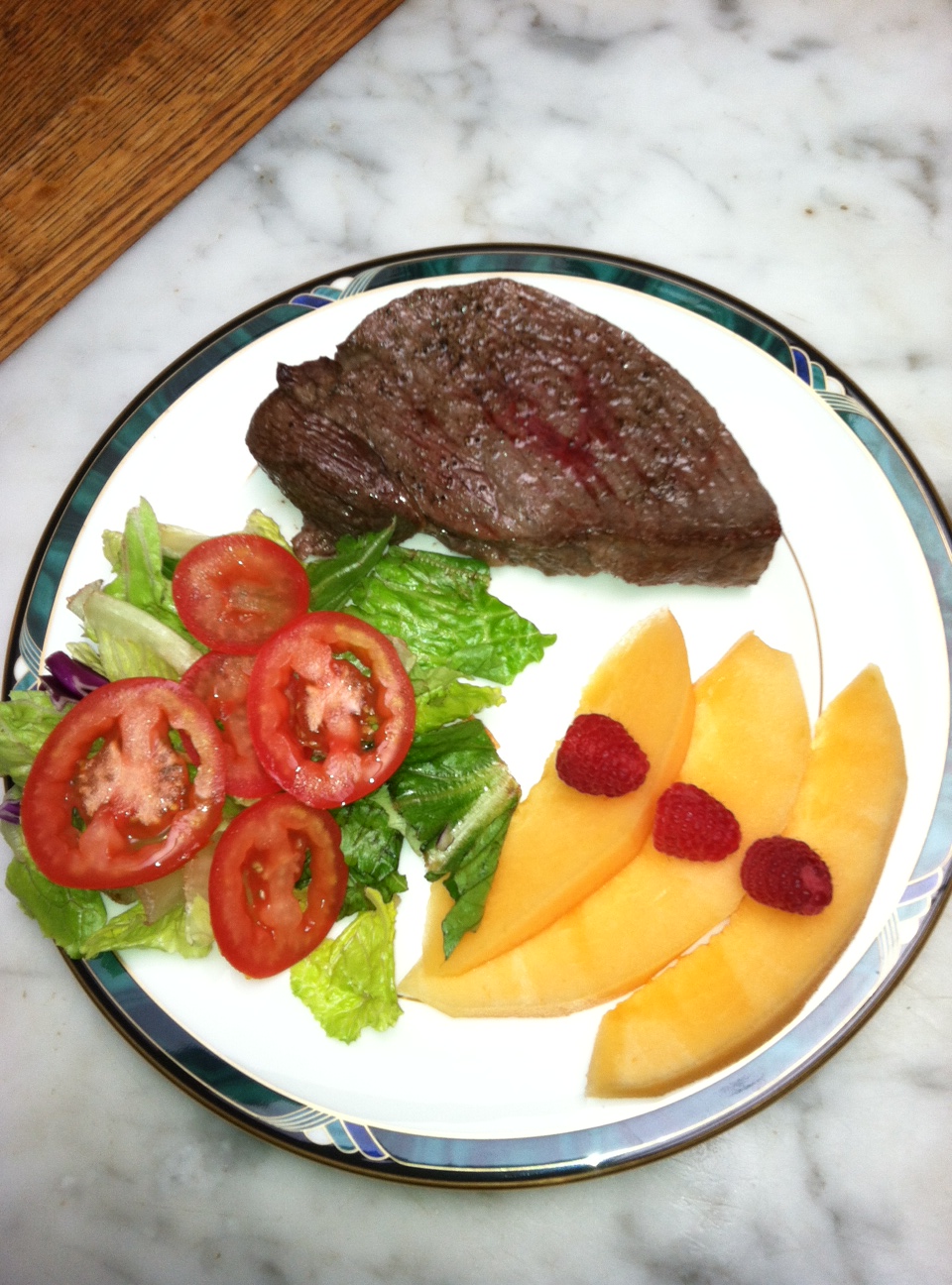
Sirloin steak, salad, cantaloupe, 3 raspberries

Sirloin steak, salad, cantaloupe, raspberries (on the Paleobetic Diet)

Or paleo-ish anyway.

Most diabetics eating paleo-style need to know how may grams of digestible carbohydrate they’re eating. Their blood sugars will go too high if they eat too many carbs. “Too many” varies from one person to another. Additional nutrient numbers are just icing on the cake. (Oops! Not a good metaphor for a Stone Age diet website.) Other than this site, I’ve only found three other sites that divulge basic nutritional analysis of their free recipes. Several sites listed are primarily low-carb, so you have to see if the recipe you’re interested in fits your definition of paleo.

Before you go, I just want you to consider financially supporting the owners and writers at the following sites. Many of them have books or services for sale. Some have a Donate button. If they can’t bring home the bacon, the websites go down and the recipes go bye-bye.

Recipes With Nutritional Analysis

Catalyst Athletics

Linda’s Low-Carb Recipes

Hold the Toast (I bet Dana Carpender’s “500 Paleo Recipes” book provides basic nutrient analysis.)

Paleo Diabetic

More Recipes (You can do your own nutritional analysis at places like Fitday.)

The Clothes Make the Girl

NomNom Paleo

The Paleo Diet

Julianne’s Paleo & Zone Nutrition (see drop-down menu under Paleo Links, Recipes, and Meals tab)

Everyday Paleo (see drop-down menu under Food tab)

Paleo Food

Paleo Plan

Stalkerville

Perfect Health Diet

Diabetes Warrior

Whole Life Eating

Nell Stephenson

Paleo Diet Lifestyle

Happy hunting!

Steve Parker, M.D.

Effects of a Paleo-Style Diet on One Case of LADA

Dietitian Kelly Schmidt has a blog interview with Intrepid Pioneer, who has LADA—Latent Autoimmune Diabetes of Adulthood. LADA is much closer to type 1 than type 2 diabetes, so he’s on insulin. He was inspired initially by a “Whole 30 Challenge.” He makes room for cheese and home-brewed beer; so not pure paleo. Samples:

I was diagnosed May 2011 during my routine annual physical. At that time my blood sugars were up around 360 and my AC1’s ran around 12.3. At first I was treated as if I was a Type 2 with Metformin. The medicine only helped to control my blood sugars down to around 250 or so. At that time my endocrinologist informed me that I probably have LADA or Latent Autoimmune Diabetes, which basically has been coined type 1.5 Meaning I developed adult on-set Type 1. My father has had Type 1 all his life and was diagnosed as a child.

***

Since eating the Paleo lifestyle, and I hate it when one calls it a diet because then it feels temporary, I’ve pretty much stop taking my fast acting mealtime insulin. Meaning I only inject fast acting when I know I’m having Pizza for dinner as a treat, or for a thanksgiving meal, etc. My long acting insulin has reduced by over 10 units since starting this diet. All of that said, Paleo is great and it all tastes so good because it’s real food, but I have found that I also need to exercise, eating Paleo combined with exercise has yielded dynamic results. My endocrinologist was blown away by all that I had done, reduced my insulin injections and basically had my A1C’s in check — my last appointment I was 7.3. Still a bit more to go but the last time I was pushing 9 just six months before.

Read the whole thing (it’s brief).

Can You Help a Guy Out?

paleo diet, low-carb, Steve Parker MD

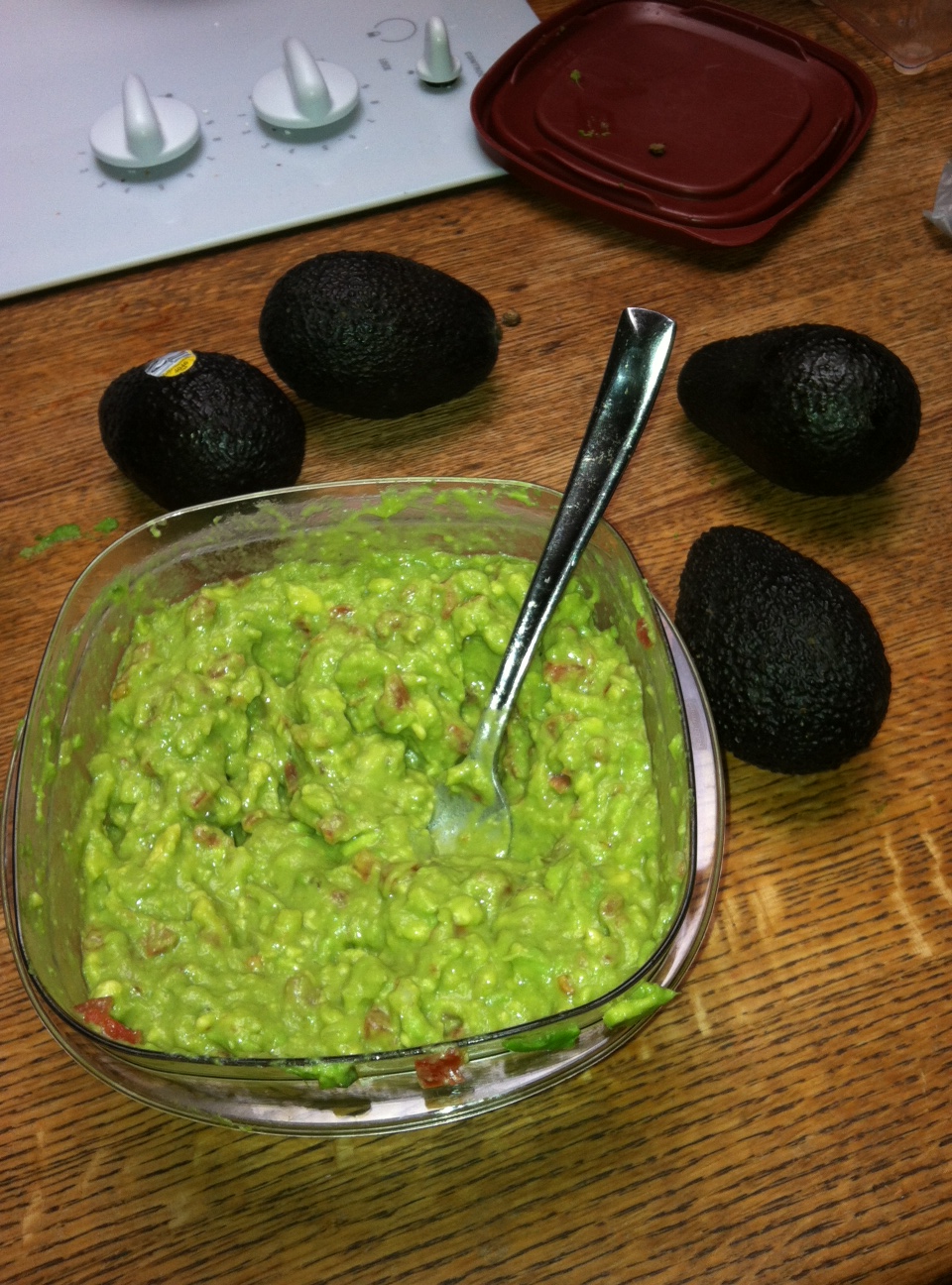
Guacamole salad

I’m looking for free online paleo recipes. But not just any old recipes.

I need them accompanied with basic nutritional analysis such as digestible or net carb grams, protein grams, fat grams, and calories per serving.

At least net or digestible carbohydrate grams.

I just spent 45 minutes surfing the net and only came up with Catalyst Athletics.

Please share, if you can help me out. If you don’t know of free recipes, how about a book I can buy?

Thanks!

soup, home-made, potato, chicken, paleo diet, meal, Stone Age diet, recipe

Potato chicken soup

Has Carbohydrate-Restricted Eating Been Studied in Type 1 Diabetes?

Sweden has lots of blondes

Sweden has lots of blondes

Yes, there are few published scientific reports. Let’s take a close look at one today. (See the references below for more.)

In the introduction to the study at hand, the authors note:

The estimation of the amount of carbohydrates in a meal has an error rate of 50%. The insulin absorption may vary by up to 30%. It is therefor virtually impossible to match carbohydrates and insulin which leads to unpredictable blood glucose levels after meals. By reducing the carbohydrates and insulin doses the size of the blood glucose fluctuations can be minimized. The risk of hypoglycemia is therefore minimized as well. Around-the-clock euglycemia [normal blood sugar] was seen with 40 g carbohydrates in a group of people with type 1 diabetes [reference #2 below].

The immediate resulting stable, near-normal blood glucose levels allow individuals to predict after-meal glucose levels with great accuracy.

For individuals with type 1 diabetes one year audit/evaluation of group education in this regimen has shown that the short-time lowering of mean hemoglobin A1c by 1 percentage unit and the reduction in mean rate of symptomatic hypoglycemia by 82% was maintained [reference #3].

***

There is no evidence for the use of the widely recommended high-carbohydrate, low-fat diet in type 1 diabetes.

Study Set-Up

Swedish investigators educated study participants on carbohydrate-restricted eating from 2004 to 2006 [reference #1]. They recently audited their medical records for results accumulated over four years. At the outset, participants were given 24 hours of instruction over four weeks. My sense is that they all attended the same diabetes clinic. The subjects’ mean age was 52 years and they had diabetes for an average of 24 years. Seven had gastroparesis. Fourteen used insulin pumps. Of the 48 study subjects, 31 were women, 17 were men. The diet regimen restricted carbohydrates to a maximum of 75 grams a day, mainly by reducing starchy food.

Results

As measured three months after starting the diet, HDL-cholesterol rose and triglycerides fell to a clinically significant degree (p<0.05). Average weight fell by 2.7 kg (5.9 lb); average baseline weight was 77.6 kg (171 lb). Hemoglobin A1c fell from 7.6 to 6.3% (Mono-S method).

As measured one year after start, meal-time insulin (rapid-acting, I assume) fell from 23 to 13 units per day. Long-acting insulin was little changed at around 19 units daily.

By two years into the study, half the participants had stopped adhering to the diet. The remainder were adherent (13 folks) or partly adherent (10). We don’t know what the non-adherents were eating.

Four years out, the adherent group had hemoglobin A1c of 6.0%, and the partly adherents were at 6.9% (p<0.001 for both). The non-adherent group had returned to their baseline HgbA1c (7.5%). Remember, at baseline the average HgbA1c for the group was 7.6%.

The authors don’t say how many participants were still adherent after four years. From Figure 2, adherence seems to have been assessed at 60 months: 8 of the 13 adherent folks were still adherent, and 5 of the 10 partly adherent were still in the game. So, of 48 initial subjects, only 13 were still low-carbing after five years later. By five years out, half of all subjects seem to have been lost to follow-up. So the drop-out rate for low-carbers isn’t as bad as it looks at first blush.

Conclusion

The authors write:

An educational program involving a low-carbohydrate diet and correspondingly reduced insulin doses for informed individuals with type 1 diabetes gives acceptable adherence after 4 years. One in two people attending the education achieves a long-term significant HbA1c reduction.

They estimate that this low-carb diet “may be an option for 10-20% of the patients with type 1 diabetes.” Only 17% of their current diabetes clinic population is interested in this low-carb diet. They didn’t discuss why patients abandon the diet or aren’t interested in the first place. Use your imagination.

Major carbohydrate restriction in type 1 diabetics significantly improves blood sugar control (decreases HgbA1c), lowers insulin requirements, and improves cardiovascular disease risk factors (increases HDL cholesterol and lowers triglycerides).

Paleo diets vary in total carbohydrate grams and percentage of calories derived from carbohydrate. Paleo diets tend to be lower in carb than usual Western diets, with 30% of total calories from carbohydrate probably a good rough estimate. The typical American eats 250 to 300 grams of carbohydrate daily, or about 50% of total calories. In the study at hand, the daily carb gram goal was 75, which would be 15% of calories for someone eating 2,000 cals/day.

Low-carb eating wasn’t very appealing to Swedes in the mid-2000s. I wonder if it’s more popular now with the popularity of LCHF dieting (low-carb, high-fat) in the general population there.

Steve Parker, M.D.

References:

1.  Nielson, J.V., Gando, C., Joensson, E., and Paulsson, C. Low carbohydrate diet in type 1 diabetes, long-term improvement and adherence: A clinical audit. Diabetology & Metabolic Syndrome, 2012, 4:23. http://www.dmsjournal.com/content/4/1/23

2.  O’Neill, D.F., Westman, E.C., and Bernstein, R.K. The effects of a low-carbohydrate regimen on glycemic control and serum lipids in diabetes mellitus. Metabolic Syndrome and Related Disorders, 2003, 1(4): 291-298.

3.  Nielsen, J.V., Jönsson, E. and Ivarsson, I. A low carbohydrate diet in type 1 diabetes: clinical experience – A brief report. Upsala Journal of Medical Sciences, 2005, 110(3): 267-273.

Another Dentist Blames Neolithic Diet For Cavities

I found another dentist who believes cavities (dental caries) are a neolithic disease caused by a mismatch between the standard Western diet and human evolutionary biology. Meet Dr. Mark Burhenne:

It is generally well accepted that tooth decay, in the modern sense, is a relatively new phenomena. Until the rise of agriculture roughly 10,000 years ago, there was nearly no tooth decay in the human race. Cavities became endemic in the 17th century but became an epidemic in the middle of the 20th century (1950).

If we understand that tooth decay started when people started farming, rather than hunting and gathering, it’s clear that tooth decay is the result of a mismatch between what we’re eating and what our bodies are expecting us to eat based on how they evolved.

***

The recent changes in our lifestyle create a “mismatch” for the mouth, which evolved under vastly different environments than what our mouths are exposed to these days. Our mouths evolved to be chewing tough meats and fibrous vegetables. Sugar laden fruit was a rare and special treat for our paleolithic ancestors. Now, our diets are filled with heavily processed foods that take hardly any energy to chew — smoothies, coffees, and sodas high in sugar, white bread, and crackers to name just a few.

Read the whole thing.

It’s disconcerting that Dr. Burhenne says Streptococcus mutans (a germ linked to cavities) is the same germ that causes strep throat. That’s not right. Strep throat is usually caused by Streptococcus pyogenes, aka Group A Strep.

Steve Parker, M.D.

The Argument Against Starches, Safe or Otherwise

Lifextension argues it as well as anyone I’ve read. Some quotes:

Chimpanzees produce salivary amylase to digest fruit; similarly, carnivores also possess amylase in order to process the glycogen residing in muscle meat. Moreover, animals fed alternatives to their natural diet will produce amylase in amounts corresponding to the quantity of carbohydrates consumed. Humans too have their own primordial amylase gene copy; we have possessed it ever since we were primates. The second copy mutation occurred somewhere between 100 – 200,000 years ago, however this may have resulted even more recently, as single nucleotide polymorphisms and copy number mutations can result in just thousands of years. The additional – and currently incomplete – copies occurred at the very most, around 25,000 years ago, but most plausibly they came about around 10,000 years ago, concurrent with the onset of agriculture, and confirming that high starch consumption was a historically late phenomenon. Many present day human populations from low-starch consuming ancestries still only have two copies, indicating that adaptation to high-starch consumption was not globally widespread.

***

Moreover, the current evidence engendered from nitrogen stable isotope analysis of hominin bone data – being studied by Professor Michael Richards and the Max Planck Institute for Evolutionary Anthropology – has confirmed that our human ancestors truly were high-level carnivores. In fact, one-hundred percent of the early hominin bones studied from Upper Palaeolithic Europe reveal an even more carnivorous stable isotope footprint than that of foxes and wolves; while, comparatively, the data from omnivores such as pigs or the Brown Bear validates that these species truly did have an omnivorous diet.

Read the whole enchilada. The debate continues.