Tag Archives: paleo diet

New Type 2 Diabetics Not Hurt With Moderate Fruit Consumption


paleobetic diet, breakfast, paleo diet

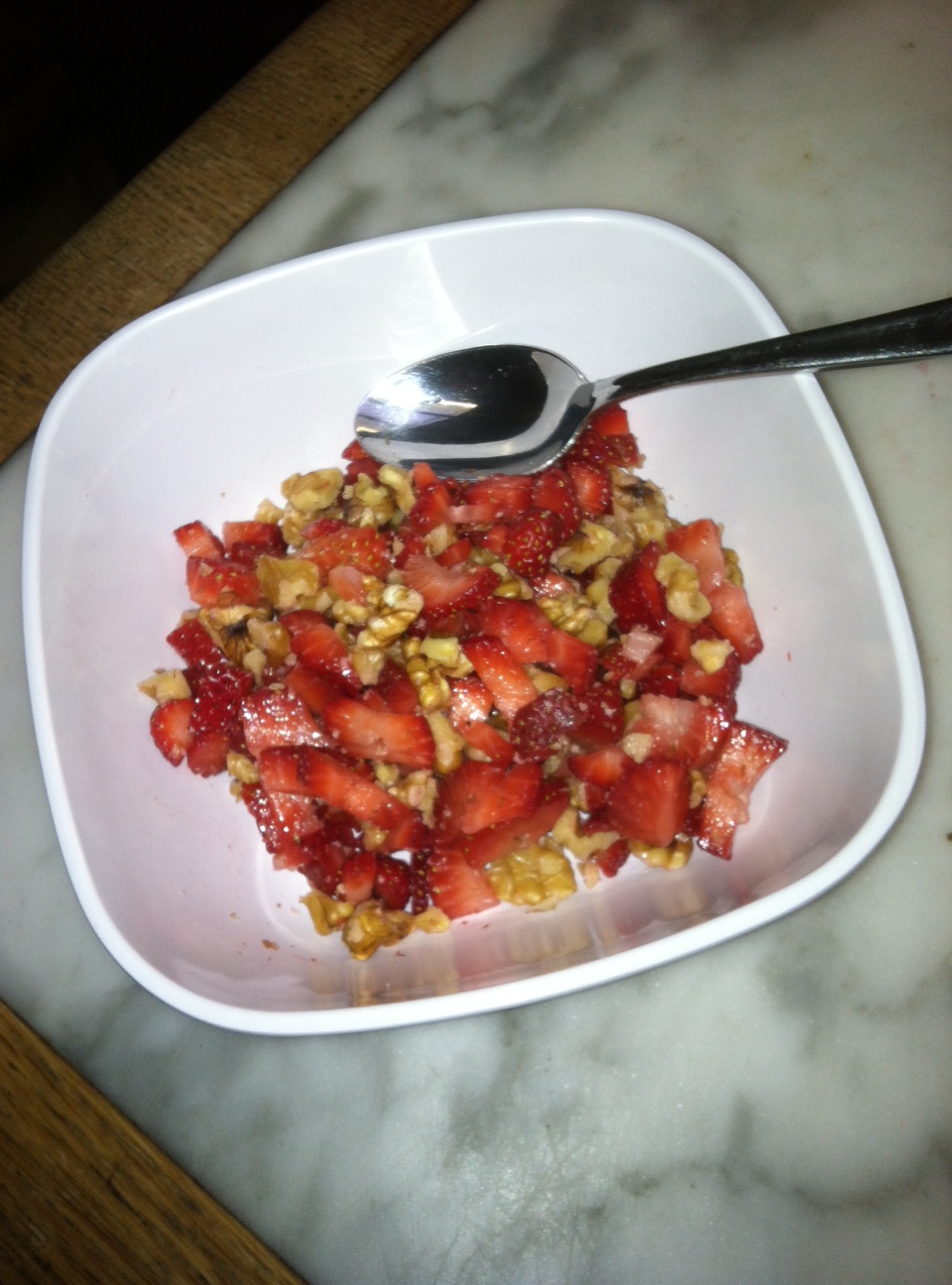
Brian’s Berry Breakfast: simply strawberries and walnuts

…according to an article in Nutrition Journal. (BTW, Shelby Hughes,with Type 1 diabetes, mentioned in a recent interview that she eats a fair amount of fruit.) The Nutrition Journal study participants were newly diagnosed type 2 diabetics. This is interesting research because we’ve often assumed that the sugar in fruits would raise blood sugar too high, leading to recommendations to avoid fruits, or at least limit them to one piece daily.

Of course, fruit in an integral component of most paleo diets.

The Well blog at the New York Times covered the story.  You’ll likely find the comments illuminating.  Also see this Diabetes Self-Managment article. I’ll read the original research report when time allows.

—Steve

T1 Shelby Hughes Is Thriving on the Paleo Diet

Dietitian Kelly Schmidt posted an interview with Shelby at her blog. Shelby seems to tolerate a fair amount of carbohydrate (fruit and starchy vegetables) although I don’t know how much insulin she’s taking to process them. Her case of diabetes is a little unusual since she wasn’t diagnosed until age 39. I wonder if she has some residual beta cell insulin production.

Another thing I like about this story is that it illustrates that a paleo diet doesn’t have to be based on meat.

Read the rest.

History of the “Modern” Paleo Diet Movement

Here’s a timeline, certainly not comprehensive, but probably more than enough to bore you. I’m trying to hit the major developments.

  • 1939 – Nutrition and Physical Degeneration by Weston A. Price’s is published.
  • 1973 – Stephen Boyden’s “Evolution and Health” is published in The Ecologist.
  • 1975 – The Stone Age Diet: Based On In-Depth Studies of Human ecology and the Diet of Man is self-published by Walter L. Voegtlin, M.D.
  • January 1985 – “Paleolithic Nutrition. A consideration of its nature and current implications” by S. Boyd Eaton and M. Konner in the New England Journal of Medicine.
  • 1987 – Stone Age Diet by Leon Chaitow (London: Optima).
  • 1988 – The Paleolithic Prescription: A Program of Diet and Exercise and a Design for Living by S. Boyd Eaton, M. Shostak, and M. Konner.
  • January 1997 – Paleodiet.com established by Don Wiss.
  • March 1997 – The Paleodiet listserv established by Dean Esmay and Donn Wiss.
  • April 1997 – The Evolutionary Fitness online discussion list is created. Art DeVany is its anchor and Tamir Katz is a regular participant.
  • April 1997 – Jack Challem published the article “Paleolithic Nutrition: Your Future Is In Your Dietary Past.”
  • 1999 – Neanderthin by Ray Audette is published.
  • November 2001 – Evfit.com established by Keith Thomas (“Health and Fitness in an Evolutionary Context”).
  • December 2001 – The Paleo Diet by Loren Cordain, Ph.D., is published.
  • April 2001 – Wikipedia’s page on Palaeolithic diet is created.
  • 2005 – Art DeVany’s first paleo blog.
  • 2006 – Exuberant Animal by Frank Forencich is published.
  • 2008 – Art DeVany’s Las Vegas seminar.
  • 2009 – The Primal Blueprint by Mark Sisson is published. Art DeVany announces ‘The New Evolution Diet’.
  • 8 January 2010 – The New York Times features the paleo lifestyle in its ‘fashion’ pages.
  • 26 February 2010 – McLean’s (Canada) publishes a general audience review of the paleo movement.
  • February 2010 – Food and Western Disease by Staffan Lindeberg is published.
  • March 2010 – Paleolithic lifestyle page is created on Wikipedia.
  • September 2010 – The Paleo Solution: The Original Human Diet by Robb Wolf is published.

Contributors to this timeline include Keith Thomas, Paul Jaminet, and Ray Audette (the latter two via blog comments). Any errors are mine.

Of the folks above, my major influences have been Cordain, Eaton, and Konner.

What would you add? I’m tempted to include the Jaminet’s book (Perfect Health Diet) and Dr. Emily Deans’ blog. Paul Jaminet mentioned Jan Kwasniewski’s Optimal Diet of 1990 (or was it Optimal Nutrition?), but is that just “the Polish Atkins,” as some say? Very high fat.

—Steve

QOTD: Yoni Freedhoff, M.D., on the Paleo Diet

Of course even were the narrative totally BS, I’d venture most folks’ paleo diets are exceedingly healthful given the emphasis on actual cooking.

Yoni Freedhoff, M.D.

“Scientific American” Pooh-Pooh’s the Paleo Diet

Click through for details. The writer mentions our pals Marlene Zuk and Christine Warinner. A snippet:

The Paleo diet not only misunderstands how our own species, the organisms inside our bodies and the animals and plants we eat have evolved over the last 10,000 years, it also ignores much of the evidence about our ancestors’ health during their—often brief—individual life spans (even if a minority of our Paleo ancestors made it into their 40s or beyond, many children likely died before age 15). In contrast to Grok, neither Paleo hunter–gatherers nor our more recent predecessors were sculpted Adonises immune to all disease.

Some Evidence for Tubers Being Paleolithic Human Food

My impression is that some versions of the paleo diet don’t include tubers.

Here’s part of an abstract at the Proceedings of the National Academy of Sciences:

Three grinding stones from Shizitan Locality 14 (ca. 23,000-19,500 calendar years before present) in the middle Yellow River region [north China] were subjected to usewear and residue analyses to investigate human adaptation during the last glacial maximum (LGM) period, when resources were generally scarce and plant foods may have become increasingly important in the human diet. The results show that these tools were used to process various plants, including Triticeae and Paniceae grasses, Vigna beans, Dioscorea opposita yam, and Trichosanthes kirilowii snakegourd roots. Tubers were important food resources for Paleolithic hunter-gatherers, and Paniceae grasses were exploited about 12,000 y before their domestication.

Did you catch “grasses” and “beans”? Could these be the verboten grains and legumes?

I know the tubers/roots above are not the white and sweet potatoes I include on my paleo diet. The latter are a New World phenomenon, and domesticated to boot.

Steve

What’s the Paleobetic Diet?

Two years ago, a few of my patients with diabetes asked me whether the paleo diet would help with management of their diabetes. After much deliberation, I can definitely say, “Yeah, maybe.”

We still don’t have much scientific data to back it up, but I’ve seen enough to convince me it would be adequately safe to try a paleo-style diet under medical supervision. The greatest immediate risk is hypoglycemia in those taking certain drugs.

Regardless of diet, diabetics are at risk for hypoglycemia if they use any of the following drug classes. Also listed are a few of the individual drugs in some classes:

  • insulins
  • sulfonylureas: glipizide, glyburide, glimiperide, chlorpropamide, acetohexamide, tolbutamide
  • meglitinides: repaglinide, nateglinide
  • pramlintide plus insulin
  • exenatide plus sulfonylurea
  • possibly thiazolidinediones: pioglitazone, rosiglitazone
  • possibly bromocriptine

I’ve just finished a handout for my patients interested in a paleo diabetic diet. If interested, click for details.

Steve Parker, M.D.

PS: The paleo diet is also referred to as the Paleolithic, Stone Age, Old Stone Age, cavemen, ancestral, and hunter-gatherer diet.

Paleobetic diet, Steve Parker MD,paleo diet, diabetic diet, diabetes

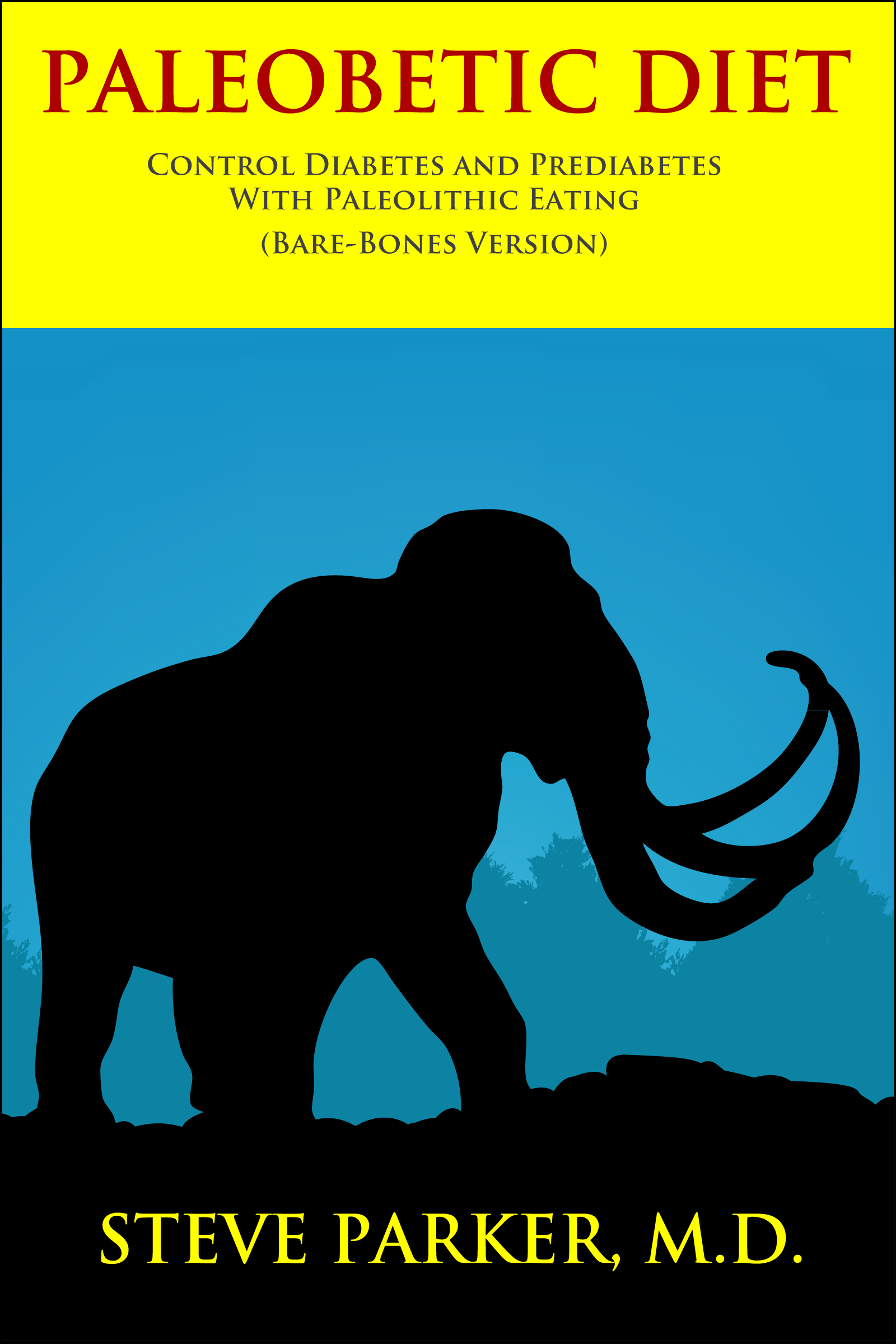
Cover of the fleshed-out ebook at Smashwords

Type 1 Diabetic Notes Improvement On Paleo Diet

Type 1 PWD (person with diabetes) AllisonN wrote about her one-month paleo diet trial at DiabetesMine. The paleo diet version she followed was the Whole30 program, with which I’m not terribly familiar. Some quotes:

3. I have the best control in recent memory, but it’s not perfect. Like anything that involves tweaking and adjustments, the Paleo diet is hardly a cure. Now that I’m taking less insulin, there are fewer chances for me to go low, and more chances for me to go high. You can never expect anything — not a diet, not a medication, not an insulin pump — to run the show for you.

4. If you eat low-carb, you have to bolus for protein. This was the biggest shock for me. After querying my friends, I discovered that bolusing for approximately half the protein is what I need to do to prevent a post-meal spike. Gary Scheiner, author and CDE at Integrated Diabetes Services, explained, “Since your Central Nervous System needs glucose to function, if your diet is lacking in carbs, the liver will convert some dietary protein into glucose.  So it is usually necessary to bolus for some of your protein whenever you have a meal that is very low in carbs.” For me, a low-carb meal is anything under 30 grams of carbs.

***

One thing that I kept thinking about during my month-long Paleo experiment was how much of diabetes really is an experiment anyway. Think about how often we have to try out different things to see what works: Changing up bolus ratios and basal rates. Fiddling with different temp basals or snack choices before working out. Alternating what we eat for breakfast. While the Paleo diet may not be for everyone, I wholeheartedly believe that if what you’re doing currently isn’t giving you the results you want, maybe you should consider starting another experiment!

AllisonN wrote that the paleo diet hasn’t been studied scientifically in people. That’s not accurate. A handful of studies have been done, even involving people with diabetes. Search this site and you’ll find them. In addition, Lynda Frassetto’s study at University of California-San Francisco should be published later this year.

Read AllisonN’s post.

Alan Aragon Jumps On the Anti-Paleo Bandwagon

Click for a slide set of a presentation by Alan Aragon given last month. The overall tone is anti-paleo. I file the link here for future reference.

One of his key points is that humans have been eating grains (and legumes) for much longer than many in the paleosphere think. That may indeed be true, but it’s difficult to imagine them eating them in the large and year-round quantities we do today. Same for industrial seed oils.

Also, Alan has no problem with our current high omega-6/omega-3 fatty acid ratio and overall omega-6 FA consumption. I think the jury’s still out on those. 

Otherwise, Alan makes some good points and slays a few straw men.

I was surprised to see photos of Sisson and Wolf supplements.


h/t non-paleo Melissa McEwan

What’s the Difference Between White Potatoes and Sweet Potatoes?

The sweet taters have more vitamin A and, at least where I live, they’re more expensive. That’s all.

paleo diet, Steve Parker MD, diabetic diet

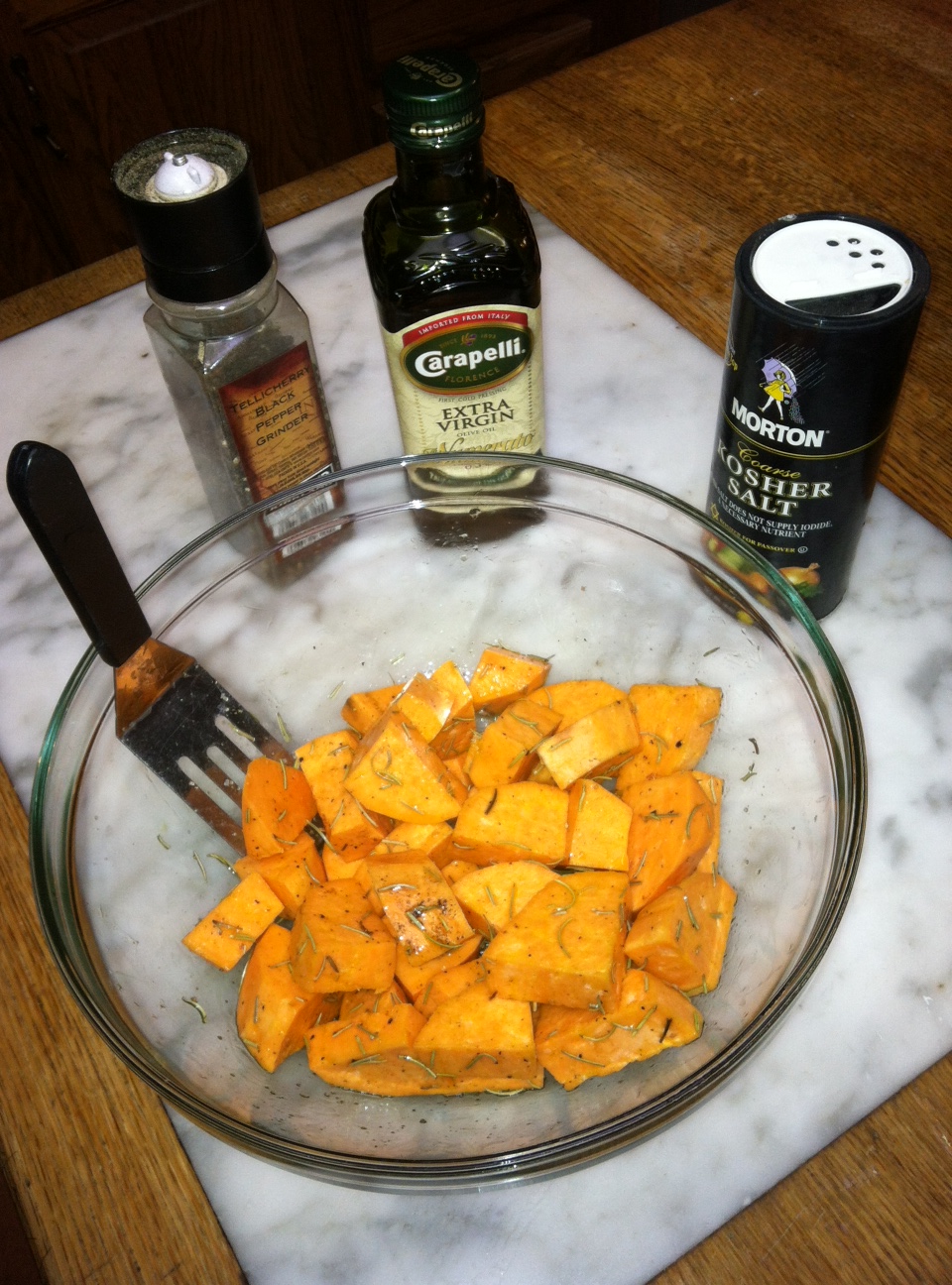
Sweet potato chunks brushed with olive oil, salt, pepper, rosemary

Oh, I forgot. Different colors, too.

AncestralChef has the details.

PS: I know a lot of nutrition bloggers and other health nuts use the nutrient database at NutritionData.com. That’s based version 21 of the U.S. Department of Agriculture’s Nutrient Database. The current version, however, is 25. About two years ago, the focus at NutritionData switched to referral of visitors to Self magazine. For my nutrient analysis, I’ve been using FitDay.com. Or you can go straight to the USDA.

paleo diet, Steve Parker MD

Ready to pop in the oven