Tag Archives: Paleobetic Diet

Recipe: Naked Chicken Fajitas with Walnuts and Pear

paleobetic diet

It looks more appealing if you use green and red bell peppers

My earliest recollection of fajitas is from Austin, Texas, in 1981. I had just moved there from Oklahoma City to start my internship and residency in Internal Medicine. Back then fajitas were made with skirt steak, the diaphragm of a cow or steer. It was considered a cheap low-quality cut of meat. You can also make fajitas with chicken. The contents of a fajita are wrapped in a tortilla usually made with flour. Since we’re a paleo crowd, we’ll skip the tortilla. Use lettuce as a wrapper if you wish.

I wonder if the El Azteca Restaurant is still in business. Best Mexican food I ever had. I think it was on 6th Street or so, about 3/4 mile east of I-35. Good times.

By the way, the j in fajita is pronounced “h.” Accent on second syllable. “Fuh-HEET-uh.”

Today we’re using chicken and making four servings

paleobetic diet, paleo diet for diabetics

Pre-cut chicken breasts and sweet mini-peppers

Ingredients:

1 lb (454 kg) chicken breast, raw, boneless and skinless, cut in strips about 1/4-inch wide (you can often buy it this way)

7 oz onion, raw, cut in long crescent shapes about a 1/4-inch wide (0.6 cm)

6 oz (170 g) bell pepper, raw, cut in long strips roughly a 1/4-inch wide (these are also called sweet peppers; a combination of the red and green ones is eye-pleasing)

2 tbsp (30 ml) olive oil

5 or 6 oz (155 g) tomato, raw, cut in long strips

1 tsp (5 ml) salt

1/2 tsp (2.5 ml) pepper

1/2 tsp (2.5 ml) chili powder

1 tsp (5 ml) parsley flakes

1/2 tsp (2.5 ml) oregano leaves

1 pinch of cumin

1/2 tsp (2.5 ml) paprika

(Optional: You could replace all these spices with a 1-oz (28 g) pack of Lawry’s Chicken Fajitas Spices & Seasoning. The sodium and potassium values below would be different.)

1/3 cup (80 ml) water

16 oz (454 g) lettuce (e.g., iceberg, romaine, or bibb)

4 oz (113 g) walnuts

4 pears, small (about 1/3 lb or 150 g each))

Instructions:

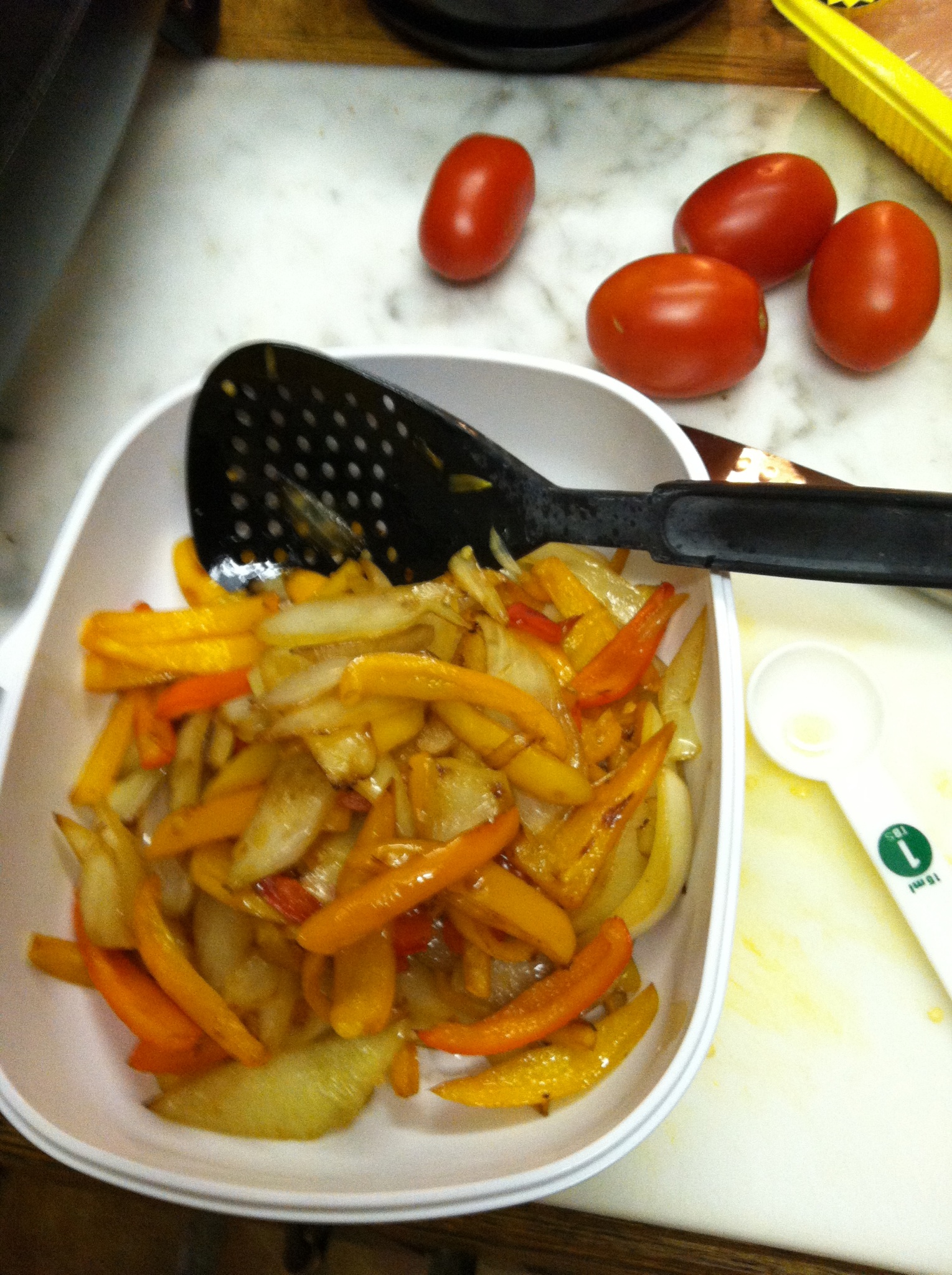
Add the onions, peppers, and 1 tbsp (15 ml)  olive oil to a 12-inch (30 cm) skillet and cook at medium-high heat until tender, stirring occasionally. This’ll take about 10 minutes. Set the skillet contents aside.

paleobetic diet, paleo diet for diabetes

This is double the recipe amount since there are six humanoids in my household
paleobetic diet, paleo diet for diabetics

The vegetables reduce volume by half while cooking

In the same pan, add 1 tbsp (15 ml) olive oil and the chicken and cook at medium to medium-high heat, stirring frequently, until chicken is thoroughly cooked. For me, this cooked quicker than the vegetables. But don’t overcook or the chicken will get tough. Then add the water and all the spices. Bring to a boil while stirring occasionally, then simmer on low heat a few minutes. This is your fajita filling.

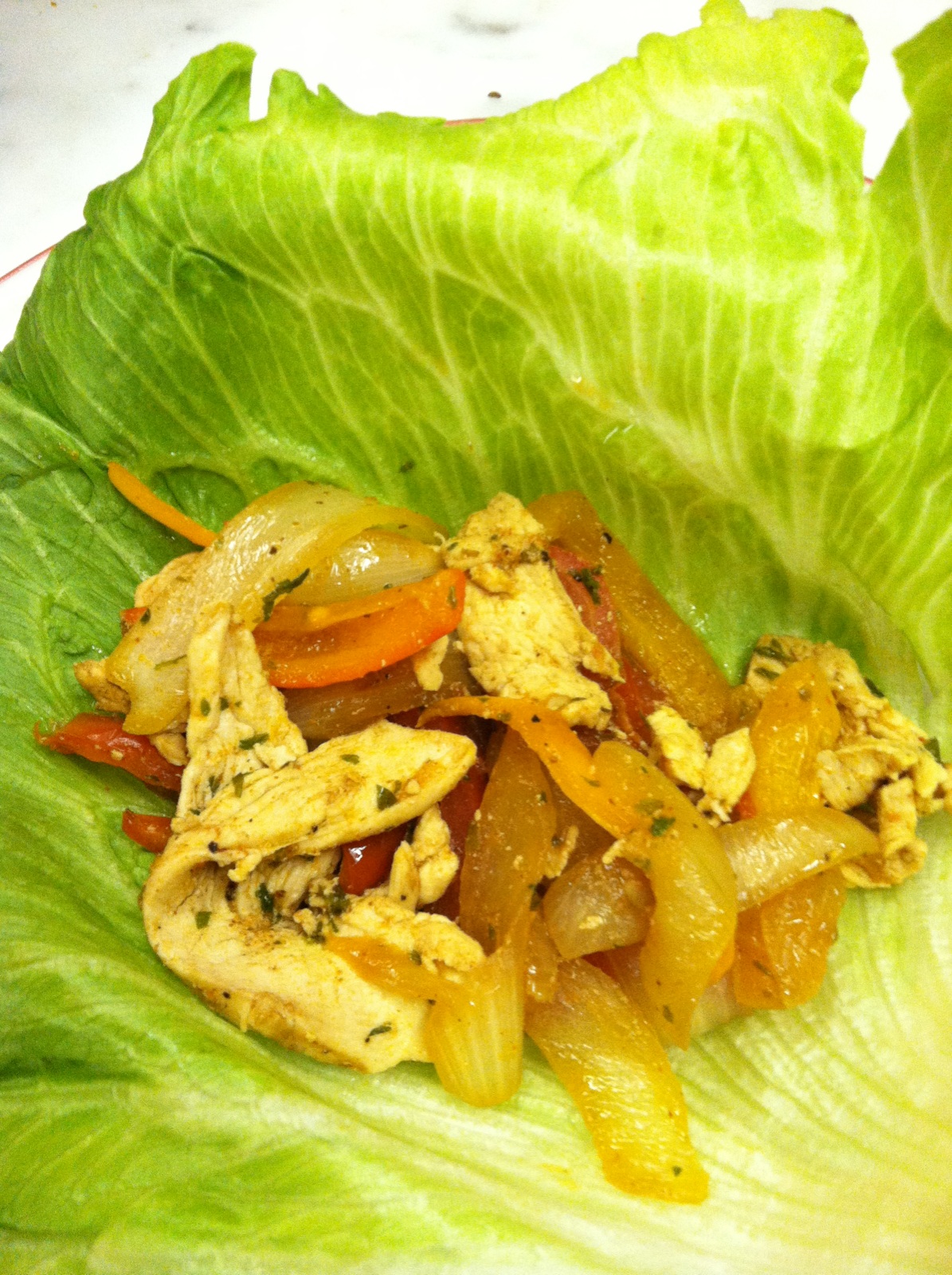
My original plan was to make “fajita wraps,” wrapping the cooked fajitas into a large leaf of iceberg lettuce. This was pretty messy, especially since I love the sauce in the bottom of the pan. I tried two leafs as a base: still messy. Finally I just made a bed of lettuce (4 oz) and loaded the fajita concoction right on top. Mess gone. Try a different lettuce? Skip the lettuce entirely and you can reduce digestible carb count in each serving by 2 grams.

Enjoy the walnuts and pear with your meal.

Leftovers taste just as good as fresh-cooked, perhaps even better.

I have another fajita recipe using skirt steak marinated in commercial Zesty Italian Dressing in the refrigerator overnight or for at least four hours. Grill it over coals outside. Yum! I don’t recall whether I added lemon juice to the marinade or squirted it on the meat just before serving. You would just cook the onions and peppers on a pan on the stove as above, with salt and pepper to taste. Garnish with a margarita and I’ll make you an honorary Texan.

Number of servings: 4

Serving size: A cup (240 ml) of the fajita mixture, 4 oz (113 g) lettuce, 1 oz (28 g) walnuts, 1 small pear. One cup makes two lettuce wraps.

Nutritional Analysis Per Serving:

48% fat

26% carbohydrate

26% protein

Calories: 514

37 g carbohydrate

10 g fiber

27 g digestible carbohydrate (25 g if you skip the lettuce)

928 mg sodium

904 mg potassium

Prominent features: Rich in protein, vitamin B6, vitamin B12, vitamin C,copper, iron, manganese, niacin, phosphorus, and selenium.
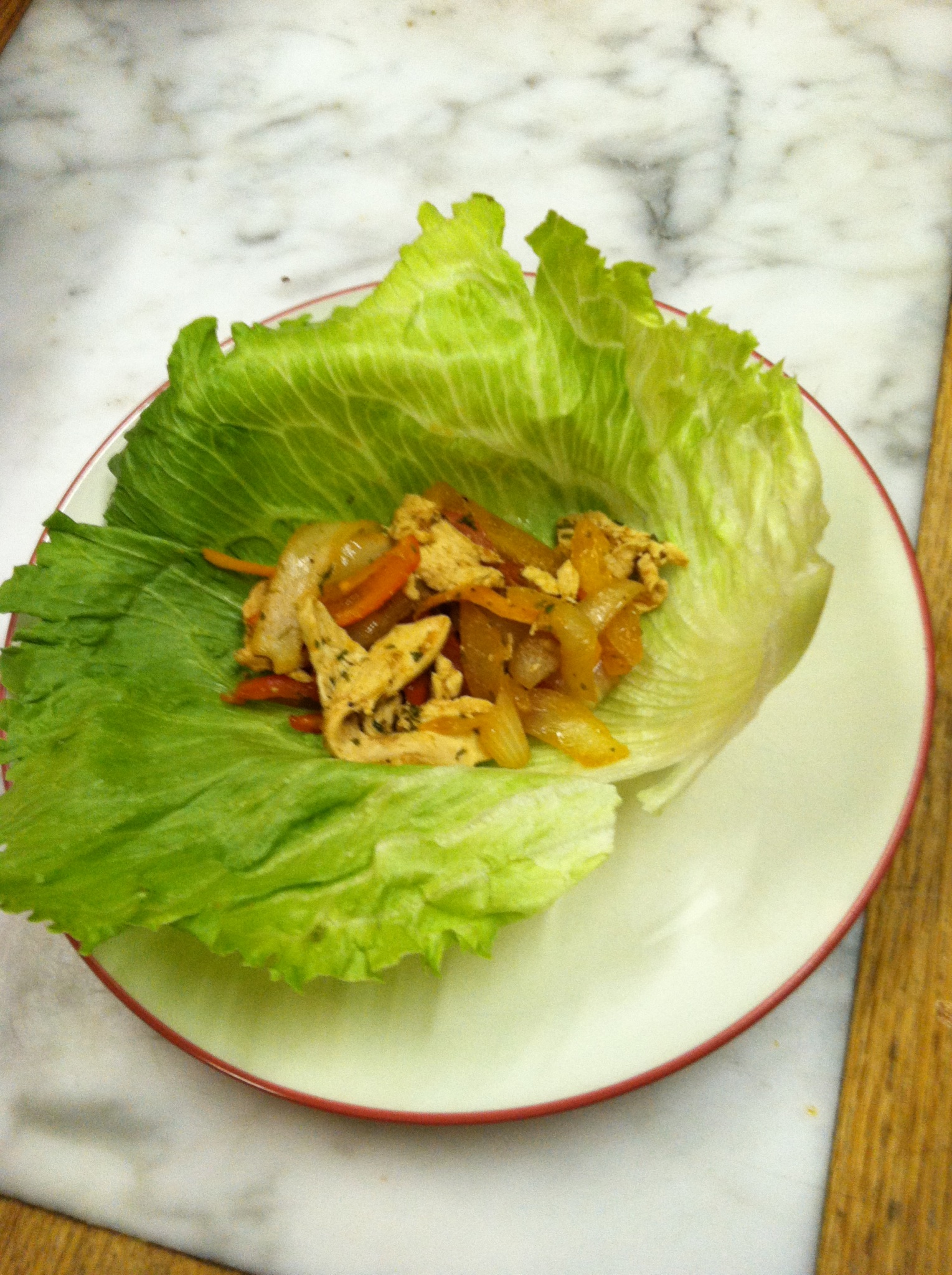
paleobetic diet

Another view, prior to rolling it up (wrapping)

Plain Ol’ Bacon, Eggs, and Honeydew, and How To Put Out a Grease Fire

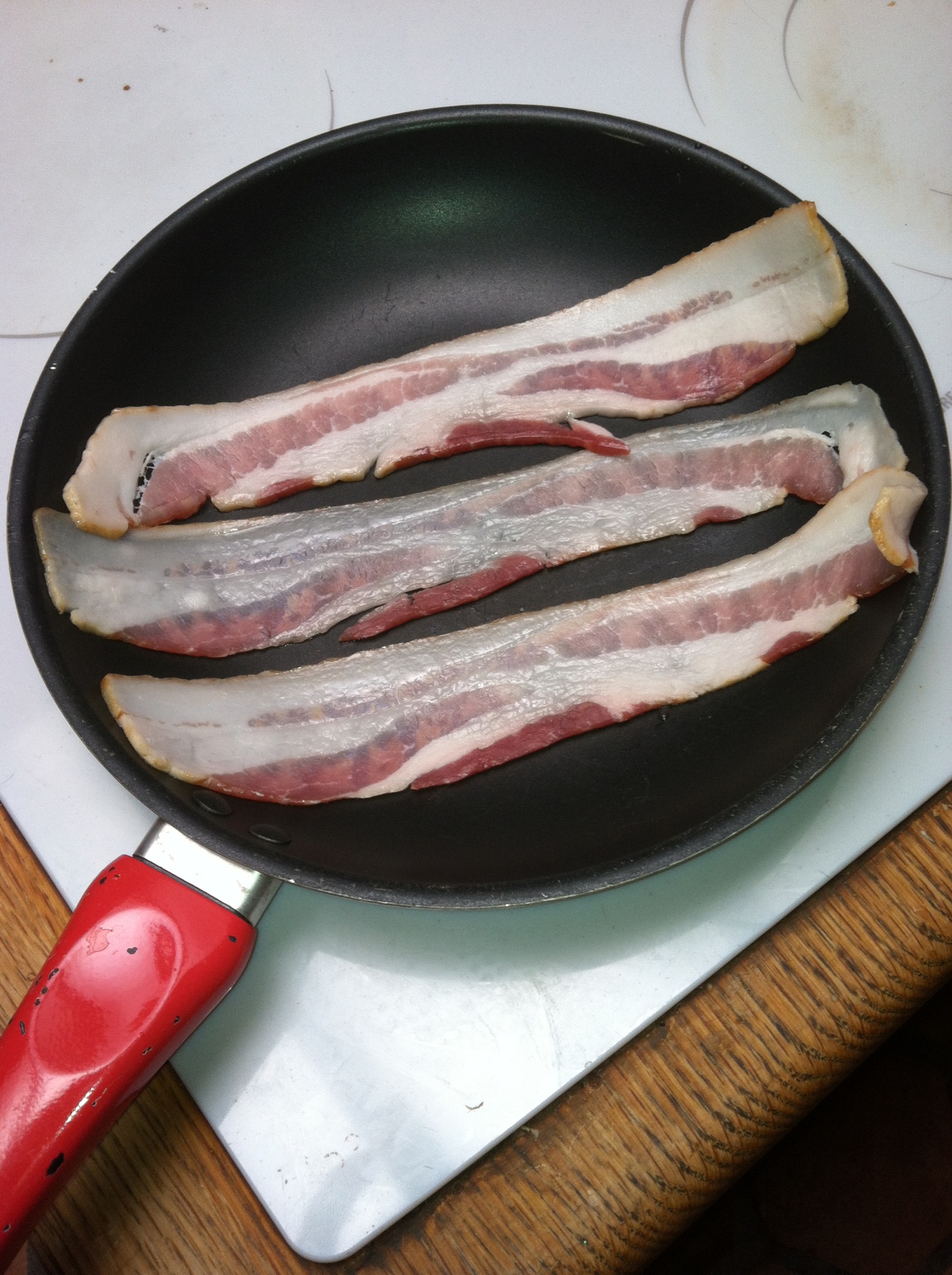
Is bacon paleo-compliant? Not really. It’s too heavily processed. Including it in a Stone Age diet is a nod to convenience and variety.

Bacon, eggs, black coffee, and Cholula hot sauce. A caveman wouldn't recognized any of this except for eggs.

Bacon, eggs, black coffee, and Cholula hot sauce. A caveman wouldn’t recognized any of this except for eggs.

If you follow nutrition science literature, you’ll see periodic references to “processed meats” like bacon contributing to increased risk of cardiovascular disease, cancer, or premature death. I think the associations are pretty weak. I don’t want to debate it right now. Health-conscious cautious people aren’t going to go hog-wild on processed meats. I don’t. We may never have a definitive science-based resolution of the issue.

If you want to control the degree of processing in your bacon, make your own. The recipe at the link includes pink salt (sodium nitrite), maple syrup, and dark brown sugar. Many other recipes are available, some of which could be more paleo-compliant. My understanding is that sodium nitrite is a preservative and gives bacon meat that pink color. Does it contribute to flavor? If you’re not storing your bacon for a long time, you may not need the pink salt.

In any case, I thoroughly enjoyed three strips of bacon with my eggs yesterday. Mine was the Kirkland brand from Costco was $3.80/pound (USD). Two slices provide 80 calories (uncooked) and zero grams of carb although, if I recall correctly, it was honey-cured bacon.

Ingredients:

3 large eggs

3 strips of bacon, standard thin slices

Salt and pepper to taste

1/2 cup raw honeydew melon, cubed

Instructions:

Fry the bacon over medium or medium-high heat. If there’s too much grease leftover in the pan after cooking, poor out what you don’t want, for later use or drizzle over your dog’s dry kibble food. Leave a little grease in the pan so your eggs don’t stick. Then fry your eggs over medium heat. Enjoy with raw honeydew, which will cleanse your palate after eating bacon.

You can pay a lot more than $3.80 a pound for bacon

You can pay a lot more than $3.80 a pound for bacon

Servings: One

Nutritional Analysis per Serving: (from FitDay.com)

63 % fat

10 % carbohydrate

26 % protein

319 calories

9 carb grams

1 fiber grams

8 digestible carb grams

845 mg sodium

423 mg potassium

Prominent features: high in B12, riboflavin, selenium, protein, pantothenic acid, and phosphorus. Although this is low in calories, it’s adequately satiating because of the rich protein and fat content. The calorie count will be higher by 50 if you eat all the bacon grease.

By the way, I didn’t start a grease fire when cooking this. But I thought about it. After I poured excess grease out of my pan, some of it dribbled onto the outside of the pan. If I had put that pan back on a gas stove to cook my eggs, would that outside grease have caught fire and crept up into the pan?

How do you put out a grease fire? I knew water wouldn’t do the trick; my first thought was pour salt on it. That’s wrong! About.com says to simply smother it by putting a metal lid on the pan and turn off the heat. If you can’t find the fitted lid, use a cookie sheet. Fire won’t burn without a supply of oxygen. You could pour baking soda on the fire, but it takes a lot. Wikihow has more info on putting out a grease fire, mentioning a dry chemical fire extinguisher as a last resort if you’re going to handle the fire yourself. Think safety first.

Grease fire? Put a lid on it and turn off heat. If that fails, try a LOT of baking soda. Or fire extinguisher.

Grease fire? Put a lid on it and turn off heat. If that fails, try a LOT of baking soda. Or fire extinguisher.

Early Feedback on the Paleobetic Diet From Jane Lenzen

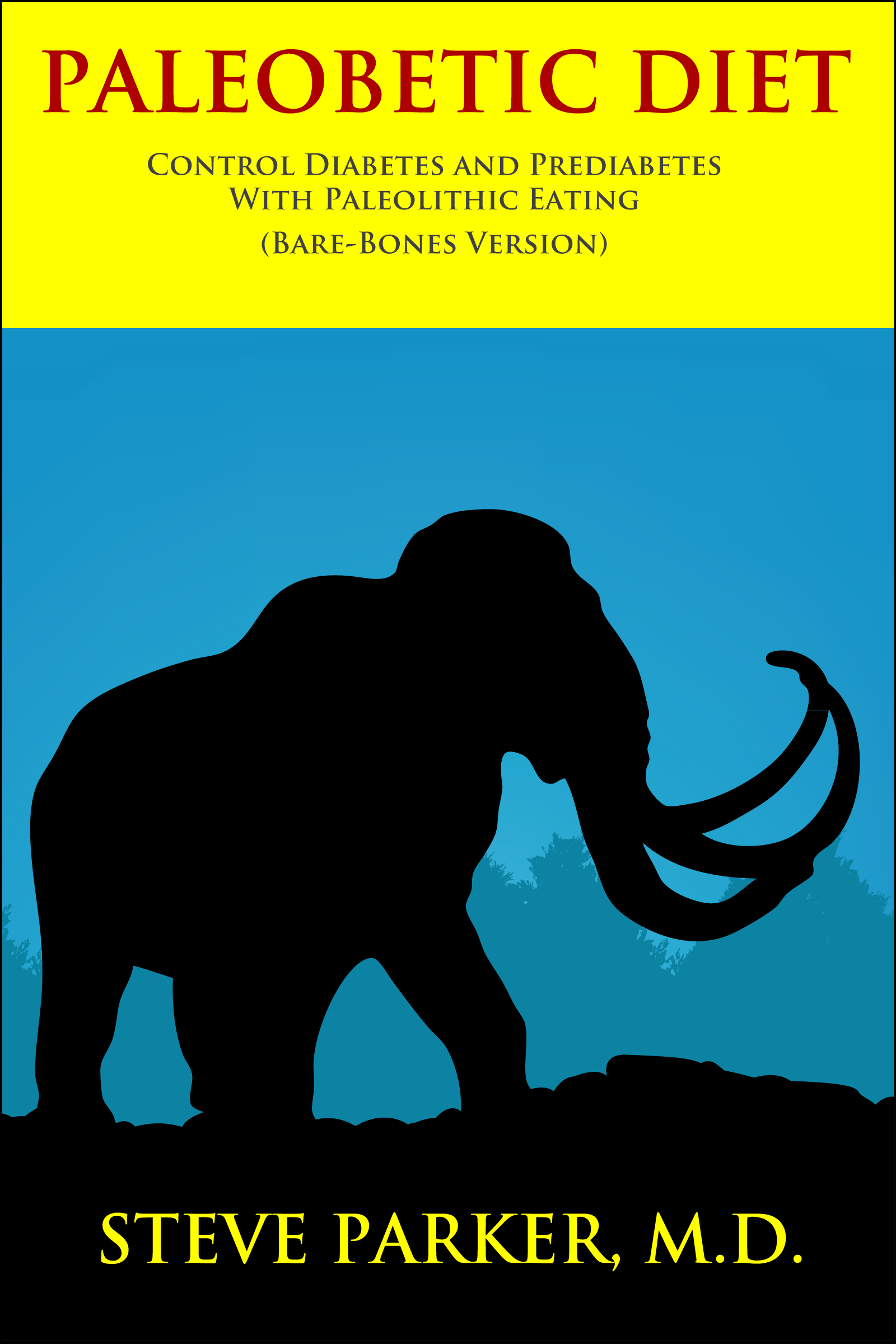
Paleobetic diet, Steve Parker MD,paleo diet, diabetic diet, diabetes

Cover designed by my 14-year-old son, Paul

Jane has been in the Clinical Nutrition field for decades. I don’t know her personally but we’ve exchanged a few emails lately. She graciously gave me permission to post her comments here. Anything in brackets below is what I added for clarification. Without further ado, here’s Jane:

***

I like to put fruits and vegetables in their proper categories. For example, avocados, tomatoes, olives, pumpkin, squash and peppers are all fruits.

As I said earlier, I discovered through observation in the early 80’s that diabetics could not eat fruit by itself, though fruit was always recommended as a stand-alone snack by the Am. Diabetic (and Dietetic) Assoc. You recommended that starchy vegs/fruits should be eaten with a protein or nuts, which is so invaluable to people, in general, diabetic or not.

In your general rec’s, there are 10 CHO’s [carbohydrate grams] AM, and Lunch/Dinner with 20 CHO’s [grams]. I’ve found that most people do better with equal amounts of protein at every meal. You mentioned later that if one is exercising, then increase the B’fast CHO’s, which I agree with. But, for the most part, I think people burn off the CHO’s during the day, no matter what they are doing. Plus, most people eat the next meal (after b’fast) within 4 hrs, whereas lunch and dinner are usually spaced more at 5 – 6 hrs. I think CHO’s should be highest at breakfast for most diabetics, as long as it is balanced with enough protein. Proteins at the next two meals could be higher. I disagree with fruits being eaten at dinner, as I think this spikes the BG for the next morning fasting. The type and amount is, of course, key.

Diet sodas. None! I believe that the sweet taste of any artificial sweetener will provoke some kind of response in the brain/body. There are mixed studies as far as insulin response, but French researchers performed a 14 yr study which showed an association between diet soda intake and Type 2 Diabetes. If your patients drank 2 sodas/day, that’s 14 per week…….too many!! I’m not a purist, by any means, but to be on the safe side, I’d stick with Paleo here……..no artificial anything.

Hypoglycemia. Again, I’m not in the ADA camp on this one either. I do believe in emergencies, (below 60 mg/dl [3.3 mmol/l]) the diabetic must ingest glucose, but only about 10 gms is usually needed, for the most part, if the BG is not too low. (Under 45 mg/dl [2.5 mmol/l], then 20 gms is warranted.) If between 60 – 70, I’d do a combo of protein and sugar. (1/2 cup OJ [120 ml orange juice] with 4 almonds or 3 glucose tabs with 4 almonds.) I’ve witnessed diabetics sucking on hard candies too many times per week, which does bring up the glucose, but to the detriment of hormonal balance. I try to prevent this yo-yoing syndrome that goes on…..it can’t be good long-term.

You advised to check BG [blood glucose] 4 – 6 times per day before meals and at bedtime. I think two of those should be 2 hr. post-prandials, which may give them better control overall.

Your meal ideas use too much of the same foods, like onions and tomatoes. Cruciferous vegetable are all over the place, which may be detrimental to those with Hypothyroidism. I’d include different vegetables at every meal to give the diabetic more option ideas.

***

Thank you, Jane!

Regarding 10 grams of digestible carbohydrate at breakfast and 20 g at lunch and dinner (evening meal): This is in deference to the dawn phenomenon, in which blood sugars tend to run higher between 6 and 9 am, roughly. I need to do some research to see how commonly this occurs. Adding carbs on top of dawn phenomenon may not be a great idea. I believe this is why Dr. Bernstein’s Diabetes Solution provides fewer carbs for breakfast than for lunch and dinner. If you don’t experience dawn phenomenon, it wouldn’t matter if you ate 20 or 30 g of digestible carb for breakfast.

I’ve asked for feedback on the Paleobetic Diet, hoping to make it better in future versions. If you give me comments via email, rest assured I will never publish them anywhere without your permission.

—Steve

Win a Paleobetic Diet E-Book – It’s Easy!

Paleobetic diet, Steve Parker MD,paleo diet, diabetic diet, diabetes

Cover designed by my 14-year-old son, Paul

Just be one of the first 100 people to email me asking for it.

Why am I giving it away? I need some feedback on it.

You don’t have to be a PWD to get a copy. Perhaps you’re just a curious dietitian, nutritionist, certified diabetes educator, nurse, or physician.

If you get the e-book, please seriously consider giving me feedback via email:

  • What do you think of the Paleobetic Diet?
  • How could I make it better?
  • How was your experience with the distributor, Smashwords?
  • Would more recipes be helpful?
  • What did you think of the sections on diabetes drugs, hypoglycemia, and exercise?
  • If you tried it, did it affect your blood sugars? How did you feel, physically? Was your healthcare provider supportive? Did you lose any excess weight?
  • What do you think of the food options on the diet?

Be aware that the Paleobetic Diet e-book bare-bones version is only 9,000 words long. That’s short. It’s a how-to primer. I don’t go into evolutionary theory and the scientific underpinnings of the diet.

Here’s How You Win:

  1. Email a request for the e-book, to steveparkermd (at) gmail (dot) com, putting “paleobetic diet” in the subject line.
  2. I’ll email you back a coupon code that gives you a 100% discount on the e-book at Smashwords.
  3. You set up a free account at Smashwords, then act like you’re purchasing the book. Before checkout, you’ll be asked for the coupon code or discount code I gave you. Enter it. Bingo! Free e-book. You’ll get a choice of multiple e-book formats.
  4. Note that I only check my email every week or two, so don’t get in a big hurry.

Thanks in advance for your thoughts! If you win the e-book and never give me feedback, I won’t bug you about it.

Steve Parker, M.D.

PS: Remember, this offer is only for the first hundred people who email me. I don’t know if those copies will be gone in a few days or six months.

What’s the Paleobetic Diet?

Two years ago, a few of my patients with diabetes asked me whether the paleo diet would help with management of their diabetes. After much deliberation, I can definitely say, “Yeah, maybe.”

We still don’t have much scientific data to back it up, but I’ve seen enough to convince me it would be adequately safe to try a paleo-style diet under medical supervision. The greatest immediate risk is hypoglycemia in those taking certain drugs.

Regardless of diet, diabetics are at risk for hypoglycemia if they use any of the following drug classes. Also listed are a few of the individual drugs in some classes:

  • insulins
  • sulfonylureas: glipizide, glyburide, glimiperide, chlorpropamide, acetohexamide, tolbutamide
  • meglitinides: repaglinide, nateglinide
  • pramlintide plus insulin
  • exenatide plus sulfonylurea
  • possibly thiazolidinediones: pioglitazone, rosiglitazone
  • possibly bromocriptine

I’ve just finished a handout for my patients interested in a paleo diabetic diet. If interested, click for details.

Steve Parker, M.D.

PS: The paleo diet is also referred to as the Paleolithic, Stone Age, Old Stone Age, cavemen, ancestral, and hunter-gatherer diet.

Paleobetic diet, Steve Parker MD,paleo diet, diabetic diet, diabetes

Cover of the fleshed-out ebook at Smashwords