A Paleo Problem: Calcium

paleo diet, Steve Parker MD,calcium, osteoporosis

I worry about her bones 50 years hence

It appears difficult to meet the Recommended Dietary Allowance (RDA) for calcium while eating most versions of the paleo diet.  That’s because they don’t include milk products.  The Linus Pauling Institute at Oregon State University has a review of calcium as related to nutrition and health, last updated in late  2010. They say that few Americans hit their recommended daily calcium goal.

I see lots of little old ladies with hip and other fractures related to osteoporosis. Trust me, you don’t want to go there. It’s difficult to reverse osteoporosis, an insidious process that’s been going on for decades before the fracture.

Osteoporosis may be related to years of inadequate calcium consumption. Adequate vitamin D is  an important part of the equation, too. Blood calcium levels are strictly regulated, and if they’re too low, calcium is pulled from the bones to fill the blood’s tank.

Broccoli and bok choy are fair sources of calcium, but pale in comparison to milk. Bok choy isn’t a part of my diet; I’m not even sure I’ve ever had it. Below is a video on bok choy cooking. Looks simple enough.  I need to look into kale, too.

Many paleophiles promote bone broth, but I haven’t figured out why yet. Is it high in calcium? (Hat tip to Wendy Schwartz for the word “paleophile”.)

A can of sardines looks like a good source of calcium: 350 mg or 35% Daily Value.

Can you help me worry less about calcium deficiency?

Recipe: Mexican Eggs and Avocado Slices

Steve Parker MD, paleo diet, low-carb dietMy family loves the pico de gallo over these fried eggs. If you don’t want to make a batch of the pico de gallo, substitute an amount of commercial picante sauce that provides no more than three grams of digestible carbohydrate. “Digestible carbohydrate” is the total carb grams of a serving, minus the fiber grams.

Ingredients:

  • eggs, three large
  • tomato, fresh, 2 oz (60 g)
  • onion, fresh 3/4 oz (20 g)
  • jalapeño pepper, fresh, 1/4 of a pepper
  • cilantro, fresh, 3–4 sprigs chopped finely to supply 1 tbsp (15 ml)
  • olive oil, 2 tsp (10 ml)
  • California avocado, 1 whole (these are the dark green or black avocados, usually 4 x 2.5 inches or 10 x 5 cm)
  • salt, to taste (1/4 tsp?)
  • black pepper to taste (1/4 tsp?)

Instructions:

Make the pico de gallo first. Finely chop and blend together the tomato, onion, jalapeño pepper, cilantro, some of the salt and pepper to taste.

paleo diet, Steve Parker MD, pico de gallo

We chop our pico de gallo more finely than this

Peel and slice the avocado. Salt and pepper to taste.

Fry the eggs in an olive oil-coated pan.  Salt and pepper to taste. When done, transfer to a plate and spoon the pico de gallo onto the eggs. Enjoy with avocado slices on the side.

At our house, we usually make enough pico for left-overs. It lasts a few days in the refrigerator.

Servings: 1

Nutritional Analysis:

  • 72% fat
  • 13% carbohydrate
  • 15% protein
  • 592 calories
  • 20.4 g carb
  • 12.8 g fiber
  • 7.6 g digestible carb
  • 810 mg sodium (if you use a total of 1/4 tsp)
  • 1,237 mg potassium
  • Prominent features: rich in B12, copper, iron, pantothenic acid, riboflavin, and selenium

Oil Pulling for Dental Health


tooth structure, paleo diet, caries, enamel

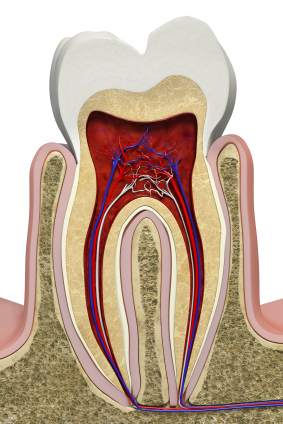
Cross-section of a tooth

Medical student Kris Gunnars has a post on the topic, mentioning it’s a time-honored Indian folk remedy for treatment or prevention of dental problems.

I’d never heard of this before. I have no opinion on efficacy. Kris says to spit the oil out after swishing for 10–15 minutes because it contains “bacteria and nasty things.” I’d be tempted to swallow it unless I were concerned about the 180 calories in the oil. You’re swallowing those bacteria all day anyway. I imagine you have a mouth full of saliva after the first five minutes.

I’m filing this tidbit away for future reference.

Julianne Taylor, RD, Outlines Her Version of the Paleo Diet

…in an attractive infographic.  You do follow her blog, don’t you?

How To Roast Asparagus and Brussels Sprouts

paleo diet, Steve Parker MD, how to cook asparagus and Brussels sprouts

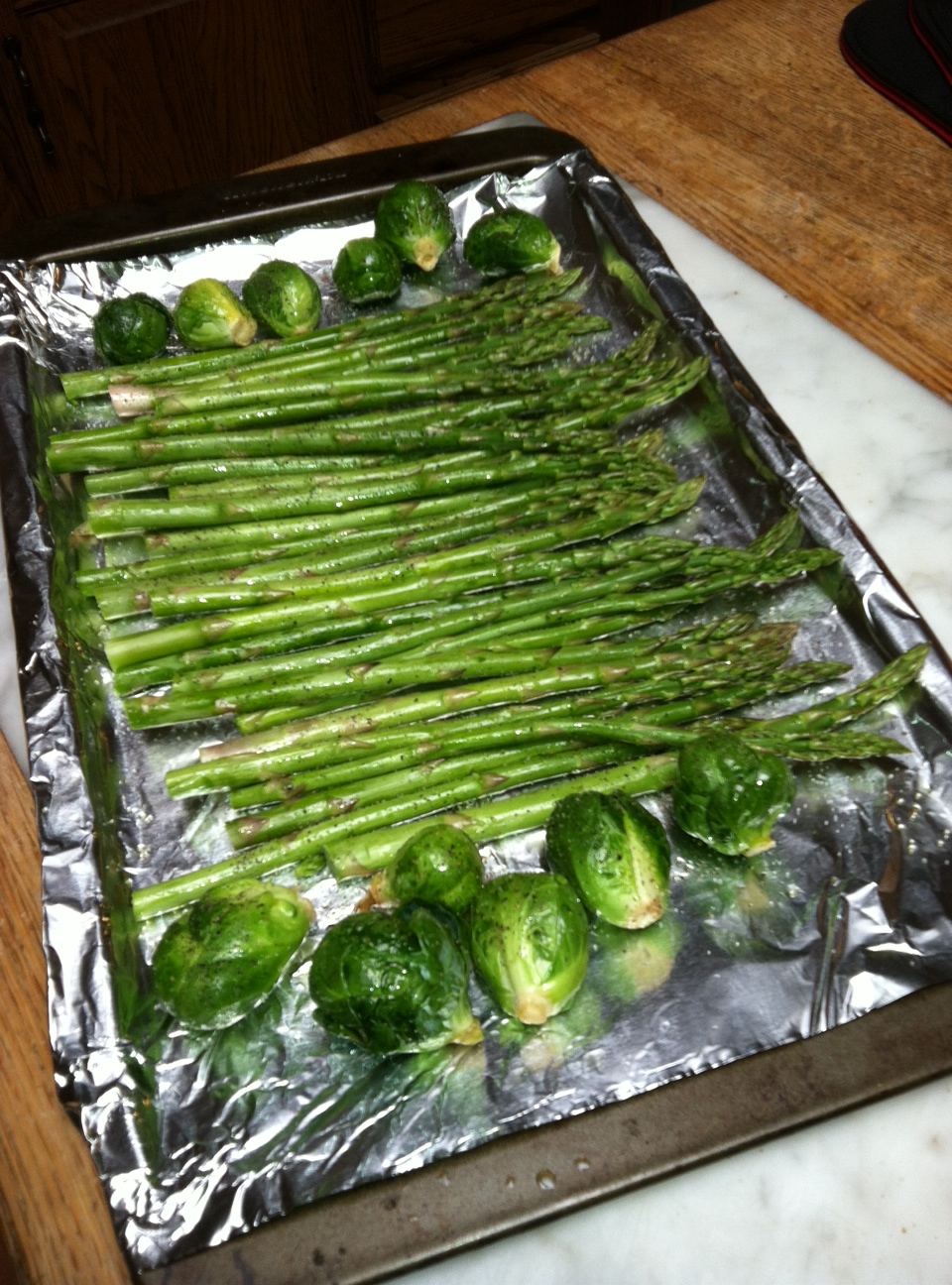
The finished product: 14 oz of asparagus and 7 oz of Brussels sprouts yields 5 or 6 servings

This is easy.  I use the same method to roast potatoes.

Cooking asparagus is a little tricky. Allrecipes.com has a short video you may find helpful. The thick end of the stalks can be woody, especially on the larger spears, so you need to cut them off or use a potato peeler to shave off some of the “wood.” Or just by the smaller spears.

how to roast asparagus and Brussels sprouts, paleo diet, Steve Parker MD

The disposable foil just makes clean-up easier

Preheat the oven to 425° F.

Rinse off the veggies then let them dry. Brush with extra virgin olive oil then salt and pepper to taste. Sprinkle with other herbs or spices if you wish. Layer them on a baking sheet covered with aluminum foil. Cook in the oven for 10–12 minutes.

It doesn’t seem fair to the other vegetables that we capitalize Brussels sprouts.

Have you noticed that asparagus alters your urine’s odor?

Nutritional Mini-Analysis

If you start with 14 oz of raw asparagus, you’ll end up with four servings.  Each serving has 40 calories (half of which are fat from the olive oil), total carbohydrates 4 g, fiber 2.2 g, and digestible carb 1.8 g.

Eight oz of Brussels sprouts yields two servings. Each serving has 70 calories, total carbs 10.3 g, fiber 4.4 g, and digestible carb 5.9 g.


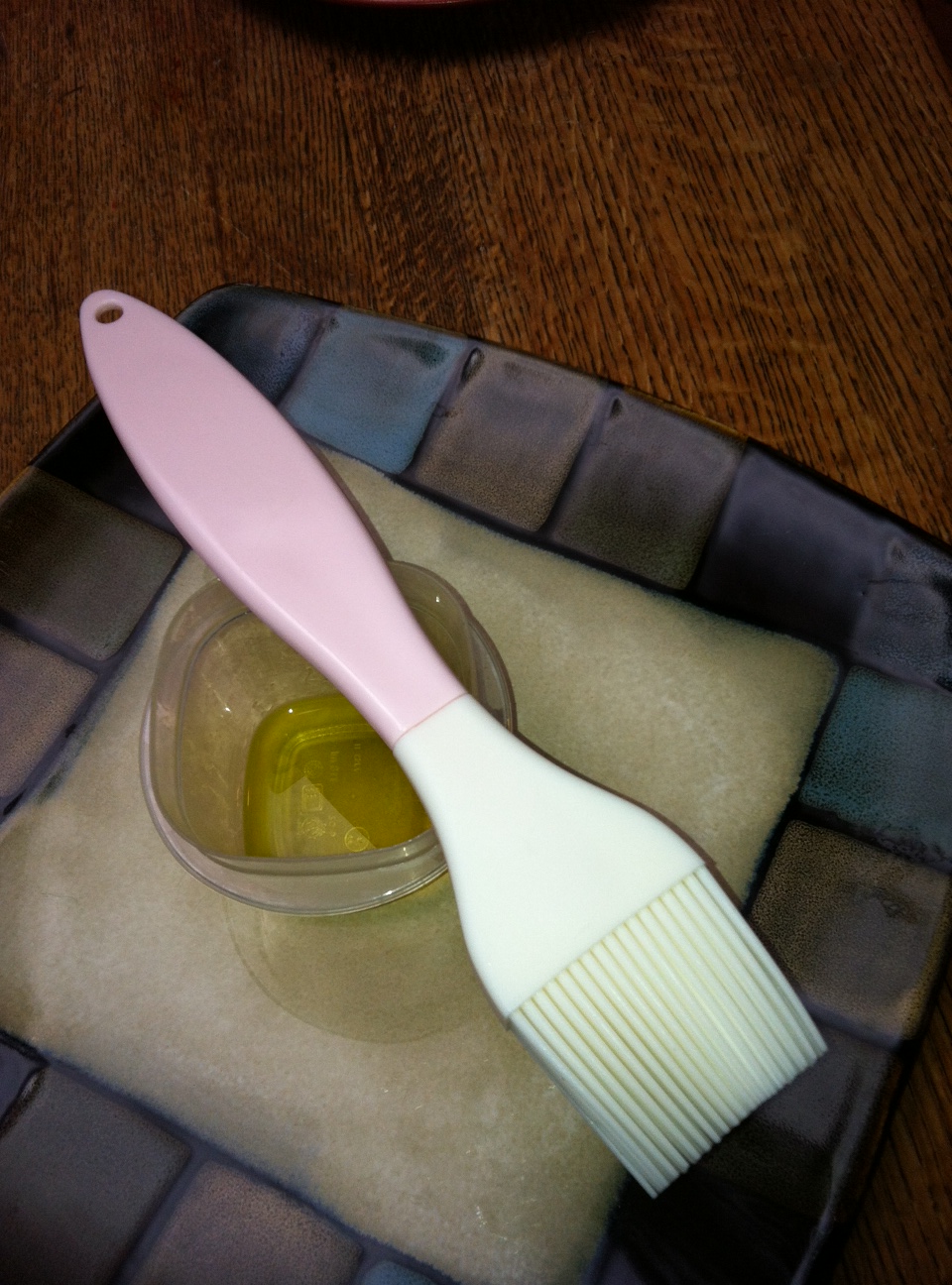
This rubber-tipped brush coated the vegetables with olive oil (a little more that a tablespoon for the whole batch)

This rubber-tipped brush coated the vegetables with olive oil (a little more than a tablespoon for the whole batch)

Are Most Wisdom Tooth Extractions Unnecessary?

I don’t know; I’ve never studied the issue.

I’m thinking about it after reading a report of a death after a “routine” wisdom tooth extraction.  Mine were extracted over 40 years ago, long enough that I don’t remember if they were causing a problem, or if they were seen on an x-ray and the dentist said, “We gotta those out before they cause problems.”

Dentist Jay Friedman says at least 2/3 of wisdom tooth extractions in young people are unnecessary.


h/t Dennis Mangan

Recipe: Fried Eggs, Cantaloupe, and Macadamia Nuts

Ingredients:

  • eggs, large, 3
  • olive oil, 2 tsp (10 ml)
  • salt to taste (1 dash)
  • pepper to taste
  • cantaloupe or honeydew melon, fresh, peeled and slivered, 6 oz (170 g)
  • macadamia nuts, roasted, 1 oz (30 g)

Instructions:

Spread olive oil in bottom of pan, then fry eggs, adding salt and pepper as desired. Enjoy macadamia nuts as you cook. Finish your meal and refresh your palate with the melon.

Servings: 1

Nutritional Analysis:

  • 72% fat
  • 13% carbohydrate
  • 16% protein
  • 555 calories
  • carbohydrates: 18.7 g
  • digestible carb: 14.9 g
  • sodium: 468 mg
  • potassium: 758 mg
  • prominent features: goodly amounts of protein, copper, iron, manganese, selenium, and vitamins A, B12, C, pantothenic acid, and riboflavin

PS: Nutritional analysis via FitDay.com

Recipe: Hearty Cabbage Soup

This version of cabbage soup isn’t a powerhouse in any one particular nutrient but provides a fair amount of zinc, protein, and vitamins A, B12, and C. If you’re a constipated, a bowl or two of cabbage soup may get things moving.

paleo diet, Steve Parker MD, cabbage soup

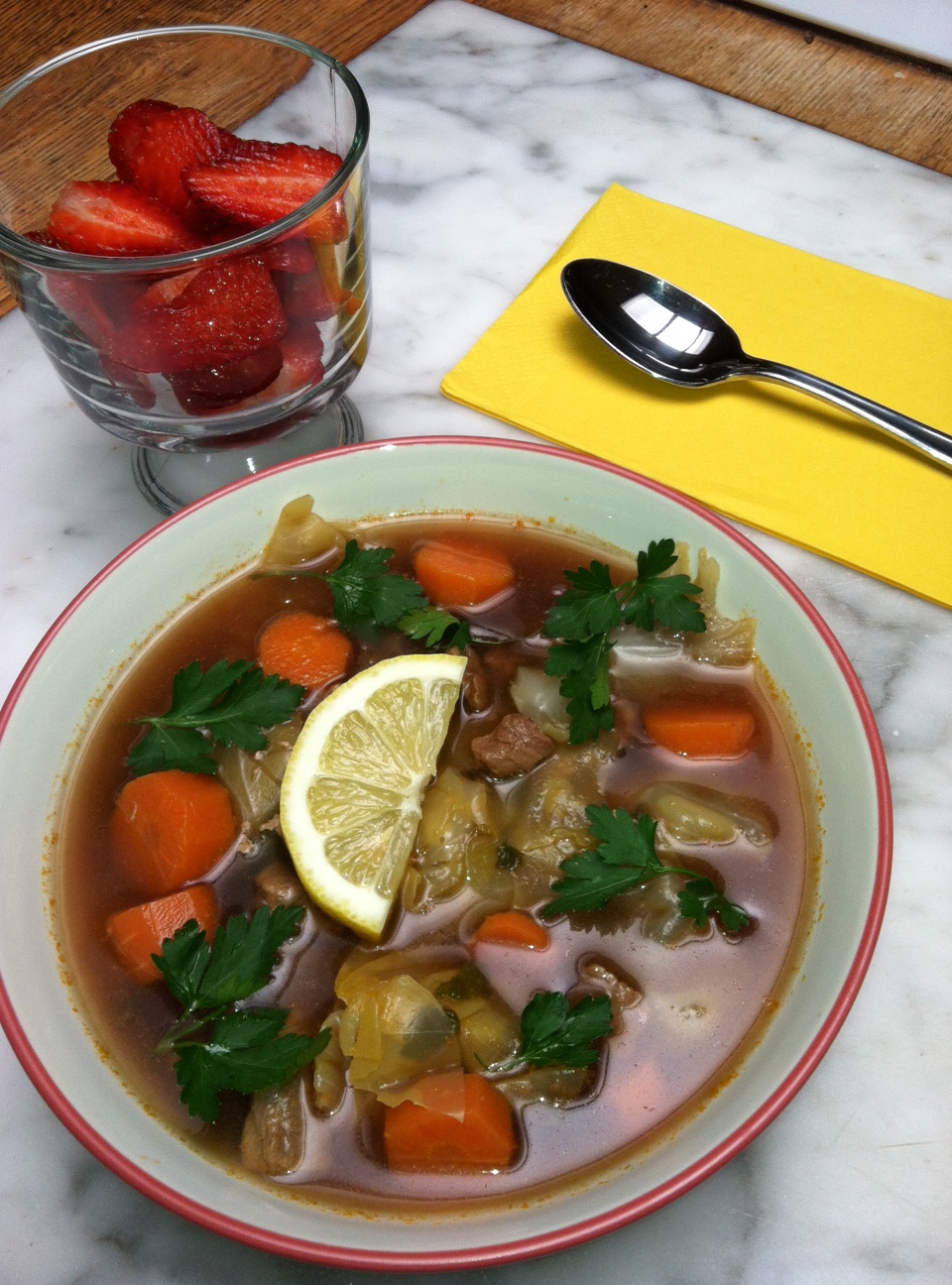
Plan well in advance because this takes a while to cook

Ingredients:

  • water, 4 quarts (3.8 L)
  • parsley, fresh, to taste (3 or 4 sprigs)
  • stew meat (beef), raw, 8 oz (230 g)
  • pepper, to taste (1/4 tsp or 1.2 ml)
  • salt, to taste (1.5 tsp or 8.4 mL) (don’t use this much if on a low-sodium diet)
  • tomato sauce, canned, 4 fl oz (120  ml)
  • carrot, raw, large (4.5 oz or 130 g), peeled and sliced into 1/4-inch (1/2-cm) thick discs
  • cabbage, green, raw, 1/2 of a small one (whole one weighs about 2 lb or 900 g), rinsed, cored, then sliced into quarters or smaller
  • fresh lemon (optional)

Instructions:

Add raw meat to the water in a large pot and boil gently for 30 minutes. Then add tomato sauce, carrot, salt, pepper, parsley, and cabbage. Bring to boil over medium heat and them simmer for 45 minutes.

If it’s too bland for you, add a squeeze of fresh lemon.  Or as a last resort, add some beef bouillon cube or powder.

Servings:

Makes four servings of 2 cups each (475 ml).

Nutritional Analysis Per Serving:

  • 46% fat
  • 23% carbohydrate
  • 31% protein
  • 200 calories
  • 12 g carbohydrate
  • 3 g fiber
  • 9 g digestible carb
  • 1,200 mg sodium
  • 495 mg potassium
  • Prominent features: see first paragraph

PS: Nutritional analysis done at FitDay.com.

Anthropologist Debunks the Paleolithic Diet

paleo diet, paleolithic diet, caveman diet

Not Dr. Warinner

Christina Warinner has a new TEDx talk on the paleo diet.  Dr. Warinner has a Ph.D. in anthropology from Harvard, so I’ll call her an anthropologist. The written TEDx intro mentions she is a paleontologist, and she mentions “archeologist” in her talk.  Anyway, I’m sure she’s very bright and put much thought into her presentation.  She spoke at my old stomping grounds, the University of Oklahoma in Norman.

Click to view video.

Dr. Warinner is probably addressing the smarter half of the general population, who holds the idea, at least superficially, that the paleo diet is meat-based.  (The dumber half of the public isn’t watching TEDx videos.)  Dr. Warinner doesn’t define “meat-based.”  Is half the plate filled with meat, fish, or eggs?  75% of the plate?  Half of total calories?

I’m not familiar with all the popular modern versions of the paleo diet.  Perhaps some are in fact meat-centric, whatever that means.  But the ones I’m more familiar with, like Dr. Cordain’s and mine, prominently feature vegetables, fruits, and nuts.  You could easily fashion a plant-based paleo diet, filling 80 or even 90% of your plate with plants.  (A vegan paleo diet isn’t realistic.  Cultures not eating animals would die out from B12 deficiency.)

I’d swear I heard Dr. Warinner say “we’re not adapted to eat meat.”  Surely she mis-spoke.

She mostly debunks popular misconceptions of the paleo diet.  Most of us deeply familiar with the paleo diet would have little to disagree with her about.

Here are some of Dr. Warinner’s major points:

  • It’s nearly impossible for most of us to eat a true Paleolithic diet.  Selective breeding has altered nearly all our foods to the point of unrecognizability by cavemen.  Examples are bananas, broccoli, carrots, and tomatoes.
  • There is no single paleo diet.  It depends on regional geographic variations in rainfall, latitude, temperature, etc.  Local populations ate what was available, in season, and often migrated seasonally to find food.

Dr. Warinner suggests we all incorporate three concepts from the paleo diet:

  1. Eat a great variety of foods.
  2. For the highest nutrient content, eat fresh food when ripe, in season.
  3. Eat whole foods.

Steve Parker, M.D.

PS: Miki Ben-Dor, a Ph.D. candidate, had many more objections to Dr. Warinner’s speech.  Paul Jaminet made a few comments about it, too (see middle of his post, after the comments on Marlene Zuk’s PaleoFantasy).  Wendy Schwartz weighs in, too. Angelo Coppola does a good job countering most of Dr. Warriner’s criticisms.

Potential Problems With Severe Carbohydrate Restriction

VERY-LOW-CARB  EATING

First, let’s talk about ketogenic diets, which require reduction of digestible carbohydrates to 50 grams a day or less for most folks.  The iconic ketogenic diet is the induction phase of the Atkins diet, which restricts carbs to a max of 20 g daily.  Note that the average American eats 250 to 300 grams of carb daily.

Your body gets nearly all its energy either from fats, or from carbohydrates like glucose and glycogen. In people eating normally, 60% of their energy at rest comes from fats. In a ketogenic diet, the carbohydrate content of the diet is so low that the body has to break down even more of its fat to supply energy needed by most tissues. Fat breakdown generates ketone bodies in the bloodstream. Hence, “ketogenic diet.” Also called “very-low-carb diets,” ketogenic diets have been around for over a hundred years.

WHAT COULD GO WRONG EARLY ON?

Very-low-carb ketogenic diets have been associated with headaches, bad breath, easy bruising, nausea, fatigue, aching, muscle cramps, constipation, gout attacks, and dizziness, among other symptoms. “Induction flu” may occur around days two through five, consisting of achiness, easy fatigue, and low energy. It clears up after a few days.

Other effects that you might not even notice immediately (if ever) are low blood pressure, high uric acid in the blood, excessive loss of sodium and potassium in the urine, worsening of kidney disease, deficiency of calcium and vitamins A, B, C, and D, among other adverse effects.

A well-designed ketogenic diet should address all these potential issues.  My Ketogenic Mediterranean Diet is an example.  I followed it for for six months and blogged about it.  (The KMD is not a paleo diet.)

Athletic individuals who perform vigorous exercise should expect a deterioration in performance levels during the first three to four weeks of any ketogenic very-low-carb diet. The body needs that time to adjust to burning mostly fat for fuel rather than carbohydrate.

Competitive weight-lifters or other anaerobic athletes (e.g., sprinters) will be hampered by the low muscle glycogen stores that accompany ketogenic diets. They need more carbohydrates.

WHAT ABOUT THE LONG RUN?

Long-term effects of a very-low-carb or ketogenic diet in most people are unclear—they may have better or worse overall health—we just don’t know for sure yet. Perhaps some people gain a clear benefit, while others—with different metabolisms and genetic make-up—are worse off.

If the diet results in major weight loss that lasts, we may see longer lifespan, less type 2 diabetes, less cancer, less heart disease, less high blood pressure, and fewer of the other obesity-related medical conditions.

Ketogenic diets are generally higher in protein, total fat, saturated fat, and cholesterol than some other diets. Some authorities are concerned this may increase the risk of coronary heart disease and stroke; the latest evidence indicates otherwise.

Some authorities worry that ketogenic diets have the potential to cause kidney stones, osteoporosis (thin, brittle bones), gout, deficiency of vitamins and minerals, and may worsen existing kidney disease. Others disagree.

It’s clear that compliance with very-low-carb diets is difficult to maintain for six to 12 months. Many folks can’t do it for more than a couple weeks. Potential long-term effects, therefore, haven’t come into play for most users. When used for weight loss, regain of lost weight is a problem (but regain is a major issue with all weight-loss programs). I anticipate that the majority of non-diabetics who try a ketogenic diet will stay on it for only one to six months. After that, more carbohydrates can be added to gain the potential long-term benefits of additional fruits and vegetables.

Or not.

People with type 2 diabetes or prediabetes may be so pleased with the metabolic effects of a ketogenic diet that they’ll stay on it long-term.

Steve Parker, M.D.