A Default Position on the Omega-6/Omega-3 Debate

ASBMB Today has a well-written balanced article on the omega-6/omega-3 fatty acid ratio debate written by Rajendrani Mukhopadhyay.  A fair amount of it is understandable to non-science majors.  The main question is whether the high consumption of omega-6 fatty acids in Western societies is unhealthy.

It’s estimated that throughout most of human evolution, our dietary omega-6/omega-3 ration has been around 3:1 or 2:1.  Today, it’s about 15:1, thanks to a large increase in omega-6 consumption.  Are our bodies adapted for the lower ratio?  A hard-core paleo diet like Dr. Cordain’s aims for that lower ratio.

Both sides of the debate agree that we would probably be better off eating more omega-3 fatty acids, as found in cold-water fatty fish.

I’m an omega-6/omega-3 ratio agnostic at this point.  I’ve never studied it in depth, so I have no strong opinion either way.

Here are a couple excerpts from the article to pique your interest:

No one is disputing that we’re eating more omega-6 than our predecessors did. Over the past 100 years, consumption of linoleic acid [an omga-6] has increased dramatically in the U.S., mainly through the use of soybean oil. Soybean oil intake has gone up from being 1 percent of calories in the American diet to as much as 10 percent, according to Hibbeln. Lands, Salem and others contend that the rise, driven by the processed food and agriculture industries, has happened without anyone knowing its effects. “If I were now to try to get permission to change 10 percent of the calories in the U.S. diet, I would need a very large body of data unequivocally proving that it was safe,” says Hibbeln. “No such body of data exists for soybean oil. But it’s in our diet. We’re the experiment. It’s been a very large, uncontrolled intervention.”

Experts like Harris and Willett say this increase has been to our benefit. “We have seen a massive decline in cardiovascular disease mortality and huge increase in life expectancy,” says Willett. “Not all the benefit is due to the increase in linoleic acid, but almost certainly much of it is. It was not an absolute disaster.” But the lipid biochemists counter that it’s not just cardiovascular disease at stake. They say diabetes, obesity and even psychiatric disorders are some outcomes of a diet heavy on omega-6s.

I’ve never before heard anybody credit linoleic acid with a major role in our  “huge increase in life expectancy” over the last century.  I doubt that’s the case.  I vote more in favor of better sewage systems, cleaner water, better hygiene, antibiotics, or improvements in surgery and medical care.

Evolutionary biologist Theodosius Dobzhansky said, “Nothing in biology makes sense except in the light of evolution.”  If that’s true, the default position is that lower amounts of omega-6 fatty acid are better than our current high consumption.  It’s up to the high-consumption proponents to prove otherwise.

Steve Parker, M.D.

h/t David Despain

PS: Dobzhansky was a Christian, by the way.

PPS: A Twitter reader (@pronutritionist) suggested that the modern Western dietary omega-6/omega=3 ratio is 9.6, not 15:1, citing Amer J Clin Nutr.  My source for 15:1 is Journal of Nutrition and Metabolism, vol. 2012, article ID 539426, doi 10.1155/2912/539426, by E. Patterson et al. I admit it’s not a great reference. Cordain’s 2002 book, The Paleo Diet, says 10:1.  Maybe it is closer to 10:1.  I’m sure there’s lots of inter-person variability.
Type 2 Diabetes: Scope of the Problem

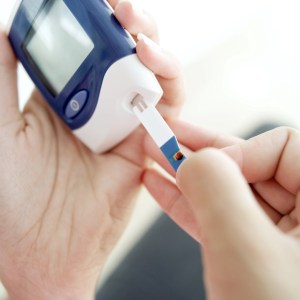
97 mg/dl. Yippee!

Type 2 diabetes is the most important public health problem in the U.S. and most of the developed world. The U.S. Centers for Disease Control and Prevention predicts that one of every three Americans born in the year 2000 will develop diabetes.

The most common form of diabetes by far is type 2, which describes at least 85% of cases. It’s less serious than type 1 diabetes. Type 1 diabetics have an immune system abnormality that destroys the pancreas’s ability to make insulin. Type 1’s will not last long without insulin injections. On the other hand, many type 2 diabetics live well without insulin shots.

The epidemic of diabetes in the U.S. and the developed world overwhelmingly involves type 2, not type 1.

“Prediabetes” is what you’d expect: a precursor that may become full-blown type 2 diabetes over time. Blood sugar levels are above average, but not yet into the diabetic range. One in four people with prediabetes develops type 2 diabetes over the course of three to five years. Researchers estimate that 35% of the adult U.S. population had prediabetes in 2008. That’s one out of every three adults, or 79 million. Only 7% of them (less than one in 10) were aware they had it.

In the U.S. as of 2010, 26 million folks have diabetes. That includes 11% of all adults.

The rise of diabetes parallels the increase in overweight and obesity, which in turn mirrors the prominence of refined sugars and starches throughout our food supply. These trends are intimately related. Public health authorities 40 years ago convinced us to cut down our fat consumption in a mistaken effort to help our hearts. We replaced fats with body-fattening carbohydrates that test the limits of our pancreas to handle them. Diabetics and prediabetics fail that test.

Dr. Richard K. Bernstein, notable diabetologist, wrote that, “Americans are fat largely because of sugar, starches, and other high-carbohydrate foods.”

We’re even starting to see type 2 diabetes in children, which was quite rare just thirty years ago. It’s undoubtedly related to overweight and obesity. Childhood obesity in the U.S. tripled from the early 1980s to 2000, ending with a 17% obesity rate.  Overweight and obesity together describe 32% of U.S. children.

Diabetes is important because it has the potential to damage many different organ systems, deteriorating quality of life. It can damage nerves (neuropathy), eyes (retinopathy), kidneys (nephropathy),  and stomach function (gastroparesis), just to name a few.

Just as important, diabetes can cut life short. Compared to those who are free of diabetes, having diabetes at age 50 more than doubles the risk of developing cardiovascular disease—heart attacks, strokes, and high blood pressure. Compared to those without diabetes, having both cardiovascular disease and diabetes approximately doubles the risk of dying. Compared to those without diabetes, women and men with diabetes at age 50 die seven or eight years earlier, on average.

Diabetic complications and survival rates will improve over the coming decades as we learn how to better treat this ancient disease.

Steve Parker, M.D.

Could Acellular Carbohydrates Be the Cause of Obesity?

Ivor Goodbody in a recent tweet reminded me of an interesting nutrition science article.  Ian Spreadbury hypothesizes that carbohydrate density of modern foods may be the cause of obesity.  Refined sugars and grains—types of acellular carbohydrates—are  particularly bad offenders.

Harvesting acellular carbs

These acellular carbs may alter our gut microorganisms, leading to systemic inflammation and leptin resistance, etc.  Our Paleolithic ancestors had little access to acellular carbohydrates.

Read more about it in “Comparison with ancestral diets suggests dense acellular carbohydrates promote an inflammatory microbiota, and may be the primary dietary cause of leptin resistance and obesity,” in Diabetes, Metabolic Syndrome and Obesity: Targets and Therapy, 2012, vol. 5, pp. 175-189.

To reverse our modern obesity epidemic, we need better understanding of the underlying pathophysiology.

—Steve

PS:  For Spreadbury’s formal definition of acellular carbohydrates, see my long comment below.

Random Thoughts On Fitness

A couple years ago, I was thinking about putting together a fitness program for myself.  My goals were endurance, strength, less low-back aching, flexibility, longevity, and being able to get on my horse bareback without a mounting block or other cheat.

I spent quite a bit of time at Doug Robb’s HeathHabits site.  He has a post called The “I don’t have time to workout” Workout.  I ran across some paper notes I made during my time there.  Doug recommended some basic moves to incorporate: air squat, Hindu pushup, dragon flag, shuffle of scissor lunge, Spiderman lung, hip thrust/bridge, swing snatch, dumbbell press, Siff lunge, jumping Bulgarian squat, band wood chops, stiff leg deadlift.  Click the link to see videos of most of these exercises.  The rest you can find on YouTube.

Another post is called “Do you wanna get big and strong? -Phase 1”.  The basic program is lifting weights thrice weekly.  Monday, work the chest and back.  Tuesday, legs and abs/core.  Friday, arms and shoulders.

  • Chest exercises: presses (barbell or dumbell, incline, decline, flat, even pushups with additional resistance  – your choice
  • Back: chins or rows
  • Legs: squats or deadlifts
  • Arms and shoulders: dips, presses, curls

Doug is a personal trainer with a huge amount of experience.  He’s a good writer, too, and gives away a wealth of information at his website.

Around this same time of searching a couple years ago, I ran across Mark Verstegen’s Core Performance, Mark Lauren’s book “You Are Your Own Gym,”  and Mark Sisson’s free fitness ebook that also  features bodyweight exercises. Lauren is or was a Navy Seal trainer.  His plan involves 30 minutes of work on four days a week and uses minimal equipment.  Lots of good reviews at Amazon.com.

I did the Verstegen program for 15 weeks and saw major improvements in my fitness and low-back aching.  It’s a good program.  The only drawback is that it required six hours a week of my time.

Newbies to vigorous exercise should seriously consider using a personal trainer.

If you’ve had any experience with these regimens, please share.  Or is there another you like?

Steve Parker, M.D.

QOTD: Fish and Mercury Contamination

Has anyone even bothered to ask why the tuna are eating mercury?

—Jim Gaffigan

Annual Hospital Care Cost of Diabetes in U.S. Is $83 Billion (USD)

“Let’s hope this thiazolidinedione doesn’t give you bladder cancer.”

At least according to the Agency for Healthcare Research and Quality.

-Steve

PS: The article above says diabetes is the fifth leading cause of death in the U.S.  Not so, according to the Centers for Disease Control and Prevention, which lists diabetes in seventh place.  I suspect it’s not even as high as that.  I fill out my share of death certificates, and I rarely list diabetes as the primary cause of death.

14 Indispensable Weight-Loss Tips

These have worked for lots of my patients.  Take what works for you and discard the rest.

1) Plan on grocery shopping, meal preparation, and taking meals to your workplace.

2) Keeping a record of your food consumption is often the key to success.

3) Accountability is another key.  Do you have a friend or spouse who wants to lose weight?  Start the same program at the same time and support each other.  That’s one of many ways to have accountability.

4) If you tend to over-eat or snack too much, floss and brush your teeth after you’re full.  You’ll be less likely to go back for more anytime soon.

5) Eat at least two or three meals daily.  Eat breakfast every day.  Ignore the diet gurus who say you must eat every two or three hours.

6) Eat slowly and allow yourself time to enjoy the delicious recipes in this book; you’ll also be a better judge of when your’re full.

7) Don’t eat while watching TV.

8) Give yourself a specific reward for every 10 pounds (4.5 kg) of weight lost.  Consider a weekend get-way, jewelry, new clothes, an evening at the theater, a professional massage, etc.  Choose the reward in advance, to give you something to work toward.

9) Don’t start a diet during a time of stress.

10) Maintain a consistent eating pattern throughout the week and year.

11) If you know you’ve eating enough at a meal to satisfy your nutritional requirements yet you still feel hungry, drink a large glass of water and wait a while.  Or try a sugar-free psyllium fiber supplement: three grams of fiber in 8 oz (240 ml) of water.

12) Weigh yourself frequently: daily during your active weight-loss phase and during the first two months of your maintenance-of-weight-loss phase.  Weekly thereafter.

13) Be aware that you’ll probably regain five or 10 pounds (2.3 or 4.5 kg) of fat now and then.  That’s normal.  Just get back on your original weight-loss plan for a month or two.

14) Tell your housemates you’re on a diet and ask for their support.  You may also need to tell your co-workers and others with whom you spend significant time.  If they care about you, they’ll be careful not to tempt you off the diet.

—Steve

Found Another Paleo-Friendly Dietitian: Kelly O’Connell Schmidt, RD

And she has type 1 diabetes, too.  I look forward to some free time so I can peruse her site, Paleo Infused.  Kelly’s twitter handle is @kellyOC.

—Steve

Dr. Frassetto Discusses Paleo Diet and Diabetes

Not Dr. Frassetto

Dr. Lynda Frassetto is a Professor of Medicine and Nephrology at the University of California San Francisco.  She and her colleagues have completed a study of the Paleolithic diet as a treatment for diabetes (type 2, I think).  As far as I know, details have not yet been published in the medical literature.

Dr. Frassetto spoke at the Ancestral Health Symposium-2012 earlier this year.  You can view the 35-minute video here.

She is convinced that a paleo diet, compared to a Mediterranean-style diet, is better at controlling blood sugars and “reducing insulin” in diabetics (presumably type 2s).  Insulin sensitivity is improved, particularly in those with insulin resistance to start with.  The paleo diet group saw an average drop of fasting glucose by 23 mg/dl (1.3 mmol/l).  One slide you’ll see in the video indicates the paleo diet reduced absolute hemoglobin A1c by 0.3%, compared to 0.2% with the “Mediterranean” diet.  (Let me know if I got the numbers wrong.)

Color me underwhelmed so far.

Questions raised by the video include:

  • what is the UCSF version of the paleo diet?
  • how many participants were in her study?
  • how long did her study last?
  • did she study only type 2 diabetics?
  • what exactly was the control diet?
  • how severe were the cases of diabetes studied?

For answers, we await publication of the formal report.

Steve Parker, M.D.

Artificial Sweeteners and the Paleoista

Did you know babies under one year of age shouldn’t be given honey?  I saw that warning on a honey container recently and didn’t know why.  Honey may contain bacterial spores that cause botulism in the wee ones.

A pinch of salt helps reduce bitterness in coffee

Paleo diet aficionados can satisfy a sweet tooth with honey or fruit.  Unfortunately for people with diabetes, those items can spike blood sugars too high.  Honey, for instance, has 17 grams of carbohydrate in one tablespoon (15 ml), which is more carb than in a tablespoon of white granulated table sugar.

Most diabetics eating paleo-style will need some limit on consumption of honey and fruit.  Or they could take more diabetes drugs to control blood glucose elevations.  Again, unfortunately, we don’t know the long-term health effects of most of our diabetes drugs.

How about getting a sweet fix with artificial sweeteners?  Paleo purists would say “fuggedaboudit.”  In theory, that’s fine.  But many paleo followers with diabetes won’t forget about it.  They’ll use artificial sweeteners, aka sugar substitutes.

If you’re gonna use ’em, think about stevia.  It’s derived from a natural source, the leaves of a plant in South America.  Admittedly, our forebears in eastern Africa wouldn’t have had access to it 50,000 years ago.  After the plant has been processed, it’s certainly a highly refined product going against the grain of the paleo movement.  Furthermore, one of the stevia market leaders in U.S. (Truvia) is mixed with erythritol.  To help you feel better about the erythritol (a sugar alcohol), note that it is found naturally in some fruits.  Another stevia commercial product in the U.S. is Pure Via.

Dietitian Brenna at her Eating Simple blog reviewed sugar impostors in January, 2012.  She favored stevia over the others, at least for non-diabetics who were tempted.  Brenna also linked to a Mayo Clinic review of artificial sweeteners.

Note that sugar alcohols like erythritol have the potential to raise blood sugar levels.  They shouldn’t raise it as much as table sugar, however.  With regard to sugar alcohols, Dr. Richard K. Bernstein urges caution, if not total avoidance.  Use your meter to see how they effect you.

If you’re in the habit of using one or two teaspoons of honey to sweeten tea or coffee, you’re blood sugar levels should be more stable and manageable if you use stevia instead.  Dr. Bernstein gives the green light to stevia powder or liquid, along with saccharin tablets or liquid, aspartame tablets, and sucralose tablets, acesulfame-K, and neotame tablets.  Stevia is the only one close to “natural.”

Steve Parker, M.D.