Is Evolutionary Medicine a Valid Concept?

Not Harriett Hall, M.D.

Dr. Harriett Hall over at Science-Based Medicine has written a couple reviews of “evolutionary medicine” books.

Of the 2009 book, Dr. Hall writes:

Seeing everything in medicine through evolutionary glasses impresses me as more of a gimmick than as a clinically useful approach. Evolution clearly informs medical practice, but I can’t see the value of “evolutionary medicine” as a separate discipline and I can’t recommend this book.

 Her conclusion about the 1994 book:
I’m sorry, but I just don’t “get it.” Am I missing something? Am I just a contrary curmudgeon? Evolution is already an essential part of all science. Medical scientists already understand evolution and apply its principles appropriately. I didn’t see a single example in their book of any significant practical development in medical care that would not have occurred in the general course of medical science as it is commonly practiced, without any need for a separate discipline of “Darwinian medicine.” Evolutionary explanations, whether true or speculative, may satisfy our wish to understand “why,” but I can’t see that they have much objective usefulness.  Instead, they have produced at least one major annoyance: a movement that preaches to us how we ought to revert to the supposed diet of our ancestors (the Cave Man Diet, etc.).
My sense at this point is that evolutionary concepts do have a place in modern medicine, a role that has not been adequately explored and exploited.

Melanie Gores a Few Oxen

Australian Aborigine

Dietitian Melanie Thomassian at Dietriffic offers some iconoclastic ideas in her critique of the paleo diet (aka Paleolithic, Old Stone Age, caveman, or hunter-gatherer diet).  Some quotes:

I’ll be the first to admit the diet recommended by most mainstream nutritionists, dietitians, and doctors is pretty terrible, and believe it or not, I do understand why people look elsewhere for their dietary advice.


The philosophy and reasoning behind the whole Paleo diet, however, isn’t something I can reconcile myself to.

Melanie addresses legumes, dairy, grains, and the problem of determining prehistoric diets.

-Steve

Will Your Diabetes Drug Cause Bladder Cancer?

MedPage Today reports that thiazolidinediones (aka glitazones) are linked to development of bladder cancer.  Pioglitazone is the most commonly used thiazolidinedione in the U.S.  From the article:

The increased risk of bladder cancer associated with glitazones—which reached a relative increase of 72% in patients who started on the agents more than 5 years earlier—”appears to be a class effect,” the research team, led by Ronac Mamtani, MD, of the University of Pennsylvania in Philadelphia, concluded.

According to the National Cancer Institute, the U.S. has 74,000 new cases of bladder cancer yearly, with 15,000 annual deaths from bladder cancer.

If you take a thiazolidinedione, talk to your doctor about bladder cancer risk at your next visit.

Steve Parker, M.D.

How Many Diabetic Diets Are There?

Elizabeth Woolley reviews most of them at her About.com column on type 2 diabetes. I don’t endorse everything there; just thought you might be interested.

I still see doctors at the hospital order “ADA diet” (American Diabetes Association) for their patients with diabetes.

There is no ADA diet.

-Steve

Fit or Fat: Which Is Healthier?

Men live longer if they maintain or improve their fitness level over time, according to research out of the Cooper Clinic in Dallas, Texas. Part of that improved longevity stems from reduced risk of death from cardiovascular disease (e.g., heart attack and stroke).

Compared with men who lose fitness with aging, those who maintained their fitness had a 30% lower risk of death; those who improved their fitness had a 40% lower risk of death. Fitness was judged by performance on a maximal treadmill exercise stress test.

Body mass index over time didn’t have any effect on all-cause mortality but was linked to higher risk of cardiovascular death. The researchers, however, figured that losses in fitness were the more likely explanation for higher cardiovascular deaths. In other words, as men age, it’s more important to maintain or improve fitness than to lose excess body fat or avoid overweight.

Steve Parker, M.D.

Reference: Lee, Duck-chul, et al. Long-term effects of changes in cardiorespiratory fitness and bodly mass index on all-cause and cardiovascular disease mortality in men. Circulation, 124 (2011): 2,483-2,490

Do We Need Supplements Because Our Soils Are Depleted?

In my recent review of The Blood Sugar Solution, I noted the numerous supplements recommended by Dr. Mark Hyman: between 11 and 16 supplements.  And one of those supplements is a multivitamin/multimineral supplement that has 20 or so different components.

One reason we need the supplements, according to Dr. Hyman, is because the soils in which we grow food over the years has been depleted of minerals and other basic plant building blocks.

I know one doctor who told his patients the same thing while selling them over-priced supplements straight from his office.

So is there any truth to the “soil depletion” argument for supplements?

Not much, if any, according to Monica Reinagel.  She reviewed the topic in 2010 at her Nutrition Diva blog: http://nutritiondiva.quickanddirtytips.com/are-fruits-and-vegetables-getting-less-nutritious.aspx.  I trust Monica.  In the same article, you’ll find links to her opinion on whether organic vegetables are healthier and worth the cost.

I’ve not done a comprehensive review of the soil depletion issue myself.   It’s quite a difficult area to research; try it and you’ll see.  The Soil Science Society of America, founded in 1936, sounds like a great place to find the answer.  No such luck.

The U.S. is a huge country with lots of different soil types and usage histories.   Soils in one field may be depleted in certain components whereas the field across the road may be quite rich.  Soils are not static.  Farmers are always making amendments to the soil, either with fertilizers or other additives, or by rotating crops.

Wouldn’t you think farmers, whether small family units or huge corporate enterprises, would do what’s necessary to keep their soils productive?

Another way to look at soil depletion would be to look at the nutrient content of the plants and animals that depend on soil for life.  The U.S. Department of Agriculture did that in its 2004 publication, “Nutrient Content of the U.S. Food Suppy, 1909-2000.”  This paper includes 10 vitamins and nine minerals.  For the boring details, see   http://www.cnpp.usda.gov/publications/foodsupply/foodsupply1909-2000.pdf.   Some excerpts:

Levels for most vitamins and minerals were higher in 2000 than in 1909.

Levels for vitamin B12 and potassium were lower in 2000 than in 1909, but over the series, met or exceeded current recommendations for a healthy diet….

The authors attibute lower potassium availability to lower consumption of plant foods, especially fresh potatoes.  I’m increasingly interested in the possibilty that low potassium consumption may contribute to heart disease and premature death.  But that’s a topic for another day.

I’m skeptical about claims of widespread soil depletion in the U.S. as a cause of food supply degradation.  Supplement sellers are sure to disagree.  To be sure you’re getting the nutrients you need, eat a wide variety of foods.

Steve Parker, M.D.

PS: The American Council on Science and Health has a brief article on whether everybody needs a multivitamin/multimineral supplement.

New research is questioning the benefits of taking supplemental vitamins and minerals, suggesting that, for the general population, such supplements may actually pose more risks than benefits.

Click for the full article: http://www.acsh.org/factsfears/newsid.3067/news_detail.asp

PPS:  Oregon State University’s Linus Pauling Institute published a long article on the multivitamin/multimineral supplement issue.  It seems fairly balanced to me.  The Institute notes the 2006 National Institutes of Health assessment that we have insufficient evidence to recommend either for  or against such supplementation (Annals of Internal Medicine, 145(5), 2006: 364-371).  Nevertheless, the Linus Pauling Institute recommends supplementation as “insurance.”  You know, just in case.

U.S. Army Fitness Benchmarks: How Do You Stack Up?

Last April, I was at a training session for adult Boy Scout leaders. One of the items covered was environmental heat illness: how to avoid, recognize, and treat. One of the risk factors for heat illness is “poor fitness,” defined as taking over 16 minutes to run two miles. Inquiring minds want to know where that number came from. No reference was given.

About.com has an article on fitness requirements for U.S. army soldiers, who are tested at least twice yearly. There are only three components tested:

  • Number of push-ups
  • Number of sit-ups
  • Time to complete a two-mile run

Fortunately, the Army doesn’t expect a 57-year-old man to perform as well as a 17-year-old. For instance, a 17-year-old has to run two miles in 19 minutes and 24 seconds or less; the 57-year-old is allowed up to 23 minutes and 24 seconds. Females and males have different performance standards: a 17-year-old woman has 22 minutes and 24 seconds to run two miles.

The simplicity of the Army’s approach appeals to me. Check out the APFT tables in the About.com article if you want to see how you compare to Army soldiers.

I’ve written previously how it’s helpful to have some baseline physical fitness measurements on yourself. That post mentioned up to 14 different items you could monitor. In the comment section, I recognized that’s too much for some folks. For them, I suggested just doing the five-item functional testing: 1-mile run/walk (timed), maximum number of push-ups and pull-ups, toe touch, and vertical jump.

Steve Parker, M.D.

Exercise Motivation

No crowds and no roads: You have to be in good shape to get up here

This last winter I slacked off on my physical activity.  But in April I started Chris Highcock’s Hillfit program.  It’s based on resistance exercise, and I supplemented with high-intensity interval training on a treadmill.  All in less than an hour a week.

To help me judge effectiveness of the new plan, I measured and recorded my baseline fitness.

Exercise isn’t fun.  You need good reasons to do it.  Here are mine:

  • it keeps you young (fountain of youth)
  • longevity
  • less low back aching
  • injury resistance
  • dementia prevention
  • lowered risk of heart disease and cancer
  • I’m a sheepdog, not a sheep
  • weight management
  • emergency preparedness
  • more energy to enjoy life (hiking, camping, horseback riding, long walks with others, etc.)

If you hope to exercise regularly, you’ll need your own list of reasons.  You’ll have days, weeks, or months when you just don’t want to exercise.  Review your list then.

Steve Parker, M.D.

PS: Here’s my report after six weeks of Hillfit.

New Hyperglycemia Management Guidelines from the ADA

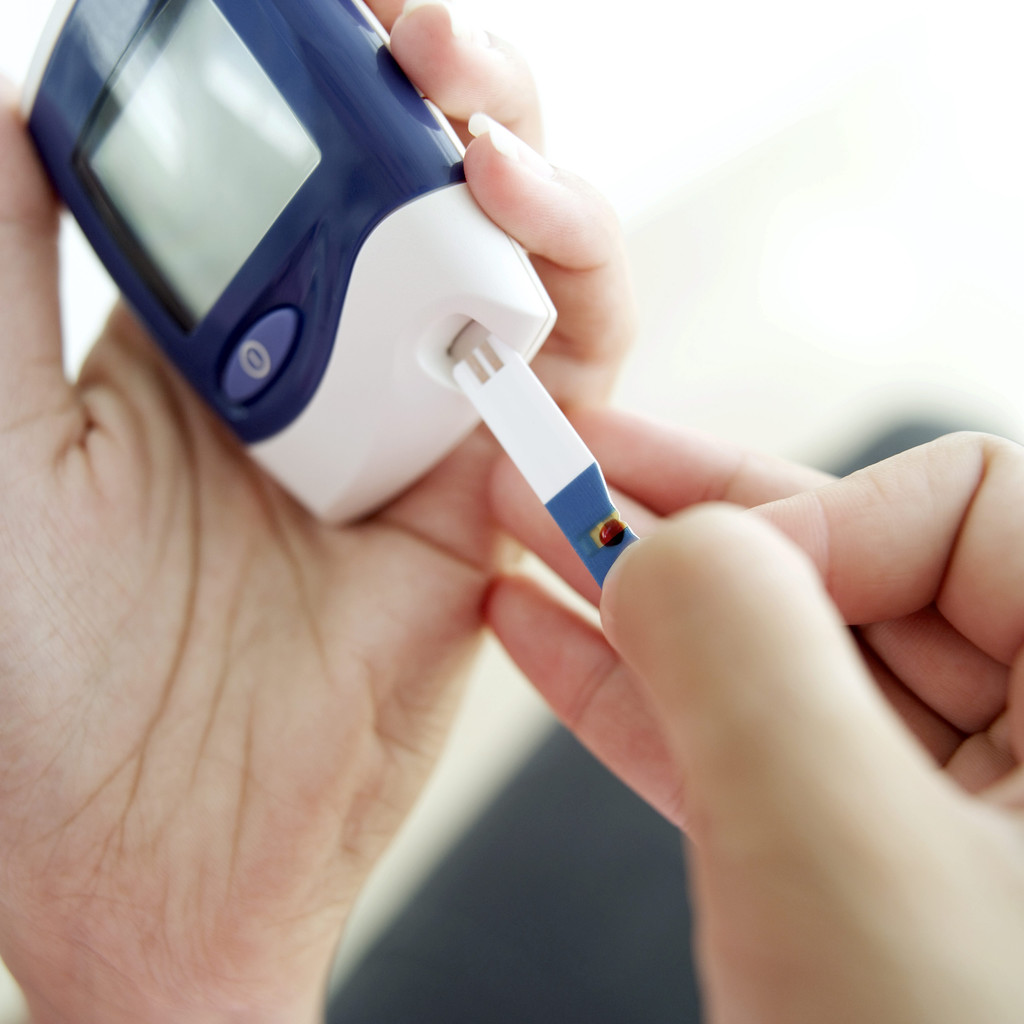
97 mg/dl. Yippee!

I’ll get to the following article as time allows.  Perhaps you’ll get to it before me.  It’s written for healthcare professionals.  It’s in a June, 2012, issue of Diabetes Care.  (Didn’t they publish management principles just six months ago?)  What does it say about diet, if anything?

Management of Hyperglycemia in Type 2 Diabetes: A Patient-Centered Approach:  Position Statement of the American Diabetes Association (ADA) and the European Association for the Study of Diabetes (EASD)

-Steve

Does Eating Fish, Meat, and Poultry Ruin Your Mood?

Cow’s in a good mood. What a great place to live!

Your mood might improve if you restrict meat, poultry, and fish, according to a pilot study in Nutrition Journal. I don’t have time to read it anytime soon. Why don’t you, and comment below?

My gut tells me these researchers are wrong.  At least for me.  To each his own.

-Steve

Reference: Beezhold, Bonnie and Johnston, Carol. Restriction of meat, fish, and poultry in omnivores improves mood: a pilot randomized controlled trial. Nutrition Journal 2012, 11:9 doi:10.1186/1475-2891-11-9. Published: 14 February 2012