Fit or Fat: Which Is Healthier?

Men live longer if they maintain or improve their fitness level over time, according to research out of the Cooper Clinic in Dallas, Texas. Part of that improved longevity stems from reduced risk of death from cardiovascular disease (e.g., heart attack and stroke).

Compared with men who lose fitness with aging, those who maintained their fitness had a 30% lower risk of death; those who improved their fitness had a 40% lower risk of death. Fitness was judged by performance on a maximal treadmill exercise stress test.

Body mass index over time didn’t have any effect on all-cause mortality but was linked to higher risk of cardiovascular death. The researchers, however, figured that losses in fitness were the more likely explanation for higher cardiovascular deaths. In other words, as men age, it’s more important to maintain or improve fitness than to lose excess body fat or avoid overweight.

Steve Parker, M.D.

Reference: Lee, Duck-chul, et al. Long-term effects of changes in cardiorespiratory fitness and bodly mass index on all-cause and cardiovascular disease mortality in men. Circulation, 124 (2011): 2,483-2,490

Do We Need Supplements Because Our Soils Are Depleted?

In my recent review of The Blood Sugar Solution, I noted the numerous supplements recommended by Dr. Mark Hyman: between 11 and 16 supplements.  And one of those supplements is a multivitamin/multimineral supplement that has 20 or so different components.

One reason we need the supplements, according to Dr. Hyman, is because the soils in which we grow food over the years has been depleted of minerals and other basic plant building blocks.

I know one doctor who told his patients the same thing while selling them over-priced supplements straight from his office.

So is there any truth to the “soil depletion” argument for supplements?

Not much, if any, according to Monica Reinagel.  She reviewed the topic in 2010 at her Nutrition Diva blog: http://nutritiondiva.quickanddirtytips.com/are-fruits-and-vegetables-getting-less-nutritious.aspx.  I trust Monica.  In the same article, you’ll find links to her opinion on whether organic vegetables are healthier and worth the cost.

I’ve not done a comprehensive review of the soil depletion issue myself.   It’s quite a difficult area to research; try it and you’ll see.  The Soil Science Society of America, founded in 1936, sounds like a great place to find the answer.  No such luck.

The U.S. is a huge country with lots of different soil types and usage histories.   Soils in one field may be depleted in certain components whereas the field across the road may be quite rich.  Soils are not static.  Farmers are always making amendments to the soil, either with fertilizers or other additives, or by rotating crops.

Wouldn’t you think farmers, whether small family units or huge corporate enterprises, would do what’s necessary to keep their soils productive?

Another way to look at soil depletion would be to look at the nutrient content of the plants and animals that depend on soil for life.  The U.S. Department of Agriculture did that in its 2004 publication, “Nutrient Content of the U.S. Food Suppy, 1909-2000.”  This paper includes 10 vitamins and nine minerals.  For the boring details, see   http://www.cnpp.usda.gov/publications/foodsupply/foodsupply1909-2000.pdf.   Some excerpts:

Levels for most vitamins and minerals were higher in 2000 than in 1909.

Levels for vitamin B12 and potassium were lower in 2000 than in 1909, but over the series, met or exceeded current recommendations for a healthy diet….

The authors attibute lower potassium availability to lower consumption of plant foods, especially fresh potatoes.  I’m increasingly interested in the possibilty that low potassium consumption may contribute to heart disease and premature death.  But that’s a topic for another day.

I’m skeptical about claims of widespread soil depletion in the U.S. as a cause of food supply degradation.  Supplement sellers are sure to disagree.  To be sure you’re getting the nutrients you need, eat a wide variety of foods.

Steve Parker, M.D.

PS: The American Council on Science and Health has a brief article on whether everybody needs a multivitamin/multimineral supplement.

New research is questioning the benefits of taking supplemental vitamins and minerals, suggesting that, for the general population, such supplements may actually pose more risks than benefits.

Click for the full article: http://www.acsh.org/factsfears/newsid.3067/news_detail.asp

PPS:  Oregon State University’s Linus Pauling Institute published a long article on the multivitamin/multimineral supplement issue.  It seems fairly balanced to me.  The Institute notes the 2006 National Institutes of Health assessment that we have insufficient evidence to recommend either for  or against such supplementation (Annals of Internal Medicine, 145(5), 2006: 364-371).  Nevertheless, the Linus Pauling Institute recommends supplementation as “insurance.”  You know, just in case.

U.S. Army Fitness Benchmarks: How Do You Stack Up?

Last April, I was at a training session for adult Boy Scout leaders. One of the items covered was environmental heat illness: how to avoid, recognize, and treat. One of the risk factors for heat illness is “poor fitness,” defined as taking over 16 minutes to run two miles. Inquiring minds want to know where that number came from. No reference was given.

About.com has an article on fitness requirements for U.S. army soldiers, who are tested at least twice yearly. There are only three components tested:

  • Number of push-ups
  • Number of sit-ups
  • Time to complete a two-mile run

Fortunately, the Army doesn’t expect a 57-year-old man to perform as well as a 17-year-old. For instance, a 17-year-old has to run two miles in 19 minutes and 24 seconds or less; the 57-year-old is allowed up to 23 minutes and 24 seconds. Females and males have different performance standards: a 17-year-old woman has 22 minutes and 24 seconds to run two miles.

The simplicity of the Army’s approach appeals to me. Check out the APFT tables in the About.com article if you want to see how you compare to Army soldiers.

I’ve written previously how it’s helpful to have some baseline physical fitness measurements on yourself. That post mentioned up to 14 different items you could monitor. In the comment section, I recognized that’s too much for some folks. For them, I suggested just doing the five-item functional testing: 1-mile run/walk (timed), maximum number of push-ups and pull-ups, toe touch, and vertical jump.

Steve Parker, M.D.

Exercise Motivation

No crowds and no roads: You have to be in good shape to get up here

This last winter I slacked off on my physical activity.  But in April I started Chris Highcock’s Hillfit program.  It’s based on resistance exercise, and I supplemented with high-intensity interval training on a treadmill.  All in less than an hour a week.

To help me judge effectiveness of the new plan, I measured and recorded my baseline fitness.

Exercise isn’t fun.  You need good reasons to do it.  Here are mine:

  • it keeps you young (fountain of youth)
  • longevity
  • less low back aching
  • injury resistance
  • dementia prevention
  • lowered risk of heart disease and cancer
  • I’m a sheepdog, not a sheep
  • weight management
  • emergency preparedness
  • more energy to enjoy life (hiking, camping, horseback riding, long walks with others, etc.)

If you hope to exercise regularly, you’ll need your own list of reasons.  You’ll have days, weeks, or months when you just don’t want to exercise.  Review your list then.

Steve Parker, M.D.

PS: Here’s my report after six weeks of Hillfit.

New Hyperglycemia Management Guidelines from the ADA

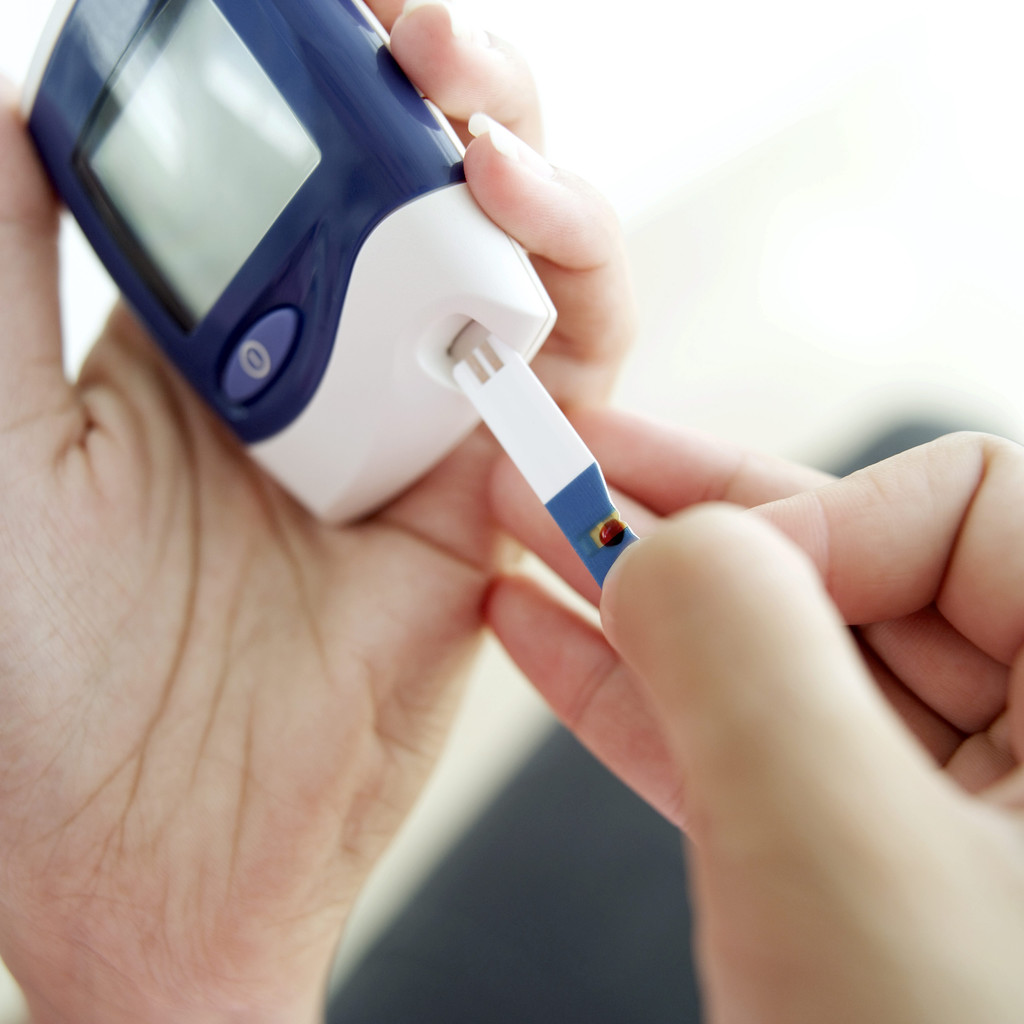
97 mg/dl. Yippee!

I’ll get to the following article as time allows.  Perhaps you’ll get to it before me.  It’s written for healthcare professionals.  It’s in a June, 2012, issue of Diabetes Care.  (Didn’t they publish management principles just six months ago?)  What does it say about diet, if anything?

Management of Hyperglycemia in Type 2 Diabetes: A Patient-Centered Approach:  Position Statement of the American Diabetes Association (ADA) and the European Association for the Study of Diabetes (EASD)

-Steve

Does Eating Fish, Meat, and Poultry Ruin Your Mood?

Cow’s in a good mood. What a great place to live!

Your mood might improve if you restrict meat, poultry, and fish, according to a pilot study in Nutrition Journal. I don’t have time to read it anytime soon. Why don’t you, and comment below?

My gut tells me these researchers are wrong.  At least for me.  To each his own.

-Steve

Reference: Beezhold, Bonnie and Johnston, Carol. Restriction of meat, fish, and poultry in omnivores improves mood: a pilot randomized controlled trial. Nutrition Journal 2012, 11:9 doi:10.1186/1475-2891-11-9. Published: 14 February 2012

Is Fructose the Cause of Obesity?

Mainly because of its low cost, HFCS [high fructose corn syrup] consumption replaced approximately one-third of the total sugar consumption in the USA between 1970 and 2000, paralleling to some extent the increasing prevalence of obesity during this period. Consequently, HFCS has been a particular focus of possible blame for the obesity epidemic. However, HFCS consumption has remained very low in other parts of the world where obesity has also increased, and the most commonly used form of HFCS contains about 55% fructose, 42% glucose, and 3% other sugars, and hence is associated with similar total fructose and glucose intakes as with sugar. Furthermore, sucrose is hydrolyzed in the gut and absorbed into the blood as free glucose and fructose, so one would expect HFCS and sucrose to have the same metabolic consequences. In short, there is currently no evidence to support the hypothesis that HFCS makes a significant contribution to metabolic disease independently of the rise in total fructose consumption.


Given the substantial consumption of fructose in our diet, mainly from sweetened beverages, sweet snacks, and cereal products with added sugar, and the fact that fructose is an entirely dispensable nutrient, it appears sound to limit consumption of sugar as part of any weight loss program and in individuals at high risk of developing metabolic diseases. There is no evidence, however, that fructose is the sole, or even the main factor in the development of these diseases…

— Luc Tappy in BMC Biology, May 21, 2012 (the article is a review of fructose metabolism and potential adverse effects of high consumption)

PS: Luc Tappy believes that excessive calorie consumption is an important cause of overweight and obesity.

New Fitness Self-Experiment No.3

OK, here’s the program I started May 21.

For aerobic and cardiovascular endurance:

  • twice weekly 15-minute treadmill high intensity interval training
  • FYI, it took me three months to build up to this starting from a sedentary baseline 18 months ago.

For strength:

Twice weekly…

Why dumbbell weights?  ‘Cuz that’s what I’ve got.

I chose push-ups over bench presses because the former probably uses more muscles.  I thought about including pull-ups/chin-ups, then decided I’m already working those muscles enough in the other exercises.

Rather than counting sets and repetitions (e.g., three sets of 10 push-ups), I’m going to continue using the exhaustion technique Chris Highcock taught me in Hillfit:

  • 90 seconds on each exercise
  • use enough weight that I’m exhausted after the 9o seconds
  • 10 seconds up and 10 seconds down for each repetition

I can probably get the resistance training done in 20 minutes.

My current fitness measurements are recorded elsewhere.  I’ll recheck after about six weeks.

None of this is etched in stone.

My goals are here.  Comments?

Steve Parker, M.D.

Notes

My fitness experiment No.1 was Mark Verstegen’s Core Performance.  No. 2 was Chris Highcock’s Hillfit.

Update May 22, 2012

The first workout went well.  I need to review the various types of dumbbell presses and decide which one I want to stick with.   I hope I’m a little sore tomorrow.  These are the dumbbell weights I used today:

Dumbbell squats: 25 lb (11.4 kg)

Push-ups: 25 lb (11.4 kg) in backpack

Dumbell presses: 15 lb (6.8 kg)

Romanian deadlift with dumbbells: 30 lb (13.6 kg)

Bent-over one-arm rows: 25 lb (11.4 kg)

Update May 25, 2012

I was sore in the back, quads (anterior thighs), and arms the day after the first workout.  I even postponed my second workout of the week for one day to allow lingering right arm soreness to resolve.  For my workout today, I reduced the overhead press weight from 15 to 10 lb.

Update May 27, 2012

Right arm/shoulder soreness is gone.  Now I’ve got soreness in my left hamstring, likely a strain related to the deadlifts.  Started 24 hours after my second workout in this experiment, and persisting 36 hours at this point.

Update May 28, 2012

Right hamstring soreness almost gone.  Instead of 30 lb dumbbells with the Romanian deadlift, I cut to 25 lb to avoid aggravating that hamstring.  Probably back to 30 lb next time.  With bent-over rows, I’m ready to progress to 30 lb.

Update June 9, 2012

It’s going well.  No injuries; no unusual aches.  Here are the dumbbell weights I carry in each hand: for squats – 30 lb; for push-ups – 25 lb in backpack; for dumbbell presses – 25 lb; for Romanian deadlifts – 40 lb; for bent-over row – 30 lb.  The set of dumbbells my wife got for me (used) in CraigsList was from 5 to 30 lb.  So I had to go buy a 40-lb pair, which set me back about $80 (USD).

Update June 26, 2012

Going well.  No injuries.  Haven’t missed any sessions.  Had to decrease backpack push-up weight from 25 to 20 lb  about 10 days ago—I just couldn’t keep up the exercise for 90 seconds at the higher weight.  A couple weeks ago I increased the bent-over row and squat weights to 40 lb.  I’m noticing much use of back and shoulder muscles when I’m doing exercises that superficially seem to target other muscles. E.g., the Romanian deadlifts and squats target the buttocks and thighs, but having to carry 40 lb in each hand works out my arms, shoulders, and back.

Institute for Justice Takes Steve Cooksey’s Case Involving North Carolina Dietitians

The Institute for Justice will be helping paleo diet blogger Steve Cooksey defend his right to free speech.  That’s an expensive battle so I’m glad Steve is not alone in the fight.

I’m sure that the Institute for Justice accepts donations.  I’ve been familiar with their great work for years.

-Steve

Your Fitness Program Is Different From Mine

Eighteen months ago I was sedentary.  I had developed some mysterious shoulder pain that I was able to cure with a rehab program.  Soon after that, the family went bowling for the first time in years.  After just three lines (games), my bowling arm got weak and sore.  That was a wake-up call for me. 

I needed a fitness program with a strength training component.

Assembling a fitness program for yourself is like figuring out your weight loss and management plan.  Lots of idiosyncrasies and variables to consider.  You have to determine what works for you, sometimes through trial and error.  Your plan may not work for your neighbor.

You could always go to a personal trainer who’ll devise a plan for you and supervise implementation.  That’s not a bad idea at all, and probably the best choice for someone not familiar with exercise yet serious about long-term health and weight management.

Future posts will address exercise-related issues peculiar to people with diabetes.  These are important.

I remember reading somewhere on the ‘net over the last year about “the big five” exercises for strength training (aka resistance training).    Turns out there are lots of Big Five lists.  Here’s one:

  • squats
  • deadlifts
  • bench press
  • overhead press
  • chin-ups
And another, similar list (a blog commenter said these were the five free-weight exercises at the top of Dr. Doug McGuff’s list):
  • squats
  • deadlifts
  • bench press
  • standing overhead press (same as military press?)
  • bent-over barbell row

If you’re not familiar with these, go to YouTube and browse.

In case you’re wondering, I’m not interested, at my age, in growing large muscles. My goal is to be injury resistant and as strong as I can be without spending too much time at it, regardless of muscle size.  Size doesn’t necessarily translate directly into strength.  My wife, on the other hand, appreciates large arms—think  Thor in The Avengers movie.

I’m tempted to put together a program composed of man-makers, Turkish get-ups, High Knee Walk to Spiderman With Hip Lift and Overhead Reach (HKWTSWHLOR?), and treadmill HIIT.  I’m saving that for another day, however.

I’ll share my new program tomorrow.

Steve Parker, M.D. 

PS: In case the appropriate link above is broken, the shoulder rehab exercises I did were from an online pamphlet from The Nicholas Institute of Sports Medicine and Athletic Trauma, probably in the Physical Therapy section.