Category Archives: Uncategorized

NYT Suggests That the Paleo Lifestyle May Be Here to Stay

“To the uninitiated, the much talked about Paleo diet — a nutritional regimen centered around pasture-raised meat, eggs, fresh fruit and vegetables, and nuts, in the spirit of our cave-dwelling forebears — may seem like another low-carb fad, the South Beach diet dressed up in a mammoth hide. But the time has passed when it could be written off as a fringe movement of shaggy-haired Luddites with an outsize taste for wild boar meatloaf.

Lately, Paleo has charged toward the mainstream, not only as a hugely popular diet (it was most-searched diet of 2013, according to the Google Trends Zeitgeist list), but also as a cave-man-inspired lifestyle that has spawned a fast-growing industry.”

Source: The Paleo Lifestyle: The Way, Way, Way Back – NYTimes.com

O’Dea Says the Transnational Food Industry Is Likely to Block Cure of T2 Diabetes

Australian Aborigine in Swamp Darwin

Australian Aborigine in Swamp Darwin

Kerin O’Dea (School of Population Health, U. of South Australia) performed one of the first clinical studies utilizing the paleo diet for treatment of type 2 diabetes. I discuss it in my Paleobetic Diet book and here.

O’Dea recently wrote:

“The most important lesson that can be drawn from this study is that metabolic control in type 2 diabetes can be greatly improved with healthy lifestyle interventions. The diet in the 1982 study was rich in very lean meat from wild animals: its high protein content aided satiety despite low energy intake [1,200 cal/day]. The carbohydrate was mostly high fibre and slowly digested. The fat content was low, but relatively rich in long chain highly polyunsaturated fats (omega-3 and omega-6). Recent research has demonstrated  that ectopic fat is a driver of both defects of type 2 diabetes: insulin resistance when in the liver, and impaired insulin secretion when in the pancreas. Both are potentially reversible by healthy diets instituted early in the disease process. However, current population trends to increased obeisty are driven by the powerful transnational food industry. Preventive interventions will therefor be very challenging.”

Source: Pathology (2016), 48(S1), Abstract Supplement

Improve Knee Osteoarthritis With Strength Training

Osteoarthritis, aka degenerative joint disease, is quite common in folks over 45 and eventually may require knee replacement surgery. Recovery from that surgery is slow and painful; best to avoid it if you can.

Having good strength in the muscle that extends the knee helps to preserve the knee joint. That muscle is the quadriceps.

Click below for the evidence:

“Although limited, the reviewed studies suggest that participation in a resistance training program can potentially counteract the functional limitations seen in knee osteoarthritis; positive associations were found between increased muscle strength and walking self-efficacy, reduced pain, improved function, and total WOMAC score. Notably, improvements were greater in maximal versus submaximal effort testing, possibly due to a ceiling effect.”

Source: Strength training for treatment of osteoarthritis of the knee: A systematic review – Lange – 2008 – Arthritis Care & Research – Wiley Online Library

To get started on strengthening the quadriceps muscle, consider the following four-minute video that is two minutes too long:

Note her mention of ankle weights.

Steve Parker, M.D.

PS: If you’re overweight or obese, you lower limb joints will last longer if you lose the fat by following one of my books.

Does Red Meat Cause Kidney Failure?

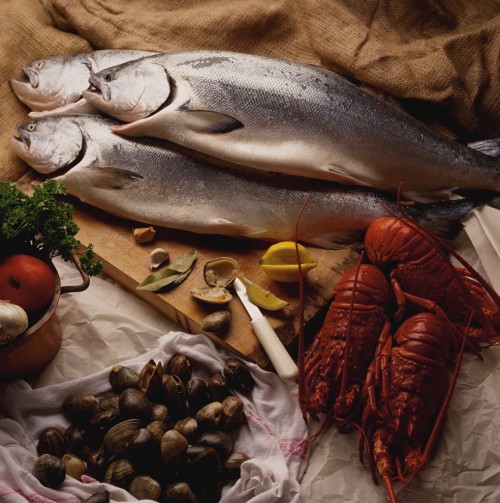
I don't know about these, but some fish have white meat (flesh), too

:Lobster meat is white, too

If you hear elsewhere about a recent study blaming red meat for kidney failure, be aware that the headline should read “pork.” Read on for details.

Wait, what? I thought pork was “the other white meat.”

First they told us red meat caused cancer. Then cardiovascular disease. Then diabetes. And now kidney failure. Why eat it at all? I still do, but in moderation.

You have to take studies like this with a grain of salt. There are numerous confounding factors that may invalidate results. For instance, if you’re not Chinese and living in Singapore, results of this study may not apply to you. For another instance, Chinese pork may be different from English, Indian, Canadian, and U.S. pork.

A quote from the article at MNT:

“Researcher Woon-Puay Koh and her team delved into data from the Singapore Chinese Health Study, which included more than 63,000 adults, aged 45-74. They linked the data with the Singapore Renal Registry, which holds the records of all Singapore ESRD patients [ESRD = end-stage renal disease]. The overall aim was to uncover the role of different protein sources on kidney health outcomes.

“We embarked on our study to see what advice should be given to chronic kidney disease patients or to the general population worried about their kidney health regarding types or sources of protein intake,” explains Koh.

In China, the primary red meat is pork, accounting for 97 percent of red meat intake. Other popular protein sources included eggs, dairy, shellfish, fish, soy, legumes, and poultry.

The participants were followed up for an average of 15.5 years. During that time, 951 cases of ESRD occurred; the resultant data showed a clear trend.

Red meat intake was associated with a dose-dependent increased ESRD risk. Individuals who consumed the highest amounts of red meat – the top 25 percent – showed a 40 percent higher risk of developing ESRD than those who consumed the least red meat – the bottom 25 percent.”

Source: Red meat consumption linked to kidney failure – Medical News Today

“Everything we love to eat is a scam” 

tuna, fishing, Steve Parker MD, paleo diet, tuna salad

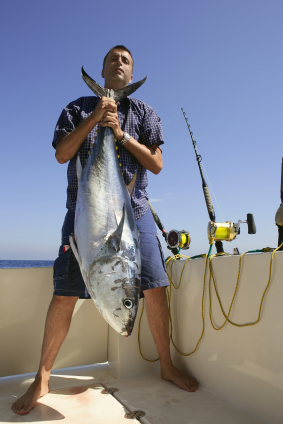
Free-range bluefin tuna

I thought “langostino” was Spanish for lobster…Guess I’m wrong.

Click the link below for details.

“Unless your go-to sushi joint is Masa or Nobu, you’re not getting the sushi you ordered, ever, anywhere, and that includes your regular sushi restaurant where you can’t imagine them doing such a thing, Olmsted says. Your salmon is probably fake and so is your red snapper. Your white tuna is something else altogether, probably escolar — known to experts as “the Ex-Lax fish” for the gastrointestinal havoc it wreaks.

Source: Everything we love to eat is a scam | New York Post

Meta-Analysis: Paleolithic Nutrition for Metabolic Syndrome

From the American Journal of Clinical Nutrition, 2015:

“Paleolithic nutrition, which has attracted substantial public attention lately because of its putative health benefits, differs radically from dietary patterns currently recommended in guidelines, particularly in terms of its recommendation to exclude grains, dairy, and nutritional products of industry.

Conclusions: The Paleolithic diet resulted in greater short-term improvements on metabolic syndrome components than did guideline-based control diets. The available data warrant additional evaluations of the health benefits of Paleolithic nutrition.”

Source: Paleolithic nutrition for metabolic syndrome: systematic review and meta-analysis

Which Costs More?: Mediterranean Diet, a Modified Paleo Diet, or Intermittent Fasting

shutterstock_256605370

Click the link at bottom for details. From the study abstract:

“Background: Obesity, and resulting health problems, is a growing issue facing today’s society. Weight-loss diets are popular worldwide but have shown mixed health outcomes. Current research has shown that the Mediterranean (MED) and Paleolithic (Paleo) diets as well as Intermittent Fasting (IF) have positive health outcomes. However, there is very little research surrounding the cost of all three popular diets. One factor that may influence long- term adherence is the cost of the dietary regime.

Conclusion: Although these differences in costs were not significant, the analysis suggests the Paleo diet is a slightly more expensive plan, while the IF plan has emerged as a potentially cheaper weight-loss intervention. Small sample sizes in the Paleo diet plan limits the potential for comparison.”

Source: A Cost Analysis of Three Popular Diets: the Mediterranean Diet, a Modified Paleo Diet and Intermittent Fasting

diaTribe Presents Expert Advice On Pregnancy and Diabetes From Dr. Lois Jovanovič 

Diabetes types 1 and 2 along with gestational diabetes are addressed in this diaTribe interview. For example:

“According to Dr. Jovanovič, it is important to make sure family members understand the importance of reducing carb intake for blood sugar management during pregnancy. She said that grandmas in particular “often think a pregnant lady needs to eat all the time and not only eat all the time, but eat tortillas and rice and pasta. The grandma often cooks and thickens food with starch, puts a lot of noodles in it, etc. Then of course the young woman doesn’t want to disappoint her grandma, and it can be a difficult situation.” Clear communication can help a supportive family provide medically sound support, in line with the mutually desired outcome – a healthy mom and baby!”

Source: Diabetes and Pregnancy: Expert Advice from Pregnancy Guru Dr. Lois Jovanovič | diaTribe

Dr. Guyenet Asks: Do Blood Glucose Levels Affect Hunger and Satiety?

From the Whole Health Source blog:

“You’ve heard the story before: when you eat carbohydrate-rich foods that digest quickly, it sends your blood sugar and insulin levels soaring, then your blood sugar level comes crashing back down and you feel hungry and cranky.  You reach for more carbohydrate, perpetuating the cycle of crashes, overeating, and fat gain.

It sounds pretty reasonable– in fact, so reasonable that it’s commonly stated as fact in popular media and in casual conversation.  This idea is so deeply ingrained in the popular psyche that people often say “I have low blood sugar” instead of “I’m hungry” or “I’m tired”.  But this hypothesis has a big problem: despite extensive research, it hasn’t been clearly supported.  I’ve written about this issue before.

A new study offers a straightforward test of the hypothesis, and once again finds it lacking.”

Source: Whole Health Source: Do Blood Glucose Levels Affect Hunger and Satiety?

The study at hand involved 15 healthy young men. Results may not apply to overweight post-menopausal women with T2 diabetes, but I bet they do.

Steve Parker, M.D.

Jamie Scott On the New Zealand Heart Foundation Paleo Diet Trial

shutterstock_268538780

Good thing she had a spear with her

“Do not adjust your set. And no, it isn’t April 1st.  The New Zealand Heart Foundation dietitians and nutritionists are giving Paleo a go.

It what sees me channeling the ghost of That Paleo Guy, I feel compelled to write a bit of a critique about their experiment, and their assumptions and starting points.  But to be clear before anything else, I do applaud the openness of the Heart Foundation to be giving this a go.

My first post to this blog outlined my reasons for largely divorcing myself from the term “Paleo” as a heuristic for how to navigate the very messy and confusing food environments we are faced with in our modern societies.  Subsequent posts have touched on why the paradigm made sense in the first place, and on some of the things we have taken issue with as the concept has grown in the public consciousness.”

Read the whole thing.