Adam Lived 340,000 Years Ago

African Savanna

African Savanna

…according to a headline at NewScientist.  That’s a tad off the 6,000 years or so suggested by some Bible scholars.  You’ll enjoy this article if you’re interested in human evolution.

Africa is said to be the cradle of humanity, but the exact coordinates of the nursery are unknown.

When you read of the Y chromosome below, remember that only men have them.  Women have two X chromosomes; men have one Y and one X.  Sounding familiar?

Some snippets from the article:

Hundreds of thousands of people have now had their DNA tested. The data from these tests had shown that all men gained their Y chromosome from a common male ancestor. This genetic “Adam” lived between 60,000 and 140,000 years ago.

Scientists analyzed the DNA of Albert Perry, and African-American who recently died in South Carolina.

Michael Hammer, a geneticist at the University of Arizona in Tucson, heard about Perry’s unusual Y chromosome and did some further testing. His team’s research revealed something extraordinary: Perry did not descend from the genetic Adam. In fact, his Y chromosome was so distinct that his male lineage probably separated from all others about 338,000 years ago.

The first anatomically modern human fossils date back only 195,000 years, so Perry’s Y chromosome lineage split from the rest of humanity long before our species appeared.

What are the implications? One possibility is that Perry’s Y chromosome may have been inherited from an archaic human population that has since gone extinct. If that’s the case, then some time within the last 195,000 years, anatomically modern humans interbred with an ancient African human.

Read the rest.

QOTD: Ken Hutchins on Exercise Versus Recreation

Perhaps the most destructive as well as most misunderstood concept in fitness today among researchers, the commercial health facilities, and the general public alike is  the confusion of exercise and recreation.

Ken Hutchins

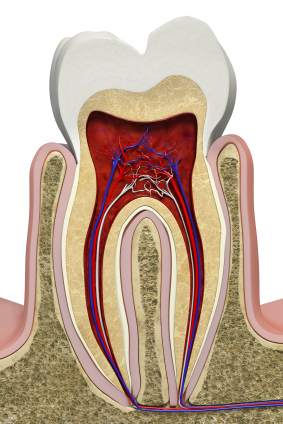
Applying Paleo Diet Principles to Dentistry: Dr. John Sorrentino

tooth structure, paleo diet, caries, enamel

Cross-section of a tooth

When I think about a Paleolithic approach to dental disease, the first expert that comes to mind is dentist John Sorrentino, D.D.S.  The only other living “authority” that pops up is Stephan Guyenet, Ph.D., and he’s not even a dentist.  Stephan focused his literature review more on malocclusions than teeth per se, as I recall.  Dr. Sorrentino cites dentist Weston A. Price as a ground-breaker, documenting the deterioration of dental health as traditional cultures moved to modern diets loaded with refined and concentrated sugars and starches.

Fortunately for us, Dr. Sorrentino has blogged about the intersection of dentistry, evolution, and the paleo diet.  Malocclusion and caries (cavities) weren’t  problems for our Paleolithic ancestors, although “…they wore thru their enamel by the time they were middle aged.”  Then what happened?

Regarding caries, Dr. Sorrentino wrote:

Caries was just about non-existent because simple sugars and the refined carbohydrates that cause them were just not present in any Paleolithic diet.  Since the Paleolithic covered such a vast period of time and many, many different populations it is important to remember that there is no one “Paleolithic Diet,” but rather a continuum or “envelope” of certain related types of foodstuffs that were consumed. These included but were not limited to fish, shellfish, leafy green plants, root vegetables, and fruit in season.  It was interesting to note that there is decay in some lowland gorillas.  It is present mostly as interproximal decay on the upper anterior teeth.  It was speculated that sucking on fruit or raiding human garbage dumps, common in the area, caused this.  In either case it shows that our closest living relatives are not very well adapted to eat sugar either.

Read the rest.

paleo diet, teeth, smile

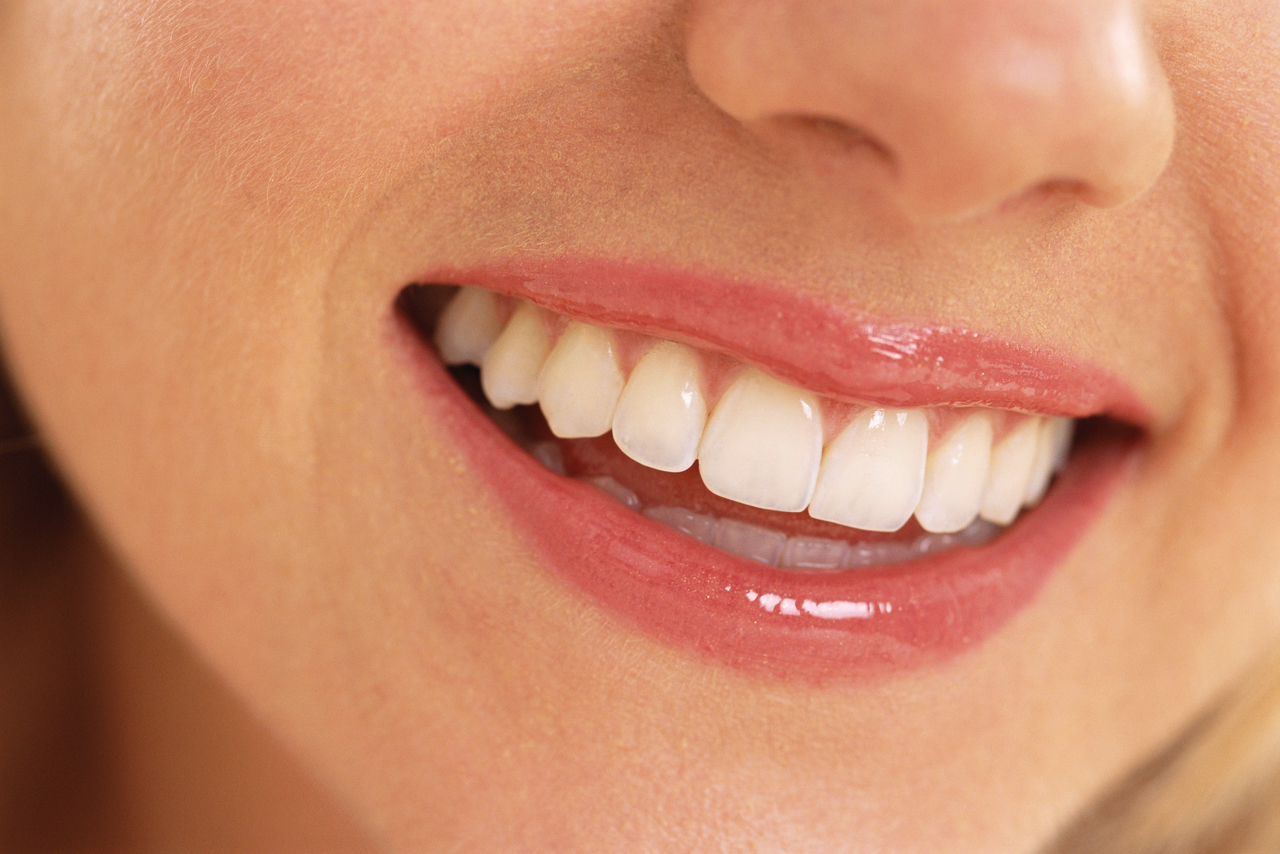
Are these healthy teeth a result of proper diet, dental self-care, dentistry, Photoshop, or a combination?

I was perusing his website looking for reliable information on flossing and Water Pik-like devices and their proper roles in periodontal disease and caries prevention.  I didn’t find much other than recommendations to eat a paleo diet, naturally low in concentrated sugars and refined starches, especially grains.

Steve Parker, M.D.

QOTD: Horace Kephart on the Wild Outdoors

“To him in whom the primitive virtues of courage, energy and love of adventure have not been slapped, there is scarce a joy comparable to that of roaming at will through wild region, viewing the glories of the unspoiled earth and feeling the inexpressible thrill of manliness sore tested by privation and hazard but armed and undismayed”.

—Horace Kephart, Camping and Woodcraft, 1917

QOTD: Calcium and the Paleo Diet

“Low calcium intake, which is often considered as a potential disadvantage of the Paleolithic diet model, should be weighed against the low content of phytates and the low content of sodium chloride, as well as the high amount of net base yielding vegetables and fruits.”

L.M. Kowalski and J. Bujko

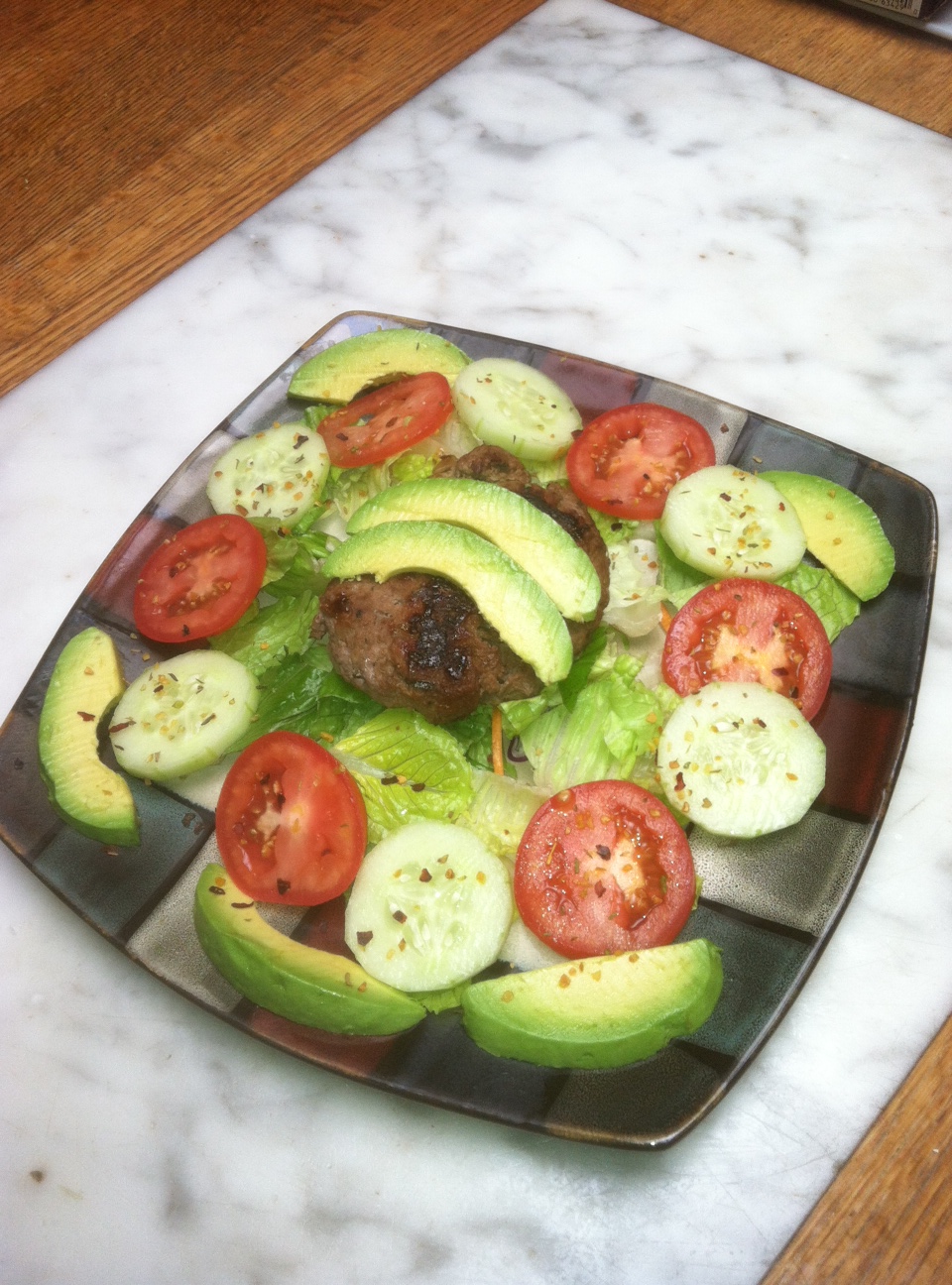
Hamburger-Avocado Salad with tomatoes, cucumbers, lettuce, salt/pepper, and olive oil vinaigrette

Hamburger-Avocado Salad with tomatoes, cucumbers, lettuce, salt/pepper, and olive oil vinaigrette

PS: Low calcium consumption is thought to predispose to osteoporosis, a bone-thinning disease that causes fractures.  It affects women far more than men.  If you don’t live past 50 or 60, it’s not much of a problem.  Kowalski and Bujko imply that low phytate and sodium content, plus alkaline veggies and fruit, counteract any adverse bone effects of low calcium consumption.  I’m not sure because I don’t read Polish.  Loren Cordain’s paleo diet website talks about the diet being healthy for bones, citing the acid-base issue.

h/t Amy Kubal (Twitter: @AmykRd)

If Teeth Are So Important For Survival…

…why do modern cultures have so many dental problems?

An oldie but goodie from Dr. Stephan Guyenet:

Our ancestors had straight teeth, and their wisdom teeth came in without any problem. The same continues to be true of a few non-industrial cultures today, but it’s becoming rare. Wild animals also rarely suffer from orthodontic problems.

Today, the majority of people in the US and other affluent nations have some type of malocclusion, whether it’s crooked teeth, overbite, open bite or a number of other possibilities.

Read the rest.

I rarely hear dentists or orthodontists talk about these ideas.  Wonder why.

Do Tomatoes Have Too Many Carbohydrates?

Eat greens for vitamin K

Looks reasonable to me

Dr. Richard Bernstein wrote a great book advocating strict carbohydrate restriction for folks with diabetes.  I’m talking about a max of 30 grams a day, compared to 250–300 g in the standard American diet.

Dr. Bernstein cautions his diabetic patients and readers of Diabetes Solution to keep a tight lid on consumption of tomatoes.  An excerpt from page 149:

If you have them uncooked in salad, limit yourself to one slice or a single cherry tomato per cup of salad.

His concern is that tomatoes will raise your blood sugar too high.

That doesn’t make sense to me.  A 3-inch diameter tomato has 7 grams of carbohydrate, 2 of which are fiber.  So the digestible carb count is only 5 grams.  That’s not much.  So do tomatoes have a high glycemic index?  Unlikely, although it’s hard to be sure.  Good luck finding a reliable GI for tomatoes on the Internet.

I think Dr. Bernstein’s wrong about this one, which is rare.  I suppose it’s possible that tomatoes deliver some other substance to the bloodstream that interferes with carbohydrate metabolism, but Dr. Bernstein doesn’t mention that.

Do tomatoes play havoc with your blood sugars?

Steve Parker, M.D.

Exercise To Momentary Muscular Failure and You Can Skip the Cardio?

I was planning to review here an article, Resistance Training to Momentary Muscular Failure Improves Cardiovascular Fitness in Humans: A review of acute physiological responses and chronic physiological adaptations.  It’s by James Steele, et al, in the Journal of Exercise Physiology (Vol. 15, No. 3, June  2012).

But dayum, it’s too technical for me!  Too much cell biology and cell metabolism.  Those college classes were over three decades ago for me.

I’m just going to harvest a few pearls from the article that are important to me.  I ran across this in my quest for efficient exercise.  By efficient, I mean minimal time involved, yet good results.

The authors question the widespread assumption that aerobic and endurance training are necessary for development of cardiovascular fitness.  Like Dr. Doug McGuff, they wonder if resistance training alone is adequate for the development of cardiovascular fitness.  Their paper is a review of the scientific literature.  The authors say the literature is hampered by an inappropriate definition and control of resistance training intensity.  The only accurate measure of intensity, in their view, is when the participant reaches maximal effort or momentary muscular failure.

The authors, by the way, define cardiovascular fitness in terms of maximum oxygen consumption, economy of movement, and lactate threshold.

“It would appear that the most important variable with regards to producing improvement in cardiovascular fitness via resistance training is intensity [i.e., to muscle failure].”

The key to improving cardiovascular fitness with resistance training is high-intensity.  These workouts are not what you’d call fun.

"MMF? Yeah, I know all about it."

“MMF? Yeah, I know all about it.”

From a molecular viewpoint, “the adenosine monophosphate–activated protein kinase pathway (AMPK) is held as the key instigator of endurance adaptations in skeletal muscle.  Contrastingly, the mammalian target of rapamycin pathway (mTOR) induces a cascade of events leading to increased muscle protein synthesis (i.e.,[muscle] hypertrophy).”  Some studies suggest AMPK is an acute inhibitor of mTOR activation.  Others indicate that “resistance training to  failure should result in activation of AMPK through these processes, as well as the subsequent delayed activation of mTOR, which presents a molecular mechanism by which resistance training can produce improvement in cardiovascular fitness, strength, and hypertrophy.”

You’re not still with me, are you?

“… the acute metabolic and molecular responses to resistance training performed to failure appear not to differ from traditional endurance or aerobic training when intensity is appropriately controlled.”

Chronic resistance training to failure induces a reduction in type IIx muscle fiber phenotype and an increase in type I and IIa fibers.  (Click for Wikipedia article on skeletal muscle fiber types.)

“It is very likely that people who are either untrained or not involved in organized sporting competition, but you have the desire to improve their cardiovascular fitness may find value in resistance training performed to failure.  In fact, this review suggests that resistance training to failure can produce cardiovascular fitness effects while simultaneously producing improvements in strength, power, and other health and fitness variables. This would present an efficient investment of time as the person would not have to perform several independent training programs for differing aspects of fitness.”  [These statements may not apply to trained athletes.]

Before listing their 157 references, the authors note:

“It is beyond the scope of this review to suggest optimal means of employing resistance training (i.e., load, set volume, and/or frequency) in order to improve cardiovascular fitness since there are no published studies on this topic.”

In conclusion, if you’re going to do resistance training but not traditional aerobic/cardio exercise, you may not be missing out on any health benefits if you train with intensity.  And you’ll be done quicker.

Steve Parker, M.D.

PS: See Evidence-based resistance training recommendations by Fisher, Steele, et al.

Brian’s Berry Breakfast

paleobetic diet, breakfast, paleo diet

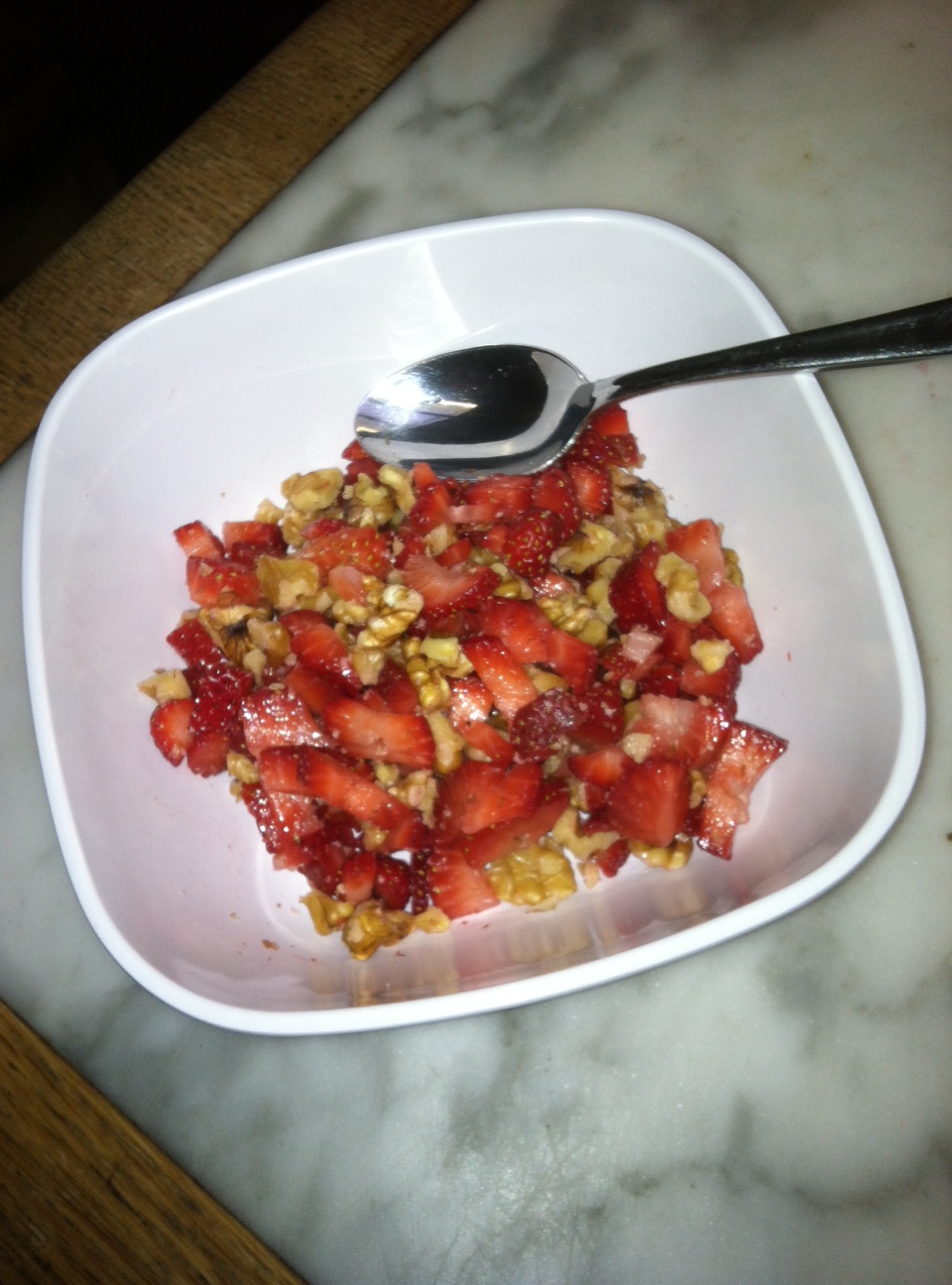
Brian’s Berry Breakfast

My stepson came up with this one.  I never would have come up with it on my own.  If you think breakfast means eating breakfast out of a bowl, this one fits the bill.  And talk about easy!  It’s paleolicious.

Ingredients:

  • 4.5 oz (127 g) fresh strawberries, diced into small pieces
  • 2 oz (58 g) walnuts, crumbled by hand

Mix ingredients together in a bowl and enjoy eating with a spoon while your tablemates eat Neolithic Cheerios.

Nutritional analysis:

  • 76% fat
  • 16% carbohydrate
  • 8% protein
  • 410 calories
  • 17 carb grams
  • 6.2 g fiber
  • 10.9 g digestible carb
  • prominent features: 80% of vitamin C RDA (recommended dietary allowance), 32% of RDA for phosphorus, 27% of RDA for iron, 25% of RDA for magnesium, 21% of RDA for vitamin B6, 19% of RDA for thiamine.  It’s also particularly rich in copper and manganese.

—Steve

PS: Nutritional analysis by free software at FitDay.com

Do You Need Medical Clearance Before Starting an Exercise Program?

medical clearance, treadmill stress test

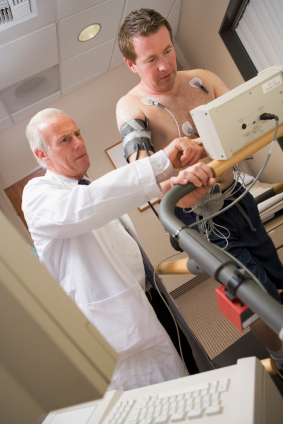
This treadmill stress test is looking for hidden heart disease

To protect you from injury, I recommend that you obtain “medical clearance” from a personal physician before starting an exercise program. A physician is in the best position to determine if your plans are safe for you, thereby avoiding complications such as injury and death. Nevertheless, most adults can start a moderate-intensity exercise program with little risk. An example of moderate intensity would be walking briskly (3–4 mph or 4.8–6.4 km/h) for 30 minutes daily.

Men over 40 and women over 50 who anticipate a more vigorous program should consult a physician to ensure safety. The physician may well recommend diagnostic blood work, an electrocardiogram (heart electrical tracing), and an exercise stress test (often on a treadmill). The goal is not to generate fees for the doctor, but to find the occasional person for whom exercise will be dangerous, if not fatal. Those who drop dead at the start of a vigorous exercise program often have an undiagnosed heart condition, such as blockages in the arteries that supply the heart muscle. The doctor will also look for other dangerous undiagnosed “silent” conditions, such as leaky heart valves, hereditary heart conditions, aneurysms, extremely high blood pressure, and severe diabetes.

She looks healthy enough, but how can you be sure?

She looks healthy enough, but how can you be sure?

The American Diabetes Association’s Standards of Care—2011 states that routine testing of all diabetics for heart artery blockages before an exercise program is not recommended; the doctor should use judgment case-by-case. Many diabetics (and their doctors) are unaware that they already have “silent” coronary artery disease (CAD). CAD is defined by blocked or clogged heart arteries, which reduced the blood flow to the hard-working heart muscle. Your heart pumps 100,000 times a day, every day, for years without rest. CAD raises the odds of fainting, heart attack, or sudden death during strenuous exercise. I recommend a cardiac stress test (or the equivalent) to all diabetics prior to moderate or vigorous exercise programs, particularly if over 40 years old. CAD can thus be diagnosed and treated before complications arise. Ask your personal physician for her opinion.

Regardless of age and diabetes, other folks who may benefit from a medical consultation before starting an exercise program include those with known high blood pressure, high cholesterol, joint problems (e.g., arthritis, degenerated discs), neurologic problems, poor circulation, lung disease, or any other significant chronic medical condition. Also be sure to check with a doctor first if you’ve been experiencing chest pains, palpitations, dizziness, fainting spells, headaches, frequent urination, or any unusual symptoms (particularly during exertion).

Physicians, physiatrists, physical therapists, and exercise physiologists can also be helpful in design of a safe, effective exercise program for those with established chronic medical conditions.

Steve Parker, M.D.