
Two Secrets to Prevention of Weight Regain

Resistance training

Regain of lost body fat is the most problematic area in the field of weight management.  Whoever solves this problem for good will win a Nobel Prize in Medicine.  Why do most diets ultimately fail over the long run?  Because people go back to their old habits.  Here are the two secrets to prevention of weight regain:

  • Restrained eating
  • Regular physical activity

“Successful losers” apply self-restraint on an almost daily basis, avoiding food they know will lead to weight regain.  They limit how much they eat.  They consciously choose not to return to their old eating habits, despite urges to the contrary.

The other glaring difference is that, compared to regainers, the successful losers are physically active.  Oftentimes, they exercised while losing weight, and almost always continue to exercise in the maintenance phase of their program.  This is true in at least eight out of 10 cases.  It’s clear that regular exercise isn’t always needed, but it dramatically increases your chances of long-term success.

Here are more tips for prevention of weight regain.

Steve Parker, M.D.

Weight-Loss Stalls

Left, right, or straight ahead (the road less travelled)?

It’s common on any weight-loss program to be cruising along losing weight as expected, then suddenly the weight loss stops although you’re still far from goal weight.  This is the infamous and mysterious stall.

Once you know the reason for the stall the way to break it becomes obvious.  The most common reasons are:

  1. You’re not really following the full program any more; you’ve drifted off the path, often unconsciously
  2. Instead of eating just until you’re full or satisfied, you’re stuffing yourself
  3. You need to start or intensify an exercise program
  4. You’ve developed an interfering medical problem such as adrenal insufficiency (rare) or an underactive thyroid; see your doctor
  5. You’re taking interfering medication such as a steroid; see your doctor
  6. Your strength training program is building new muscle that masks ongoing loss of fat (not a problem!)

If you still can’t figure out what’s causing your stall, do a nutritional analysis of one weeks’ worth of eating, with a focus on total calories.  You can do this analysis online at places like FitDay (http://fitday.com/) or Calorie Count (http://caloriecount.about.com/).  You may be surprised to find out you’re eating a lot more calories than you thought.  Assuming you indeed have excess fat to lose, you can break your stall by cutting your total daily calorie intake by 400–500.  Try it for a week or two.

Steve Parker, M.D.

TV’s Biggest Loser Plan Improves Prediabetes and Diabetes in Small Study

TV’s “The Biggest Loser” weight-loss program works great for overweight diabetics and prediabetics, according to an article May 30, 2012, in MedPage Today.

This isn’t directly related to the paleo diet or lifestyle, but I thought you might be interested.

Some quotes:

For example, one man with a hemoglobin A1c (HbA1c) of 9.1, a body mass index (BMI) of 51, and who needed six insulin injections a day as well as other multiple prescriptions was off all medication by week 3, said Robert Huizenga, MD, the medical advisor for the TV show.

In addition, the mean percentage of weight loss of the 35 contestants in the study was 3.7% at week 1, 14.3% at week 5, and 31.9% at week 24…

The exercise regimen for those appearing on “The Biggest Loser” comprised about 4 hours of daily exercise: 1 hour of intense resistance training, 1 hour of intense aerobics, and 2 hours of moderate aerobics.

Caloric intake was at least 70% of the estimated resting daily energy expenditure, Huizenga said.

At the end of the program, participants are told to exercise for 90 minutes a day for the rest of their lives. Huizenga said he is often told by those listening to him that a daily 90-minute exercise regimen is impossible because everyone has such busy lives.

“I have a job and I work out from 90 to 100 minutes per day,” he said. “It’s about setting priorities. Time is not the issue; priorities are the issue.”

Of the 35 participants in this study, 12 had prediabetes and six had diabetes.  This is a small pilot study, then.  I bet the results would be reproducible on a larger scale IF all conditions of the TV program are in place.  Of course, that’s not very realistic.  A chance to win $250,000 (USD) is strong motivation for lifestyle change.

Steve Parker, M.D.

PS: Although not mentioned in the article, these must have been type 2 diabetics, not type 1.

Notable Quotes From Kuipers’ “Multidisciplinary Reconstruction of Palaeolithic Nutrition”

Australian Aborigine in Swamp Darwin

I scored of copy of “A multidisciplinary reconstruction of Palaeolithic nutrition that holds promise for the prevention and treatment of diseases of civilisation” by RS Kuipers, JCA Joordens, and FAJ Muskiet. I’m not going to review it here. I’m just assembling some interesting “facts” for my files, so this could be boring. You won’t offend me much if you stop reading now.

This paper is from the University Medical Center Groningen and Human Origins Group (Faculty of Archaeology, Leiden University), both in The Netherlands. It’s 23 pages long, not counting the 450 references.

I’ll following the spelling conventions of the paper’s publisher.

Introduction

“…our genome has remained basically unchanged since the beginning of the Palaeolithic era.”

“Since the onset of the Agricultural Revolution, some 10 thousand years ago, and notably in the last 200 years following the start of the Industrial Revolution, humans have markedly changed their dietary habits. Consequently, it has been advocated that the current pandemic of diseases of civilization results in part from the mismatch between the current diet and our Palaeolithic genome.”

These are some of the diseases that may result from the mismatch of our Palaeolithic genome and modern lifestyle (including diet): type 2 diabetes, high blood pressure, osteoporosis, fertility problems (polycystic ovary syndrome), pregnancy complications (pre-eclampsia, gestational diabetes), some cancers (colon, breast, prostate), heart disease (such as coronary artery disease), major and postpartum depression, autism, schizophrenia, some neurodegenerative diseases (Parkinsons disease, Alzheimer’s disease). [Sorry, Dr. Cordain – no mention of acne. And I wonder about dental and eye problems.]

Evolutionary Medicine

“Many, if not all, diseases can become explained [sic] by both proximate and ultimate explanations. The science searching for the late explanations has become known as ‘evolutionary medicine.’ Unfortunately, modern medicine deals mostly with proximate explanations, while ultimate explanations seem more prudent targets for long-time disease prevention.”

The term “evolutionary medicine” was coined by Randolph M. Nesse and George C. Williams in the early 1990s. It’s also called Darwinian medicine.

“…about 20% of modern hunter-gatherers reach at least the age of 60 years.”

After the transition to the Agricultural Revolution about 10,000 years ago, life expectancy fell from about 40 years to about 20 years. This is astounding news to me, assuming it’s accurate.  (Remember that for most of human existence, infant and child mortality has been very high. If an infant dies at 6 months old and an adult dies at 40 years, average life expectancy for the two would be about 20 years.)

Average life expectancy among modern hunter-gatherers is about 40 years—same as it was for students of the Harvard College class born in 1880.

Life expectancy in the Neolithic era was stable until the late 18th century, rarely exceeding 25 years in civilized nations.  At that point, life expectancy started to improve dramatically thanks to sanitation, water and food hygiene, immunizations, and quarantine practices. (Thomas Jefferson was the third president of the U.S.  His wife Martha had six children but only two survived to adulthood.)

The earliest species in the genus Homo appeared about  two million years ago.   Homo sapiens appeared about 200,000 years ago in south or east Africa. Several different hominin lines co-existed with modern humans.

The current world population of humans may be derived for only 1000 or so individuals that survived a decimating event.

The ability to store fat is one of the things that differentiate us from other primates.

Hunting and Our Ancient Diet

The composition of the early human diet is still hotly debated.

Lotta work to snag one of these

In modern hunter-gatherers, only about 30% of diet energy is derived from hunting, with the rest coming from gathering plant food and aquatic animals.

In contrast to the arid, hot, iconic savanna, “…the combined evidence strongly suggests that early hominins frequented the land-water ecosystem and thus lived there.” If rainfall and other conditions allowed, there would be wooded grasslands.

“…the proportion of the human gut dominated by the small intestine (>56%) suggests adaptation to a diet that is highly digestible, indicating a closer structural analogy with carnivores than to [animals that eat leaves and fruit].”

“The data of combined studies of early hominins and the more recent hominins suggest a gradual increase in dietary animal protein, a part of which may derive from aquatic resources. In the more recent human ancestors, a substantial part of the dietary protein was irrefutably derived from marine resources, and this habit was only abandoned in some cases after the introduction of agriculture at the onset of the Neolithic.”

Sea levels have risen over the past 17,000 years, up to 150 meters.

“In conclusion, there is ample archeological evidence for a shift from the consumption of plant towards animal foods.”

“For a long time period in hominin evolution, hominins derived large amounts of energy from (terrestrial and aquatic) animal fat and protein. This habit became reversed only by the onset of the Neolithic Revolution in the Middle East starting about 10,000 years ago.”

“The Homo genus has been on earth for at least 2.4 million years and for over 99% of this period has lived as hunter-gatherers.”

“We conclude that gathering plays, and most likely always played, the major role in food procurement of humans. Although hunting doubtlessly leaves the most prominent signature in the archaeological record, gathering of vegetables and the collection of animal, notably aquatic, resources (regardless of whether their collection is considered as either hunting or gathering), seems much easier compared with hunting on the hot and arid savanna. We suggest that it seems fair to consider these types of foods as an important part of the human diet, unless proven otherwise. Conversely, while hunting might have played a much more important role at higher latitudes, dietary resources in these ecosystems are rich in n-3-fatty acids (for example, fatty fish and large aquatic mammals), while the hominin invasion of these biomes occurred only after the development of more developed hunting skills.”

Even though traditional Maasai showed extensive atherosclerosis with fibrous changes and lipid infiltration, they had very few complicated arterial lesions and rarely had clinical cardiovascular disease events.

The Agricultural and Industrial Revolutions

“Contrary to earlier belief, the advent of agriculture coincided with an overall decline in nutrition and general health, but at the same time provided an evolutionary advantage since it increased birth rates and thereby promoted net population growth.”  [Both supporting references are from CS Larsen.]
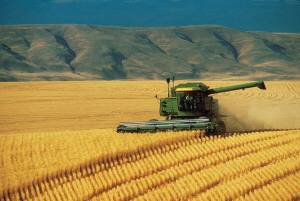
Good news for birth rates

With the advent of the Industrial Revolution, nutritional quality and general health declined even more rapidly.

“Among the many dietary and lifestyle changes are: a grossly decreased n-3:n-6 fatty acid ratio, the combined high intakes of saturated fatty acids and carbohydrates, the introduction of industrially produced trans-fatty acids, reduced intakes of n-3 and n-6 long-chain polyunsaturated fatty acids, reduced exposure to sunlight, low intakes of vitamins D and K, disbalanced anti-oxidant status and high intakes of carbohydrates with high glycaemic indices and loads, such as sucrose and industrially produced high-fructose maize syrup.”  [Aren’t we eating more n-6 fatty acids, not less?]

Potential Benefits of a Palaeolithic Diet

The authors conclude with a review of the few medical scientific studies of Palaeolithic diets in modern humans. These are the ones by Frassetto, Osterdahl, Jönsson, and Lindeberg. I’ve already reviewed those here.  They missed O’Dea and Kerin’s study.

My Overall Impressions

This article seems very well researched.  It lays out a logical framework for the discipline of evolutionary medicine and should spur further clinical research.  It’s well worth a read if you have more than a passing interest in paleo lifestyle theory.

Bear in mind I’m not a paleontologist, anthropologist, paleo-anthropologist, or archeologist.  So caveat lector.

Steve Parker, M.D.  (B.S. degree in zoology)

Reference: Kuipers,RS; Joordens, JCA; and Muskiet, FAJ. A multidisciplinary reconstitution of Palaeolithic nutrition that holds promise for the prevention and treatment of diseases of civilization. Nutrition Research Reviews, 25 (2012): 96-129.  doi: 10.1017/S0954422412000017

PS: The Paleolithic diet is also called paleo, ancestral, hunter-gatherer, Stone Age,  Old Stone Age, and caveman diet.

Dr. Bernstein: Effect of Dietary Protein on Blood Sugar

The protein in this can raise your blood sugar

I’m considering whether I should advise my patients with diabetes to pay careful attention to the protein content of their diet.  It’s an important issue to Dr. Richard K. Bernstein, who definitely says it has to be taken into account.

Here are some of Dr. Bernstein’s ideas pulled from the current edition of Diabetes Solution:

  • The liver (and the kidneys and intestines to a lesser extent) can convert protein to glucose, although it’s a slow and inefficient process.
  • Since the conversion process—called gluconeogenesis—is slow and inefficient, diabetics don’t see the high blood sugar spikes they would see from many ingested carbohydrates.
  • For example, 3 ounces (85 g) of hamburger patty could be converted to 6.5 g of glucose under the right circumstances.
  • Protein foods from animals (e.g., meat, fish, chicken, eggs) are about 20% protein by weight.
  • Dr. B recommends keeping protein portions in a particular meal consistent day-to-day (for example 6 ounces with each lunch).
  • He recommends at least 1–1.2 g of protein per kilogram of ideal body weight for non-athletic adults.
  • The minimum protein he recommends for a 155-lb non-athletic adult is 11.7–14 ounces daily.
  • Growing children and athletes need more protein.
  • Each uncooked ounce of the foods on his “protein foods” list (page 181) provides about 6 g of protein.
  • On his eating plan, you choose the amount of protein in a meal that would satisfy you, which might be 3 ounces or 6–9 ounces.
  • If you have gastroparesis, however, you should limit your evening meal protein to 2 ounces of eggs, cheese, fish, or ground meat, while eating more protein at the two earlier meals in the day.

Dr. Bernstein wrote:

In many respects—and going against the grain of a number of the medical establishment’s accepted notions about diabetics and protein—protein will become the most important part of our diet if you are going to control blood sugars just as it was for our hunter-gatherer ancestors.

Conclusions

I haven’t changed my thinking on this issue yet, but will let you know if and when I do.  I don’t talk much about protein in Conquer Diabetes and Prediabetes in part because I wanted to keep the program simpler than Dr. Bernstein’s.

As with most aspects of diabetes, your mileage may vary.  The effect of dietary protein on blood sugars will depend on type 1 versus type 2 diabetes, and will vary from one person to another.  So it may be impossible to set rigid guidelines.

If interested, you can determine how much protein is in various foods at NutritionData.

Steve Parker, M.D.

Does Exercise Help With Weight Loss?


Enjoy your dinner!

Skyler Tanner slaughters some sacred cows in his blog post June 4, 2012. I pulled the following bullet points from his post. Click on his embedded links for details.

Comparing the effects of food and exercise on weight loss, what you eat, and how much, are more important than your physical activity.  By far.

  • Your genetics largely determines your response to an exercise program
  • Physical activity isn’t a great way to lose weight
  • School-based or other programs to increase childhood physical activity probably won’t reverse childhood obesity statistics
  • Disregarding weight loss, exercise has other worthwhile metabolic advantages
  • Highly advanced societies shouldn’t blame our overweight problem on decreased levels of physical activity

Steve Parker, M.D.

Smoked Paprika on Eggs?

I’m glad eggs are on the paleo diet!  Love ’em.

Darya Pino suggests smoked paprika on fried eggs.  Not regular paprika, smoked.  Hope my local supermarket has it.  I got the fresh eggs—my chickens lay five a day, enough to share with the dogs now and then.

-Steve

What’s Diabulimia?

MedPage Today has a brief article on “diabulimia,” a disorder in type 1 diabetics who withhold insulin in order to lose weight.

After following the women for 11 years, the researchers found that those who restricted insulin had increased rates of diabetes complications, shortened lifespan, and increased mortality risk.

Factors that were associated with insulin restriction included greater eating disorder symptoms, diabetes-specific distress, overall psychological symptoms, and fear of hypoglycemia at baseline.

Diabulimics believe the theory that insulin is a major fat-storage hormone.  Furthermore, the high blood sugar levels resulting from inadequate insulin dosing lead to loss of calories (sugar) via urine.

Steve Parker, M.D.

Are Ketogenic Diets Crazy?

You get it?

Ketogenic diets don’t have anything to do with the paleo diet usually.  However, I think they may play a legitimate role in weight loss for overweight type 2 diabetics.  They could also be helpful in rapid control of blood sugars in out-of-control diabetics (excluding diabetic ketoacidosis).

Has anyone devised a ketogenic paleo diet yet?  I don’t recall one off the top of my head.

Registered Dietitian Franziska Spritzler recently reviewed the concept of low-carb ketogenic diets.  She thinks they are a valid approach to certain clinical situations.  Among dietitians, this puts her in a small but growing minority.

I hesitate to mention this, but I will anyway.  Many, if not most, dietitians too easily just go along with the standard party line on low-carb eating: it’s rarely necessary and quite possibly unhealthy.  Going along is much easier than doing independent literature review and analysis.  I see the same mindset among physicians.

Franziska breaks the mold.

Steve Parker, M.D.

U.S. Diabetes Prevalence: 1935 to 2011

From 1935 to 1996, the prevalence of diagnosed type 2 diabetes [in the U.S.] climbed nearly 765%.

765%—Wow!  This statistic is from the Centers for Disease Control and Prevention as cited in Increased Consumption of Refined Carbohydrates and the Epidemic of Type 2 Diabetes in the United States: an Ecologic Assessment, American Journal of Clinical Nutrition, 2004, vol. 79, no.5, pp: 774-779.

I thought 765% might be a misprint, so I did some digging.  A similar figure is in DHHS Publication No. (PHS) 82-1232 published in 1981:

  • Diabetes prevalence rose from 0.4% of the population in 1935,  to 2.4% in 1979.

This is a six-fold increase.  The major part of the upward trend started in 1960.  Interestingly, that’s when corn syrup started working its way into our food supply.  Coincidence?  The authors of the Department of Human Services paper write:

Preliminary evaluation of these trends suggests that the change in the prevalence of known diabetes has resulted from improvements both in detection of diabetes among high-risk groups and in survivorship among persons with diabetes.

To me, it sounds like they weren’t considering an true increase in the number of new diabetes cases (i.e., incidence), but better detection of existing cases and improved longevity of existing patients (prevalence).  Incidence and prevalence are often confusing.  Wikipedia has a clarifying article.  These days, both incidence and prevalence of diabetes are greatly increased over 1935 levels.

In January, 2011, the U.S. Centers for Disease Control and Prevention released the latest estimates for prevalence of diabetes and prediabetes.

  • 8.3% of the total U.S. population has either diagnosed or undiagnosed diabetes (earlier percentages in this post were for diagnosed cases only)
  • Nearly 27% of American adults age 65 or older have diabetes (overwhelmingly type 2)
  • 6% of the U.S. adult population has diagnosed diabetes (My calculation: Population in 2011 was 311 million; with 18.8 million diagnosed cases of diabetes, 7 million undiagnosed)
  • Half of Americans 65 and older have prediabetes
  • 11% of U.S. adults (nearly 26 million) have diabetes (overwhelmingly type 2)
  • 35% of adults (79 million) have prediabetes, and most of those affected don’t know it

Here’s a post about prevention of type 2 diabetes.

I suspect that overconsumption of concentrated sugars and refined starches (e.g., grains) has contributed to the prevalence of type 2 diabetes and overweight lately.  A paleo-style diet restricts those quite a bit, and therefore, could prevent some cases of diabetes.

Steve Parker, M.D.

PS: The paleo diet is also referred to as the Old Stone Age, Stone Age, hunter-gatherer, caveman, and ancestral diet.